


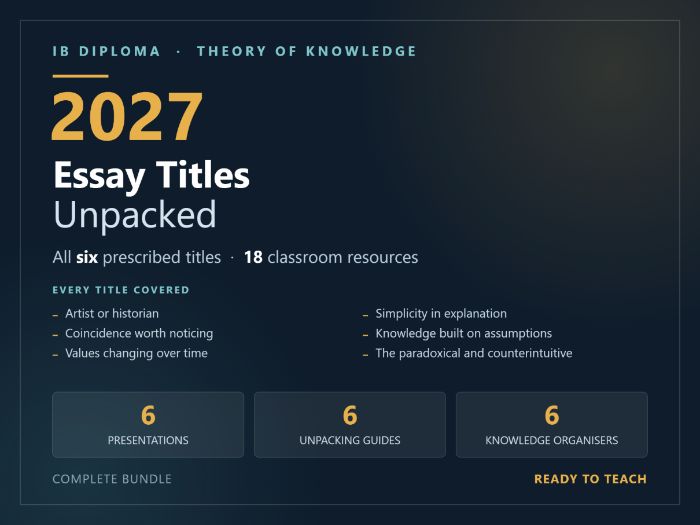
All six TOK prescribed titles for the 2027 examination session, fully unpacked: six classroom presentations, six unpacking guides, six knowledge organisers. Every lesson you need, already written.
The titles drop, and within a week you face six essay questions, a class where every student has chosen differently, and six sets of materials to build from nothing. This bundle is that work, finished.
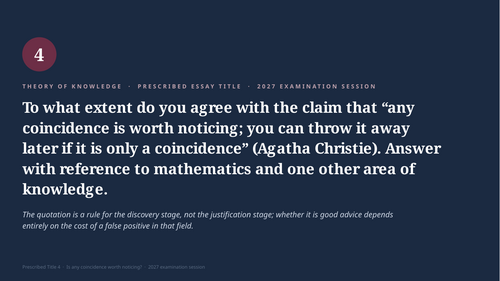
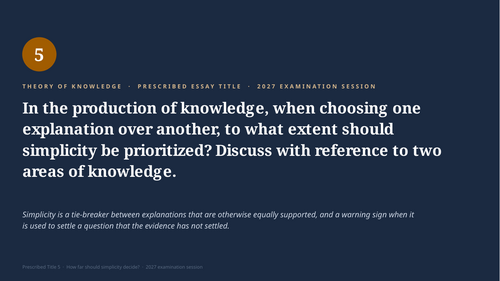
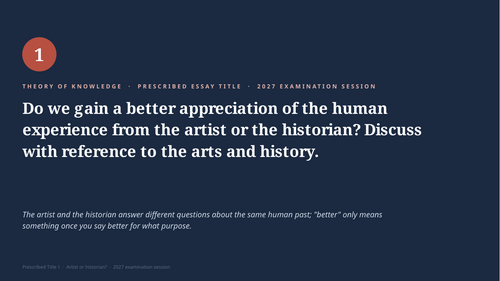
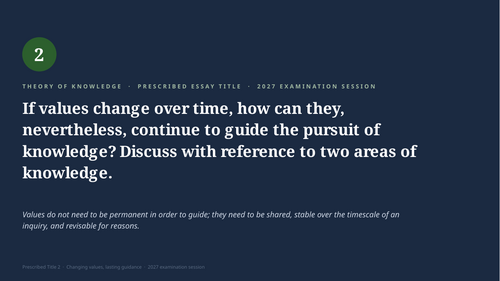
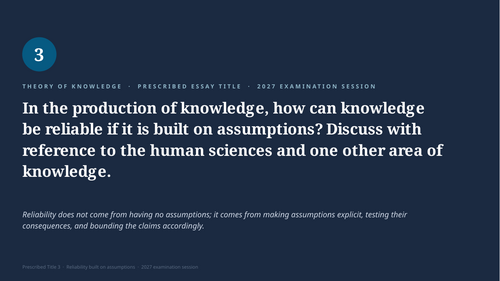
For every one of the six titlesA classroom presentation, 17 to 20 slides. Open it and teach. It takes the title apart phrase by phrase, exposes the trap in the wording, builds the knowledge questions worth writing about, argues both sides, and hands students a curated bank of real-life examples, each annotated with what it proves and where it can be turned against them. It closes with a workable essay structure.
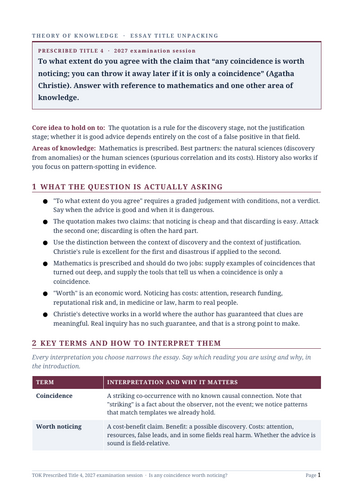
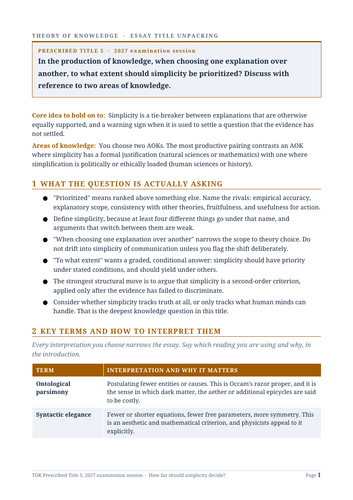
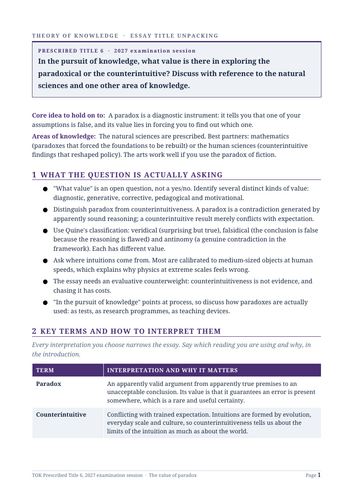
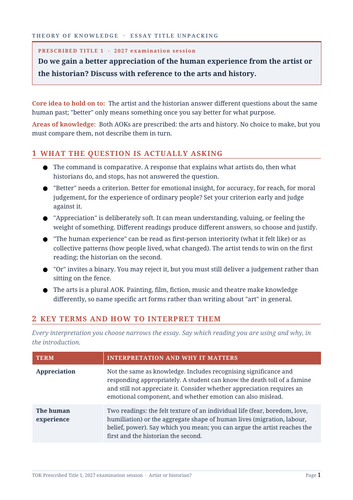
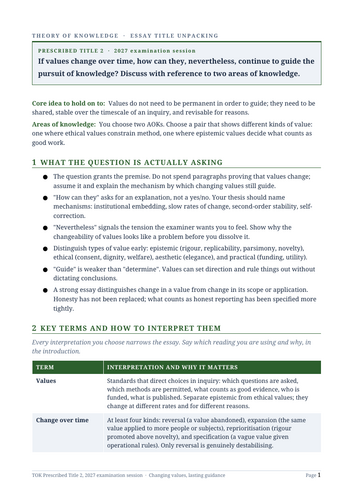
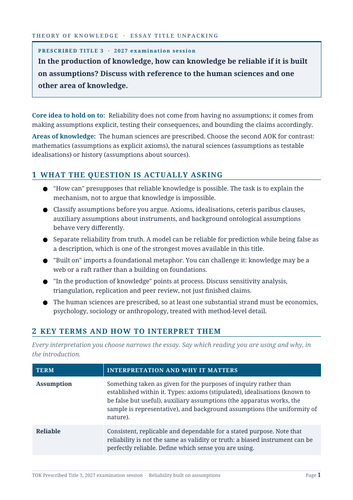
An unpacking guide, twelve sections. What the question is really asking. Every key term and the interpretation to adopt. Which areas of knowledge to focus on and why. Knowledge questions. Arguments with counterarguments prepared. The full example bank. Thinkers worth naming. The pitfalls specific to that title. A structure that works. Sentence stems that push students from description into evaluation. Classroom tasks. Assessment reminders.
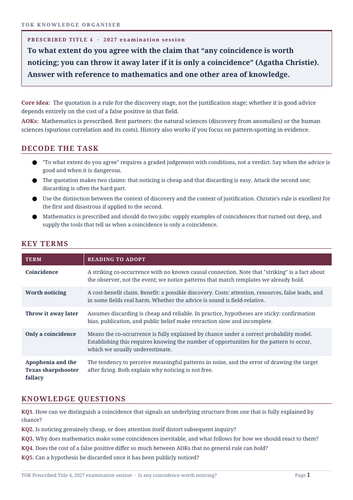
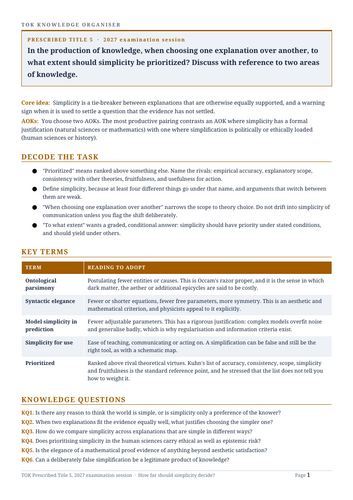
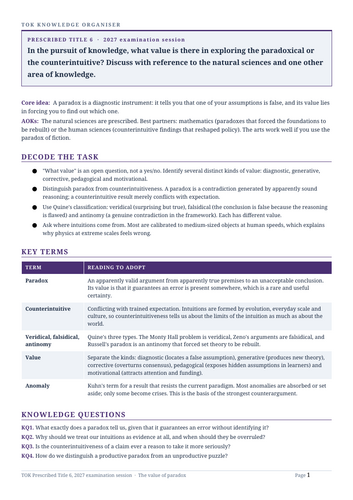
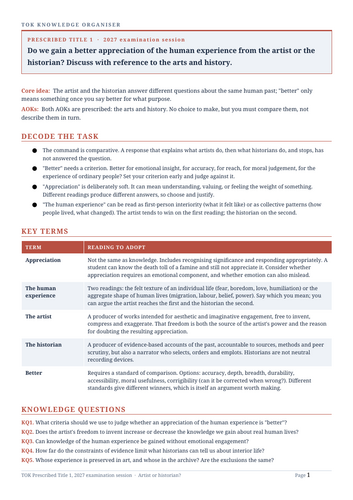
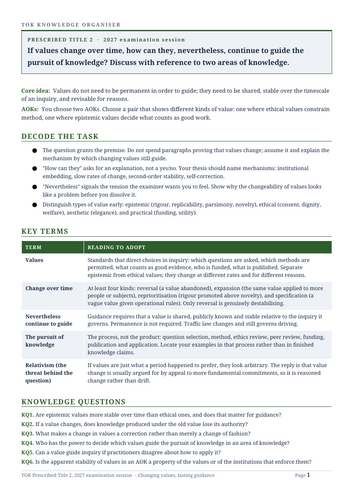
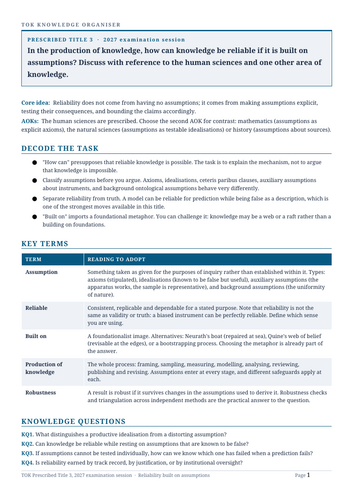
A knowledge organiser, one page. Core idea, areas of knowledge, key terms, knowledge questions, examples, pitfalls. Print it, hand it out, watch essay quality lift.
The six titles- The artist or the historian? (the arts and history)
- Values that change — how can they still guide the pursuit of knowledge? (two AOKs)
- Built on assumptions — how can knowledge be reliable? (human sciences and one other)
- "Any coincidence is worth noticing" — Agatha Christie (mathematics and one other)
- The case for simplicity (two AOKs)
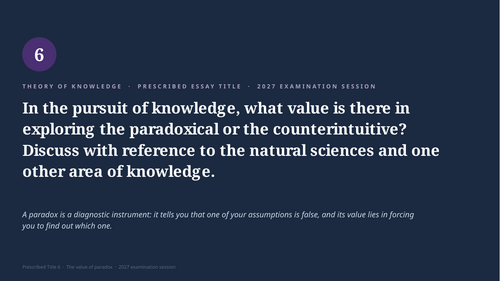
- The paradoxical and the counterintuitive (natural sciences and one other)
Most TOK resources restate the question and leave the hard thinking to you. This one does the hard thinking.
Anyone can say that art reaches feelings history cannot. This bundle also hands your students Carlo Ginzburg’s The Cheese and the Worms, a historian reconstructing the mental world of a sixteenth-century miller from Inquisition records, because it demolishes that comfortable claim. And Svetlana Alexievich, a Nobel Prize in Literature awarded for oral history, because the boundary may not exist at all.
That is what separates a C from an A: examples that fight back. Your students arrive at the essay with ammunition, and you arrive at the lesson with the counterargument already prepared.
Written by a practising IB examiner who marks these essays for a living.
Practical detail18 files, 6 PowerPoint and 12 Word, as a single ZIP with one folder per title. Fully editable. No sign-up, no expiry.
An independent resource. Not affiliated with or endorsed by the International Baccalaureate Organization.
Something went wrong, please try again later.
Now that the pack has been updated I'm happy to say it is excellent!
Report this resourceto let us know if it violates our terms and conditions.
Our customer service team will review your report and will be in touch.
£9.99