Triple Chemistry Core Practicals: Edexcel GCSE Bundle
Resource Bundle


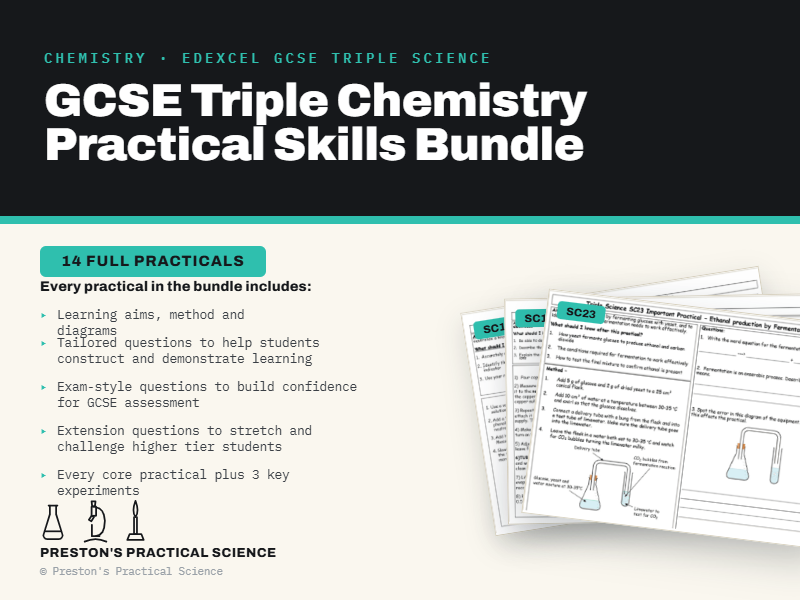

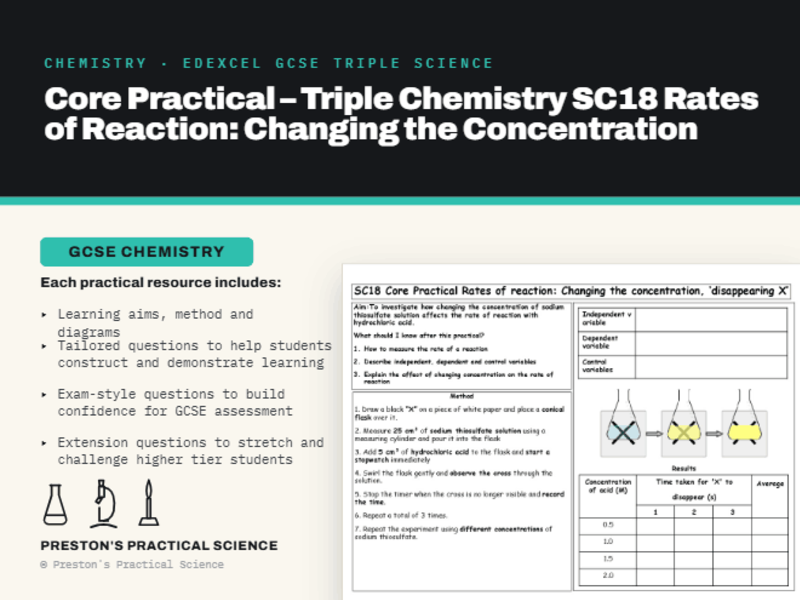
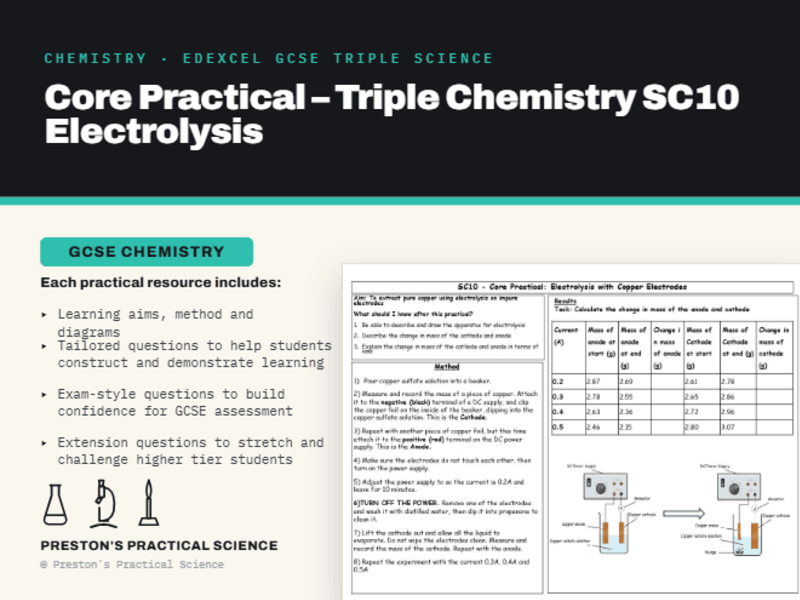
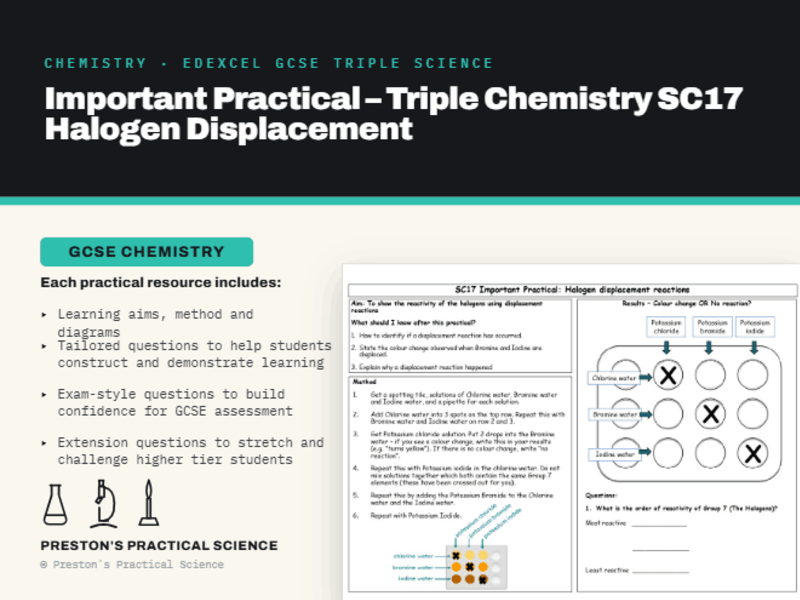
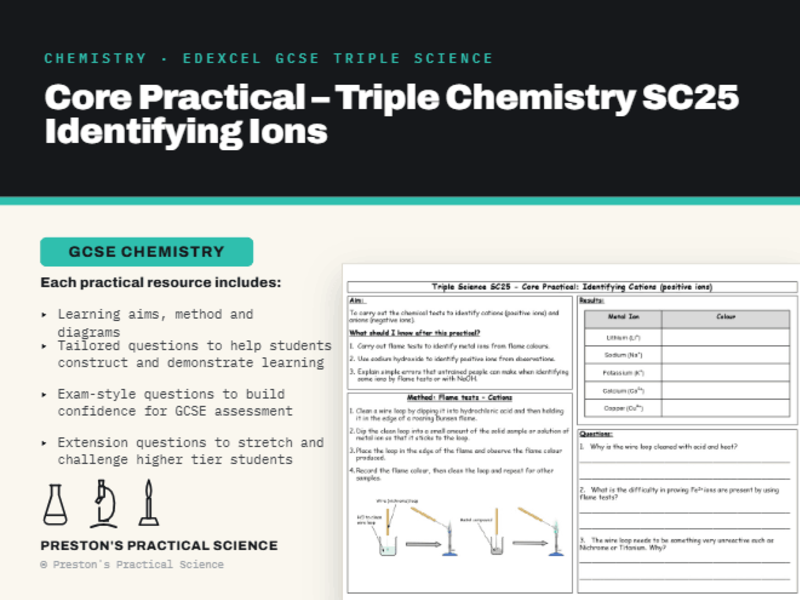
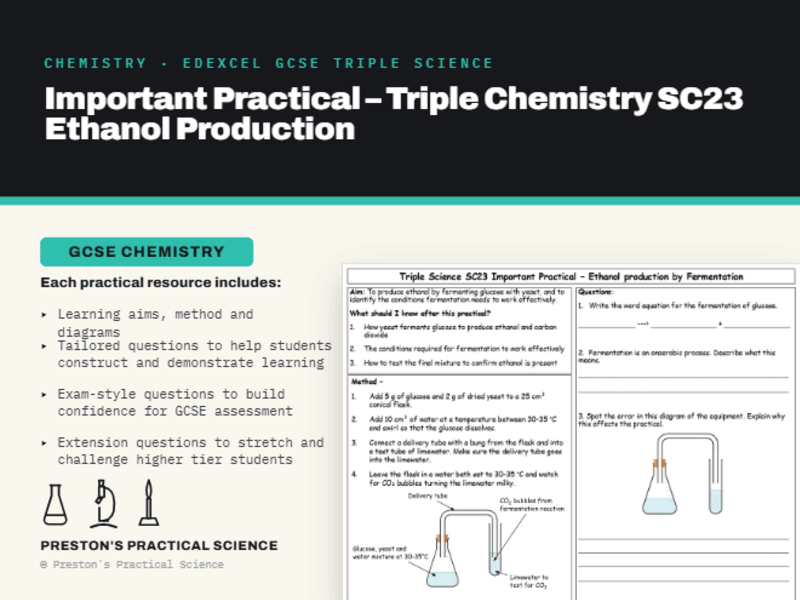
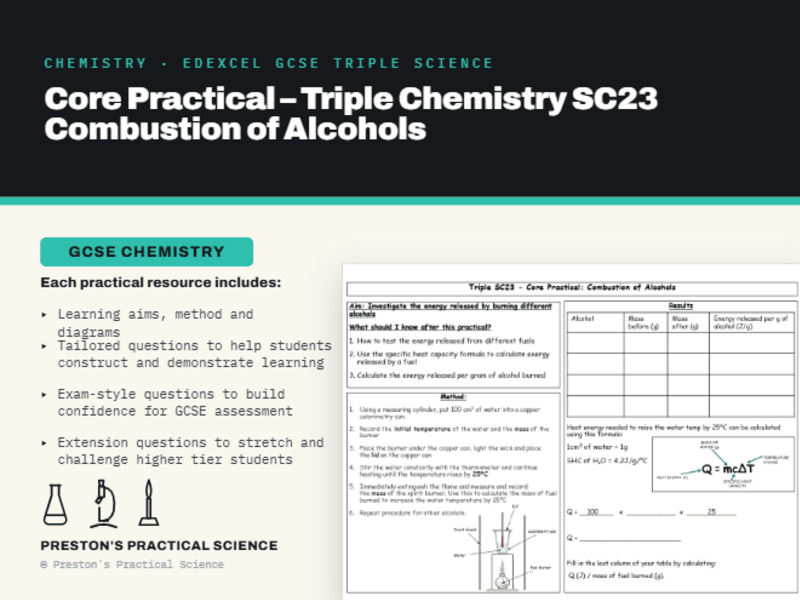
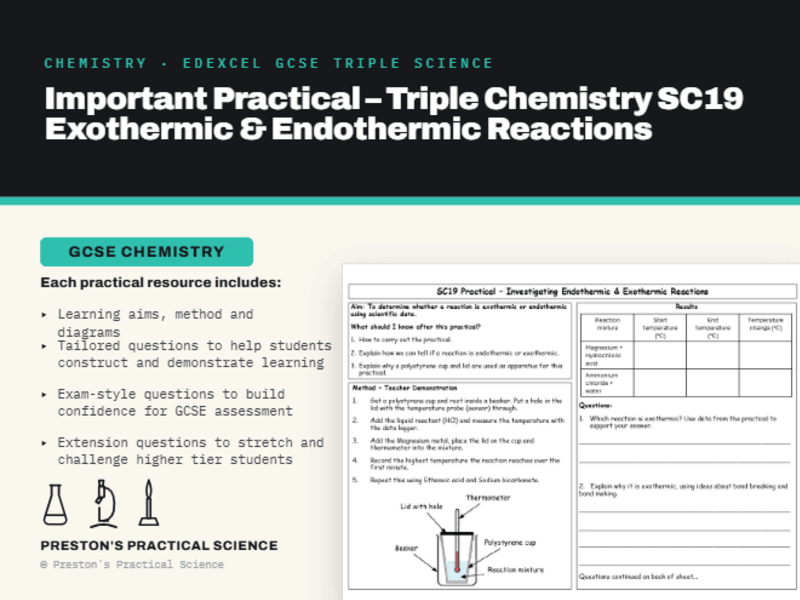
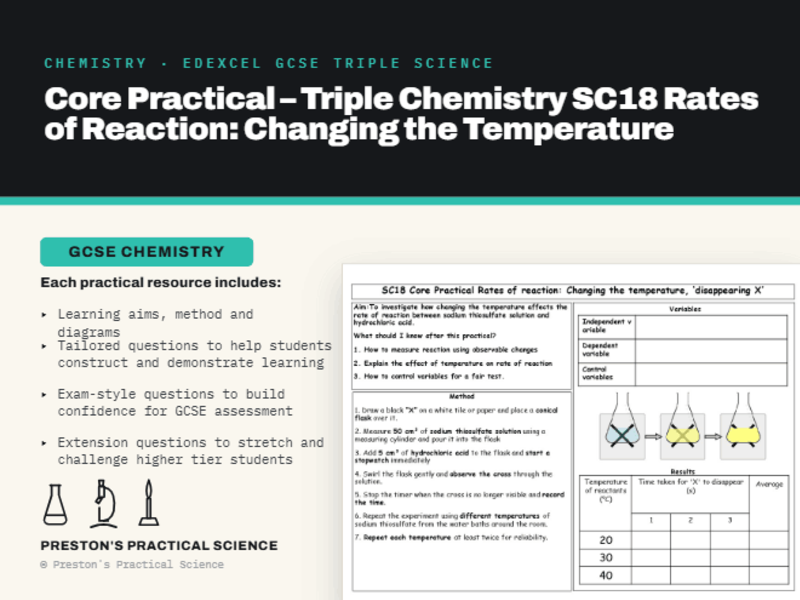
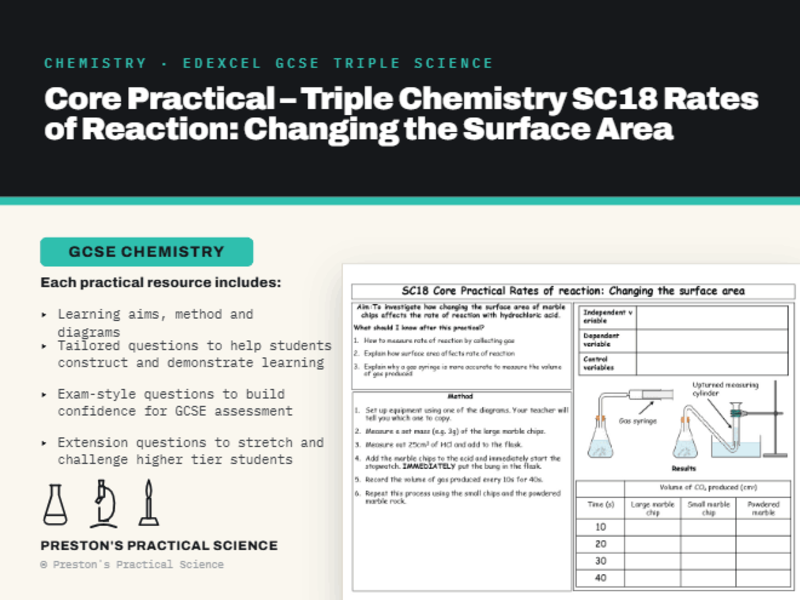
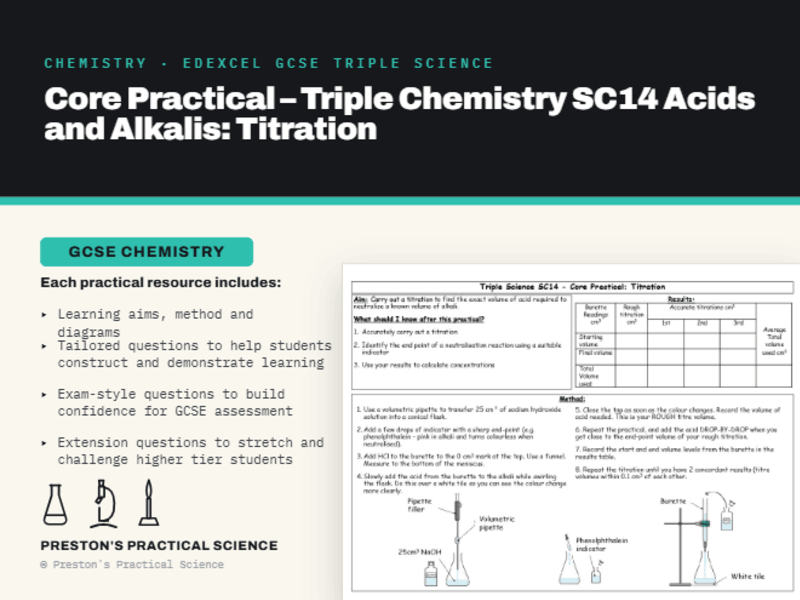
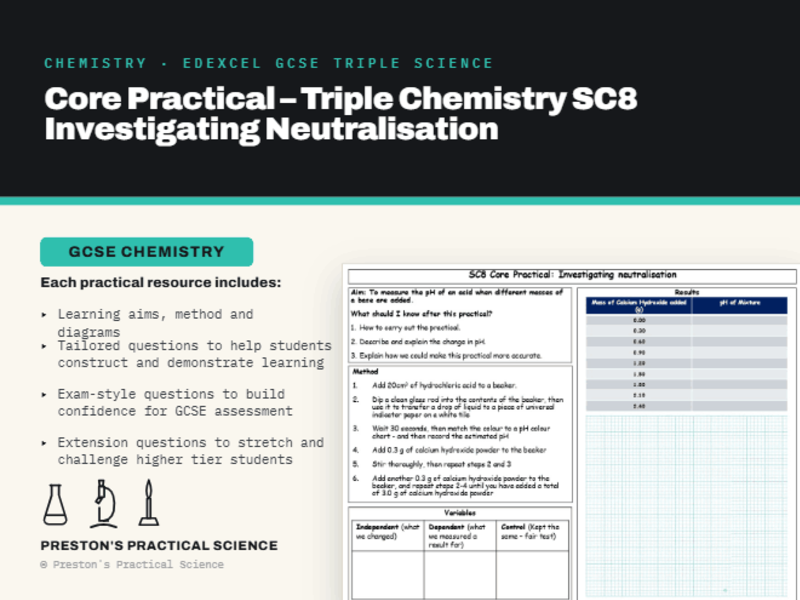
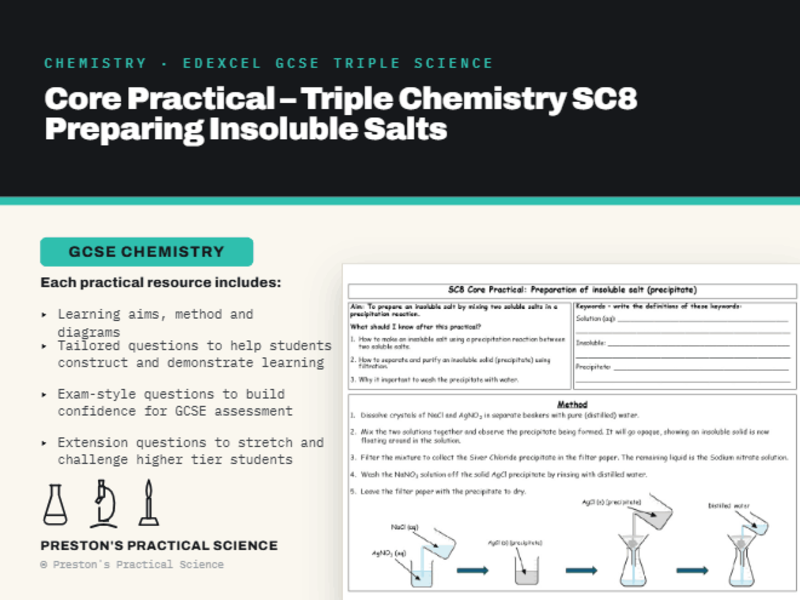
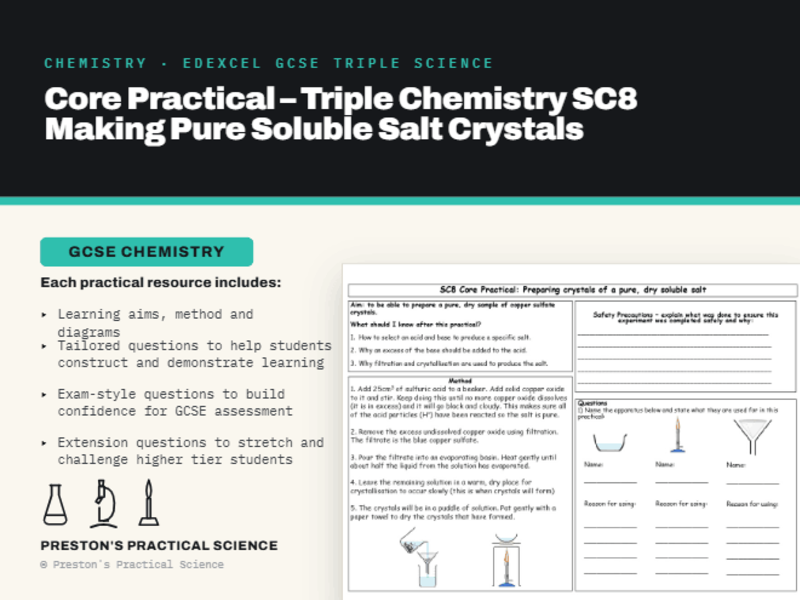
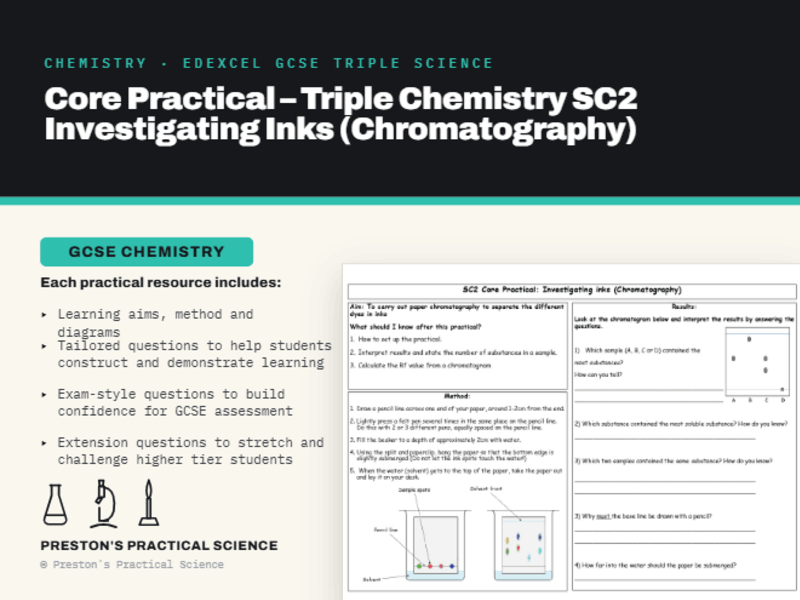
A ready-to-use bundle of 14 GCSE Chemistry practical worksheets for Edexcel separate (triple) science, covering the chemistry core practicals plus three further required investigations, each with a full method, results table and exam-style questions.
Practicals included:
Every practical follows the same format: the aim and “what should I know after this practical?” objectives, a step-by-step method with labelled diagrams, a results table where relevant, space to identify the variables, and scaffolded exam-style questions, with extension tasks for higher attainers.
All fourteen are fully editable PowerPoints, so you can reword the questions, change the quantities to match the equipment in your prep room, or drop your own diagrams in.
How I use it: students complete the relevant sheet during each practical lesson and keep them as a revision record, which gives them something to revise from when practical questions come up in the exam. With the full method on the sheet, any non-specialist in the department can run the practical confidently.
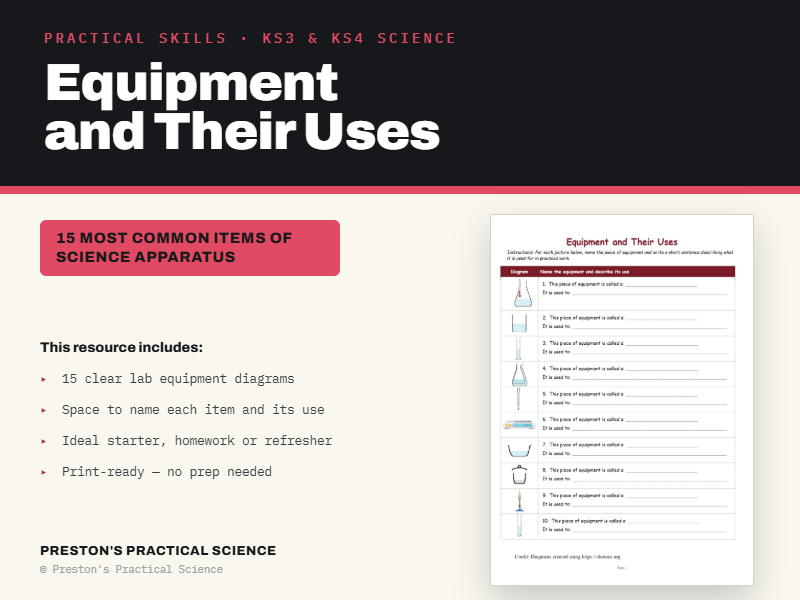
Also included is my “Equipment and Their Uses” worksheet — a two-page apparatus-naming activity that works as a settler before the first practical of the year, and again as revision before mocks, end-of-term assessments and exams.
I refer to this in all practical lessons, and as revision before mocks, end-of-term assessments and exams — apparatus names come up in practical exam questions across KS3 and KS4, and students lose easy marks on them.
Bought separately these fifteen cost £36.00. Teaching combined science instead? The matching 10-practical bundle with CC codes is here: https://www.tes.com/teaching-resource/gcse-chemistry-core-practicals-edexcel-bundle-10-worksheets-13537762
The layout matches my KS3 Science Practical Skills bundle (https://www.tes.com/teaching-resource/resource-13516197), so students arriving from Year 9 already know how the sheets work.
Last updated August 2026.
Credit: Diagrams created using Chemix.
Something went wrong, please try again later.
This resource hasn't been reviewed yet
To ensure quality for our reviews, only customers who have purchased this resource can review it
Report this resourceto let us know if it violates our terms and conditions.
Our customer service team will review your report and will be in touch.