


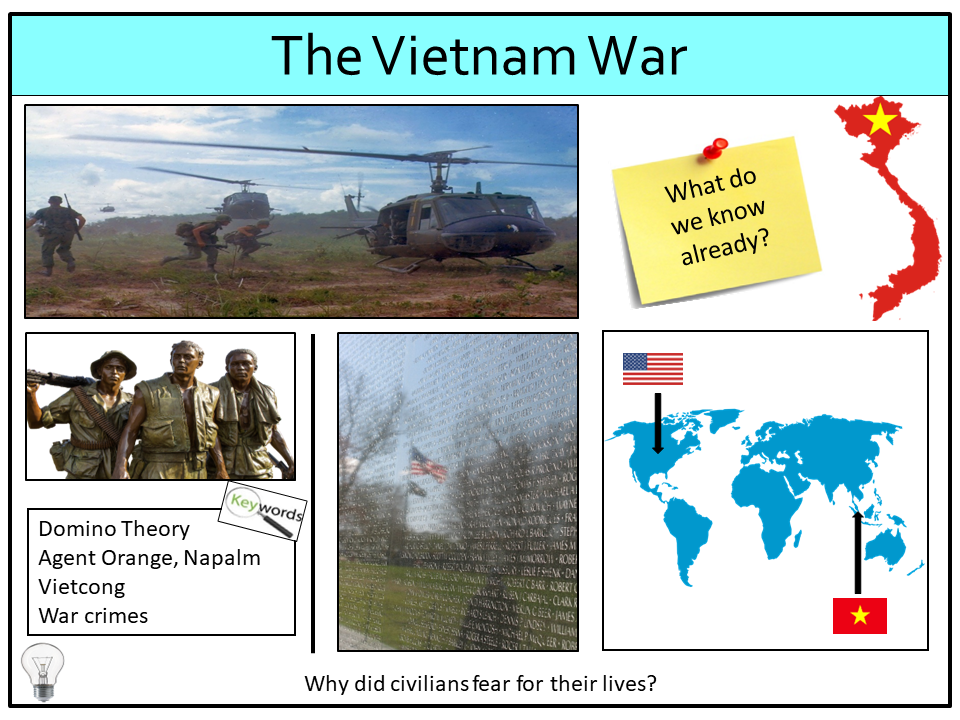
Why did the United States fail to win the Vietnam War despite overwhelming military superiority, control of the air and sea, and access to some of the most advanced weaponry in the world?
This lesson examines one of the most controversial conflicts of the twentieth century, exploring the Vietnam War from its disputed origins through to its devastating consequences for both soldiers and civilians.
Students investigate the causes of American involvement, the tactics employed by both sides, the atrocities committed during the conflict, and the growing opposition to the war both in Vietnam and at home in the United States.
The lesson begins with an analysis of Paul Hardcastle’s 19, encouraging students to consider why the song was written and what it reveals about public attitudes towards the war.
Students then examine the iconic photograph of Kim Phúc before investigating the events surrounding the Gulf of Tonkin Resolution and debating the legitimacy of American intervention.
Through a variety of differentiated activities and printable worksheets, students explore and compare American and Vietcong military tactics, assessing the strengths and weaknesses of each approach. They investigate the realities of guerrilla warfare, the effectiveness of the Vietcong tunnel networks, the impact of search-and-destroy missions, and the significance of the My Lai Massacre. Students also examine the use of Napalm and Agent Orange and evaluate their devastating effects on the civilian population of Vietnam.
As the lesson progresses, students are encouraged to analyse, evaluate and reach substantiated judgements about the key reasons for Vietcong success and American failure. They will also consider the wider significance of the Vietnam War within the context of the Cold War and its impact on international relations.
This lesson forms part of a wider enquiry into the question: Why did civilians fear for their lives during the Cold War? Throughout the unit, students build and revisit a thematic mind map, adding new knowledge and ideas after each lesson. This approach allows students to track their learning over time, make meaningful connections between different Cold War events, and develop a deeper understanding of how people and governments responded to living in a world overshadowed by conflict and nuclear tension.
Included in this lesson:
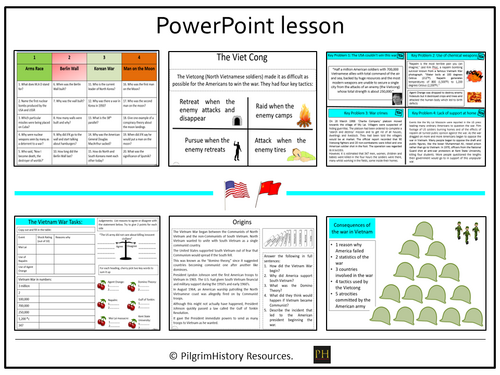
Fully editable PowerPoint
Investigation into the Gulf of Tonkin Resolution
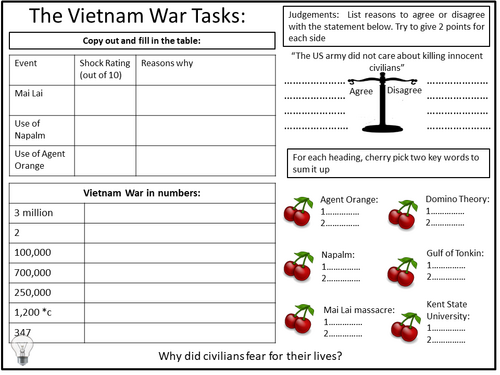
Differentiated activities and printable worksheets
Comparison of American and Vietcong tactics
Investigation of the My Lai Massacre
Analysis of Napalm and Agent Orange
Prioritisation and judgement activities
Suggested teaching strategies and guidance
Fully differentiated throughout
Please leave a review if you find this resource useful. Your feedback is always appreciated.
Something went wrong, please try again later.
Amazing resources as always. Informative and clear to follow with great lesson activities that stretch and engage students in equal measure. Amazing history lessons!
Superb resources
Report this resourceto let us know if it violates our terms and conditions.
Our customer service team will review your report and will be in touch.
£3.50