


A complete Year 6 computing lesson and resource pack in which pupils use their understanding of how computers have developed to design a realistic computer of the future.
Pupils begin by considering which developments — from Colossus and early electronic computers to smartphones, tablets and wearable technology — have had the greatest influence on modern computing. They then revisit key computer components including CPU, RAM, ROM and storage, before exploring the input → process → output model.
The lesson compares computers of the past with those of today, encouraging pupils to identify trends such as devices becoming smaller, more portable, more powerful, more connected and increasingly responsive to their surroundings. Pupils use these patterns to make reasoned predictions rather than simply inventing impossible technology.
For the main task, pupils create and annotate their own future computer. Their design must include a clear purpose, at least two inputs, two outputs, CPU, RAM, storage and a power source. A completed model demonstrates the expected standard.
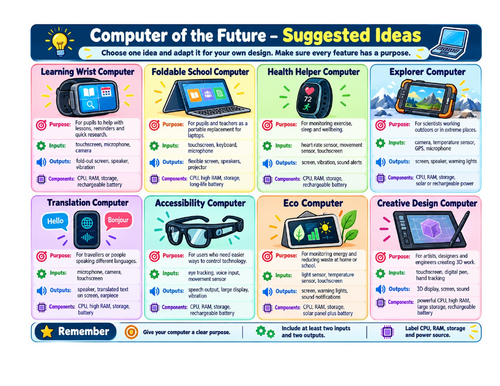
Also included is a colourful Computer of the Future ideas mat, featuring eight possible starting points such as a learning wrist computer, accessibility computer, translation computer, health helper and eco computer. Each example identifies its purpose, inputs, outputs and components, making it especially useful for pupils who need additional scaffolding.
Ideal for Year 6 computing, computer systems, hardware, input/output, computing history, technology design and end-of-unit assessment.
Something went wrong, please try again later.
This resource hasn't been reviewed yet
To ensure quality for our reviews, only customers who have purchased this resource can review it
Report this resourceto let us know if it violates our terms and conditions.
Our customer service team will review your report and will be in touch.
£2.50