


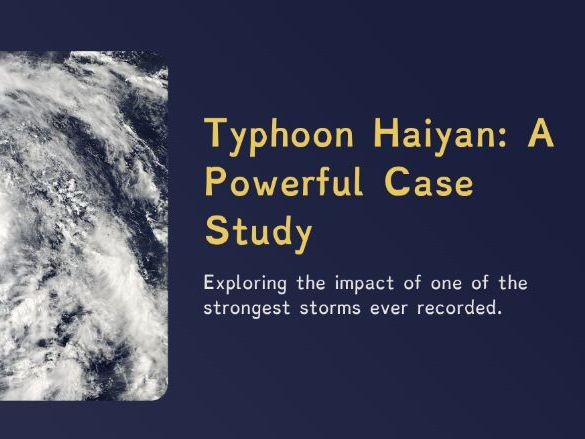
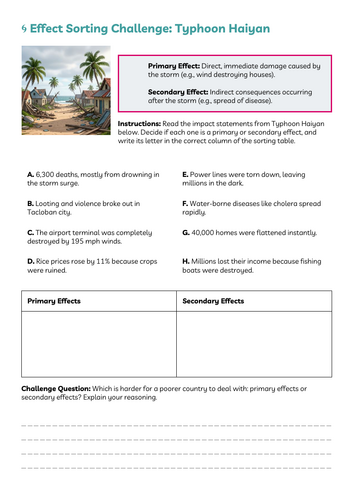
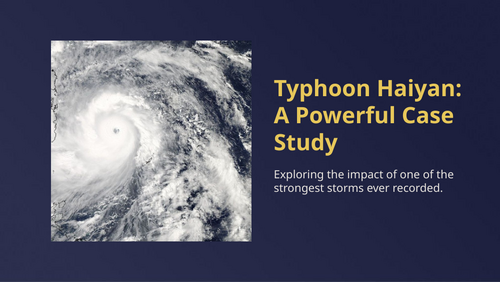
This lesson helps pupils connect their understanding of tropical storm formation with a real‑world case study: Typhoon Haiyan. Students recap how tropical storms form and how we measure them, investigate the path and power of Haiyan, distinguish between primary and secondary effects, and evaluate the responses to the disaster. Through maps, data interpretation and structured analysis, pupils build strong geographical understanding of how extreme weather affects people, places and economies.
Lesson Objectives
Recap how tropical storms form and how we measure them by revisiting the “recipe” for storms and the Saffir–Simpson scale.
Investigate the path and power of Typhoon Haiyan using storm‑track maps and wind‑speed data.
Distinguish between primary and secondary effects by categorising social, economic and environmental impacts.
Evaluate the responses to the disaster through analysis of immediate aid, long‑term recovery and the effectiveness of international support.
This lesson is data‑rich, case‑study focused, and perfect for developing evaluative writing, helping pupils understand how extreme weather becomes a humanitarian crisis.
Something went wrong, please try again later.
This resource hasn't been reviewed yet
To ensure quality for our reviews, only customers who have purchased this resource can review it
Report this resourceto let us know if it violates our terms and conditions.
Our customer service team will review your report and will be in touch.
£2.00