


This lesson introduces pupils to the science behind wind formation and global air movement. Students learn how air pressure creates wind, understand the mechanics of convection currents, identify the three cells in the Global Atmospheric Circulation model, and use the Beaufort scale and weather instruments to measure wind. Through diagrams, modelling and map‑based tasks, pupils build strong foundational knowledge of how the atmosphere moves and why wind varies across the world.
Lesson Objectives
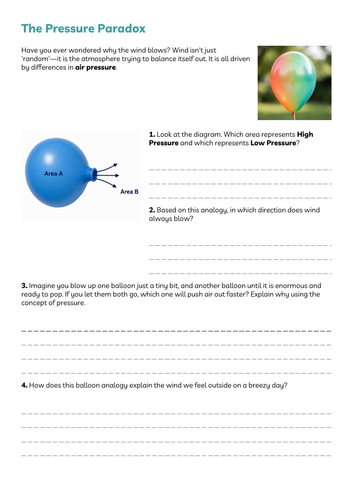
Explain how air pressure creates wind by understanding how air moves from high to low pressure.
Understand the mechanics of convection currents by exploring how warm air rises and cool air sinks.
Identify the three cells in the Global Atmospheric Circulation model (Hadley, Ferrel and Polar) using annotated diagrams.
Use the Beaufort scale and instruments to measure wind by interpreting wind speeds and practising simple fieldwork skills.
This lesson is visual, hands‑on, and perfect for building core weather knowledge, helping pupils understand how the atmosphere moves and why wind patterns shape global climate.
Some visuals in this resource were made with AI to help bring ideas to life and support student understanding.
Something went wrong, please try again later.
This resource hasn't been reviewed yet
To ensure quality for our reviews, only customers who have purchased this resource can review it
Report this resourceto let us know if it violates our terms and conditions.
Our customer service team will review your report and will be in touch.
£2.00