KS3 Small Basic – Complete 7 Lesson Programming Scheme + Bonus Game Project (Dyslexia-Friendly PowerPoints & Worksheets)
Resource Bundle


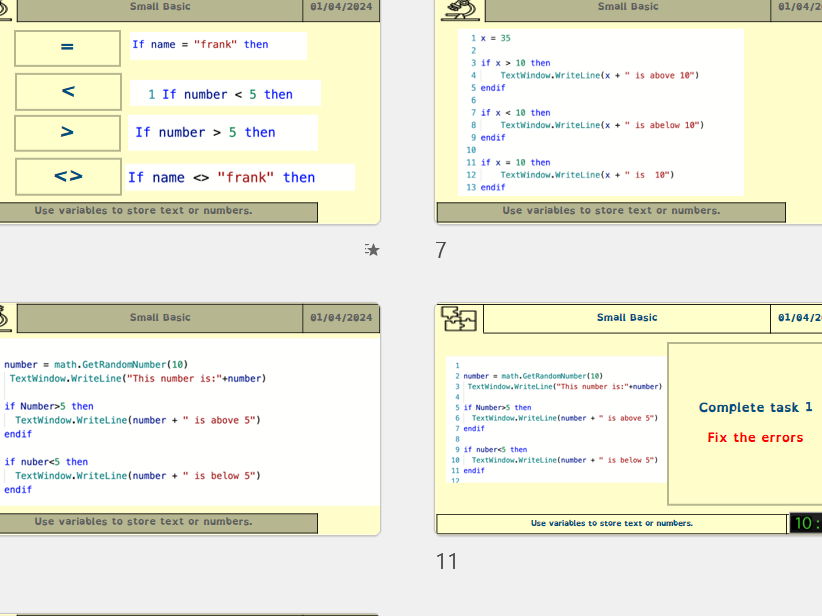

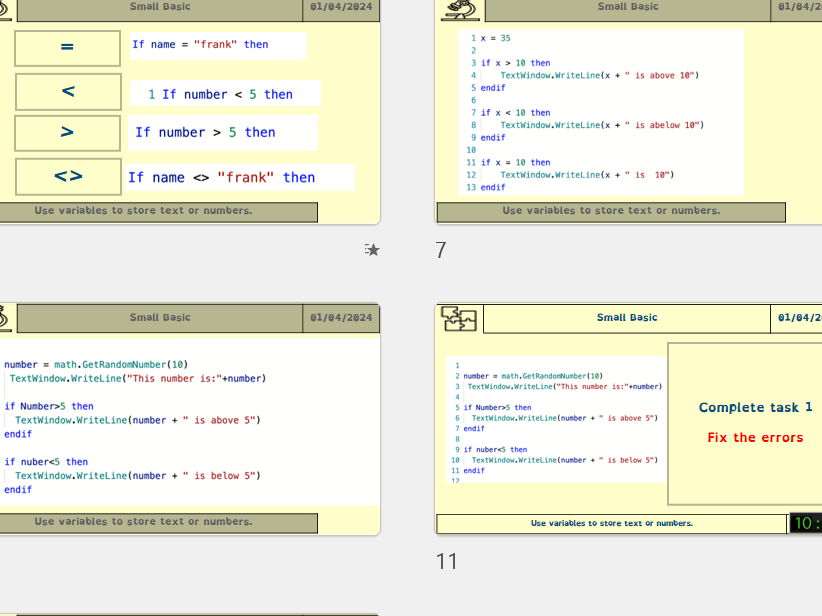
KS3 Programming Scheme – Microsoft Small Basic (7 Lessons + BONUS Game Project) (2026 Updated) | FREE Online Compiler | Dyslexia-Friendly
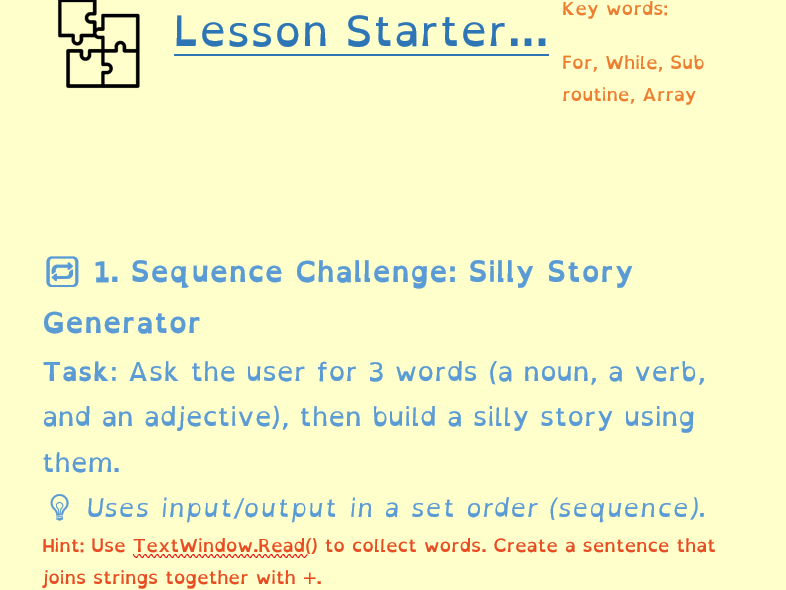
A complete, fully resourced 7-lesson KS3 programming scheme using Microsoft Small Basic and the FREE online editor — now upgraded with a BONUS Rock–Paper–Scissors game project.
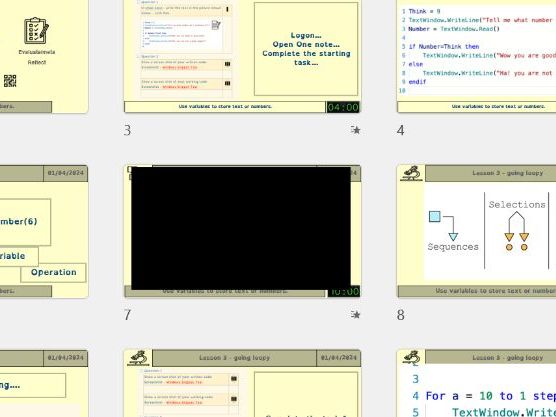
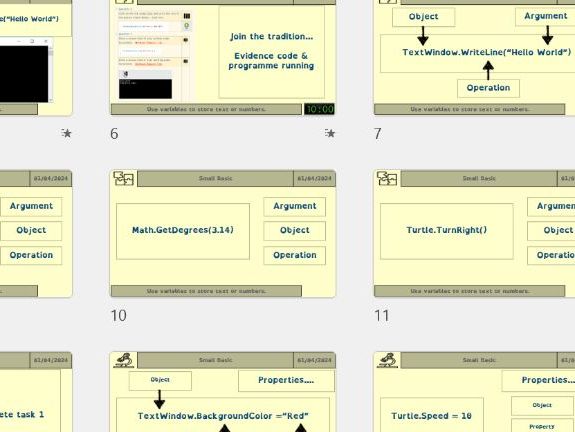
Every lesson includes a dyslexia-friendly PowerPoint, differentiated worksheets, model solutions, scaffolding and screenshot-evidence sections for assessment. Ideal for specialists and non-specialists. Zero installation required — perfect for ICT suites, laptops and Chromebooks.
===========================================Lesson 1 – Starting Small Basic (Objects, Operations & Properties)
Students run their first program and explore how operations and properties change output.
Lesson 2 – Variables, Concatenation & Calculations
Students define variables, perform arithmetic and calculate areas of shapes using formulas.
Lesson 3 – IF, ELSE & Nested Conditions
Learners debug logic, build branching programs and create interactive joke generators.
Lesson 4 – FOR Loops, WHILE Loops & Randomness
Students master iteration, countdowns, loop conditions and random number operations.
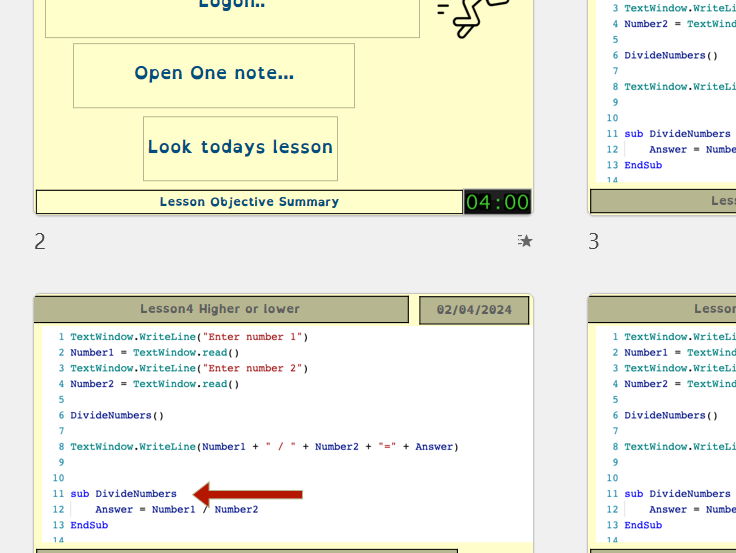
Lesson 5 – Subroutines & Calculator Builder
Students create Sub…EndSub procedures and develop a fully working calculator application.
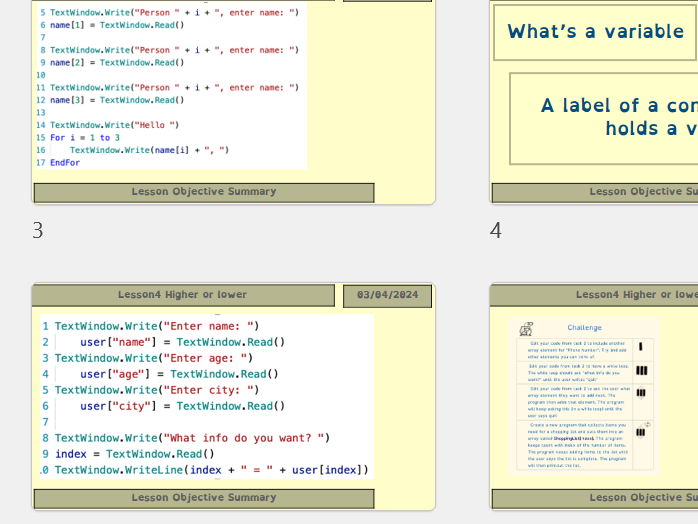
Lesson 6 – Arrays & Lists
Learners build mini-databases using arrays and create a functional shopping list program.
Lesson 7 – Full Revision Challenge
Six structured programming challenges revisiting sequence, selection, iteration, subroutines, arrays and randomness.
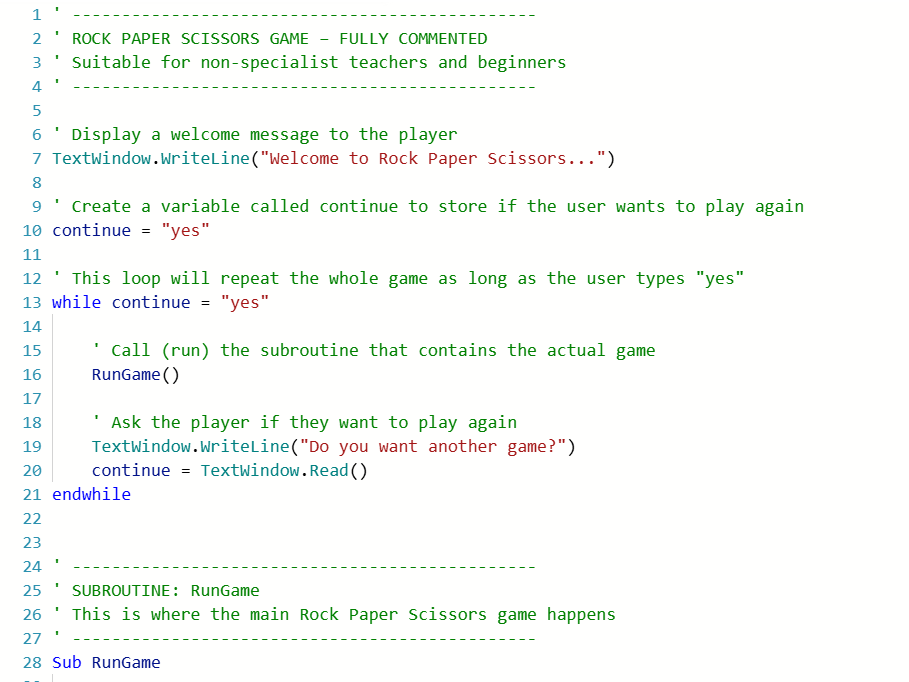
A creative final project where students build a complete Rock–Paper–Scissors game using:
• Random number generation
• IF / ELSEIF selection logic
• User input
• Validation and replay structure
Students will:
Perfect as a capstone project, assessment task or end-of-unit celebration lesson.
===========================================• Uses the FREE online Small Basic editor (no installs required)
• Dyslexia-friendly design throughout (accessible fonts, calm backgrounds, low clutter)
• Differentiated challenges in every lesson
• Screenshot-evidence tasks for easy assessment
• Covers all KS3 programming fundamentals:
This is a complete half-term programming scheme with no installation issues, clear step-by-step explanations and built-in assessment opportunities.
Teachers value the clarity and structure. Students enjoy the creativity, game-building and challenge tasks.
Excellent preparation for Python at KS3 or GCSE Computer Science.
Something went wrong, please try again later.
This resource hasn't been reviewed yet
To ensure quality for our reviews, only customers who have purchased this resource can review it
Report this resourceto let us know if it violates our terms and conditions.
Our customer service team will review your report and will be in touch.