


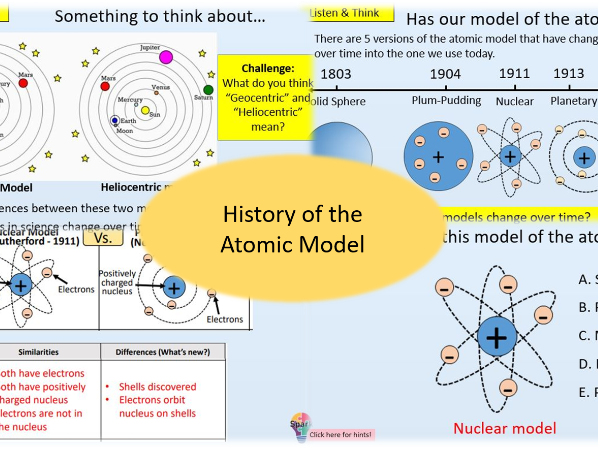
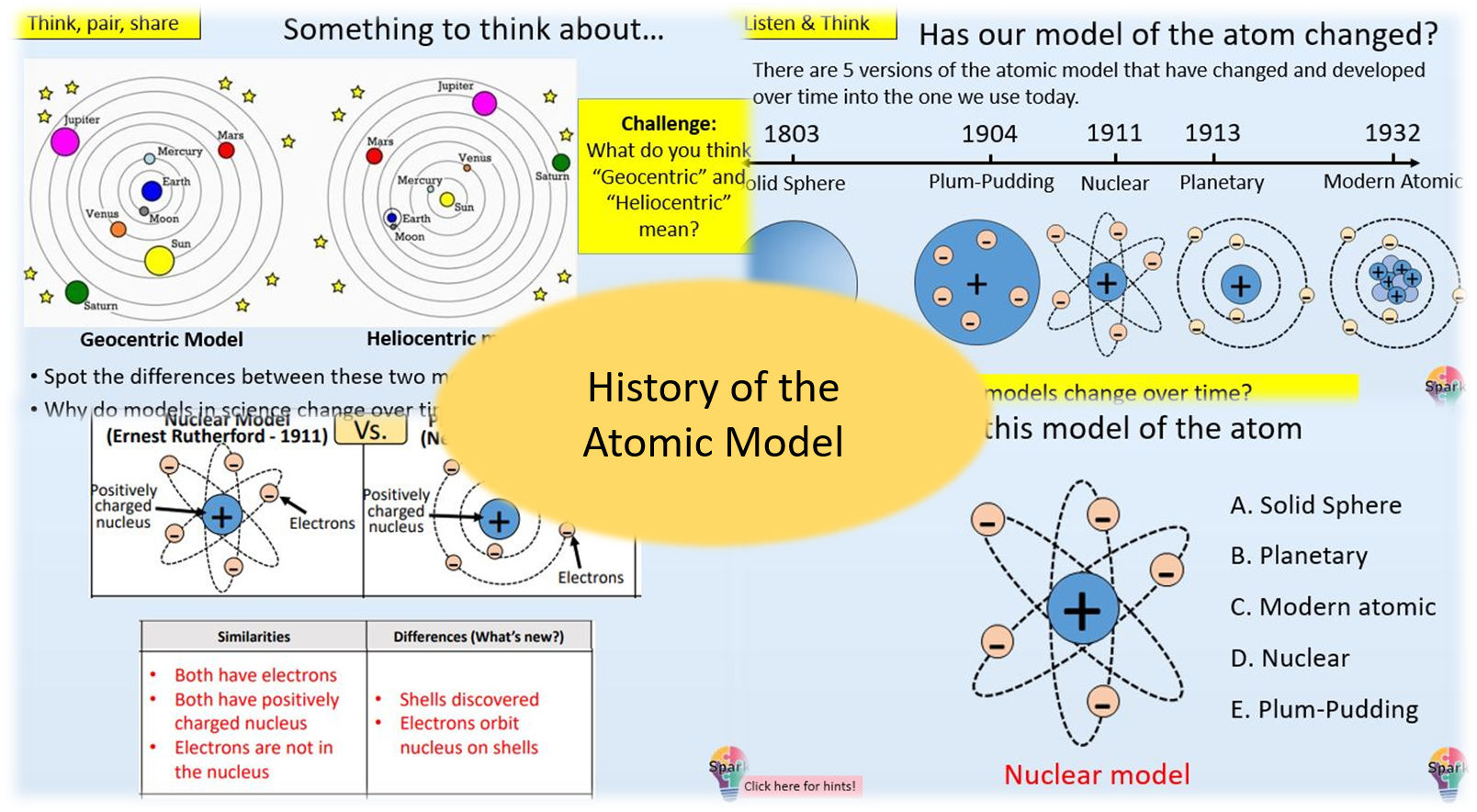
In this lesson students will discover how the model of the atom has changed over time, through its various versions until we reached the modern atomic model we use today.
Students will learn about the various discoveries that took place and which scientists were associated with them. They will also practicing comparing and contrasting scientific models.
Note: This lesson does not cover the alpha particle scattering experiment and how its results led to the development of the nuclear model by Rutherford. This is covered in the “Alpha Particle Scattering Experiment” lesson.
This lesson is the tenth lesson in the “Atomic Structure” topic. This topic is designed to act as a “bridging topic” between KS3 and KS4 chemistry.
Lesson objectives:
- Identify and name the different historical models of the atom
- State the major discoveries about the structure of the atom and the scientists associated with them
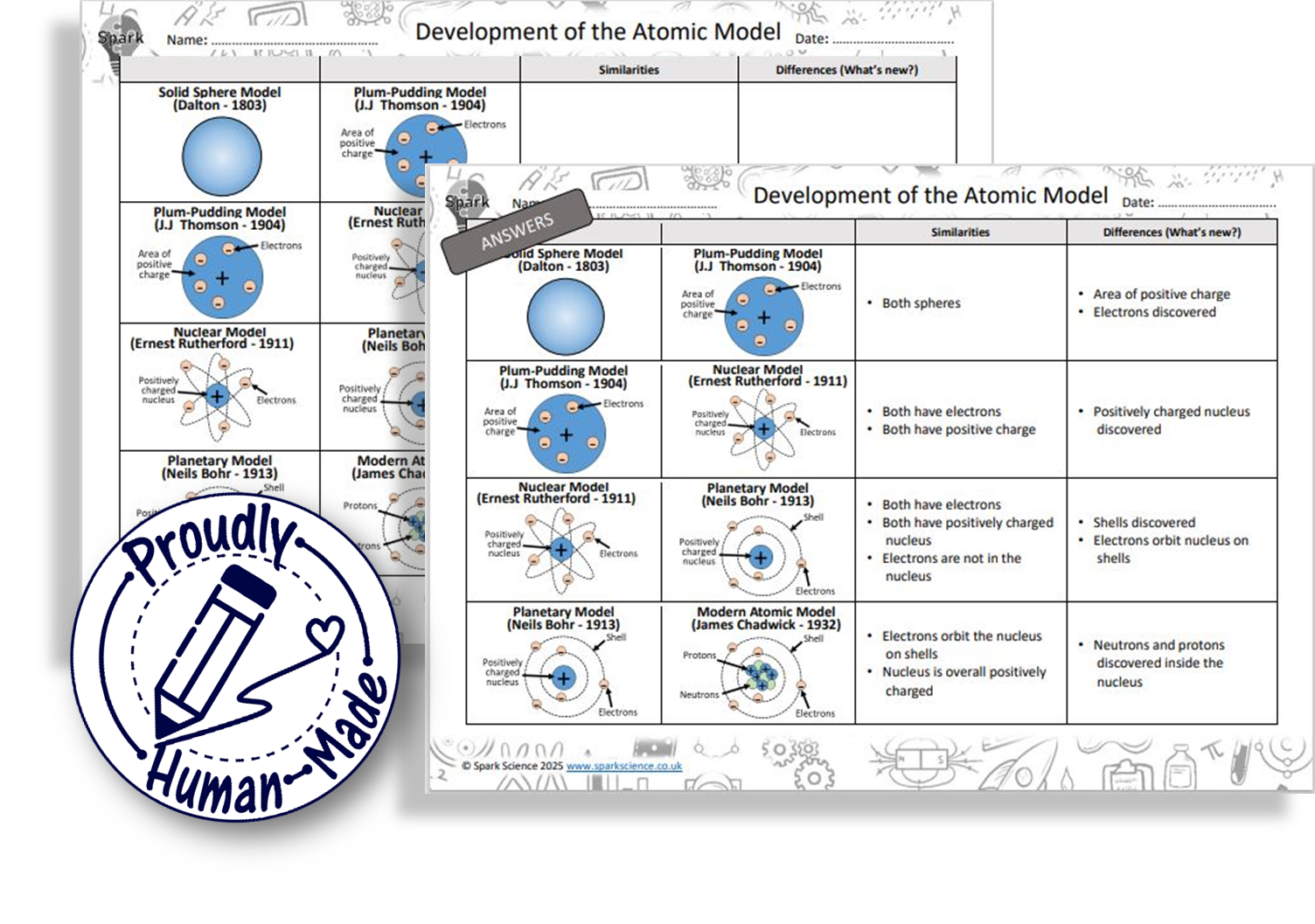
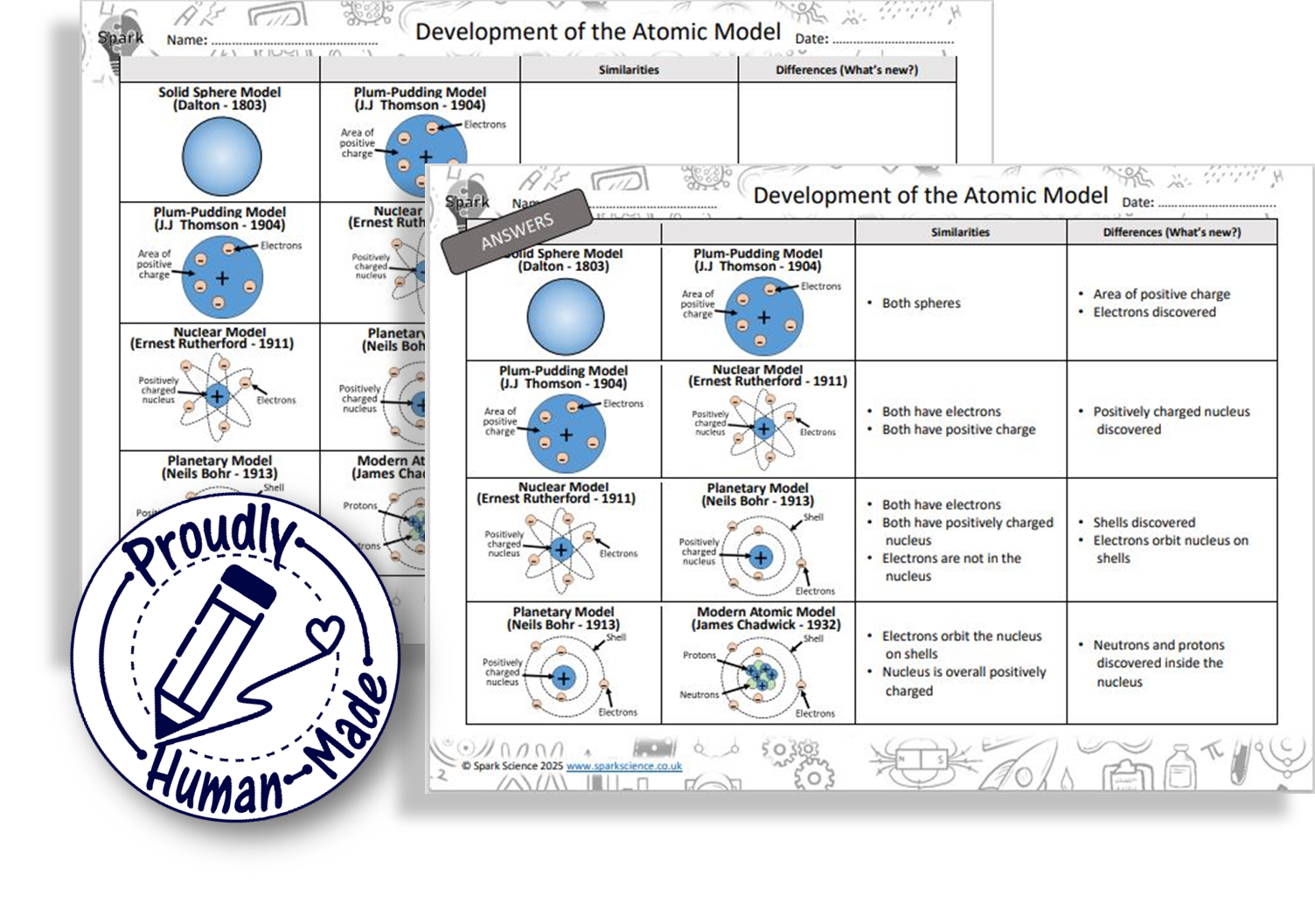
- Compare and contrast features of different models of the atom
Resource contains:
- Lesson Powerpoint (pptx.)
- Student Worksheet (PDF)
- Student Worksheet Answers (PDF)
Lesson contains:
- Interactive powerpoint including teacher delivery notes and answers throughout
- AFL activities
- Plenary quiz
- Stretch and challenge tasks throughout
- Student-led discovery task
Something went wrong, please try again later.
This resource hasn't been reviewed yet
To ensure quality for our reviews, only customers who have purchased this resource can review it
Report this resourceto let us know if it violates our terms and conditions.
Our customer service team will review your report and will be in touch.
£2.49