Data collection and types of dataQuick View
McArdleTeaching

Data collection and types of data

(0)
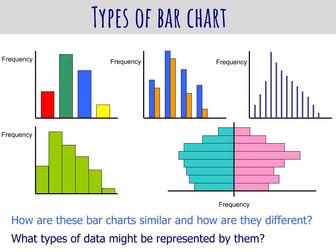
A unit of work to introduce types of data and to discuss different ways of collecting data. The zip file contains: A PowerPoint (pptx) slide on two-way tables used as a lesson starter. A PowerPoint (pptx) presentation that asks questions about types of data (primary/secondary, qualitative/quantitative) and data collection techniques including types of sampling. It also briefly looks at how different types of data can be represented in bar charts, frequency diagrams and histograms. A worksheet (pdf/docx) on collecting data where students match types of data to keywords such as primary, secondary, qualitative, quantitative, discrete and continuous. A Match-up activity (pdf/docx) on sampling methods, where students match the method with its description and some advantages and disadvantages of the technique. Includes an answer sheet. A worksheet (pdf/docx) about surveys showing 7 different survey questions. Students are asked for one criticism of each question and to rewrite it in a more suitable form. A worksheet (pdf/docx) about representing data containing 5 questions. Each question has a table containing data and students are asked to draw 2 bar charts, a pie chart, a line graph and a scatter graph. This is a good revision exercise to remind students of the variety of graphs they already know how to draw.
Class Survey Template for Students Collecting DataQuick View
myeducationalhotspot

Class Survey Template for Students Collecting Data

(0)
Check out this simple and organized template for students to collect class data with. Beginning at the top, students will identify the question they are asking. The middle section then allows for tallying based on as many categories/answers they want to list on the left. Student will then draw a conclusion based on their data set and formulate a sentence at the bottom. A sample is provided for your convenience. Have fun!
T-Level Health - Core Unit A5/A6 - Data Collection & Client HistoryQuick View
HSC_TeachingResources

T-Level Health - Core Unit A5/A6 - Data Collection & Client History

(0)
T-Level Health Core Components for units A5 and A6. The resource includes a full lesson (2hours - split into 2 one hour slots) of instruction and activities; including starters, session formative assessment activities and end of session exit tickets. The lesson covers the following: A5: Managing information and data within the health and science sector Students will examine: A5.1 - A range of methods used to collect data. A6: Managing personal information Students will examine: A6.2 Why personal information is collected, stored and protected A6.3 The types of information needed when obtaining a client history All resources are fully editable to adjust as you wish. Please remember to leave your feedback.
River Fieldwork - Data Collection MethodsQuick View
Alic3B

River Fieldwork - Data Collection Methods

(0)
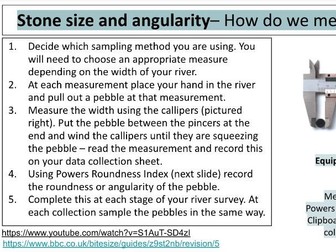
This resource is a set of slides which detail the various types of river data collection methods that students may use on a school field trip. It is purely information, rather than tasks. Includes Youtube videos and images/diagrams. Can be used for IGCSE/GCSE or KS3.
Data & Averages from Frequency TablesQuick View
daniince

Data & Averages from Frequency Tables

(0)
Suitable for a variety of sets due to in depth examples and understanding. Lesson begins with understanding the frequency and totals for the mean calculations before introducing averages. Tasks use the same frequency tables so students are not wasting time copying all the time and develop knowledge from the same frequency tables and data. Begins with frequency and multiplying. Develops to mode and range. Moves to median and mean. Problem solving with missing frequencies.
Introduction to primary and secondary data and data collectionQuick View
Jesta123

Introduction to primary and secondary data and data collection

(1)
This lesson gives an intro to primary and secondary data collection. I use this with my Y7 low ability students. It involves taking them to collect car colour data from the staff car park!! We then use a secondary sources to collect car colour data and compare the two. This can also lead on to the analysis and presentation of the data. I have sued it as a data source for bar charts, dual bar charts and also pictograms. It is also an opportunity for the students to discuss and make their own hypotheses.
Data Collection: A beginner's activity to collecting data and handling itQuick View
pearp

Data Collection: A beginner's activity to collecting data and handling it

(0)
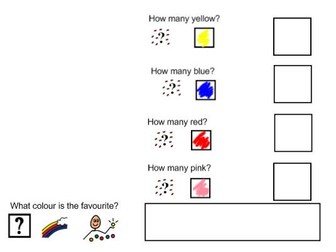
Collecting data: Building the skills to collect data and then handling it. First you need to be able to match items, then record what is selected using a picture graph and lastly reading the data. This resource has data collection using colours, favourite biscuits and music. It was designed for using with students with special needs and would be useful with young students. The symbol boards can be used to carry out a survey and then there is a grid and cards to record the answers.
Fieldwork; coast fieldwork data collection sheetsQuick View
ReallyGoodGeography

Fieldwork; coast fieldwork data collection sheets

(0)
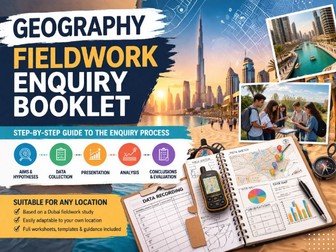
This resource includes a wide of data collection sheets which could be used with KS3 to A Level including beach profile, cost of coastal defences, evaluation of the effectiveness of defences, field sketching, groyne height measurements, wave information. They can easily be adapted to any location you are studying and incorporated into your own fieldwork booklet.
OCR AAQ in Applied Science: 2.2 Collecting scientific dataQuick View
srshaw89

OCR AAQ in Applied Science: 2.2 Collecting scientific data

(0)
Course: OCR Level 3 Alternative Academic Qualification Cambridge Advanced Nationals in Applied Science. Unit F181: Science in society Topic Area 2: Handling scientific data This PowerPoint is a whole lessons included with student activities and animated answers. Methods of collecting data with their advantages and disadvantages. Observation and measurement from experiments Surveys Cohort studies Meta-studies Computer modelling Sampling techniques Random sampling Systematic sampling Using estimates Bias and diversity in science
Venn Diagram Data CollectionQuick View
mabooth

Venn Diagram Data Collection

(0)
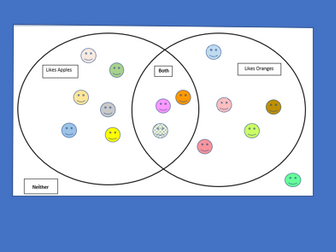
6 Data collection sheets that can be used in a variety of ways, I prefer to use one question to demonstrate the use of the Venn diagram then spread 4 around the classroom and have students move to each one recording names in the correct sections. You may have an outdoor painted diagram where students can stand in the appropriate positions or be able to create a diagram with rope loops, however the full activity can be completed from students responding with raised hands. A blank data collection sheet is included for you to choose a question/s particularly suited to your location or student group, also a student worksheet for individuals to record results and a copy of the picture to aid your initial description.
Data Collection ActivityQuick View
lmtteacher

Data Collection Activity

(0)
Stage 2 Mathematics Year 4 Data Collection Scaffold Worksheet / Activity 4 Mathematics Australian & New South Wales Curriculum Syllabus content focus: • MA2-18SP selects appropriate methods to collect data, and constructs, compares, interprets and evaluates data displays, including tables, picture graphs and column graphs • MA2-19SP describes and compares chance events in social and experimental contexts Editable Word version. Purchase separately or as part of a bundle from Mathematics Program
Secondary data collection and analysisQuick View
galkin_pavel07

Secondary data collection and analysis

(0)
Secondary data collection and analysis is one of the lecture which is cowered during marketing research module. The agenda for this lecture is: •Define the nature and scope of secondary data and distinguish secondary data from primary data; •Analyze the advantages and disadvantages of secondary data and their uses in the various steps of the marketing research process; •Describe in detail the different sources of secondary data, focusing upon external sources in the form of published materials and syndicated services; •Explain the need to use multiple sources of secondary data; •Understand the challenges of using secondary data in international marketing research; •Describe the nature and purpose of researchers utilizing internal sources of secondary data; •Understand how web analytics can capture and model customer data and thus support marketing. In the attached file, you will find: • 1 Secondary data collection and analysis lecture power point presentation • 1 Tutorial Plan with several activities This lecture is covered by bachelor students. Once purchased please leave comment.
Handling Data CollectionQuick View
Edustem1

Handling Data Collection

5 Resources
Fully detailed, creative original lesson plans ensuring progressions and 5 lessons that covers the Handling Data section in Maths.
Environmental research and data collectionQuick View
huseinmubarak

Environmental research and data collection

(0)
Strictly follows the A-level Cambridge Environmental management new syllabus for examinations from 2022. A great resource for both teachers and students- a remedy since Cambridge has no resource yet for this syllabus. It is also useful for any environmental studies, Biology and even Geography at all levels. This resource covers- The scientific method Formulate hypotheses Characteristics of Hypothesis Design investigations in which variables are controlled and quantitative results are collected dependent and independent variable Interpret data to determine whether they support or refute the hypothesis being tested Explain how limitations in the measurement of data lead to uncertainty in the results understanding that a hypothesis that is consistently supported by investigation and observation can become a theory Environmental research in the context of climate change reliable and bias how historical data have developed how bias has led to the misuse of scientific data how unreliable data has led to false reporting of scientific conclusions Collection of environmental data Sampling strategies how random sampling and systematic sampling strategies aim to ensure samples are well distributed with a low risk of bias factors influencing the suitability of random sampling or systematic sampling strategies for different studies techniques used to collect sample data Quadrats (open frame Grid and point) Pitfall traps Sweep nets Beating tray kick sampling Light traps Capture-mark-recapture water turbidity Questionnaires Interviews benefits and limitations of each sampling technique listed population size using the Lincoln index biodiversity using the Simpson’s index of diversity abundance using quadrat data The use of technology in data collection and analysis Remote sensing Radio tracking Computational Modeling What Is Crowdsourcing? ‘big data’ Big data challenges benefits and limitations of the analysis of big data
The Snowman - Data Collection!Quick View
ebernstein2

The Snowman - Data Collection!

(0)
Part of The Snowman pack, this graphing activity will get your students practicing asking questions, collecting data and graphing it in a fun and visual way. Have you ever built a snowman? Let’s find out! And don’t forget to leave a comment or a review, I would love to hear your feedback. Follow and tag us on Instagram with any resources of ours you’ve used—we’d love to see your classroom in action!