Knowledge organiser designed to be printed in A3, however smaller scales (A4) can be used. The resource is constructed to be used for class work, independent/group learning through the sign-pointed references to textbooks, revision guides and web sites. The page numbers stated in each box can be easily adjusted to other reading/research materials.
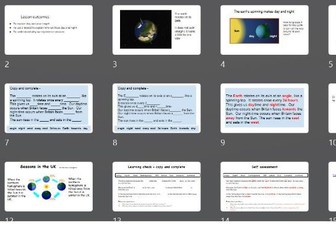
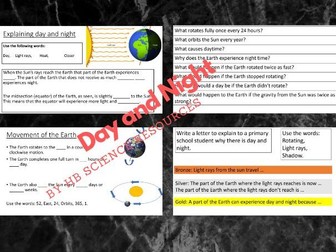
The scaffolded work starts with day and night, leap years, seasons, why summers are hotter than winter and ends with past paper questions.
Embedded QR codes take the student to appropriate revision sites (YouTube and BBC Bitesize).
Mark scheme is included for all answers.
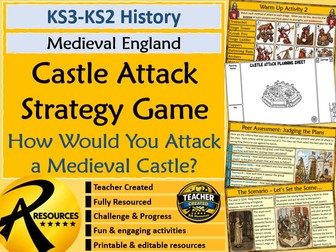
A fun addition to any unit about Medieval castles and from personal experience has been great for Year 6/7 subject transition days and school open evenings as well as for lessons covering Medieval England and the Norman Conquest.
Following a recap of Medieval weaponry, students work as a team or individually to plan either a castle siege or castle attack based on a list of costings.
This resource contains:
1 x Castle game costings list (PDF & PPT)
1 x Main Power Point which includes:
Slide 1: Title slide
Slide 2-3: Recap Activity covering the main weapons of castle attack such as trebuchet, siege ladders, archers etc.
Slide 4-5: Recap Activity 2 covering the images of castle attack weapons
Slide 6: Setting the scene for the castle attack to give the attack historical context.
Slide 7-10: A choice of three castle attack sheets each with a slightly different castle (stone keep, concentric and motte and bailey). These need to be printed out onto A3
Slide 11-12: Peer Assessment cards
Slide 13: Learning Review
Slide 14: More from RA Resources
All images used in this resource are in the public domain and are therefore copyright free. Images which require attribution have been attributed in the notes section of each slide where the image appears. Any images where AI technology has been used are labelled in the notes section and are property of RA Resources. Other than AI images, all other lesson content is teacher created. If you feel any errors have been made, please contact me at raschoolresources@gmail.com in the first instance to resolve any issues. My lessons are completed using PowerPoint and designed on widescreen formatting. Thank you.
This resource is for personal use only unless a school license is purchased and for copyright reasons any slides, worksheets, RA Resources maps or diagrams should not be copied/amended for commercial use.
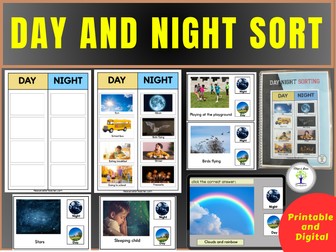
Cards provided in inprint for children to complete two seperate activites. Children can sort ;things they do in the day’ and ‘things they do at night’ as well as a daily routine activity,
Day and Night - Year 5
In this science teaching resource pupils discover why the Earth has day and night and why it appears that the Sun moves across the sky covering the curriculum objectives of the Year 5 science programme of study (Earth and space). Content includes:
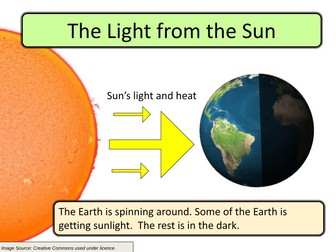
An explanation of the rotation of the Earth
An explanation of why the rotation of the Earth causes day and night
A suggested science activity to illustrate the causes of day and night
An explanation of how the rotation of the Earth causes the sun to appear to move across the sky with activity worksheet
A link to an explanatory video
Day and night quiz
1 worksheet
‘Day and Night - Year 5’ is completely editable so that teachers can adapt, alter and revise it as much or as little as required.
Not quite what you’re looking for? Click below for similar resources:
Planets on the Move
A bright and engaging cover design for a European Day of Languages Quiz, packed with vibrant colours and playful visuals. The image highlights the excitement of exploring languages and cultures across Europe, featuring bold lettering and a clear focus on 10 fun-filled rounds. Perfect for classrooms, events, or quiz nights, it sets a lively and welcoming tone for participants of all ages
Once pupils have grasped the idea of day and night being caused by the Earths rotation, build on it with this activity introducing and explaining the concept of a timezone.
Help young learners explore the difference between daytime and nighttime routines with this engaging Day and Night Sort activity. Created with visual supports and interactive elements, this resource is ideal for early years, students with autism, and any child who thrives on hands-on learning.
Through sorting, matching, and discussion, students will build an understanding of which activities or objects are typically associated with day or night. The resource includes both printable and digital options for flexible use in various settings.
By the end of the lesson learners should be able to:
Identify what causes day and night time.
Describe how the Earth moves:
Through rotating:
Around the Sun:
Explain the link between the rotation of the Earth and the effect on days.
Comprehension and additional task exercises pages 190 and 191 from Next Page Science KS3 Complete. Accompanying PowerPoint and word searches available for free from the website.
This exercise covers:
• What causes a day and a year: 24 hrs and 365.25 days
• A leap year
• Earth’s orbit having an elliptical shape
• Earth’s tilt as the cause of the seasons
• A pictorial illustrating summer (solstice), winter (solstice), spring (equinox) and autumn (equinox)
• An explanation explaining why light intensity changes from winter to summer using torches to represent how the same amount of light from the sun can be more or less intense
• Earth’s path across the sky (northern hemisphere)
• How earth’s spin causes the sun to rise in the east and set in the west
• An exercise on plotting the average hours of daylight for each month
• A matching the statements exercise
• An exercise on what it would be like in the summer (continual daylight) and winter (continual night time) at the north pole
• Amazing WHAT? facts
https://www.tes.com/teaching-resources/shop/DinosaurLaboratory
Be weird, be funny, be gross, have fun, play, stick to your routines and find that little spark of madness we all have and electrocute the class with it!
My style of teaching isn’t for everyone, I’m a dyslexic teacher who’s heard it all, my lessons are all catered towards accessibility (because if they were not I’d never be able to read them myself). Everything is short sharp and to the point, I don’t believe in endless writing, reams of printing, spoon feeding diagrams or pointless activities. Every minute matters!
Be sure to check out all my other resources, as a personal goal I intend to share all my resources at least once because hey, the government isn’t going to make it easier and we both know you are reading this way outside of your work hours.
Enjoy, comment or rate if you can, but most of all hang in there, they need you way more than you realise!
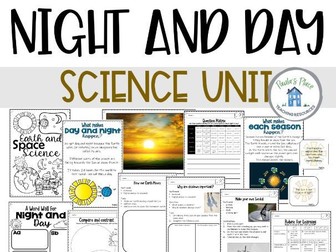
Day and Night Science Inquiry with Our Engaging Inquiry-Based Unit!
With explicit teacher notes, printable activities, and step-by-step inquiry guidance, this unit supports students as they observe, question, and explain the science behind day and night.
What’s Included in This Science Unit?
The Big So What? – Introduce the big ideas and why this topic matters
Key Understandings – Clearly outline learning intentions
Skill Development – Focus on science skills and critical thinking
Inquiry Questions – Spark curiosity and guide exploration
e5 Inquiry Model – Engage, Explore, Explain, Elaborate, Evaluate
Engage – What Is Day and Night?
Start strong by defining day and night and prompting discussion using real-life photos.
Complete a KWHL chart to track prior knowledge and generate wonderings
Build a themed word wall to boost vocabulary
Use the included rubric to make learning expectations visible
Add engaging A–Z Key activities into students’ STEAM books
Create personalised word lists for theme-based spelling and writing
Explore – Understanding Earth’s Axis
Now dig deeper into Earth’s movement and how it creates day and night:
Record differences with a Venn Diagram
Draw how the Earth spins and explain its motion
Investigate the role of shadows and why they change
Create and test a simple sundial to track time outdoors
Explain – Night, Day, and the Seasons
Encourage students to reflect on their learning so far:
Discuss discoveries from the Engage section
Share Night and Day and Seasons posters (colour and B&W)
Revisit and update their KWHL wonderings
Empower students to explain day and night and the reasons for the seasons in their own words
Elaborate – Our Earth’s Orbit and Daily Life
Extend the learning by connecting it to real life:
Compare what we do during the day vs. night
Investigate diurnal and nocturnal animals
Use a Question Matrix to develop new inquiry questions
Evaluate and Celebrate – Share What You Know!
Wrap up with a celebration of learning:
Design a model or poster to demonstrate understanding
Reflect with a self-assessment and personal learning review
Host a classroom exhibition to showcase projects and spark discussion
Why Teachers Love This Pack:
Aligned with science curriculum outcomes
Builds science vocabulary and writing connections
Supports independent and group inquiry
Easy to print, prep, and implement
Suitable for STEAM and cross-curricular learning
Themes: Day and Night | Seasons | Earth’s Rotation | Inquiry Learning | Shadows | Time | Animals | Observation
Please Note:
This resource is for personal use in one classroom only. If you plan to share or use it across multiple classrooms, please purchase additional licenses. Do not copy or redistribute this product without written consent from the author.
Ready to bring the science of day and night to life in your classroom?
Download the Day and Night Inquiry Unit from Paula’s Place Teaching Resources today and watch your students shine!
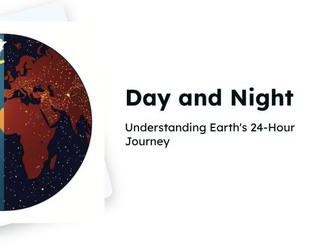
Explain why we have day and night using Earth’s rotation through simple torch‑and‑globe modelling that makes the concept instantly clear.
Describe Earth’s axis and how it stays tilted using crisp diagrams that help pupils visualise the 23.5° tilt.
Understand how shadows change throughout the day with practical examples showing how the Sun’s apparent movement affects shadow length and direction.
Explain why different parts of the world have different time zones using interactive world‑map tasks that link rotation to global time differences.
Built with clear visuals, hands‑on modelling, and student‑friendly explanations to secure understanding of Earth–Sun relationships.
Why teachers love this resource
Ready‑to‑teach — ideal for busy teachers; everything is structured and classroom‑ready.
Engaging demonstrations that make abstract ideas concrete for Year 7 learners.
Misconception‑busting explanations that tackle common errors like “the Sun moves across the sky”.
Worksheet included for evidence, homework or retrieval practice.
High‑impact visuals that support EAL learners and make the lesson accessible for all.
Some visuals in this resource were made with AI to help bring ideas to life and support student understanding.
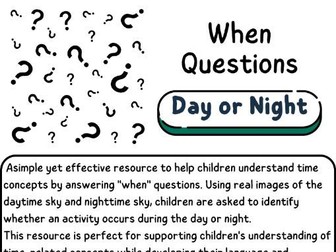
Introducing When Questions – Day or Night from Little Learners Hub, a simple yet effective resource to help children understand time concepts by answering “when” questions. Using real images of the daytime sky and nighttime sky, children are asked to identify whether an activity occurs during the day or night.
For example, they might be asked, “When do we wear sunglasses?” and prompted to:
Point to the correct image (day or night sky).
Verbally respond with “day” or “night.”
This resource is perfect for supporting children’s understanding of time-related concepts while developing their language and comprehension skills. It’s designed for young learners or children needing extra support in mastering the concept of time.


 Quick View
 Quick View
 Quick View
 Quick View
 Quick View
 Quick View
 Quick View
 Quick View
 Quick View
 Quick View
 Quick View