Perfect for last-minute SATs revision, independent practice or reading intervention!
This Year 6 SATs Reading Revision Booklet is designed to help pupils prepare for the KS2 Reading SATs test. It includes a range of fiction, non-fiction and poetry texts, carefully written in the style of past SATs papers, with SATs-style comprehension questions and full mark schemes.
Ideal for teachers, tutors, home learning, or targeted reading interventions.
What’s included:
5 engaging texts covering all genres:
Fiction: The Tunnel
Fiction: The Silver Key
Non-fiction: Endangered Animals
Non-fiction: How Space Rockets Work
Poetry: The Wind by Emily Banks
Full set of SATs-style comprehension questions
Mark scheme included – no extra planning needed
Pupil-friendly “How to Use This Booklet” guide
Printer-friendly black and white format
No preparation required – ready to print and use
Covers a range of question types including retrieval, inference, vocabulary, explanation and ordering events
Great for independent revision, homework, reading interventions or SATs booster sessions
Supports the teaching of key KS2 Reading content domains
Encourages pupils to build confidence, comprehension skills and test stamina
Perfect for use in the classroom, at home, or for 1:1 tuition
A fully-fleshed resource, which has activities designed for analysis of two extracts from The Woman in Black. There is an activity which looks at Ann Radcliffe’s definitions of horror and terror.
Included is an extended writing question and writing frame. I have also added a creative writing task with a model response, plus a re-drafted model which could be used to illustrate the importance of making conscious choices as an author. I use the resource with very able year 8 classes, but it would be suitable for key stage 3 and 4 students alike.
18 slides in length and enough material for up to two lessons. Links have been checked to ensure they are working (May 2025).
The visuals on the resource have been updated to fall in line with copyright regulations.
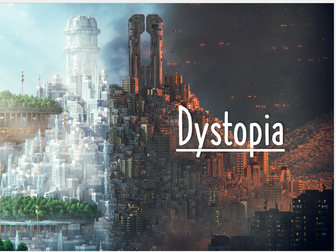
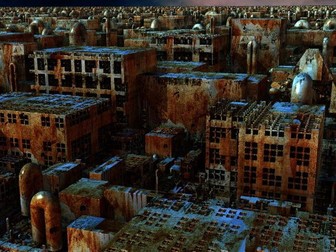
A whole scheme of work of KS3 teaching of a variety of dystopian fiction texts. Some of the larger texts are missing from the resources, for copyright purposes, but are readily available elsewhere. All lessons are aimed at levels 5, 6 and 7 reading skills.
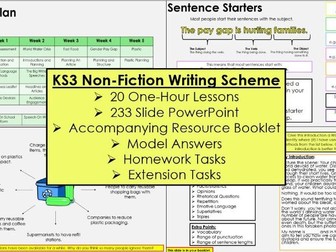
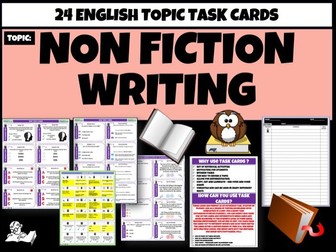
KS3 Non-Fiction Writing Scheme of Work
This PowerPoint contains twenty one-hour lessons (233 slides) that focus on nonfiction writing skills, and is aimed at Key Stage Three.
There are a wide range of tasks (lessons listed below) that focus on building the key skills of nonfiction writing: planning, language and structure methods, accurate punctuation, vocabulary and proofreading. There are practice questions, original non-fiction model responses, extension tasks, punctuation activities, and a whole bunch more! I have also included a second PowerPoint that can be printed as a resource booklet for students. This will save you time in printing and slicing (and will also save you a fortune on glue sticks!).
Additionally, there are weekly homework tasks. And three printable sheets that can be used as KS3 nonfiction cover work if you are in a pinch.
The premise is that students would gather information about a particular non- fiction topic by watching a documentary. They would then learn about the form of the text and plan their responses thoroughly. They would then learn a new skill and use this to complete some extended writing, before proofreading and editing their work. As a result, for some texts, they will be planning and writing over multiple lessons to really give them the chance to develop and hone their non-fiction writing skills.
Please Note: The longer documentaries are available on Netflix; however, I have also provided alternatives on YouTube for teachers that do not have access to a Netflix account.
Areas covered:
Lesson 1: Baseline assessment on tackling climate change
Lesson 2: Editing letters on education
Lesson 3: Exciting introductions on filters
Lesson 4: Writing leaflets on homelessness
Lesson 5: Watching the world water crisis documentary
Lesson 6: Planning, introductions and speech features
Lesson 7: Writing a speech on the world water crisis
Lesson 8: Headlines and newspaper features
Lesson 9: Watching the fast food documentary
Lesson 10: Discourse markers and planning articles
Lesson 11: Writing an article on fast food
Lesson 12: Midterm assessment on fast fashion
Lesson 13: Watching the gender pay gap documentary
Lesson 14: Structural features and letter planning
Lesson 15: Writing a letter on the gender pay gap
Lesson 16: Midterm assessment feedback
Lesson 17: Watching the plastics documentary
Lesson 18: Persuasive methods and planning texts
Lesson 19: Writing the KS3 non-fiction writing end of unit assessment
Lesson 20: Writing leaflets on our planet
Extra: Three cover lessons
Both the scheme and the resource booklet and provided in PPT and PDF formats.
My GCSE Paper Two: Section B scheme of work can be found here:
https://www.tes.com/teaching-resource/resource-11873033
Please check out my other resources.
Any feedback would be greatly appreciated. Thank you!
A 25-slide, detailed and engaging presentation that covers everything students need to know to successfullly write non-ficiton texts for GCSE/IGCSE, with a specific focus on argue/persuade for Edexcel IG English Language.
Slides include:
‘Do Now’ activities (adapt to your specific rubric)
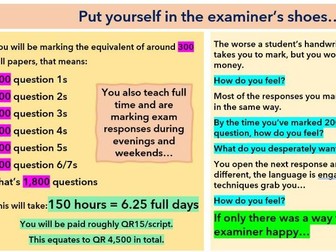
‘Put yourself in the examiner’s shoes’ - explaining the role of the examiner and what they can do to stand out
A step-by-step paragraph plan
Checklist of everything students need to consider/include in their response
Examples of Edexcel IGCSE exam questions
Identiftying TAP activities
A full exemplar response with annotations
4 non fiction articles with reading comprehension questions and an extended writing task linked to the issue.
Perfect for cover work or homework.
Suitable for KS3 and KS4.
Please do leave a review if you find these resources helpful
**A full, differentiated unit of work for KS3 students. **
Features extracts from The Beach, The Hunger Games, The Maze Runner, and 1984.
Featuring a range of reading & writing tasks, including:
Comprehension activities
Descriptive writing
Informative Guide Writing
Language analysis
Sentence structure/language device tasks
BONUS: A 7 week homework booklet with tasks linked to the main scheme
An A3 planning sheet to aid the planning of creating a crime-detective character whilst using a range of language devices; this can be followed up by an extended piece of creative writing.
Ideal for KS3 - years 7 or 8
I initially designed this scheme (of up to eight lessons) for a very low ability group of students who were, as reluctant writers, worried about their writing assessment. The assessment is placed across the first few slides, but you could skip it. It is heavily scaffolded, with accompanying planning and assessment sheet fir the assessment and some worksheets. The scheme then teaches punctuation and grammar, with starters assessing current learning and short writing activities designed to demonstrate progress. After students have mastered this, they move on to exploring how to use simile and metaphor.
You will need a DVD copy of War of the Worlds and Hunger Games for the first few lessons.
Perfect for KS3 and KS4 this booklet contains a range of different non-fiction articles with questions related to each. The booklet contains lined paper after every article to take notes or respond to questions asked. This is a great way of promoting pleasure for reading in class or at home. These could also be used in the English classroom alongside transactional writing as examples.
13 PowerPoints covering an introduction to Crime Fiction for Yr 7 students. Reading and analysis of a variety of different short crime stories, including The Brazilian Cat, The Speckled Band and Lamb to the Slaughter. PowerPoints contain a variety of activities, including card sorts, close textual analysis and creative writing. The unit includes a mid unit creative writing assessment along with an end of unit analytical assessment. Designed for a mixed ability Yr 7 class.
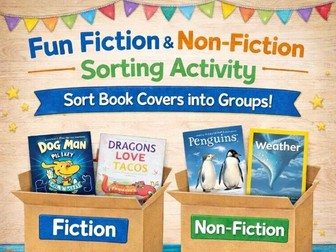
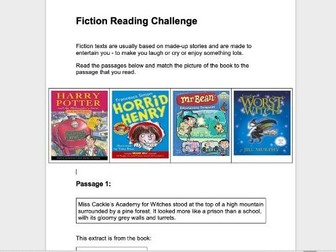
Introducing a fun and educational classroom activity perfect for students of all ages - Sorting Children’s Book Covers! In this activity, students will be presented with a collection of real children’s book covers and their task will be to sort them into two groups - fiction and non-fiction. This activity not only helps students develop their critical thinking skills but also fosters a love of reading and learning.
The activity begins by introducing the concept of fiction and non-fiction to the students. Then, students will be shown a collection of colourful and engaging book covers, each representing a different children’s book. The students will work in small groups to sort the covers into the two categories, discussing their reasoning and decision-making process with their classmates.
Not only does this activity promote teamwork and collaboration, but it also helps students learn about different genres and types of books, encouraging them to explore new subjects and stories. Whether your students are just starting to develop their reading skills or are seasoned book lovers, this activity will provide a fun and engaging way for them to explore the world of children’s literature.
So why wait? Incorporate this exciting and educational activity into your next lesson plan and watch as your students develop a love of reading and a better understanding of fiction and non-fiction!
2 group cards and 2 sets of book covers.
**Take a peek at the preview for a better picture of what is included! **
English non-fiction writing introduction lesson that explores purpose, audience, text types or forms, language and structure as students recap previous learning on non-fiction texts from previous years and use their new learning to evaluate purpose, audience and key features within an article on tattoos and perspectives around them.
Useful for KS3 students, particular Year 8 or Year 9, as well as GCSE English Language students preparing for Language Paper 2.
Includes differentiated activities, engaging worksheets, modelled examples, extensive teacher and student notes and more.
Check out our English Shop for loads more free and inexpensive KS3, KS4, KS5, Literacy and whole school resources.
**This lesson forms part of our KS3 Complete Pack. **
AQA English Language Paper 1 and Paper 2 Knowledge Organisers
AQA English Language Paper 1 Section A package
AQA English Language Paper 1 Sections A and B package
AQA English Language Paper 1 package
AQA English Language Paper 2 Question 5 package
AQA English Language Paper 1 Question 5 package
AQA English Language Paper 2 Section A package
AQA English Language and English Literature revision package
An Inspector Calls whole scheme package
An Inspector Calls revision package
Macbeth whole scheme package
Macbeth revision package
A Christmas Carol whole scheme package
A Christmas Carol revision package
Jekyll and Hyde whole scheme package
Jekyll and Hyde revision package
Romeo and Juliet whole scheme package
Power and Conflict poetry comparing poems package
Power and Conflict poetry whole scheme package
Love and Relationships poetry whole scheme package
Unseen Poetry whole scheme package
After you’ve looked at non-fiction text features, see if your students can identify examples of the text features independently. Grab an appropriate level non-fiction text and get started!
Happy teaching & learning!
Be purposeful teachers
Who are in control
Feel inspired
And knows they’ve done enough.
☆ If you found this product helpful, please leave a review below!
@attheminute.teaching
KS3 - A lesson where students examine a review of “The Island with Bear Grylls” and answer a question on the language used in the review. A variety of resources including comprehension questions on the text, an annotated model paragraph, a planning table and sentence stems.
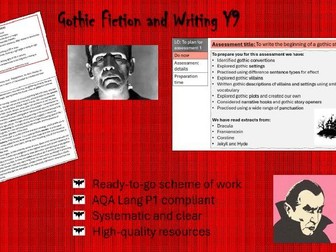
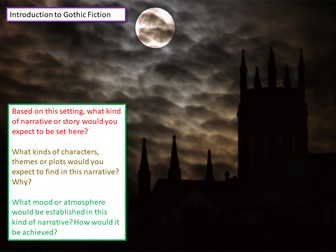
Gothic Horror lessons that cover setting, characters, plot devices, genre conventions and more. A complete unit that can be used for KS3 students or that can be adapted for GCSE texts like Dr Jekyll and Mr Hyde.
Check out our English Shop for loads more free and inexpensive KS3, KS4, KS5, Literacy and whole school resources.
AQA English Language Paper 1 and Paper 2 Knowledge Organisers
AQA English Language Paper 1 Section A package
AQA English Language Paper 1 Sections A and B package
AQA English Language Paper 1 package
AQA English Language Paper 2 Question 5 package
AQA English Language Paper 1 Question 5 package
AQA English Language Paper 2 Section A package
AQA English Language and English Literature revision package
An Inspector Calls whole scheme package
An Inspector Calls revision package
Macbeth whole scheme package
Macbeth revision package
A Christmas Carol whole scheme package
A Christmas Carol revision package
Jekyll and Hyde whole scheme package
Jekyll and Hyde revision package
Romeo and Juliet whole scheme package
Power and Conflict poetry comparing poems package
Power and Conflict poetry whole scheme package
Love and Relationships poetry whole scheme package
Unseen Poetry whole scheme package
Unseen fiction is a step-by-step introduction to the unseen element of the GCSE English Language exam, developing students’ analytical skills and confidence.
The perfect foundation for KS4 students, this pack addresses AO1, AO2 and AO4 and will help your students develop their skills and confidence in approaching unseen fiction.
With eight detailed lesson plans for each text, the pack includes starter activities, main lesson activities, plenary ideas and extension activities, as well as worksheets and classroom resources.
Featured text extracts:
Kerfol by Edith Wharton
The War of the Worlds by H.G. Wells
My Ántonia by Willa Cather
‘The Christmas Present’ by Richmal Crompton
Mort by Terry Pratchett
‘Printer’s Devil Court’ by Susan Hill
‘Down to a Sunless Sea’ by Neil Gaiman
A Thousand Splendid Suns by Khaled Hosseini
What’s included?
Eight text extracts
Exam-style questions
Exam-style practice papers with suggested ‘answers’ for the final extract for AQA, Edexcel and WJEC Eduqas.
What’s inside?
Introduction (page 3)
Specification summaries (pages 4-6)
Top tips (pages 7-8)
Text 1: Kerfol (pages 9-17)
Resource 1 - finding information
Resource 2 - the black greyhound
Text 2: The War of the Worlds (pages 18-28)
Resource 3 - the storm
Text 3: My Ántonia (pages 29-37)
Resource 4 - guess what is being described
Resource 5 - character descriptions
Resource 6 - author’s use of language
Text 4: ‘The Christmas Present’ (pages 38-50)
Resource 7 - structural terminology
Resource 8 - the beginning
Resource 9 - developing the story
Text 5: Mort (pages 51-59)
Resource 10 - venn diagram
Resource 11 - close analysis of Mort
Text 6: ‘Printer’s Devil Court’ (pages 60-68)
Resource 12 - evaluating writing
Resource 13 - exam-style questions
Text 7: ‘Down to a Sunless Sea’ (pages 69-84)
Resource 14 - narrative voice in the story
Resource 15 - imagery
Resource 16 - planning grid
Text 8: A Thousand Splendid Suns (pages 85-107)
Resource 17 - exam style questions
This lesson is perfect for a lesson in a school library to get students to think about opening their minds to new genres.
To prepare for the lesson you need 7 tables.
Each table must include 4-7 books in the following genres:
fantasy
crime
realistic
historical
fantasy
action and adventure
horror
In a carousel, students visit each table and make a note of the best opening, blurb and cover.
I have made some labels that can easily be applied to reading books. I decided to do this, so the children become more accountable/responsible for the reading area in my classroom. Hopefully, it will help them to identify different texts too. I hope these are useful to you all! I would love to see these in your settings! Feel free to check out my Instagram page to see these in my classroom and how I have organised my books.
PLEASE NOTE: I have made these fit my own labels. This is a template for 21 labels on 1 sheet of A4. The code I used to set up my labels is Avery - L7160
Thank you!
Miss G
x