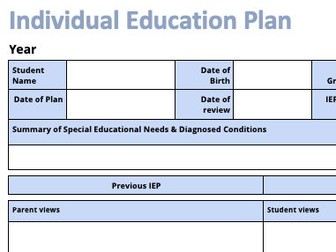
High quality, comprehensive Individual Education Plan Templates that really support pupil progress and the assess, plan, do, review cycle
Includes:
One for pupils with an EHCP, one for pupils at SEN Support.
-Clear one page profile with all the details and information you will need to share about a pupil to help everyone be clear on their needs and strengths
-Target pages linked to the pupil’s key areas of SEN need
-Space to detail provision
-Space to record impact
-Clear assess, plan, do, review cycle as each term is progressive
-Editable to put your own stamp on it
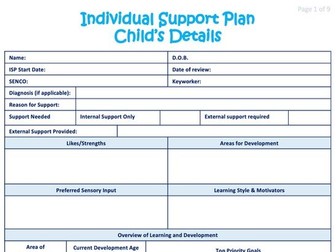
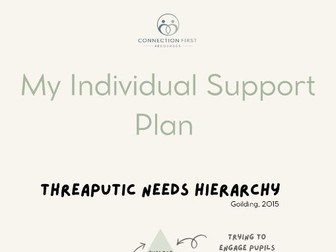
Individual Support Plan for Early Years: A comprehensive resource featuring sections for child details, parental input, communication, goals, tracking, and evaluation.
This Individual Support Plan (ISP) is designed to offer tailored, holistic support for children with additional or specific needs across educational or care settings. It functions as both a planning and tracking document that ensures consistent, collaborative, and measurable interventions.
Key Sections:
Child Details
Includes essential information such as name, date of birth, age, setting/class, identified needs, and any relevant background or contextual information.
Parent Partnership
Encourages a collaborative relationship with parents/carers, capturing their insights, concerns, aspirations, and feedback. This section fosters shared decision-making and consistent support between home and setting.
Communication Log
Tracks all relevant communications between staff, parents, and external professionals. It ensures transparency, continuity, and a chronological record of discussions and updates.
Specialist Support
Documents involvement from external agencies or professionals such as speech and language therapists, occupational therapists, educational psychologists, or SEND coordinators. It outlines support strategies, recommendations, and follow-up actions.
SMART Goals
Sets clear, Specific, Measurable, Achievable, Relevant, and Time-bound goals tailored to the child’s developmental needs. This section supports targeted planning and progress tracking.
Weekly Focus Overviews
Breaks down termly or half-termly targets into weekly focus areas to ensure manageable, incremental progress. These overviews link to SMART goals and inform planning.
Tracking Log
Provides a structured way to record ongoing progress toward SMART goals and weekly focuses. It can include ratings, milestones achieved, and observational notes.
Weekly Observation Notes
Offers space for educators or support staff to capture qualitative insights into the child’s learning, behavior, engagement, and social interaction. These notes help contextualize progress and challenges.
Continuous Provision
Details the strategies, resources, and adaptations embedded in the environment to support the child daily. It shows how inclusive provision is maintained in practice.
Evaluation and Future Action
A reflective section where staff assess the effectiveness of current strategies and interventions. It identifies what has worked, what needs adjustment, and plans next steps or referrals.
This resource supports a cycle of assess–plan–do–review and is ideal for settings seeking a structured yet flexible way to personalize learning and support for children.
The I.B.P. is an in-depth document for recording and tracking student behaviour. It is a supportive document that collates a range of evidence on the student and identifies a range of strategies and interventions to support improvements. This is an individually designed IBP that has been used alongside other Pastoral Support Programmes and which has been used to help provide evidence in both EHCP Review meetings and PEP’s.
Here are some templates for ILP's.
Great assessment for student learning, and no teacher should be without!
If you like other free stuff, visit My Shop.
Total Pages-4
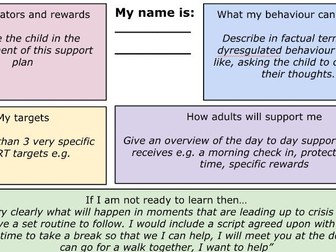
A behaviour support plan to use with children in your class or setting displaying dyregulated behaviour. Guidance is included in the plan to lead your conversation with the pupil. This plan was developed in conjuction with a CAMHS clinician as part of a piece of work on Trauma Informed Practice.
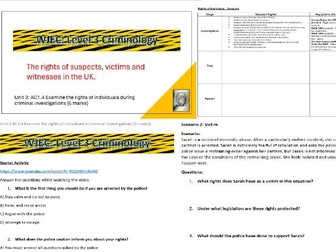
Lesson resources, PowerPoint, handouts, activities workbook, lesson plan for Criminology Unit 3 AC1.4 Examine the rights of individuals in criminal investigations.
This is a full lesson pack covering the rights of the suspect, witness and victim at investigation stage, during the trial and at the appeal stage.
The bundle includes PowerPoint, Student Workbook, Literacy and assessment handout and detailed teacher notes. Once the lesson is completed the workbook can be used in the Unit 3 Controlled Assessment.
Resources are for the WJEC Level 3 Diploma / Certificate in Criminology
Resources included are:
Student workbook - includes activities, questions and knowledge that will help students to assess the usefulness of interview techniques in criminal investigations.
PowerPoint - with information, video links, activity instructions for the students and key exam skills information.
Literacy and Assessment Handout - provides students with the assessment criteria, key terms glossary, guidance on structuring notes and sentence starters.
Lesson Plan and Teacher Notes - detailed notes include the lesson plan / rationale. Instructions on how to facilitate activities and also answers / suggested answers to some of the activities. References are made to the relevant slide numbers, pages numbers and documents that are needed in each activity.
This lesson tries to include different activities and suggestions for a range of learning styles. Pedagogy includes videos, discussions, knowledge re-call, literacy and extended writing.
The notes made in this booklet are compliant with WJEC’s guidance on controlled assessments therefore, students could take it into the assessment with them.
Try my resources for free. Download Unit AC1.1 Types of crime white collar crime. Please leave a review to let me know what you think!
Free Lesson Unit 1 AC1.1 White Collar Crime
Click link below for further resources for the WJEC Criminology course:
Level 3 Criminology Resources
For Unit 3 AC2.1 Requirements of CPS click on the link
For Unit 3 AC1.1 lesson click here:
Unit 3 AC1.1 Evaluate the effectiveness of the roles of personnel involved in criminal investigations
For another Unit 3 AC1.2 lesson click here
AC1.2 Investigative techniques: Forensics and Intelligence Databases
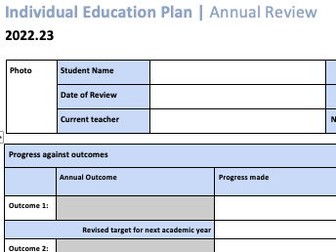
Fully editable termly review templates for a student IEP.
Includes summaries of all elements within the SENDBank IEP template.
Includes Term 1, Term 2 and Annual Review templates.
This resource has been updated and a .pptx has been added to enable you to edit the resource
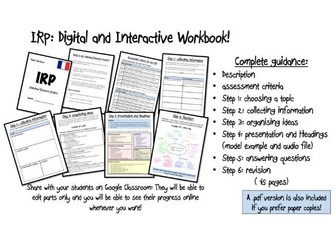
In this resource file: A workbook to guide your students through their IRP.
Pdf copy AND Digital Workbook (Ideal if you are using Google Classroom)
You will download a .zip folder, which you will need to save on your computer ( in the “My documents” section for example) before right- clicking and selecting “Extract all” to be able to open all the files included in the zip folder.
The resource includes:
-description of the IRP
-Assessment criteria (AQA)
-Guidance on: step1 to 6 (choosing a topic, collecting information, organising ideas, presentation and ideas, answering questions, revising) with: spaces for students to record their finding, progress sessions record forms, model plan, model presentation with audio file, model questions linked to the presentation, model mind map for revision)
The Digital Workbook will enable you to share this workbook with your students on google classroom, they will be able to edit some of the boxes but won’t be able to edit any of the guidance, you will be able to check their progress at any time online. ==> guidance on how to do that is included if you are new at it
Total number of pages is: 45 ( +some pages which are to be photocopied/ copied and pasted by the students as he/she requires)
If you have any questions or if you are interested in more resources like this, you can check this facebook page: @Frenchresources, where updates, links and freebies are posted regularly
This is a comprehensive resource pack designed for the WJEC Level 3 Applied Diploma in Criminology. It specifically covers Unit 3: AC1.4 Examine the rights of individuals involved in criminal investigations.
This pack is designed for a 1-2 hour lesson, with a focus on active learning, retrieval practice, and “thinking hard” pedagogy.
This resource provides a complete, modern, and engaging toolkit for teaching the rights of suspects, victims, and witnesses within the criminal justice system. It transitions from the initial investigation (PACE 1984) through to the trial and appeal process.
What’s Included:
Retrieval Tasks: Connects AC1.4 to previous learning (AC1.1, 1.2, and 1.3).
“Think Hard” Prompts: Deep-thinking questions designed to stretch and challenge high-ability students.
Chromebook Integration: Embedded “Active Learning” tasks where students research the Victims’ Code (2021) and specific legal powers.
Visual Aids: High-quality imagery and clear diagrams of legal processes.
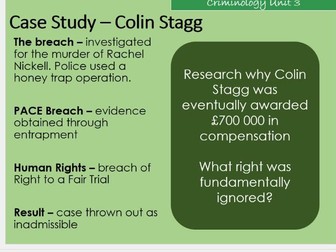
Case Study Focus: Detailed slides and tasks on Colin Stagg (Suspect rights/Entrapment) and Banaz Mahmod (Witness protection and Special Measures).
Exam Preparation: A dedicated section on how to structure a 6-mark “Examine” answer, including a content checklist and a timed writing task.
Stop and Search Scenarios: A practical application task with 5 realistic scenarios to test student understanding of “Reasonable Grounds” under PACE 1984.
Planned Homework: A 1-hour research task on the Stefan Kiszko case to reinforce learning through independent inquiry.
Key Learning Objectives:
Identify and examine the rights of suspects (PACE 1984, GOWISELY, Right to Counsel).
Understand the Victims’ Code (2021) and the rights to review and impact statements.
Analyze the Special Measures available to witnesses under the YJCEA 1999.
Evaluate the grounds for Appeal for both the defense and the prosecution.
Why choose this resource?
Active Learning: Students aren’t just listening; they are using their Chromebooks to find real-world legal examples.
Differentiated: Includes “Stretch and Challenge” tasks for Band 3 learners.
Assessment Focused: Directly mapped to the WJEC specification and mark schemes.
This is a report that monitors a specific pupils behaviour in class over a 6 lesson period - copy sent to parents prior to going on report and then after.
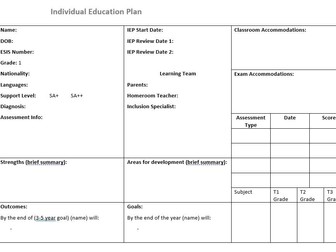
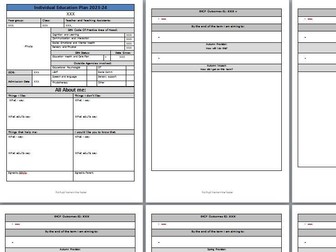
IEP template for students with SEN. Includes front page, pupil passport page and targets page with space for reviews. Front page covers diagnosis, adults invovled, dates for review meetings, any assessment scores and subject grades. It also has sections for developing long term outcomes and goals that you want to work towards for the student. There are also 3 versions of the pupil passport adapted to different age groups from EYFS/KG through to 18.
An editable Individual Education Plan (IEP) for SEND students. Includes students information section, summary of needs, who has contributed, outcomes, strategies and additional comments. Fully editable for your needs.
Whats important to me
Primary needs
What people like and admire about me
The best ways to support me are…
My aspirations
Reasonable adjustments
Strategies and internal interventions to aid learning
Short/medium term targets
sensory issues raised
any subjects/areas of education that cause hightened anxiety
what does their current education look like
attendance data from host school
we will support in achieving his/her targets by…
student views and aspirations prior to coming on role
Parent/carer views prior to coming on role
can the learner cope with an unknown person/visitor in the room
review of progress from last plan
signed by professionals
Support your school in delivering consistent, needs‑led and relational practice with this fully editable Individual Support Plan (ISP) template. Designed for SEND teams, class teachers, pastoral staff and behaviour leads, this resource provides a clear, structured and trauma‑informed way to understand and support a pupil’s needs.
This ISP helps staff move from behaviour‑focused responses to needs‑focused intervention — ensuring every child is seen, understood and supported.
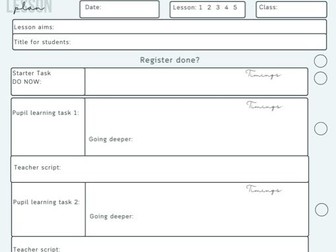
A lesson plan that supports teacher’s organisational skills in the classroom. With areas to add teacher script prompts and reminders to take the register, this proforma reminds teachers to stick to the structure whilst engaged in the busyness of a classroom. Best printed and put into a half-termly binder.
This individual education plan is an effective way to facilitate an individual education programme for a child with specific learning needs (SEN, G & T etc.)
Simple and purposeful
3-page booklet
Fully editable
Page 1: Initial Interview with child
Page 2: Specific targets, activities and schedule
Page 3: Review of targets
Individual Education Plan (IEP) that profiles the child. Adapted from the work of Matt Grant to include child's strengths and barriers to learning along with targets and success criteria.
This sheet can be used as part of an IEP in science. It is suitable for mainstream and special needs at every level including gifted and talented. It lends itself to differential planning for specific pupils. I use it to inform support assistants and students about what is expected. They can then contribute ideas and comments in the relevant places. This is AFL formalized and can be a powerful tool for individualized teaching and learning.
I suggest that you change the file extension from .doc to .dot to convert this into a template.
Please provide feedback.


 Quick View