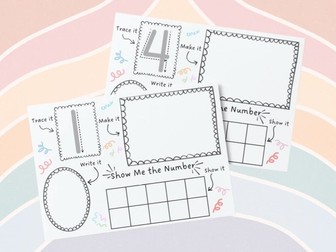
A bright, child-friendly All About Me PDF worksheet for back to school, transition days and getting to know your new class.
Children can draw, write and share simple information about themselves, including their name, family, favourite things, what they enjoy playing with and what they want their teacher to know.
Perfect for EYFS, Year 1, Year 2 and lower KS2, this resource works well as a first week activity, transition task, PSHE lesson or classroom display piece.
Includes:
Full-colour PDF version
Low-ink printable PDF version
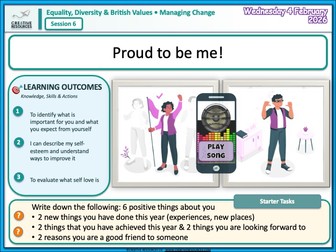
All about me! Proud to be Me! Shout it out loud…**. Editable 17 slide PowerPoint Lesson, Lesson Assessment, Student Resources, Signposting to extra support services. Bonus Mindfulness Activity and much more.
✰✰✰✰✰✰✰✰✰✰✰✰✰✰✰✰✰✰✰✰✰✰✰✰✰✰✰✰✰✰✰✰✰✰✰✰✰✰✰✰✰✰✰✰
Learning Outcomes:
To identify what is important for you and what you expect from yourself, taking into account the beliefs and expectations that others have of you
I can describe my self esteem and understand ways to improve it
To evaluate what self self love is
Some Key Terms Covered
Emotions, Feelings, Thoughts, Past Behaviours, Understanding, Ambition, Ideal self Actual Self, Values
Each Lesson Pack Contains:
☞ 1 Fully Editable PowerPoint (Learning Outcomes, Confidence Checkers, Assessment of Learning, Variety of Tasks, Video Embedded URL Clips, Engaging Premium Quality Slides, Extra Support Websites, Challenging & Thoughtful Questioning)
☞ Most lessons include a Worksheet
☞ Assessment Opportunity (Confidence Checker)
☞ Teacher Notes (On some slides)
☞ Team project Handouts
☞ Team roles
☞ Mapped against Latest Statutory Health and RSE DfE Guidance, PSHE Association & Character Education Guidance from DfE.
⟴ PSHE Association Theme: Health & Wellbeing H2
⟴ Be Ofsted and DfE PSHE ready with our resources! Product Code: RSE/C8/LS/170
Why not check out some of our latest PSHE super bundles below:
Personal Finance as a young adult
Online Safety + Staying Safe
Y12 Survival Kit - Personal Safety
Y11 Survival Kit - Revision + Exam Stress
British Values Explored Bundle
PSHE - Debating Topical Issues
Society, Body Image + Peer Pressure
Finance Risk + Online Safety
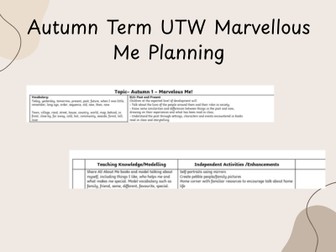
6 weeks of planning and resources for an “All About Me” topic, suitable for a Reception class. Based on the 2021 EYFS Development Matters document.
The topic is broken up in to 6 themes:
Week 1 - What Makes Me Special?
Week 2 - My Body
Week 3 - My Senses
Week 4 - My Feelings
Week 5 - Growing and Changing
Week 6 - My Home and Local Area
Each week has detailed planning for adult led sessions for the 7 areas of learning. There are 48 session plans altogether.
Each week also has ideas for enhancing the continuous provision across 10 areas of the learning environment, with over 200 ideas in total.
Where needed, resources to support these activities are included in the pack.
There are also 6 weekly newsletters included. These can be used to let parents/carers know what their child is learning and to suggest ideas that they may want to try at home.
The planning documents and newsletters are Word documents and can be edited. The supporting resources are PDF files and cannot be edited.
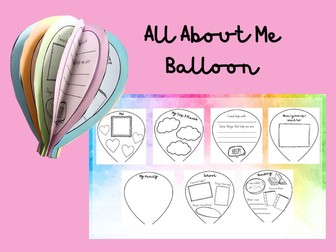
7 ‘all about me’ pages in the shape of a balloon perfect for getting to know your class/transition activity.
Keep them as they are or attach to coloured paper using the template.
They can be folded and glued to create a 3D balloon. Looks great with photo of the child hanging on and can be added to a display board or hung from a washing line.
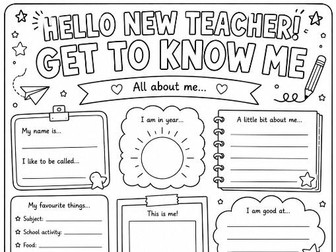
Help children feel confident and excited about meeting their new teacher with this engaging Get to Know Me worksheet. Designed for KS2 pupils (Years 3–6), this printable colouring-style activity encourages children to introduce themselves, share their interests, reflect on how they learn best, and tell their new teacher what makes them unique.
Perfect for transition day, the first week back, or meet the teacher activities, this low-prep resource helps build positive relationships from day one while giving teachers valuable insight into their new class.
What’s included:
1 A4 printable black and white worksheet
Fun colouring-style design
Writing and drawing prompts
Suitable for Years 3–6 (KS2)
Sections include:
My name and preferred name
A little bit about me
Draw a picture of yourself
My favourite things
I am good at…
I learn best when…
Something you might not know about me
I would love my teacher to know…
I would like help with…
I am looking forward to…
Perfect for:
Transition Day
Moving to a new class
Back to School
Meet the Teacher activities
PSHE lessons
Icebreaker activities
Classroom displays
Pupil voice
Includes a PDF booklet to provide to children starting school to gain information and get to know them before their start date. Also includes a page to colour in skills they have and two pages for parents/carers to fill in.
Is downloaded in A4; print as ‘booklet’ or use as it is.
This 33-slide lesson explores Patience Agbabi’s poem, ‘Eat Me’.
Students begin by discussing key ideas around the relationship between sex and food and society’s beauty standards. We then learn about Agbabi’s work before delving into the poem and establishing its narrative.
The lesson then guides students methodically through extensive key ideas related to the poem, including title analysis; intertextual allusions; analysis of language; and analysis of form, structure, rhythm and rhyme. The nature of the dramatic monologue as a form is also discussed, before looking closely at some of the poem’s key images and the use of repetition. Each character in the poem is then dissected, while also looking at key symbols in the poem (eg. the cake, the bed). We also discuss the poem’s colonial undertones.
Students are given a list of key themes and key vocabulary to facilitate high-level analysis. There are then some important questions for students to answer once they have explored the whole poem, and a list of potential poems which could be used to compare to ‘Eat Me’ to strengthen comparative analytical skills.
This resource is particularly useful for those studying ‘Poems of the Decade’ with Pearson, but could easily be used for any purpose.
Two files are included: one has the PowerPoint saved as a PDF so that the fonts and layout are firmly in place; the other is saved as a normal PPT file so that you can edit it.
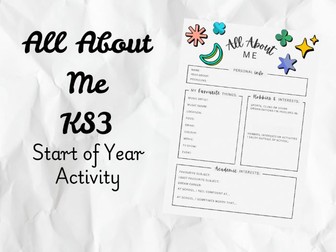
KS3 All About Me Profile Worksheet – Retro Style
Kick off the new school year with this engaging All About Me worksheet, designed especially for Years 7–9. With a fun retro look and easy-to-complete sections, this resource helps students share their personalities, interests, and learning preferences in a clear and structured way.
Perfect for:
First week of term activities
Tutor time / form groups
PSHCE lessons
Transition activities (Year 6 into Year 7)
Any lesson where teachers want to get to know their students quickly and effectively
What’s included:
A single-page worksheet with retro illustrations
Prompts for hobbies, goals, favourite subjects, and aspirations
Designed for KS3 (Years 7–9) but easily adaptable for other age groups
Why teachers love it:
Helps build positive relationships with new classes
Encourages student self-reflection and goal-setting
Provides a quick insight into each learner’s personality and interests
Stylish design that students enjoy filling in
Ideal for back-to-school, this resource saves planning time and creates a fun, welcoming atmosphere in your classroom.
This 45-page pack is for the book ‘Can You See Me?’ by Libby Scott and Rebecca Westcott. The book centres around Tally, a girl with autism who struggles to adapt to Junior High School.
Included are vocabulary work and comprehension questions, broken down by chapter and designed for a six week unit of study. There are also a few activities/ideas/worksheets about autism and social-emotional topics to link to the book or PSHCE lessons.
Two standalone worksheets to support pupils to talk about holidays in the past tense.
Resource 1: Introduces key past tense verbs and recycles key language with a sentence builder, gap fill reading and translation practice. There is also a summary of how to form past tense verbs with avoir and a grammar gap fill task.
Resource 2: Review of key past tense verbs with a GCSE reading comprehension task (a note taking question with a vocabulary search).
Format: Word document and PDF with answers.
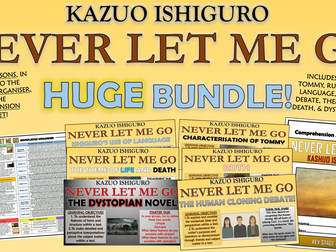
This bundle contains all of the Never Let Me Go lessons, the comprehension activities booklet, the knowledge organiser and the Pointless game!
These engaging, varied, and informative lessons have been designed to help students gain a valuable understanding of the plot, characters, language, and key messages in Kazuo Ishiguro’s novel ‘Never Let Me Go.’ The lessons enable students to gain a comprehensive understanding of the key features of content, language, and structure, in addition to considering Ishiguro’s key intentions in writing the novel.
All of the resources that you need to teach are included in the bundle: Whole lesson step-by-step PowerPoint presentations, informative and engaging , worksheets, activities, and lesson plans.
Contained in the bundle are lessons based on:
Characterisation of Tommy;
Ishiguro’s Use of Language;
Ruth;
The Dystopian Novel;
The Human Cloning Debate
The Theme of Life and Death
Plus the 30-page comprehension booklet, the knowledge organiser and the Pointless Game!
Stimulating, visual, and easily adaptable, these lessons provide suggested learning objectives and outcomes for students of a wide-range of abilities - The vast majority of tasks are differentiated to allow for different abilities and needs in your classroom. Each lesson loosely follows this logical learning journey to ensure that students learn in bite-size steps:
Engaging
Defining/ Understanding
Identifying/Remembering
Analysing/ Creating
Peer or self evaluating.
All of the lessons are interactive, employ a variety of different teaching and learning methods and styles, and are visually-engaging.
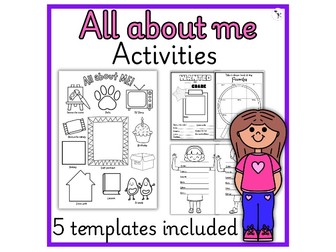
If you’re looking for an All about me activity for your ‘Meet your Teacher’ event then look no further as this downloadable pack consists of five All about me worksheet templates (A4 pdf for ech). Included are:
a magnifying glass for a close up of your students favourites
a picture prompt sheet
a wanted theme poster
a girl template concertina worksheet
a boy template concertina worksheet
Each template gives learners the opportunity to share information about them, such as their favourite colour, hobbies, lessons, pets, friends, family and likes, all with prompted areas.
The completed activities would look great on your display boards for the new term ahead, providing a familiar welcome for students as they settle into their new learning environment.
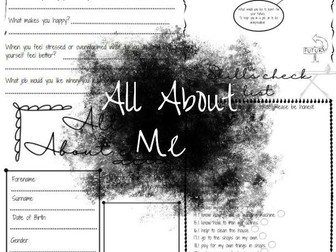
All About Me Pack – For Older SEN Learners Starting College
(Editable for Year 7 Students)
This All About Me Pack is designed to help older students with special educational needs share important information about themselves as they prepare to start college. It’s simple to use and helps teachers and support staff get to know their students better.
The pack includes:
All About Me Page - where learners write their name and home address
Question Page - to help you get to know your students likes, dislikes, and personality
Life Skills Self-Assessment Checklist - learners reflect on what skills they already have and what they might need help with
Learning Goals Page - a space for students to say what they would like to learn in college
The pack is black and white, so it’s printer-friendly and easy to photocopy.
This resource can also be used as an assessment tool to check:
If a student knows their personal details
Their handwriting and sentence writing skills
What life skills they already use
Their future goals and ambitions
Perfect for transition sessions, induction week, or first-day activities.
You can also adapt it easily for Year 7 students moving into secondary school.
2 interlinked lessons to either introduce or cover the basics in Spanish; personal introductions and the alphabet
Could also be used for absolute beginners at KS4
Introduction to family members vocabulary (father / mother / sister / brother) and possessive pronoun my in French (mon / ma / mes).
Uses two famous cartoon families: The Simpsons and The Griffins.


 Quick View
 Quick View
 Quick View
 Quick View
 Quick View
 Quick View
 Quick View
 Quick View
 Quick View
 Quick View
 Quick View
 Quick View