Mountain Environments - KS2Quick View
TeachItForward

Mountain Environments - KS2

8 Resources
Mountain Environments is a Geography unit suitable for KS2 (Y4-6) and has everything you need for covering a mountains topic. The planning overview, topic title page and vocabulary page can be downloaded for free here. Lessons include: L1 – Identifying the key features of mountains L2 – Identifying the world’s major mountain ranges L3 – Locating the world’s famous mountains using latitude and longitude L4 – Understanding how fold mountains are formed L5 – Investigating the structure of a volcano (FREE) L6 – Researching famous world mountains (FREE) L7 – Investigating mountain climates Each lesson includes a presentation and differentiated activities/worksheets. If you like this resource, we would appreciate a review! We will happily send you a free resource in return for a review or useful suggestions/feedback. Contact us at ed@teachitforward.co.uk.
Investigating mountain climates - KS2Quick View
TeachItForward

Investigating mountain climates - KS2

(3)
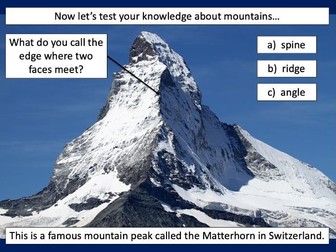
This lesson is part of Mountain Environments, a Geography unit designed for students in upper KS2 (Y4-6). First the presentation looks at features of a mountain climate including lower temperatures and increased rainfall. It then focuses in more detail on the climate of Mount Everest. There are two activities: Interpreting climate graphs In this activity students look at and answer questions about temperature graphs for both the summit and base camp of Mount Everest. It is differentiated two ways: Easier – Students answer questions about temperature graphs for Mount Everest (suitable for Year 4 and 5). Harder – Students answer questions about temperature graphs for Mount Everest (suitable for Year 6). Creating a climate graph in Excel In this ICT activity, students create their own climate graph, including temperature and rainfall, for the summit of Mount Everest using Microsoft Excel. If you like this resource, we would appreciate a review! We will happily send you a free resource in return for a review or useful suggestions/feedback. Contact us at ed@teachitforward.co.uk.
Mountains Rivers Lettering DisplayQuick View
turner21BGU

Mountains Rivers Lettering Display

(0)
Beautiful lettering set for your classroom display. Mountains / rivers theme. The file includes: Capital letters Lowercase letters Symbols . , ? ! Simply print, cut out and stick up on display board. Other image styles available.
Mountains of Europe Geography Lesson KS2Quick View
Teachallenjoy

Mountains of Europe Geography Lesson KS2

(1)
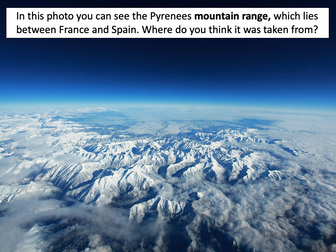
A complete geography lesson on the mountains of Europe. Includes a thorough teaching PowerPoint, interactive activities, worksheets, video, extensions and games. Follow the ready-to-go PowerPoint to teach about the mountain ranges of Europe. Cover: Formation Map work Climate Vegetation Facts Famous peaks Planned for years 3 or 4, easily adaptable for years 5 and 6. Differentiated recording tasks provided with two extensions. Highlights: Photo analysis starter activity Activities for all styles of learners Scaffolded learning Check out my other popular Geography lessons on Europe: Where is Europe? lesson pack Countries of Europe lesson pack Compare Cities of Europe lesson pack Climate of Europe lesson pack Rivers of Europe lesson pack
Story mountain template Quick View
ljj290488

Story mountain template

(0)
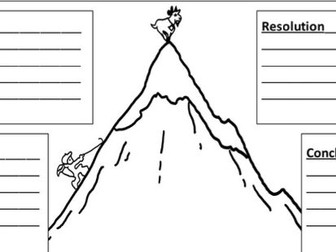
Basic story mountain planning template. A very effective resource to gather and organise fiction writing/narrative writing ideas.
Identifying the key features of mountains - KS2Quick View
TeachItForward

Identifying the key features of mountains - KS2

(3)
This is the first lesson in Mountain Environments, a Geography unit designed for students in upper KS2 (Y4-6). First the presentation introduces students to the topic and looks at some of the activities people do in mountains. It then introduces the key features of a mountain range. The activity challenges students to identify the key features of a mountain environment. It is differentiated three ways: Easier – Students identify 8 key features of mountains. Medium – Students identify 10 key features of mountains. Harder – Students label the key features of mountains in their exercise book. Extension – Students match mountain vocabulary to their definitions. If you like this resource, we would appreciate a review! We will happily send you a free resource in return for a review or useful suggestions/feedback. Contact us at ed@teachitforward.co.uk.
Story Mountain PackQuick View
MissRoskell

Story Mountain Pack

(2)
This pack contains: Complete ‘story mountain’ to demonstrate how children can build their story up (ideal for displays or laminating as story mountain mats!) Version with ‘remember audience and purpose’ prompt on. Blank version with white space, for displays or post-it-notes. Blank colour version, with lines for pupils to write on Blank black and white version, with lines for pupils to write on Completely blank colour and black and white story mountains A black and white and colour editable word document version, so that you can customise it to your needs!
Understanding how fold mountains are formed - KS2Quick View
TeachItForward

Understanding how fold mountains are formed - KS2

(1)
This lesson is part of Mountain Environments, a Geography unit designed for students in upper KS2 (Y4-6). First the presentation recaps the structure of the Earth and how its crust is split into tectonic plates. It then investigates the different ways tectonic plates can move and how two tectonic plates colliding can form fold mountains (e.g. the Himalayas). The differentiated activity challenges students to work out which tectonic plates formed different fold mountain ranges around the world. Easier – Students have to find one tectonic plate. Medium – Students have to find two tectonic plates. Harder – Students find the name of each mountain range and two tectonic plates. Extension – Students complete a cloze procedure paragraph about fold mountains. If you like this resource, we would appreciate a review! We will happily send you a free resource in return for a review or useful suggestions/feedback. Contact us at ed@teachitforward.co.uk.
Story MountainQuick View
mrichmond

Story Mountain

(0)
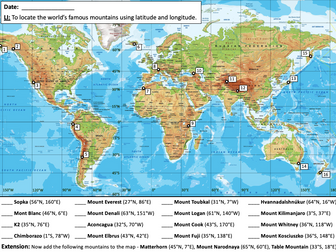
This is a PowerPoint with a Story Mountain which is invaluable for pupils planning good stories. I have also included it in a pdf version for ease of printing.
Mountains display packQuick View
highwaystar

Mountains display pack

(0)
This resource contains headings, vocabulary and posters, all in pdf format on CD to print out for a Mountains display MOUNTAINS LETTERING - This lettering is to cut out for display. 'MOUNTAINS' / 'THE MOUNTAIN ENVIRONMENT' is written out, which can either be printed as a banner, or cut out for display. There are also all upper and lower case letters and numbers included so that you can print out whatever you need to personalise your display. THE MOUNTAIN ENVIRONMENT A4 HEADER - to print. MOUNTAINS VOCABULARY DISPLAY - With headings and photographs (2 per A4 sheet - Includes blizzard, avalanche, snowdrift, snow, hail stones, snow flake, alpine glow, flood, peak, mountain range, base station, mountain tourism, ski run, litter, mountain, hill, flora and fauna.) MOUNTAINS POSTERS - 15 A4 sheets, with explanations and descriptions: What is a mountain? Plate tectonics (x2) Fold mountains Fault-block mountains Volcanic mountains Dome mountains Plateau mountains Mountain climates Mountain temperatures Mountain weather Mountain rainfall Mountain ranges - map Seven Summits - map UK mountains - map
Mountains and Mountain EnvironmentsQuick View
CuriosityCrows

Mountains and Mountain Environments

(0)
A collection of photos from my own visits to mountains around the world. I have used these photos with my class for projects and presentations about glaciation, mountain environment, habitats, adaptation, weather and climate, and plate tectonics.
MountainsQuick View
Lolliepopcouture1

Mountains

(0)
This great powerpoint explains mountains and give lots of examples. Enjoy this resource but please do not re-upload. Copyrighted to @PrimaryPrints
MountainsQuick View
sdh030419

Mountains

(0)
This is an upper intermediate (CEFR B2, IELTS 6.0) EFL Speaking class about mountains. Students begin the class by describing four pictures of mountains. A short discussion follows. Target language (summit, tree line, cliff, slope, valley, ridge) is introduced using photographs. Students then match the vocabulary to the meaning. Students will then brainstorm the different kinds of animals that live in the mountains. Six images are then shown, each showing a different animal (cougar, snow leopard, golden eagle, ibex, black bear, hare). Students then rank the most dangerous animal to the least dangerous. Finally, students give their opinions in an agree/disagree activity.
MountainsQuick View
loudahill

Mountains

(0)
Planning and resources for Year 3. Can be adapted for other year groups. Meets Natioanl Curriculum objectives.
MountainsQuick View
savas_savides

Mountains

(0)
All over the world, in every kind of climate, majestic mountain ranges rise up as eternal guardians of nature’s beauty. Shaped over millions of years by the forces of tectonics and weather, these geological wonders not only define the landscapes they inhabit but also affect weather patterns and host unique ecosystems. Whether it’s towering peaks capped with everlasting snow or lush slopes descending into valleys, each mountain range has its own story of endurance, cultural significance, and ecological variety. This book is not about the tallest mountains (most of them are in the Himalayas anyway); it is about the biggest mountain ranges of the world. Each chapter is dedicated to one such mountain range, with plenty of interesting facts about them. At the end, there are some multiple choice questions to check your students’ undrstanding, and as usual the relevant answer key to the questions. Explore our world through teaching cool geography!
Mountains - How mountains are formedQuick View
lisavicky

Mountains - How mountains are formed

(30)
An interactive activity that begins with a powerpoint and ends with groups of children working on creating their own mountain effects out of materials. Warning, need to prepare in advance for the activity. (Materials used for fold mountains are paper, tissue paper and thicker more scratchy type material to reflect differences in the earth's surface). Resources needed are crispy chocolate slabs, icing in plastic bag, sand, material, balloon and paper.
Mountains Knowledge Organiser!Quick View
TandLGuru

Mountains Knowledge Organiser!

(0)
This clear, detailed and visually-appealing resource offers a complete reference point for students revising knowledge relating to mountains, as a part of their study of physical geography. It contains comprehensive sections on: Overview; Diagram and Terminology; Notable Mountains; How Mountains are Formed; Important Facts; World’s Highest Mountains; UK’s Highest Mountains; Key Vocabulary. The organiser is designed to help children to learn the relevant physical geography knowledge from the KS2 Geography National Curriculum, however it can be adapted for other age groups if necessary. The resource is designed to be printed onto A3 or A4, and is provided as both a PDF and a Word version (so that you can edit if you want to). All images used are licensed for commercial use and are cited on a separate document (included).
Story Writing Plan - Story MountainQuick View
nayanmaya

Story Writing Plan - Story Mountain

(2)
Helpsheet for children planning a story. Ideas for what to write about in the opening, build-up, problem, resolution and conclusion. This story mountain can be used to guide children through the planning phase and make improvements to their story writing skills.
Story MountainQuick View
shhmakey

Story Mountain

(3)
Story Mountain activity sheet. Useful in english and literacy lessons.