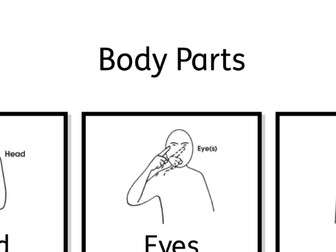
These resource is a A4 sheet with 12 makaton signs on it all about your body parts. This resource includes the following makaton signs:
Head
Hair
Eye
Mouth
Ears
Face
Hand
Nose
Arm
Leg
Foot
Hurt
Please check out my other Makaton resources to learn more Makaton signs, all on one side of A4 for easy reading.
Please leave me a review, if you like my resources. If there is a resource you would find particular helpful please let me know and I can make it.
This resource is to practice body parts and pains. It has different Conti style activities IT IS EDITABLE:
Vocabulary
What is missing? Game
match the word with the picture
Sentence builder
Listen and tick the word I say
Sentence stealer
Read my mind
Faulty echo
Sentence bingo
Break the flow
Tick or cross
Narrow reading
Write sentences following the pictures
Trapdoor
This resource contains 6 worksheets to support the learning of French Body Parts. It includes:
Face Vocabulary
Body Vocabulary
Face Vocabulary
Body Wordsearch
Clothes Crossword
Self Portrait
Describing Face & Body
Answers are included
A 3-page French worksheet which should be used as homework or for a revision session about ‘parts of the body’. This document recaps the key vocabulary, grammar points and translations.
Level: Beginners/Medium
Tenses used: Present Tense
Skills developed: Translation/Grammar
French Parts of the Body - Le Corps. 76 pages of resources to teach 16 French words for parts of the body - great for teaching elementary students.
This French parts of the body vocabulary set includes: une tête, une bouche, les dents, un nez, les cheveux, une oreille, un œil, un cou, un bras, une main, un doigt, un pouce, un ventre, un pied, une jambe, un genou.
The pack comprises:
1. 5 pages of suggestions for use of the resources in the classroom
2. Word wall set with separate title (color). (Can be cut up to make small color flashcards)
3. 16 large b/w flashcards - image and text
4. 16 large b/w flashcards - image (no text)
5. A set of small b/w flashcards - image (no text)
6. A b/w handout of pictures and words
7. A b/w matching activity set (words and pictures)
8. A b/w worksheet - color and label the picture
9. A b/w worksheet - unscramble the anagrams and match
10. A crossword (two versions - one with initial letters given to provide for differentiation in the classroom) plus answer key
11. A b/w wordsearch activity with answer key
12. 30 bingo game boards and teacher’s master board
13. A set of b/w playing cards for games such as dominoes, pelmanism (pairs) etc.
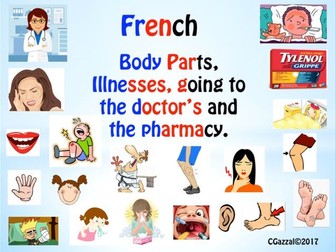
This is a set of resources to introduce and cover the topic of body parts, illnesses, going to the doctor and going to the chemist. The PowerPoint resource introduces and practises: 26 body parts; avoir mal + body parts; 14 other illness expressions; conversations at the doctor’s and at the chemist’s; and different medications.
There is a range of different types of activities to complete and a worksheet that accompanies all of the exercises on the PowerPoint.
A resource for GCSE French on the topic of illnesses and sickness that will help pupils to speak and write about their health, symptoms and solutions. There are reading activities and lots of translation using the avoir expressions: avoir mal/ envie/ besoin/ faim/ soif/ chaud/ l’air etc.
There is also a writing task and model answer for pupils to complete before attempting their own.
Answers included.
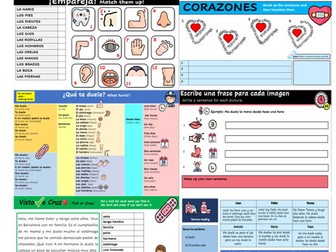
Three resources to help pupils to talk about illness, health and body parts in Spanish.
There is a reading comprehension, vocabulary activities, practice with me duele/ me duelen and a grammar gap fill task.
There is also a speaking/writing mat on illnesses and needs with translation practice and answers.
A reading comprehension on the topic of body parts, accidents and injuries in the past tense (preterite) with a scaffolded text: tuve un accidente de esqui
Answers included.
This resource contains 6 worksheets to support the learning of German Body Parts. It includes:
Face Vocabulary
Body Vocabulary
Face Vocabulary
Body Wordsearch
Clothes Crossword
Self Portrait
Describing Face & Body
Answers are included
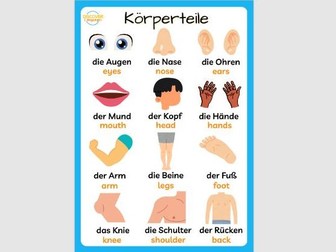
Beginner German and English bilingual posters, worksheets and wordsearch activity to learn and practice parts of the body and facial features vocabulary.
This PDF printable includes 5 pages:
12 colorful pictures with the German text underneath
Bilingual poster with German and English
Fill in the blank worksheet for students to spell the words themselves
An easy drawing and writing worksheet
Wordsearch activity to recall and recognize the vocabulary
Answer Key
This resource is ideal for teaching young learners the parts of the body.
It features engaging activities that help students easily identify and remember body parts like the head, arms, legs, hands and more.
Children will enjoy learning while developing essential vocabulary and motor skills.
Perfect for preschool, kindergarten, and early elementary classrooms.
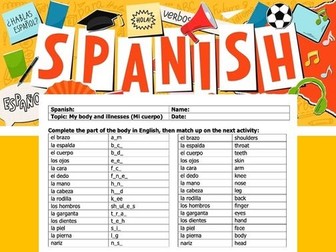
Spanish worksheet to teach parts of the body and illness / doctors vocab. Vocab taken from the New Spec GCSE vocab list to ensure students are exposed to the correct vocabularly. Perfect worksheet for cover, homework, revision or classroom learning to consolidate what is taught in the classroom.
Worksheet includes a variety of activities to allow students to:
learn vocab
apply new structures
translate
readaloud (if used in lesson, in pairs)
1x Assembly from the Empowering Minds Bundle. Great as an assembly on it’s own or as part of the series. Why not buy the bundle to have all 10 sessions. Ready to use straight away or customizable to your school context.
"Healthy Body, Healthy Mind: The Importance of Physical and Mental Wellness"
Learning Outcomes:
• Recognise the link between physical activity, nutrition, and mental health.
• Learn simple ways to maintain a balanced lifestyle through healthy habits.
• Understand how sleep, exercise, and mindful practices contribute to overall well-being.
Could be used for an assembly for 11-18 year olds or as a tutor time session or even as a support resource.
Empowering Minds Series:
Bouncing Back: The Power of Resilience
The Growth Mindset: Unlocking Your Potential
Building Bridges: The Importance of Positive relationships
Healthy Body, Healthy Mind: The importance of Physical and Mental Wellness
The Power of Gratitude: Finding Positivity in every day
Digitial Well-being: Thriving in an Online World
Fail Forward: Embracing Failure as Part of Success
The Power of Kindness: Creating a culture of care
Finding balance: Managing stress and academic pressure
Setting Goals: Mapping your Path to success
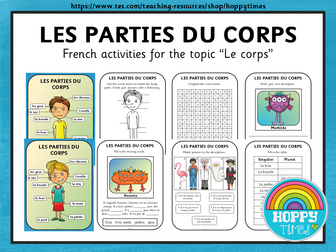
French Parts of Body Activities
Les Parties du corps.
Page 1 - resource cover
Pages 2-3 boy/girl posters (words included:les cheveux, l’oreille, la tete, le main, la jambe, le pied, le bras, la bouche, le nez, les yeux )
Pages 4 - 5 Body Parts Labelling Activity .
Pages 6 - 7 Fill in the Table (singular, plural); with answers.
Pages 8 - 9 Word Search (with answers).
Pages 10 - 11 Match Pictures to Descriptions Activities.
Pages 12 - 15 Fill in the Missing Words Activities.
Pages 16 - 17 Write your Own Description Activities.
Page 18 Terms and conditions; credits.
Suitable for KS2. Colourful, child friendly graphics.
A 3-page Spanish worksheet which should be used as homework or for a revision session about ‘parts of the body’. This document recaps the key vocabulary, grammar points and translations.
Level: Beginners/Medium
Tenses used: Present Tense
Skills developed: Translation/Grammar
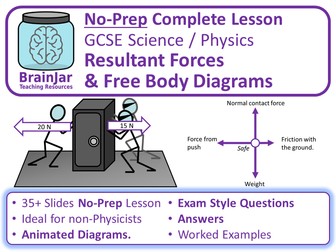
Complete No-Prep lesson with exam questions, tasks and answers on Resultant Forces and Free Body Diagrams for AQA GCSE (9-1) Science / Physics. This lesson covers the first parts of AQA GCSE Physics 4.5.1.4 / Combined Science 6.5.1.4. Note: This lesson does not cover the last two parts of this exam specification point (vector diagrams and resolving forces) as these are in the next lesson.
As a Secondary Science teacher, Deputy Headteacher, writer and examiner for many years I make high quality no-prep lessons so busy teachers can teach outstanding lessons without spending hours planning. This high quality lesson includes explanations, different types of in-lesson assessment (all with answers) and unique exam questions.
My lessons are ideal for non-Physicists - as a Biologist who retrained as a Physics teacher I know how to take learners on a journey that builds up their understanding step by step, while still going into a lot of depth. The preview video shows a representative sample of slides from the resource so that you get a good idea of what it includes before you buy.
What’s Included:
• Teaching notes
• Starter / Do Now Activity
• Explanation slides in “chunked” sections with animated diagrams.
• Multiple questions in different question styles and difficulties - no need for worksheets. Each “chunked” explanation section typically includes a set of “learning check / quick questions” followed by a set of in-depth questions on the learning from that “chunk” of the lesson. All questions have answers.
• Exam-style questions on the whole lesson at the end of the lesson- these are unique, based on real exam questions but not just copied from exam boards.
• Answers for all questions
• All easily editable to adapt to your teaching or to use in existing lessons.
• Slightly humorous, at points, if you like that sort of thing.
The lesson was written for AQA GCSE Science / Physics but is very likely to be applicable to other exam specifications.
Please leave a rating / review and all other feedback gratefully received!
Objective: Learning parts of the body, asking questions, speaking practice.
Step 1: The outline of a human body is labelled on a worksheet. (Words given underneath).
Step 2: With a partner, pupils design a monster: They ask for number, size and colour of the body part, and the partner determines it by throwing a dice. Then the pupils can draw and describe their monster.


 Quick View