UPDATED FOR THE NEW 2026-2027 ACADEMIC YEAR.
Progression of Skills document that matches up with the long term plan (also available on my TES). A 10-page document that highlights all the skills throughout the academic year for a reception cohort - it addresses all areas of the EYFS curriculum and makes links to the primary curriculum. Fantastic to get you started in creating a reception curriculum.
Includes both a PDF and microsoft word version for you to edit as you wish.
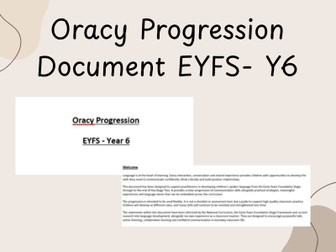
This Oracy Progression Document (EYFS – Year 6) provides a clear, whole-school approach to developing high-quality speaking and listening skills across the curriculum.
It outlines a carefully sequenced progression of oracy skills, beginning in EYFS and building through to Year 6, aligned with both the EYFS framework and National Curriculum expectations. The document is structured around key strands including physical, linguistic, cognitive, and social and emotional aspects of communication, ensuring a comprehensive approach to oracy development.
Within EYFS, the document breaks down key early communication skills, including turn-taking, vocabulary development, sentence building and confidence in speaking, alongside practical teaching ideas and language stems to support classroom practice.
The inclusion of progression, teaching strategies, real-life speaking opportunities and modelled language makes this an invaluable tool for ensuring consistency and high expectations across a setting.
Ideal for EYFS Leads, English Leads and senior leaders, this resource supports Ofsted expectations, clearly demonstrating how oracy is intentionally planned, developed and embedded across the curriculum.
Track progress among one or many classes.
- Use as a class markbook
- Colours grades and results based on achievement
- Displays comparison graphs
- Contains tens of new functions such as AverageGrade, HighestGrade, ScoreToGrade.
- Includes a data matrix to compare assessments or view levels or progress for performance management or AfL purposes.
This is a set of templates needed to complete your subject leadership monitoring. They can be used as they are or edited to make it more specialist for your subject and school. All ready to go with a suggested evaluation schedule, including when to complete monitoring, OFSTED supporting deep dive questions from training sessions and discussion prompts for middle leaders.
Download these to save yourself time setting up templates for:
Monitoring report
Questions for Pupil Interview
Subject Leader Progress Reports
Lesson Observation Proforma
Work Scrutiny Proforma – 2 templates
Action Plans
You can find my many more reliable and time-saving resources at my shop: https://www.tes.com/teaching-resources/shop/Teach_wise
All reviews welcome.
Head of Department Curriculum Lead | Progress Data Analysis In Tray Task | Interview Preparation
This interview task is designed to assess candidates applying for a Head of Department role within a secondary school. It focuses on a realistic scenario involving pupil attainment data, requiring candidates to analyse trends, identify key issues, and propose strategic interventions to raise achievement.
This is not specific to a department and can be used generically.
This resources includes:
an excel dataset for 60 students (Years 9–11) with filters for PP, SEN, attendance, class groupings, etc.
task instructions - simulating the real interview task
a realistic 60 minute model analysis to help you consider your own ideas
Please note: this is not an exhaustive resource but is a great starting point for those hoping to transition to the role of Head of Department and to pratice their analysis skill pre-interview
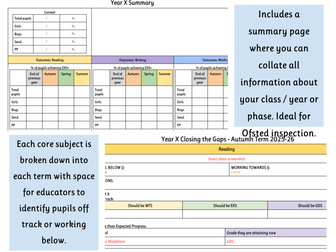
This comprehensive document is designed to help teachers, subject leaders, and school leaders monitor and track pupil progress across Reading, Writing, and Maths throughout the academic year. It combines clear data recording with actionable insights, making it easier to identify gaps in learning and plan targeted interventions.
Key features include:
Year Group Summary: Quickly capture cohort context, including total pupils, gender splits, SEND, and disadvantaged pupils (PP).
Termly Tracking: Record attainment and progress for each pupil every term, highlighting those Off Track, on Track, or achieving More than Expected Progress.
Closing the Gaps: Identify pupils working Well Below or Towards the Expected Standard and plan specific actions to support them.
Group Analysis: Compare attainment and progress across key groups (girls/boys, SEND, PP, higher attainers) to ensure equity and targeted support.
Action Planning: Provides space to record interventions, teaching adjustments, and strategies for challenging more able pupils.
Integration with Assessment Tools: Designed to complement the Termly Core Subject Assessment Cribsheet (available separately) for consistent and reliable data analysis.
By using this template, schools can efficiently track progress, highlight trends, and make informed, evidence-based decisions to improve outcomes for all pupils. It saves time, supports accountability, and ensures that gaps are addressed proactively.
UPDATED FOR THE NEW 2026-2027 ACADEMIC YEAR.
Progression of Skills document that matches up with the long term plan (also available on my TES). A 7-page document that highlights all the skills throughout the academic year for a school nursery cohort - it addresses all areas of the EYFS curriculum and makes links to the primary curriculum. Fantastic to get you started in creating a nursery curriculum.
Includes both a PDF and microsoft word version for you to edit as you wish.
As Art Subject Lead I created this glossary of art terminology/ extended vocabulary list to ensure that the children in my school had a broad range of vocabulary that could be used across the curriculum. I began with Year 1 and, based on National Curriculum progression documents, I compiled a list of vocabulary that the children should see, hear and be encouraged to use. I have added new vocabulary to deepen the children’s understanding and broaden their vocabulary for each year group. This can be seen in green.
This list can be used by:
Subject Leaders as part of progression documents and curriculum for the school.
Teachers as a planning scaffold and an assessment tool to ensure children have a broad art curriculum.
Teachers to deepen their subject knowledge.
Teachers and subject leaders to promote high standards in vocabulary across the curriculum.
To ensure Art is linked to English and reading where possible.
Pupils may find this resource useful as a check list in their sketchbooks at the beginning of each topic.
My school have used this grid this year and we have noticed a great improvement in the children’s understanding of art vocabulary in their speech and through their writing in English.
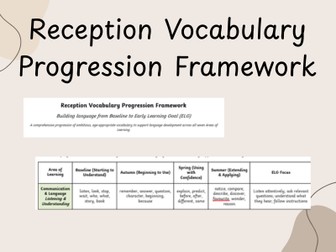
As a foundation subject lead I created this glossary of art terminology/ extended vocabulary list to ensure that the children in my school had a broad range of vocabulary that could be used across the curriculum. I began with Year 1 and, based on National Curriculum progression documents, I compiled a list of vocabulary that the children should see, hear and be encouraged to use. I have added new vocabulary to deepen the children’s understanding and broaden their vocabulary for each year group. The vocabulary lists are broken into Key Stage 1 and 2 and are progressive showing high frequency words, sight words, vocabulary from the national curriculum and where appropriate, the year group spelling lists. These features are colour coded within the document.
This list can be used by:
Subject Leaders as part of progression documents and curriculum for the school.
Teachers as a planning scaffold and an assessment tool to ensure children have a broad Geography curriculum.
Teachers to deepen their subject knowledge.
Teachers and subject leaders to promote high standards in vocabulary across the curriculum.
To ensure Geography is linked to English and reading where possible.
Pupils may find this resource useful as a check list in their sketchbooks at the beginning of each topic.
My school have used this grid this year and we have noticed a great improvement in the children’s understanding of Geography vocabulary in their speech and through their writing in English.
Attached is a maths subject leader checklist. This checklist is useful for monitoring maths lessons in the school as well as demonstrating progression. It is in-line with the White Rose maths progression document, Development Matters (EYFS section) and the National Curriculum.
For school leaders who want to drive pupil progress by measuring effort vs attainment and providing appropriate intervention which has real impact.
Includes X / Y Scatter graph with hover tip feature.
Simply populate with student name, mean effort / A2L , and progress 8 score
NOW INCLUDES 2019 P8 Calculator simply drop the KS2 PA and the grades in the relevant columns to calculate P8 based on 2019 proviosnal estimates.
Head of Year | Head of House | Pastoral Role | Interview Toolkit Bundle
This 14 resource Toolkit Bundle is a mid-tier collection designed to help aspiring Heads of Year or Pastoral Leaders prepare for interview with confidence and clarity.
It offers a wide range of practical tools covering common interview questions, key pastoral scenarios, and in-tray tasks — ideal for those seeking structured support without committing to the full Ultimate Bundle.
In this bundle you will find:
Interview Questions & Guidance
3 sets of questions you may be asked on a pastoral interview — over 50 questions for practicing.
Parts 1 & 2 of my series “5 Big Pastoral Questions” detailed guidance on how to answer 10 common interview questions.
In-Tray / Prioritisation Tasks
Guidance on a prioritisation task — a task which frequently comes up at Head of Year interviews as an in-tray exercise.
An example progress/attainment data analysis in-tray task — to help you prepare for interview.
An example attendance data analysis in-tray task — for interview practice.
A PDF containing guidance on responding to a parental concern letter — another common in-tray task at Head of Year interviews.
Data Analysis Support
A PDF guide to analysing a set of progress data from a Head of Year perspective — detailed, step-by-step approach with suggested actions.
Additional Resources
Two PDF e-booklets useful to read prior to interview, offering ideas for discussion:
E-booklet 1: Leading a team and working across school
E-booklet 2: Ideas for improving attendance and behaviour
An example assembly on raising aspirations — successfully used in a Head of Year interview.
A PDF with information on what to expect during a Head of Year interview and the types of in-tray exercises you may face.
Perfect for teachers and leaders applying for Head of Year or pastoral roles who want structured, focused interview preparation.
Please follow me on facebook: facebook.com/teachcoach
From a recently Ofsted outstanding setting.
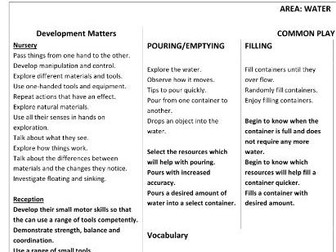
A document showing the progression between nursery and reception in the different areas of provision in our early years setting.
Areas on the map include ideas for resources and vocabulary to support where needed.
Skills are developed using Alistair BryceClegg’s common play behaviours and links are also shown to the seven areas of learning from development matters.
Level 5
SQA
The purpose of the unit is to provide learners with the opportunity to develop their research skills, reflect on their own qualities, skills and experience in relation to leadership and to develop the leadership skills and values necessary to work cooperatively with others
Learning Intention : For this Unit learners are expected to be able to:
Find out information about leadership
Reach conclusions about what makes an effective leader
Evaluate their own potential for leadership
Tutors will provide minimum support to learners by answering specific questions to enable learners to progress.
A power point document
57 slides
Talking about skills and qualities
Types of leadership
Open discussions
Self evaluation
a word document for pupils to complete (11 pages) for them to complete the course
**A simple, easy to use proforma to track your SLT meetings. **
Reviews welcome.
This goes hand in hand with my free rapid action template:
https://www.tes.com/teaching-resource/rapid-improvement-plan-template-13010836
Alternatively, you might like my performance management/pupil progress resources: https://www.tes.com/teaching-resource/pupil-progress-meeting-data-pack-analysis-13014100
or how about my Personal Development template:
https://www.tes.com/teaching-resource/personal-development-plan-including-british-values-and-smsc-13012821
If your focus is on behaviour, you may like this resource:
https://www.tes.com/teaching-resource/behaviour-concern-forms-and-reflection-time-slips-13014031
Research Project on Student Leadership. Leader begins as deputy supporting Leader & learning roles é responsibilities (A). Progress to Leader the following week é have to make a presentation to the class on maths in the real world. They also nominate other pupils as all stars (D) é receive the attached feedback report (B) in the post upon completion. After all pupils have completed a week a single pupil is elected as Leader and assumes more responsibility including some teaching (E). Feedback so far has been positive from pupils, parents and staff. Please rate.
Here is a clear, concise overview template of all the subject monitoring you have completed across the year. They can be used as they are or edited to make it more specialist for your subject and school.
This would work perfectly alongside my in depth monitoring forms, which include:
Monitoring report
Questions for Pupil Interview
Subject Leader Progress Reports
Lesson Observation Proforma
Work Scrutiny Proforma – 2 templates
Action Plans
Take a look here: https://www.tes.com/teaching-resource/subject-leadership-monitoring-forms-evaluation-schedule-and-supporting-questions-13012343
All reviews welcome.
A quick summary of the fantastic book ‘Doing Middle Leadership Right’ by Bawden, Hickin and Macis-Riley.
Wolsey Academy, a non-profit resource provider, directs all profits to various charities, including refugee support, youth sports, educational programs, and carbon capture, achieving a carbon-negative status. Explore our site for resources and free history role-playing games loved by students. Thank you for your dedication to teaching and for supporting our mission.


 Quick View