Wood Theory Resistant MaterialsQuick View
DesignandEngineering

Wood Theory Resistant Materials

(0)
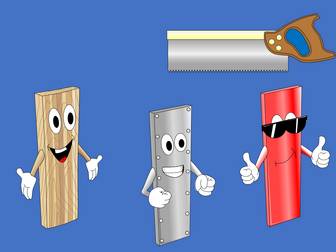
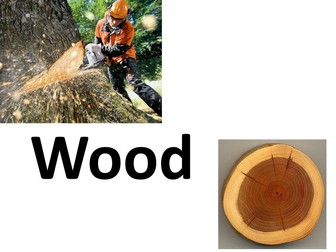
This lesson is an excellent, accessible introduction into wood theory or KS3, 4 or 5. It is essential that design technology and/or product design students know this as part of their theory, ready for assessments. The lesson covers hardwoods, softwoods and manufactured boards, wood examples and their respective properties and manufacturing (felled, formed and finished) through various activities. Included is also a video on plywood production, worksheets and home learning tasks.
KS3 D&T Resistant Materials Types of Wood LessonQuick View
natalielonglegs

KS3 D&T Resistant Materials Types of Wood Lesson

(0)
KS3 lesson on types of wood Written to start to incorporate the new Design & Technology GCSE framework into KS3 learning PowerPoint includes worksheets to be printed. When I delivered this lesson I found it useful to get the learners working in small groups (on tables that were strategically arranged to mix SEN, behavioural and higher ability learners). Feel free to ask me any questions!
Nazi Opposition and resistanceQuick View
PilgrimHistory

Nazi Opposition and resistance

(0)
AQA GCSE Germany 1890-1945: Democracy and Dictatorship The aim of this lesson is to assess how effective the different types of opposition and resistance were towards the Nazis in Germany. This lesson is split into three main areas of opposition to the Nazi regime: resistance, non-conformism and open criticism. The lesson also looks in depth at Church opposition, youth opposition, passive resistance, Jewish resistance and the Stauffenberg Bomb Plot. Students are given a list of ways of opposing the Nazis which they have to categorise and through some independent research decide the best and most effective forms of opposition. Moreover by the end of the lesson students will be able to assess and judge why opposition was ineffective against the Nazi state. The lesson is enquiry based with a key question using a lightbulb posed at the start of the lesson and revisited to show the progress of learning. The resource includes suggested teaching strategies, retrieval practice, differentiated materials and comes in PowerPoint format if there is a wish to adapt and change.
Resistant Materials Boat ProjectQuick View
McCraft

Resistant Materials Boat Project

(1)
The boat project is a resistant materials project designed mainly for year 10 pupils but can be used for KS3 or KS4 pupils. This project is a skills based activity to teach pupils how to use tools in the workshop safely as well as teaching them basic wood working skills which are needed when developing the subject knowledge leading up to GCSE resistant materials. In the project the user will create a wooden boat and high impact polystyrene flags and sails using step by step guides and tutorials. This tutorial has curriculum links with maths with regard to the marking out and measuring accurately. The tutorial includes: A3 display worksheets. A4 booklet worksheets. Power point tutorial. 2D design boat steering wheel template. Exemplar product photo’s. Assessment sheets.
DT Material Properties MatQuick View
MrsDesignTech

DT Material Properties Mat

(0)
Material Reference Mats Materials included: Papers and Boards Timbers Polymers Textiles Metals Our material reference mats are designed to support students in understanding the key properties, uses, and types of materials commonly used in Design and Technology. Each mat is visually engaging, featuring clear, high-quality images, making the resources accessible to all learners. The mats cover essential material categories: papers and boards, metals, polymers, timbers, and textiles. These mats provide: Key Properties: Concise descriptions of each material’s physical and mechanical characteristics. Common Uses: Practical examples of where these materials are used in real-world products. Clear Images: Visual aids to help students easily identify each material type. These mats are suitable for any year group and can be used as a quick reference tool in the classroom, for independent study, or as part of revision activities.
KS3 ~ Year 8 ~ ResistanceQuick View
SWiftScience

KS3 ~ Year 8 ~ Resistance

(0)
This lesson is designed for the KS3 Year 8 Science course, specifically the P2 1.1 unit on ‘Electricity & Magnetism’. The lesson begins with an introduction to resistance, students are provided with a definition which they can write down in their books, as well as a diagram to depict what happens to electrons as they flow around the metal wires within a circuit. Students will then complete a ‘copy-and-complete’ task, this can be marked using the mark scheme provided. Students are now asked to ‘Think > Pair > Share’ their ideas about whether the thickness of the wire would affect the resistance of the wire. Students will discuss their ideas with their peers, share their ideas with the class and then watch a video to find out the answer. Students can then summarise their findings in their books by completing a fill-in-the-blank task, this can then be self-assessed once complete. Students will now be introduced to Ohm’s law, which links the resistance of a component to the current running through it and potential difference across it. Students will be given an equation triangle, they can copy this down into their books and use this to complete the set of problems on the next slide. This work can be marked and corrected once complete. Lastly, students are asked to ‘Think > Pair > Share’ their ideas about which materials are good conductors and insulators. Students can discuss their ideas and write them down into their books, answers are then revealed for students to check their work against. The last assessment task is a ‘Copy and correct’ task, students are given a paragraph of information which they will need to copy and correct the mistakes as they go. Once complete, this can be marked using the mark scheme provided. The plenary task is a choice of two tasks - to summarise what students have learned in three sentences or to write a definition for a set of key words. All resources are included at the end of the presentation, thanks for looking, if you have any questions please let me know in the comments section and any feedback would be appreciated :)
Materials - Resistant MaterialsQuick View
lsshales

Materials - Resistant Materials

4 Resources
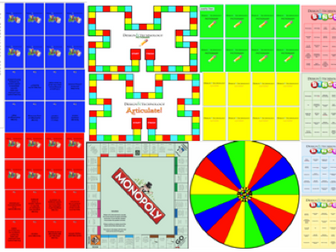
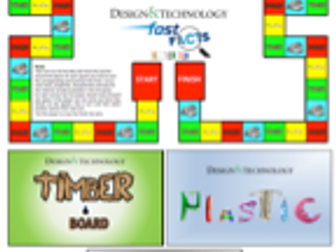
Four great resources that can be used as lesson starters/settlers or plenaries or as fun and effective revision tools. Includes three card sort games and a Fast Facts board game that can be used as a whole lesson with learners working in pairs, teams or as a whole class activity.
Design Technology Pine Wood Resistant Materials Starter Activities Wordsearch, Anagrams CrosswordQuick View
mikedean

Design Technology Pine Wood Resistant Materials Starter Activities Wordsearch, Anagrams Crossword

(0)
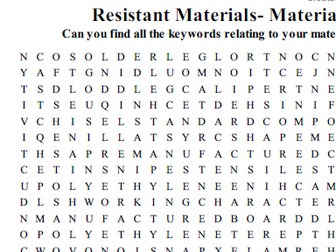
1 x Wordsearch, 1 x Anagram sheet, 1 x Crossword and Alphabet Brainstorm Analysers activities on the theme of the Design: Pine. Includes space for students to explain the keywords and suggested extension activities. Can take 10 minutes or an hour, depending on which activities the students complete. Ideal for the start of a lesson, a quick filler, a homework, part of a cover lesson or as a plenary on the board with a whiteboard pen. The idea behind these is to get students to become more literate and think independently about the words that could be used to describe the topic being taught. Often the students will pick up on things that you would not normally expect!
Resistant Materials : Composite Materials Exam PreparationQuick View
jjmcfall

Resistant Materials : Composite Materials Exam Preparation

(0)
KS4/KS5 Resistant Materials Exam preparation: Composite Materials LEARNING OBJECTIVES: Be aware of the characteristics and uses of different types of composite materials To Understand how Combining two or more materials will improve the performance of the material. AQA EXAM TIP: Be able to visually identify a range of composite materials You must be able to name specific composite materials You must understand the specific properties of a range of composite materials.
Materials and their working properties (resistant materials) online learningQuick View
clarvise

Materials and their working properties (resistant materials) online learning

(0)
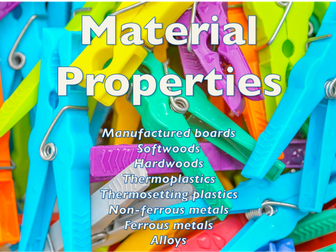
This is an electronically editable research task consisting of 12 pages. Learners to find out the working properties, physical properties, applications and other information as appropriate and record their findings in the tables. It is based on the AQA GCSE Design & Technology specification and includes the following materials: Manufactured boards Softwoods Hardwoods Thermoplastics Thermosetting plastics Non-ferrous metals Ferrous metals Alloys A PDF version is also provided to allow the resource to be printed where learners have limited ICT access.
Smart Materials Design and TechnologyQuick View
thedtteacher

Smart Materials Design and Technology

(1)
Introduction to smart materials when you just don’t have enough time or resources to give everyone a smart material to experiment with. Good revision lesson too. Includes: Video link introduction Key Vocubulary Smart Material animations Mini Review Scaffolding Tasks Example GCSE Questions Exit Card.
AQA GCSE Resistant MaterialsQuick View
nthorogood

AQA GCSE Resistant Materials

5 Resources
Materials theory: Metals, Plastics, Woods, health and safety, injection moulding and extrusion. Includes tests, whole lesson power point presentation, printable worksheets. Could also be used for A level product design.
Wheel Of Fortune - Resistant MaterialsQuick View
lsshales

Wheel Of Fortune - Resistant Materials

(0)
Can be used as a whole class activity or small groups or pairs. One player spins the wheel and it will land on a colour. They then collect the coloured card matching the colour on the wheel and read the question to the other player. The person with the card then attempts to answer the question on the card to gain the marks for the question. If they are unable to do so this can be passed to other player to answer. A great revision tool which is engaging and fun for the group. Idea for the Edexcel syllabus but will apply for any resistant materials group.
Resistant Materials ArticulateQuick View
lsshales

Resistant Materials Articulate

(0)
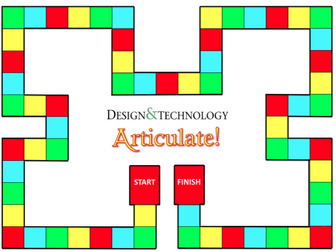
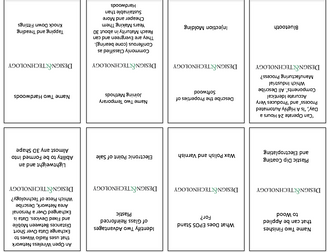
Students work in two teams. Students start by rolling the dice and moving the counter to select the colour, the colour corresponds to a card. Learners select the coloured card and describe to the group the tool, process etc. on the card. The learner who guesses the tool, process being described wins the point for their team. A great whole class activity.
Pictionary Resistant MaterialsQuick View
lsshales

Pictionary Resistant Materials

(0)
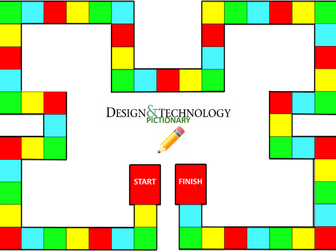
Students work in teams. Students start by rolling the dice and moving the counter to select the colour, the colour corresponds to a card. Learners select the coloured card and draw for the group the tool, process etc. on the card. This can be done as a group on the whiteboard or in teams/pairs on paper. The student who guesses the tool, process being drawn wins the point for their team. A great activity for a fun lesson starter and for revision.
Revision Games - Resistant MaterialsQuick View
lsshales

Revision Games - Resistant Materials

7 Resources
Eight great revision tools to keep learners motivated and engaged during revision. Can be used as whole lessons, learners play the classic games with a twist answering question on Design Technology. A great way to get learners engaged in the revision process and foster collaborative learning in the classroom.