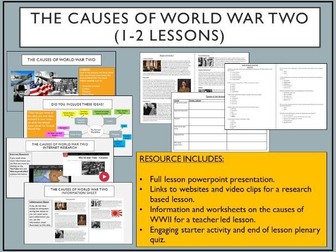
This lesson is the first in a series of lessons on the Second World War aimed primarily at KS3 students and is expected to take between 1-2 hours to complete. Students are introduced to some of the main causes of this significant event of modern world history. The lesson can be delivered as a computer based research lesson or through a more traditional, classroom based lesson. In the computer based lesson students are directed to a series of informative websites and audio visual clips from which they can gather their information. In the traditional, classroom based lesson students use the information sheet resources to gather their information.
The final task of the lesson requires students to demonstrate their learning through a choice of creative tasks which they must complete. This can include such things as creating a poem, song, role play or video. Responses from students so far has been excellent.
This lesson is one of a series of lessons on the Second World War aimed primarily at students in KS3. Students are asked to consider why the allies wanted revenge on their enemies in the Pacific. The lesson begins with an engaging picture starter of a sinking ship at Pearl Harbour which gains student curiosity. The lesson then introduces students to a variety of source materials including video clip, pictures and written sources to gain knowledge about the start of the war in the Pacific, the Japanese enemy, and the treatment of allied prisoners of war at the hands of the Japanese. The lesson ends with students producing a piece of their own wartime propaganda encouraging support for the war against the Japanese in the Pacific.
5 excellent lessons on London and the Second World War.
These lessons are linked to the new Edexcel GCSE 9-1 spec.
All the resources are included and this series of lessons works well with the Pearson ‘Warfare through time, c1250 - present’.
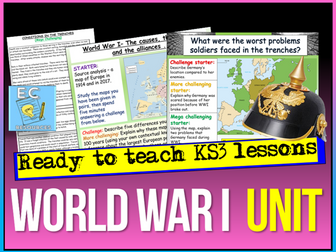
A HUGE unit of World War Two lessons for KS3 (or could be used as pre GCSE prep / catch up for KS4). 20 x well planned, detailed and challenging lessons, complete with 9-1 level GCSE challenge questions. This is an editable package and includes:
1. The Treaty of Versailles
2. The Great Depression and Germany
3. The Spartacist Rebellion
4. The Kapp Putsch
5. Hitler and the Nazi Rise to Power
6. WWII Propaganda
7. The Hitler Youth
8. Women, Children and Workers in Nazi Germany
9. Appeasement
10. Sudetenland Crisis
11. The German Youth in Opposition
12. Terror in Nazi Germany
13. The Holocaust
14. Blitzkrieg
15. Stalingrad
16. Dunkirk
17. Battle of Britain
18. D-Day
19. Was Hitler a great dictator?
20. The Impact of WWII on Civilians
This package would take you months to plan from scratch - each lesson will last you an hour, unless stated as two hours in the individual lesson description.
Who are EC Resources?
EC Resources are a group of teachers who work together to create easy to use, high quality and editable lessons and units of work. We have created lessons for The Bank of England, The Children’s Commissioner, MACS Charity, The British Legion, Tes, LikeToBe Careers, the Criminal Cases Review Commission (UK Gov) and have also completed PSHE and Citizenship commissions for schools across the UK.
A lesson looking at the consequences of the Second World War.
This involves looking at and filling in an A3 sheet on the following events:
Germany divided (occupation zones)
Cold War
Marshall Plan
Iron Curtain
Berlin Wall
The far right in Europe
Decolonisation
European colonisation
Students will then use this information to complete an two consequences exam question. Explain two consequences of the Allied victory in World War Two.
Finally students will read about the policies of the Soviet Union and the West, with this information they will create a logo that best represents both ideologies.
A KS3 History lesson on evacuation during the Second World War.
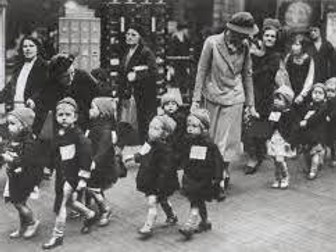
This lesson can be broken into two one-hour lessons. The first looks at the reasons for evacuation looking at first hand accounts of the process. The second looks at the experiences during evacuation, again looking at sources.
Questions are asked throughout the lesson to check for understanding and develop source analysis.
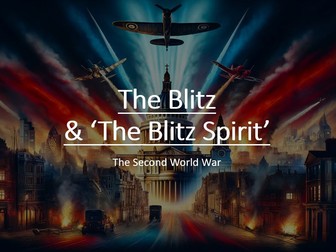
This lesson examines the Blitz, a sustained bombing campaign by Nazi Germany against Britain during World War II. Students will learn about the threats, how Britain adapted, and the concept of the Blitz Spirit. Activities include video analysis, completing worksheets on threats and adaptations, and writing PEEKA paragraphs. The lesson concludes with a discussion on the existence of the Blitz Spirit, supported by evidence from various sources.
Lesson Content and Activities:
Introduction:
Discuss the Blitz and its significance during World War II.
Create a spider diagram and add to it while watching a video on the Blitz.
Threats:
Identify and analyse the threats posed by Heinkel bombers, V1 rockets, and V2 rockets.
Complete the ‘threats’ section on the Blitz worksheet using fact sheets.
Adaptations:
Discuss how Britain adapted to the bombings with bomb shelters, the London Underground, blackouts, barrage balloons, and the Royal Observer Corps.
Complete the ‘adaptations’ section on the Blitz worksheet using fact sheets.
Blitz Spirit:
Examine the concept of the Blitz Spirit and its portrayal in history.
Read through various sources and complete a table analysing whether the sources support the idea of a united Blitz Spirit.
Writing Task:
Write two PEEKA paragraphs, one arguing that there was a Blitz Spirit and one arguing that there was not.
Use evidence from at least two sources to support each paragraph.
Class Discussion:
Share and discuss the paragraphs.
Reflect on the impact of the Blitz on British society and whether the Blitz Spirit was a real phenomenon.
Resources:
Spider diagram template
Video link on the Blitz
Fact sheets on threats and adaptations
Sources for Blitz Spirit analysis
PEEKA paragraph guidelines
From a series of over 30 Second World War lessons made by Wolsey Academy. They provide a thorough foundation of knowledge in this vital period of 20th Century History and each lesson looks to focus on a range of historical skills and exam techniques to equip students with knowledge and transferable research, analysis and study skills.
To find the complete bundle search on the Wolsey Academy website.
Wolsey Academy operates as a non-profit, with every penny we make going to one of our charity partners or into the Ipswich Initiative, funding good works across the town and county. Search for Wolsey Academy to see our website for more details and to purchase resources at a discount.
Use code ‘WOLSEY’ for 10% off at the Wolsey Academy Web Store.
Please help us, help you, help them. Thank you.
Hope it helps.
W
This lesson explores the rise of Benito Mussolini and the establishment of fascist rule in Italy from 1919 to 1925. Students will learn about the socio-economic factors that contributed to Mussolini’s rise, his use of violence and propaganda, and key events like the March on Rome. Activities include video analysis, sorting timeline events, and writing a PEEKA paragraph. The lesson concludes with a discussion on Mussolini’s impact on Italy and European politics.
Lesson Content and Activities:
Introduction:
Discuss the historical context of post-World War I Italy, including economic depression and political instability.
Watch a video on the rise of Mussolini and create a spider diagram to note key points.
Quiz-Quiz-Trade Activity:
Walk around the classroom and partner up to ask and answer questions using the provided question cards.
Trade question cards after each interaction.
Who Was Mussolini?
Learn about Benito Mussolini, the formation of the Fascist Party in 1919, and his rise to power.
Discuss his use of nationalism and authoritarianism.
Timeline Activity:
Sort timeline cards into the correct chronological order, covering key events such as the formation of the Fascist Party, the Biennio Rosso, the use of Black Shirts, the March on Rome, and the establishment of dictatorship.
Factors Contributing to Mussolini’s Rise:
Examine the “Mutilated Victory” and its influence on Italian politics.
Discuss the fear of communism and the Biennio Rosso.
Analyze Mussolini’s use of violence and propaganda, including the Black Shirts and media control.
Writing Task:
Write a PEEKA paragraph explaining one key factor that contributed to Mussolini’s rise to power.
Use the PEEKA structure: Point, Evidence, Explain, Knowledge (extra), Answer the question.
Class Discussion:
Share and discuss the PEEKA paragraphs.
Reflect on Mussolini’s impact on Italy and the broader European political landscape.
Resources:
Video link on Mussolini’s rise
Spider diagram template
Timeline cards for sorting
Question cards for Quiz-Quiz-Trade activity
PEEKA paragraph guidelines
From a series of over 30 Second World War lessons made by Wolsey Academy. They provide a thorough foundation of knowledge in this vital period of 20th Century History and each lesson looks to focus on a range of historical skills and exam techniques to equip students with knowledge and transferable research, analysis and study skills.
To find the complete bundle search on the Wolsey Academy website.
Wolsey Academy operates as a non-profit, with every penny we make going to one of our charity partners or into the Ipswich Initiative, funding good works across the town and county. Search for Wolsey Academy to see our website for more details and to purchase resources at a discount.
Use code ‘WOLSEY’ for 10% off at the Wolsey Academy Web Store.
Please help us, help you, help them. Thank you.
Hope it helps.
W
This lesson is one of a series of lessons created on the Second World War which I deliver to students at KS3. However, it is a great lesson that would also be ideal for students at KS2. The lesson begins with an engaging starter activity which introduces students to the Home Front and asks them to consider the hopes, fears and feelings of various fictional characters at the outbreak of the Second World War. Students then find out more about life on the Home Front either by following a traditional classroom based lesson using detailed information sheets, or as a computer based lesson which guides students to various websites and video clips from which they can gather their information. Students use their information to produce an A3 presentation piece on the home Front and finishes off by revisiting the starter activity to consider how different people in Britain were affected by the Second World War.
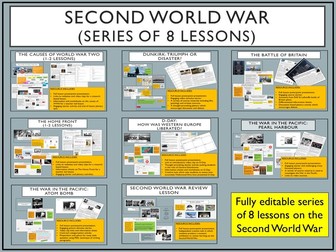
Fantastic Value. An 8 lesson series on the Second World War. This bundle includes engaging lessons that encourage independent learning on the Causes of the Second World War, Dunkirk, The Battle of Britain, D-Day, Pearl Harbour, Atomic Bomb, and a great resource on the Home Front.
This great diamond 9 activity is designed to help students understand why the causes of the Second World War 1939 - 1945. The key theory underpinning this pedagogy is that when we rank items, either statements, objects or images, we are required to make explicit the over- arching relationships by which we organise our knowledge and connect our learning. It can used as a starter or plenary and is suitable for middle to upper ability students as a stretch and challenge task. If you would like something aimed at middle to lower ability students, then please check out my card sort of this topic in my TES shop. This task is primarily designed to help students prioritise the different factors in preparation for an extended answer or essay.
The resource nine diamond shaped cards include a range of factors to explain the causes of the Second World War. Once students have cut the cards out they are set three tasks including:
1. Remove any reasons that you don’t think are important. Record and explain why you have removed them.
2. Arrange the remaining diamonds to show any links that you can find between the different reasons. Record and explain your reasons.
3. Make a smaller diamond shape using what you think are the four most important causes of the First World War.
At each stage students should be feeding back to their group or the class and explaining their choices. The discussion and explanation around the choices that they have made are critical in helping them develop their thinking skills as well as their arguments for writing their essay. on the causes of the Second World War.
The aims and objectives for this lesson are:
Theme: Causes of the Second World War 1939 - 1945?
Know: What were the causes of the Second World War?
Understand: Which factors were the most important?
Evaluate: How far was Hitler responsible for starting the Second World War?
WILF: What Am I Looking for?
Identify & describe: The main reasons why the Second World War started in 1939?
Explain: How did each factor help to start the war?
Analyse: Which factors were the most important?
If you like this resource then why not check out my TES shop where you can find many similar ideas and resources. For example, we have a much simpler card sort on the causes of the Second World War aimed at middle and lower ability students. You can also follow ‘The History Academy’ on Twitter, Google Plus, YouTube and Facebook for the latest updates or even to get in touch and chat about how you have used this resource or to ask questions. We aim to produce cheap and affordable resources for either the price of a good cup of coffee or a happy meal so that you can spend more time doing the things that you want.
Anyway, have fun and stay in touch via social media for the latest updates.
Kind Regards
Roy
***SALE*** - this resource is on sale at a reduced price.
Learning outcomes:
describe what rationing consisted of.
assess the methods by which rationing was ‘sold’ to the people of Britain.
assess the relative significance of different aspects of the Home Front to people’s lives
Lesson features differentiated learning objectives, a well-paced starter, main and plenary, and a focal on source evaluation, including the analysis of sources designed to encourage rationing.
Lesson ties together series of three lessons on the Blitz, evacuation and rationing by asking students to compare the relative impact of these three events on Britain using Partington's model of historical significance.
A number of lessons on the Second World War and its consequences.
1939 recap
Invasion of Poland
Battle of France and Dunkirk
Battles of Britain and El Alamien
Battle of Stalingrad
D-Day
Battle of the Atlantic
Downfall of Nazi Germany
Red Sun Rampant
Island Hopping
Hiroshima and Nagasaki
Consequences of Nuclear Weapons
Consequences of the Second World
A lengthy KS3 History lesson introducing the Second World War.
This lesson is taught almost like a timeline from start to finish of the war. I teach this over 2-3 lessons to introduce the topic and then go into more detail with certain events in lessons after this.
There are lots of discussion points and questions for students to answer.
This lesson explores the Arctic Convoys during World War II, focusing on their purpose, the challenges faced, and their impact. Students will learn about the significance of these convoys in supporting the USSR and the dangers involved. Activities include map work, analysing primary sources, a gallery walk, and writing a PEEKA paragraph. The lesson concludes with a reflection on the personal experiences of sailors through diary extracts.
Lesson Content and Activities:
Introduction:
Discuss the concept of total war and the necessity of the Arctic Convoys.
Define key terms: Lend-Lease, Arctic Convoys.
Map Work:
Complete the ‘Arctic Convoys’ map sheets, plotting the route from Britain to the Soviet Union.
Why Were They Needed?
Explain the importance of supplying the USSR after Hitler’s invasion.
Discuss the Lend-Lease Act and its significance.
Dangers of the Arctic Route:
Identify and discuss the dangers: extreme weather, German U-Boats, aircraft, capital ships, and long daylight hours.
Watch a video on Convoy PQ17 and discuss the outcomes.
Gallery Walk:
View images from the Arctic Convoys and write down three adjectives to describe the conditions seen.
Diary Extracts:
Read extracts from Ivor Davies’ diary.
Complete a table identifying themes such as environmental challenges, duties on the ship, threats from the enemy, and isolation.
Writing Task:
Write a PEEKA paragraph on the most significant challenge faced by the sailors.
Use sentence starters and provide detailed evidence.
Class Discussion:
Share and discuss the written paragraphs.
Reflect on how these experiences shaped the relationship between the Allies and the USSR.
Resources:
Map sheets
Video link on Convoy PQ17
Image gallery slides
Diary extracts
PEEKA paragraph guidelines and sentence starters
From a series of over 30 Second World War lessons made by Wolsey Academy. They provide a thorough foundation of knowledge in this vital period of 20th Century History and each lesson looks to focus on a range of historical skills and exam techniques to equip students with knowledge and transferable research, analysis and study skills.
To find the complete bundle search on the Wolsey Academy website.
Wolsey Academy operates as a non-profit, with every penny we make going to one of our charity partners or into the Ipswich Initiative, funding good works across the town and county. Search for Wolsey Academy to see our website for more details and to purchase resources at a discount.
Use code ‘WOLSEY’ for 10% off at the Wolsey Academy Web Store.
Please help us, help you, help them. Thank you.
Hope it helps.
W
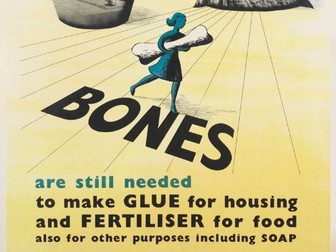
Propaganda posters from the IWM collection looking at how the British Government encouraged people to help the war effort.
All the images are available to download together as a PowerPoint.
Visit the IWM website to find out more about IWM's free online learning resources
http://www.iwm.org.uk/history/learning-resources
This resource explores Second World War poetry in the context of war poetry as a whole. It includes an analysis of Timothy Corsellis' poem &'Dawn After the Raid&'; and writing exercises to get students writing their own poems based on Timothy's structure. The resource supports Young Poets Network&'s annual Timothy Corsellis Prize.
This activity is taken from MY UNCLE'S DUNKIRK by Mick Manning and Brita Granström (published by Franklin Watts in association with the Imperial War Museum). It explores the events at Dunkirk by comparing a holiday beach scene with a war zone. There is opportunity for plenty of cross curricular work, including history, geography and PSHE, as well as two worksheets to support the Pupils Writing Targets at Y 2, 3, 4 and 5.