The resource is designed for young people, aged 12+, who have social and communication related difficulties. It may benefit those with Autism or Neurodiversities but will also suit a range of learners who find social interaction, relationships, communication and independence more difficult for any reason. The workbook is packed full with 50 pages of activities that are designed to be used in the classroom or at home. This workbook can be used as a programme of work on social skills for learners who wish to develop these skills. It’s important for the teacher or adult working with the learner to check each activity for suitability for their individual student and that the programme is suitable for the individual.
The topics covered include: Knowing Yourself, Relationships, Emotions, Independence and Social Scenarios.
The booklet is in read-only PDF format.
It can be used with compatible text-to-speech software and coloured backgrounds have been used on most pages so that the booklet is dyslexia-friendly.
Support secondary students in building the essential social skills they need to navigate friendships, conflict, and everyday interactions with this practical, ready-to-use activity pack.
This resource pack targets three core areas of Social and Emotional Learning (SEL): reading social cues, initiating and sustaining conversations, and resolving conflict.
What’s Included
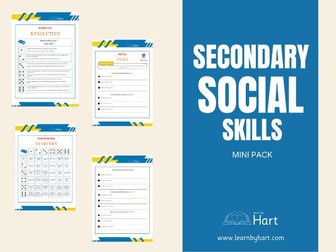
A 4 page PDF containing the following:
Conflict Resolution – What Would You Do? – A scenario-based activity presenting six realistic conflict situations drawn from everyday secondary school life.
Conversation Starters – A visually engaging grid of 36 conversation prompt cards covering both open questions and “would you rather” scenarios, designed to help students practice initiating and sustaining conversations with peers.
Social Cues – Emotions Worksheet (Part 1) – A structured worksheet introducing the concept of social cues — the facial expressions, body language, and tone of voice that communicate how someone is feeling.
Social Cues – Emotions Worksheet (Part 2) – A continuation of the social cues activity, extending student reflection to three additional emotional states.
How to Use
This pack is flexible enough to use as a complete social skills unit or as standalone activities slotted into form time, PSHE lessons, intervention sessions, or pastoral support
Grade Levels: Secondary / KS3 and KS4 / Middle and High School
File Format: PDF (printable and projectable)
**Note: **This is a digital download only.
This pack contains:
A presentation for the Club Leader of how to run the sessions
A presentation for pupils
Role
Group rules poster
Assessment tools
All you need (apart from the LEGO pieces!) to run a LEGO Club intervention. This is your complete pick-up-and-go resources pack.
This programme is a short intervention intended for children in KS1 or for those who struggle to cope in social situations.
Understanding of Social skills is an under pinning tool required throughout life. Identifying our own feelings and the feelings of others helps us to adapt in our ever changing world. It helps children work independently or within a group and react to situations appropriately.
Programme contents - This is me, Friendship web, What do you look for in a friend, Show your appreciation, Being a good sport, Being a team player, Personal Space, Your space, Blow your own trumpet, Being confident, Getting on with others, Sorry, high five certificate!
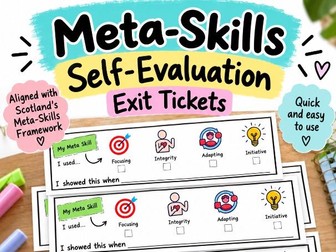
A pupil self-evaluation exit ticket designed to support reflection on Scotland’s Meta-Skills framework. It encourages learners to consider their progress in the three key areas of Self-Management, Social Intelligence and Innovation by identifying strengths and areas for development.
The visual layout has been designed to align with the Skills Development Scotland Meta-Skills poster, making it familiar and accessible for pupils.
The resource can be used as a plenary activity, assessment tool or evidence of skills development across the curriculum, helping learners become more aware of the transferable skills they are developing through their learning experiences.
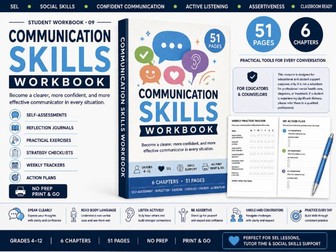
Help students build clearer communication, active listening, assertiveness and confidence in social situations with this structured 51-page Communication Skills Workbook.
Designed for upper primary and secondary students, this workbook supports learners through self-assessment, reflection, verbal and non-verbal communication practice, active listening activities, assertiveness exercises, difficult conversation planning, weekly progress tracking and action planning. It can be used for SEL lessons, social skills intervention, tutor time, counselling, learning support, special educational needs provision and independent student reflection.
This resource is ideal for:
Communication skills practice
Social skills intervention
SEL lessons
Assertiveness support
Active listening practice
Learning support programmes
School counselling
Tutor time
Special educational needs
Student wellbeing support
What’s included:
51 printable workbook pages
6 structured communication skills modules
Student self-assessments
Reflection journals
Practical communication exercises
Strategy checklists
Weekly progress trackers
Action planning pages
Skills covered:
Verbal communication
Non-verbal communication
Listening skills
Assertiveness
Difficult conversations
Communication practice
Format:
PDF file
51 pages
Print-and-go resource
No preparation required
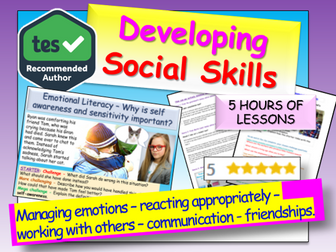
5 x fully resourced, highly-rated lessons fo developing Social Skills in children and young teens. All 5x lesson packs (in 4 downloads) are complete with at least one hour-long powerpoint, accompanying differentiated worksheets, clip links with questions, plenaries, clear LOs and starters. All are well differentiated to three levels throughout to enable clear evidence of progress for all students.
These resources have been highly-rated individually by TES users, follow the same consistent format and are easy to follow.
There is zero extra work required. You can just have a quick look at them and teach - instructions are very clear as you go along.
I use all of these myself and I really hope you find them excellent value.
Please leave me a review and I’ll send you any other resource of your choice for free.
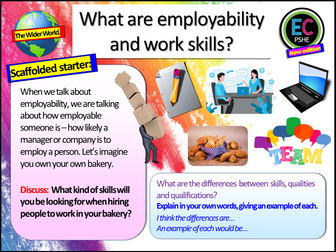
Employability Skills Introduction Lesson- New PSHE / Careers lesson for 2026 (matched up to new RSHE guidelines for 2026 on lesson plan), perfect for KS3 students to begin to explore employability skills in relation to their future career paths. This lesson covers both Gatsby Guidelines and the PSHE Association’s objectives for Living in the Wider World KS3. Everything is editable. engaging and easy to follow, with written tasks, clip tasks, creative tasks, case study analysis and much more. Includes lesson plan.
Students will investigate the employability skills their potential future employers are looking for in the modern world, and see just how much their personal attributes have already started to apply. They will explore what employers are looking for in 2026 and how important adaptability is. They will explore case studies of students applying for their first jobs, assessing the skills they need, already have and where they could improve further.
Who are EC Resources?
EC Resources are the top TES PSHE providers and are a group of teachers who work together to create easy to use, high quality and editable lessons and units of work. We have created lessons for The Children’s Commissioner, The Bank of England, The British Legion, MACS Charity, Tes, LikeToBe Careers, the Criminal Cases Review Commission (UK Gov) and have also completed PSHE and Citizenship commissions for schools across the UK.
You can visit our website at EC Publishing for further discounts, complete school packages and much more, and can email us at info@ecpublishing.co.uk
Check out our PSHE Packages on Tes here:
Complete KS3 PSHE and RSE
Complete KS4 PSHE and RSE
Complete KS5 PSHE and RSE
One Year of Citizenship and British Values
Complete KS3 RE
Complete Careers and Employability
AQA Citizenship GCSE Mega Pack
x66
Teaching PSHE, RE or Citizenship GCSE next year? Why not join our Citizenship and PSHE teachers Facebook group, with 12,000 other teachers, for guidance, advice and resource sharing.
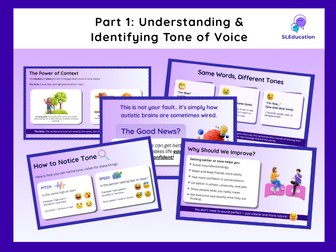
This structured PDF presentation (full lesson) teaches adolescents and young adults with autism and individuals with social communication deficits how to identify and interpret tone of voice during conversations. Students learn that the same words can carry completely different meanings depending on how they are said — and that noticing pitch, volume, speed, and energy is a learnable skill, not an instinct.
The resource breaks tone of voice down into clear, concrete components, using real-life examples and practice activities to build recognition and understanding without relying on guesswork.
What is covered:
What is tone of voice? — pitch, volume, speed, and energy explained
Why this can be harder for individuals with autism — common and normalised
How to notice tone — a step-by-step breakdown of each vocal component
Same words, different tones — understanding hidden meaning
The power of context — how environment changes what tone means
Structured practice activity with discussion
Practical tips and key takeaways
Suitable for:
Adolescents and young adults with autism aged 13+
Individuals with social communication deficits
Students with functional verbal language and a basic level of reading comprehension
1:1 sessions, small group work, or guided independent study
SEN specialists, therapists, tutors, and support workers
Format: PDF presentation
Session time: Approximately 30-40 minutes
This resource works as a standalone session. However, it is best utilised as Part 1 of a two-part series — Part 2 covers expressive tone of voice (using your own voice effectively) and can be purchased separately.
All content uses clear, literal, and neutral language throughout. Resources are universally applicable, with no political, ideological, or religious content.
SLEducation — Where rehearsal meets real life
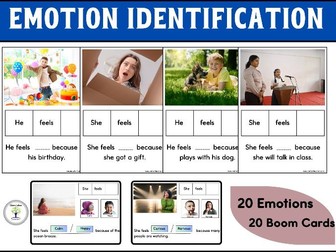
help your students recognizing and name emotions with these real life emotion cards, perfect for autism, special education or social skill lessons. With 20 different emotion types, students match realistic, pictures to the correct feelings and level each emotion by name.
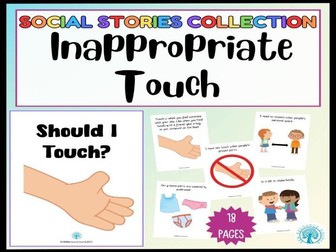
This social story helps children understand the importance of respecting personal boundaries and appropriate touch. It explains gently what private parts are and why it’s important not to touch others in ways that may feel uncomfortable. It also shares examples of positive and friendly touches that are okay.
Ideal for parents, teachers, and caregivers, this story helps children learn about appropriate touch in a simple, clear way, encouraging respect and kindness in their interactions with others.
What’s Inside?
Along with a 18-page social story, there’s also a shorter, adapted version with movable pictures to help engage children on each page.
Why Is This Social Story Helpful?
Social stories use a gentle and reassuring tone to teach children about social situations in a way that’s easy to understand. They are particularly useful for:
• Children who struggle to grasp social concepts.
• Learning social skills, social cues, and appropriate responses.
• Providing guidance on expectations, emotions, and problem-solving.
• Supporting autistic children who may find social interactions challenging and benefit from clear, structured explanations.
How to Use This Story Effectively
• Create a focused environment – Read the story in a quiet space with minimal distractions.
• Read it regularly – Start by reading it twice, then revisit it often to reinforce learning.
• Incorporate it into daily routines – Use the story as part of a structured schedule.
• Use it when needed – If the child struggles with apologising, read the story at relevant moments (without making it feel like a punishment).
• Encourage and praise – Keep the experience positive, reinforcing good behavior with encouragement.
Durability & Reusability
For long-term use, consider laminating and binding the pages or placing them in a display book. This allows for repeated reading and reinforcement, making the lesson more effective over time.
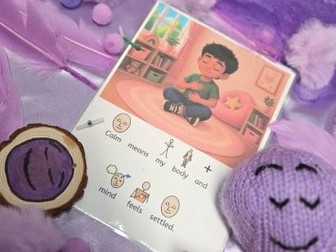
Calm Social Story. Understanding Emotions
Support children with SEND to develop their understanding of feeling calm with this accessible and visual social story.
This resource explores what feeling calm might look and feel like, helping children recognise some of the signs that their body and mind may be calm and regulated.
Using simple, accessible language and Widgit symbols, the story supports children to develop their understanding of calm and recognise activities and experiences that may help them feel settled and regulated.
This social story can be used alongside sensory activities, visual supports, Makaton, AAC and adult modelling to help children develop an understanding of what calm feels like and recognise the things that help them feel regulated.
A visual, accessible and neuroaffirming resource to help children understand calm and recognise what feeling regulated can look and feel like.
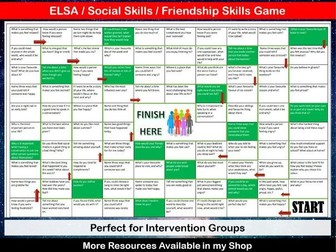
A fun and engaging game that is perfect for ELSA / Friendship Support / Mindfulness / Social Skills intervention groups etc.
Can be played with two or more players - all you will need is a dice and some counters. Students work their way around the board by answering question about themselves, the first student to reach the finish is the winner of the game!
Game mat can be printed laminated for future use.
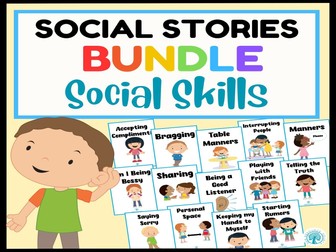
Help children develop essential social skills with our “Social Skills” Social Stories Bundle. This set of 14 stories is specifically designed to teach children important social behaviors, encouraging positive interactions and helping them build stronger relationships with others. Each story uses clear, relatable examples to guide children in mastering social skills that will support their success both in school and in everyday life.
Includes:
Accepting Compliments
Am I Being Bossy?
Bragging
Interrupting
Manners
Personal Space
Playing With Friends
Rumors
Saying Sorry
Keeping My Hands to Myself
Sharing
Being a Good Listener
Table Manners
Telling the Truth
Social stories use a calm, reassuring tone to explain social situations in a way that is easy for children to understand. They are particularly helpful for children on the autism spectrum, who may struggle with social cues and experience anxiety when faced with new situations. By clearly outlining expectations and providing guidance, social stories help children navigate various social interactions with confidence.
For optimal use, we recommend reviewing these stories regularly. To make the stories more accessible, consider placing them in a display book or laminating and binding the pages.
Autism Social Skills Older Students
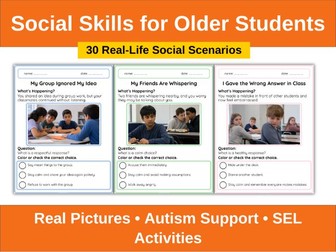
Autism social skills worksheets with real pictures designed for older students, tweens, and middle school learners to practice SEL, emotional regulation, flexible thinking, and problem-solving skills.
This resource includes 30 printable worksheets created specifically for autistic learners, special education students, visual learners, speech therapy groups, and middle school SEL support. Each page uses a realistic social situation, one authentic photo, and three answer choices to help students practice calm, respectful, and socially appropriate responses.
Unlike many social skills resources that feel too young for older learners, these activities use realistic tween and middle school situations that are more age-respectful and relatable.
The activities focus on:
social skills
emotional regulation
flexible thinking
problem solving
friendship skills
online communication
social-emotional learning
What Is Included
30 printable worksheets
Real-life tween and middle school photo scenarios
3 answer choices per page
“Color or check” response format
Simple “What’s Happening?” explanations
US Letter PDF format
Topics Included
School & classroom situations
Friendship challenges
Emotional regulation
Flexible thinking
Community independence
Digital and online social situations
How Teachers Can Use This Resource
Teachers, therapists, and counselors can use these worksheets for:
SEL lessons
social skills groups
speech and language sessions
counseling support
autism support programs
behavior intervention
independent work
one-to-one instruction
Students read the social situation, examine the realistic photo, and choose the most respectful or helpful response.
Target Students
Ideal for:
autistic learners
tweens and middle school students
special education students
visual learners
students needing emotional regulation support
speech and language students
students working on social-emotional learning skills
Recommended for:
Ages 9–14
Grades 4–8
The realistic visuals, age-appropriate situations, and predictable structure help reduce visual overload while supporting meaningful social-emotional learning for older students.
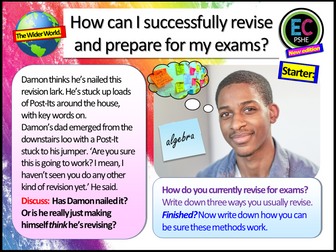
Two-hour lesson, mapped to new RSHE 2026 DfE guidance (see lesson plan included for details), jam-packed with information the best ways to revise (as well as how and why) and the most common revision pitfalls, and why these don’t work.
Students will complete tasks where they try out the very best methods, critique their current revision strategies, and put new plans into action which integrate all of the new and improved ideas. A revision timetable is included, where students can not only plan their time - but also add in HOW they intend to use the best revision methods they have learned about, during that time (plenary task).
An emphasis is also included on sleep, healthy eating and exercise in the months leading up to the exams, to ensure maximum performance. There are loads of activities, clips, information sheets, plans and more and everything is editable to you can tweak for any class.Includes detailed lesson plan.
This double lesson is engaging and very easy to follow, best suited to KS4 but also very useful for KS5 (or even KS3 end of year exams).
This Revision + Study Skills lesson covers all the best techniques for GCSE revision and gives the students activities in order to apply and practice their new skills in any subjects of their choice. It could be used in Tutor Time as exam preparation or in any revision lesson. These resources have been designed to be engaging, detailed and easy to follow. All our resources are editable (so easy to adapt for your classes) and are designed to last one hour each.
Taken from the new 2026 EC Publishing Complete PSHE Secondary Package.
We are confident you’ll be pleased with this resource – however, if you have any issues at all, contact us at info@ecpublishing.co.uk and we’ll help you straight away. If you try to contact us through Tes we may not be alerted for days so may not be able to help you on time.
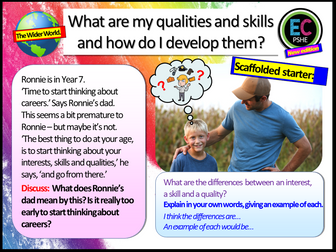
2 HOURS - NEW PSHE / Careers lesson for 2026, perfect for students to begin to assess and develop their personal skills, strengths, interests, qualities and values in relation to their future career paths. This lesson covers both Gatsby Guidelines and the DfE’s new 2026 RSHE Guidelines / PSHE Association’s objectives for Living in the Wider World KS3. Everything is editable. engaging and easy to follow. Lesson plan included.
Students will discover their own personal skills, strengths, interests, qualities and values by assessing examples, completing progress templates, creative and fun tasks, video clip tasks, partnered activities and much more. They will then investigate the employability skills their potential future employers are looking for in the modern world, and see just how much their personal attributes have already started to apply. They will also set realistic but ambitious goals about those they wish to develop and begin thinking about how their interests and values could also help them decide upon a career path.
This is taken from the new 2026 COMPLETE SECONDARY PSHE Package
This contains all the new DfE RSHE 2026 topics - AI deepfakes, sextortion, chatbots, brain development, coercive control, online misogyny, harmful behaviour online and so much more.
We are confident you’ll be pleased with this resource – however, if you have any issues at all, contact us at info@ecpublishing.co.uk and we’ll help you straight away. If you try to contact us through Tes we may not for be alerted for days so may not be able to help you on time.
Who are EC Resources?
EC Resources are the top TES PSHE providers and are a group of teachers who work together to create easy to use, high quality and editable lessons and units of work. We have created lessons for The Children’s Commissioner, The Bank of England, The British Legion, MACS Charity, Tes, LikeToBe Careers, the Criminal Cases Review Commission (UK Gov) and have also completed PSHE and Citizenship commissions for schools across the UK.
We also run the EC Publishing website, where you can find anything and everything for PSHE.
Teaching PSHE, RE or Citizenship GCSE next year? Why not join our Citizenship and PSHE teachers Facebook group, with 12,000 other teachers, for guidance, advice and resource sharing.
25 HOUR UNIT - For the Gatsby Benchmark Careers Guidelines.
All fully resourced lessons, well differentiated and highly rated 1 or 2 hour lessons suitable for secondary schools which can be used over both key stages - perfect to help you meet the new GATSBY criteria. Some of the lessons last two hours, all in all there is about 25 hours worth of teaching content.
Pack includes - 20 x Powerpoints, 70 worksheets, well differentiated throughout, all with clips and LOs at three challenge levels:
Includes:
1. Job interviews and preparation
2. What are employability skills?
3. Your skills and applying for suitable work
4. Payslips, income tax and national insurance
5. Equal opportunities in the worksplace
6. CVs - What are employers looking for?
7. Rights and responsibilities in the workplace
8. Preparing for Work Experience
9. Enterprise skills
10. Entrepreneurial skills
11. Enterprising personalities and qualities
12. Interpersonal skills
13. Communication skills
14. Using enterprising skills in the workplace
15. How do people succeed as entrepreneurs?
16. Workplace Skills - Conflict Management
17. Careers in STEM focus
18. How can we choose a career that's right for us?
19. What impact does our digital footprint have our futures and careers?
20. Why is Health and Safety important in the workplace?
Many more new Careers Resources and PSHE lessons on the EC Publishing website.
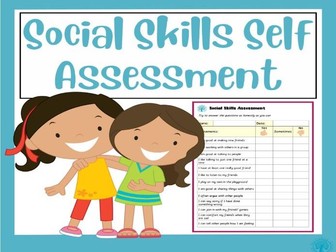
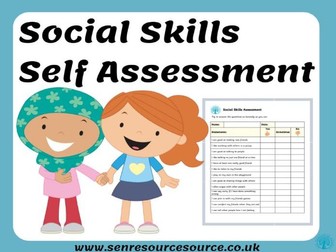
This is a self assessment for children about their social skills. It may help you to see where they think they are at in terms of their own social skills. Good to do before and after work on social skills or friendships.
This is a self assessment for children about their social skills. It may help you to see where they think they are at in terms of their own social skills. Good to do before and after work on social skills or friendships.
Clipart images courtesy of Kari Bolt Clip Art


 Quick View