Descriptive / Creative WritingQuick View
EnglishGCSEcouk

Descriptive / Creative Writing

(6)
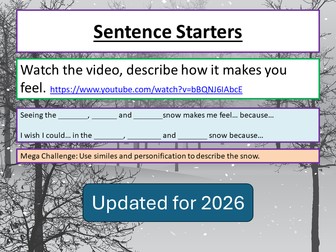
A fully differentiated and resourced lesson for low ability KS3 and KS4 students to help them develop their sentence starters and use of language techniques to write a description of a winter scene. UPDATED FOR 2026 Query or question? Get in touch at info@englishgcse.co.uk Check out our English Shop for loads more free and inexpensive KS3, KS4, KS5, Literacy and whole school resources.* AQA English Language Paper 1 and Paper 2 Knowledge Organisers AQA English Language Paper 1 Section A package AQA English Language Paper 1 Sections A and B package AQA English Language Paper 1 package AQA English Language Paper 2 Question 5 package AQA English Language Paper 1 Question 5 package AQA English Language Paper 2 Section A package AQA English Language and English Literature revision package An Inspector Calls whole scheme package An Inspector Calls revision package Macbeth whole scheme package Macbeth revision package A Christmas Carol whole scheme package A Christmas Carol revision package Jekyll and Hyde whole scheme package Jekyll and Hyde revision package Romeo and Juliet whole scheme package Power and Conflict poetry comparing poems package Power and Conflict poetry whole scheme package Love and Relationships poetry whole scheme package Unseen Poetry whole scheme package
Descriptive  / Creative WritingQuick View
EnglishGCSEcouk

Descriptive / Creative Writing

(15)
AQA English Language Paper Question 5, descriptive writing lesson. Complete 1 hour, well differentiated lesson with worksheets and differentiated tasks throughout. Includes peer assessment task and marking criteria. Ideal preparation for Section B of AQA Language Paper 1. Suitable for KS3/4 - adaptable Different level tasks for MA,LA or Core Designed to fit Ofsted criteria for’ Good’ or above. UPDATED FOR THE 2026 EXAMS Query or question? Get in touch at info@englishgcse.co.uk Check out our English Shop for loads more free and inexpensive KS3, KS4, KS5, Literacy and whole school resources. AQA English Language Paper 1 and Paper 2 Knowledge Organisers AQA English Language Paper 1 Section A package AQA English Language Paper 1 Sections A and B package AQA English Language Paper 1 package AQA English Language Paper 2 Question 5 package AQA English Language Paper 1 Question 5 package AQA English Language Paper 2 Section A package AQA English Language and English Literature revision package An Inspector Calls whole scheme package An Inspector Calls revision package Macbeth whole scheme package Macbeth revision package A Christmas Carol whole scheme package A Christmas Carol revision package Jekyll and Hyde whole scheme package Jekyll and Hyde revision package Romeo and Juliet whole scheme package Power and Conflict poetry comparing poems package Power and Conflict poetry whole scheme package Love and Relationships poetry whole scheme package Unseen Poetry whole scheme package
Creative Writing Masterclass - Narrative and Descriptive OpeningsQuick View
ajs12345

Creative Writing Masterclass - Narrative and Descriptive Openings

(6)
A lively and engaging lesson developing students’ ability to open their descriptive and narrative writing in an original and engaging way. Ideal in preparing students for AQA GCSE English Language Paper 1, Section B. The full scheme of work is available to purchase for just £5. Click this link to check it out! Activities are designed to develop your pupils’ ability to open their story/description in an engaging and varied way, giving them lots of different methods and strategies to enable them to do this. The lessons have been designed with the new AQA Language Paper 1 specification in mind, which places heavy emphasis on making effective vocabulary choices in the writing, but is equally useful for KS3 teaching. Would work well as a standalone writing/literacy lesson or as part of the paper 1 writing scheme of work of which this is a part. If you loved the resource and think it’s worth 5 stars, why not get another one absolutely free? Simply leave a review, email ireviewedajs@outlook.com with your TES username and state the free resource* you would like! (Free resource cannot exceed the value of the original resource purchased)
English KS2- Story Writing- Character descriptionQuick View
ResourcesForYou

English KS2- Story Writing- Character description

(1)
In this lesson, students will learn how to effectively describe characters including their appearance, personality/ behaviour and special traits. They will look at a range of book extract describing characters looking at this in practice. They will then look at the character description of Miss Trunchbull and be tasked to identify the different descriptions before writing their own character description using the plan and word banks provided. All plans and word banks are included. This lesson is intended for KS2 students but can easily be modified to suit KS3. Leave a review for this resource and send a copy of your receipt to resourcesforyou100@outlook.com to receive a FREE single resource of your choice!
AQA Paper 1 Question 5 Descriptive WritingQuick View
EnglishGCSEcouk

AQA Paper 1 Question 5 Descriptive Writing

(18)
A lesson for Section B of the AQA English Language Paper 1, where students focus on improving their descriptive writing through differentiated activities and success criteria. The lesson enables students to reflect on their uses of language techniques, as well as considering what kind of structure to give to their writing. Additionally, it helps them to use zooming in as a way of effectively planning a piece of descriptive writing for Section B or Question 5. UPDATED FOR THE 2026 EXAMS Query or question? Email info@englishgcse.co.uk Check out our English Shop for loads more free and inexpensive KS3, KS4, KS5, Literacy and whole school resources. AQA English Language Paper 1 and Paper 2 Knowledge Organisers AQA English Language Paper 1 Section A package AQA English Language Paper 1 Sections A and B package AQA English Language Paper 1 package AQA English Language Paper 2 Question 5 package AQA English Language Paper 1 Question 5 package AQA English Language Paper 2 Section A package AQA English Language and English Literature revision package An Inspector Calls whole scheme package An Inspector Calls revision package Macbeth whole scheme package Macbeth revision package A Christmas Carol whole scheme package A Christmas Carol revision package Jekyll and Hyde whole scheme package Jekyll and Hyde revision package Romeo and Juliet whole scheme package Power and Conflict poetry comparing poems package Power and Conflict poetry whole scheme package Love and Relationships poetry whole scheme package Unseen Poetry whole scheme package
Symbolism in Gothic Literature (Analysis and Descriptive Writing)Quick View
NovelTeachingUK

Symbolism in Gothic Literature (Analysis and Descriptive Writing)

(2)
A whole lesson and worksheet (suitable for KS3 and KS4) which encourages students to consider how an author can use symbolism in Gothic Fiction. Students are first given a definition of symbolism and are asked to consider a variety of symbols and what they represent. Students read a short extract. Using the sentence starters provided, they then make inferences based on the imagery of a ticking clock, a hospital bed, and a woman’s hand compared to ‘pale marble’ to explore how it could symbolise illness or death. In pairs students complete the worksheet and consider what certain Gothic features could represent. They then come up with two of their own and share with the rest of the class. Finally, students are given a choice of two images. They must write a piece of descriptive writing based on the image of their choice and must try to include symbolism. This could also work as a Halloween themed lesson or as part of a Creative Writing scheme of work. I often taught this lesson together with my Gothic Horror writing lesson available here: https://www.tes.com/teaching-resource/gothic-horror-creative-writing-lesson-11235636
The moon - descriptive writing planningQuick View
Doctorofedjourney

The moon - descriptive writing planning

(0)
This engaging worksheet supports students in crafting vivid descriptive writing by using a carefully chosen image as inspiration. The resource guides learners through the planning process with targeted questions that prompt detailed observation, sensory description, and language technique use. Worksheet features: Stimulus Image: A striking, atmospheric picture that sparks imagination and sets the scene for descriptive writing. . Sensory Detail Prompts: Questions that guide students to imagine and describe sounds, smells, textures, tastes, and feelings related to the scene. Language Techniques Focus: Tasks asking students to identify and plan the use of similes, metaphors, personification, alliteration, and other descriptive devices. Structure and Tone Planning: Space to outline the overall mood, tone, and progression of the description, helping students organize their ideas logically. Benefits for students: Builds observational skills and attention to detail Encourages use of varied and effective language techniques Supports clear planning for well-structured, evocative descriptive writing Ideal for KS3 and GCSE English classes preparing for creative writing tasks or exams Use this worksheet as a starter activity, homework task, or scaffolded support for descriptive writing assignments.
Writing a Setting Description- The Snail and the WhaleQuick View
begum99

Writing a Setting Description- The Snail and the Whale

(1)
This is an amazing pack for those teaching, studying and learning about the book ‘The Snail and the Whale’ by Julia Donaldson. This pack includes all the resources needed to write a setting description. It includes all the settings of the snail and the whale’s trip. The Sign: ‘Beaming Literacy’ is only there for the document protection. It will not be on the ones you download. Included in this pack are: • Story word mat • Ordered story pictures for recalling • Big setting pictures (half a page) x6 settings Writing examples x2 Writing templates/ frames x7 Setting planning Sentence starters Senses Word mat • Writing example • Writing checklist Thank you for visiting my page. I hope you enjoy this product as much as I did making it and using it in my classroom! There are also other resources in my shop. Please do visit. Beaming Literature
English- Story Writing- Setting descriptionQuick View
ResourcesForYou

English- Story Writing- Setting description

(2)
In this lesson, students will look at what makes a setting description effective. They will learn how to use expanded noun phrases, prepositional phrases and figurative language when describing a setting and will be tasked to identify these in setting descriptions. They will then develop their ideas for their own settings using group discussion, drama and the plan provided. All of the task resources for this lesson are included. This lesson is appropriate for KS2 children but can easily be modified to suit KS3 students. Leave a review for this resource and send a copy of your receipt to resourcesforyou100@outlook.com to receive a FREE single resource of your choice!
Descriptive Writing WorksheetsQuick View
cwilson1983

Descriptive Writing Worksheets

(8)
Contains 11 worksheets to help students recap key techniques and examples of descriptive writing that can be used as models for students' own writing. I'd appreciate your feedback should you choose to purchase this resource (positive or constructive).
Descriptive  / Creative Writing - PunctuationQuick View
EnglishGCSEcouk

Descriptive / Creative Writing - Punctuation

(13)
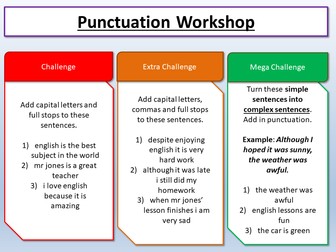
Punctuation resource. A fully differentiated and resourced lesson to prepare low ability KS3 and KS4 students for writing descriptive pieces, with a focus on their use of punctuation. Many more inexpensive, high quality English resources are available at my shop: Lead Practitioner’s Shop
Descriptive writing resources bundleQuick View
Kat001

Descriptive writing resources bundle

(0)
A range of resources to support the teaching of descriptive writing. This bundle includes: Descriptive writing techniques grid - with definitions and examples of 8 descriptive writing techniques and space for students to write their own examples of each. 2 x worksheets for students to explore using the 5 senses in descriptive writing. Each worksheet has a different image to prompt students and a grid for them to make notes in for each of the 5 senses + sentence openers available for each task to support students, on PowerPoint. 2 x ‘improve the description’ worksheets for students to demonstrate their improved skills. A PowerPoint with more example descriptive sentences using different techniques and images for students to write about.
Descriptive writing resourcesQuick View
vanessaalicianelson

Descriptive writing resources

4 Resources
A selection of descriptive writing resources. Aimed at developing skills for the writing section of the AQA GCSE Englsih exam (both question 5’s). However, could be transferable to other exam boards or used as generic descriptive writing resources.
Descriptive Writing Resource packQuick View
iain_davis

Descriptive Writing Resource pack

(0)
These resources were written by a Cambridge International Assessment Examiner, Consultant and Teacher Trainer. However, these resources can be effectively used in conjunction with any examination board. This pack consists of 11 activities, worksheets and notesthat help students secure the skills required to write effective descriptions or narrative descriptions. The pack includes AFL pies (designed for structured peer assessment, and teacher feedback) and other useful display items and resources.
Show Not Tell GCSE Descriptive WritingQuick View
amy_lill

Show Not Tell GCSE Descriptive Writing

(0)
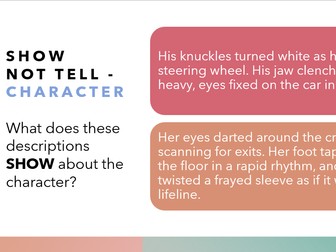
A fully resourced GCSE English Language Paper 1 Question 5 lesson focused on helping students move from basic “telling” sentences to powerful “show, not tell” descriptive writing. This lesson builds students’ ability to use body language, actions, setting and sensory detail to create vivid characters and scenes — a key skill for high-mark Q5 responses. What’s included **Complete PowerPoint lesson ** Students learn: The difference between telling vs showing Minor, simple and complex sentences How writers reveal character and setting through actions and details Includes: Starter activity (Sentence Detective) Model examples of show not tell Writing prompts and example starters Extended “A Stranger Walks In” writing task **Sentence Detective Worksheet ** Students will: Identify minor, simple and complex sentences Fix punctuation errors Write their own sentence examples Supports SPaG and sentence variety for Q5. **Show Not Tell Worksheet ** Students rewrite basic telling sentences into vivid showing descriptions using: Body language Actions Facial expressions Setting Sensory detail Perfect for building confidence before extended writing. Perfect for GCSE English Language (AQA Paper 1 Q5) Year 10 & 11 GCSE resit groups Reluctant or low-confidence writers Creative writing lessons Why teachers love it Clear before and after writing improvement Works for weaker writers Highly engaging and practical Ready to teach with minimal prep
Writing: Under the Ocean Setting DescriptionQuick View
begum99

Writing: Under the Ocean Setting Description

(0)
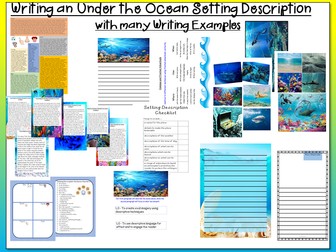
This is an amazing pack for those teaching, studying and learning. Children will be able to write a setting description about under the ocean. There are various examples and pictures to support the work. The Sign: ‘Beaming Literacy’ is only there for the document protection. It will not be on the ones you download. Included in this pack are: Writing examples x6 Writing Frames x3 Writing instructions with 2 learning objectives Under the ocean pictures x3 pages full Writing sentences with commas and fronted adverbials Senses word mat Setting sentence starters Setting planning sheet using the senses Thank you for visiting my page. I hope you enjoy this product as much as I did making it and using it in my classroom! There are also other resources in my shop. Please do visit. Beaming Literature
Show Not Tell Activity: Interactive Descriptive Writing ResourceQuick View
Nawalalearning

Show Not Tell Activity: Interactive Descriptive Writing Resource

(0)
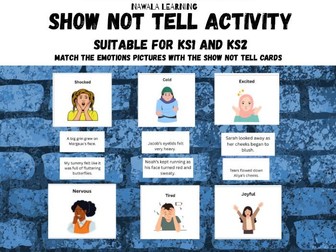
Show Not Tell Activity: Interactive Descriptive Writing Resource Help students master the art of Show Not Tell in descriptive writing with this interactive activity. Students engage with images linked to emotions and apply their knowledge to create examples of Show Not Tell phrases, enhancing their descriptive writing skills. Activity Features: Emotion-linked images for contextual learning Students link images and emotions to Show Not Tell phrases A3 Group Worksheet for scaffolded learning and collaboration Extension Ideas: create additional Show Not Tell phrases, uplevel emotions with advanced vocabulary Supports independent, paired, or group work Benefits for Students: Strengthens descriptive writing techniques Encourages critical thinking and creativity Provides visual and contextual support for Show Not Tell Promotes vocabulary expansion and sentence upleveling Adaptable for whole-class, small group, or individual practice Perfect For: KS2 and KS3 writing lessons Creative writing workshops or literacy centers Scaffolded group activities or independent exercises Linking emotions to descriptive language Preparing students for higher-level writing tasks Additional Resources: A differentiated set of Show Not Tell activities is also available in my shop to extend learning further.
Descriptive writingQuick View
menatul

Descriptive writing

(2)
Literacy resource for KS2 and KS3 Valuable to teach writing skills. Use of simile and metaphors, mood and imagery
KS3 English Descriptive Writing - The StormQuick View
AStarLessons

KS3 English Descriptive Writing - The Storm

(0)
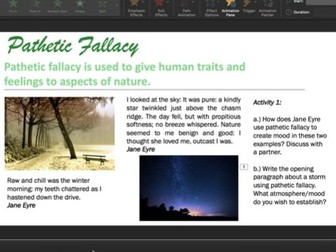
This lesson seeks to help KS3 (or KS4) students to create a powerful description about a storm. It focuses on three techniques: pathetic fallacy prepositions vocab choices There are short activities for students on each slide and some sample writing is also provided. This has always taken me a whole lesson and is good preparation for exams that require a descriptive piece. In addition, it is a good follow on lesson from A Thunderstorm unseen poetry resource also listed for free.