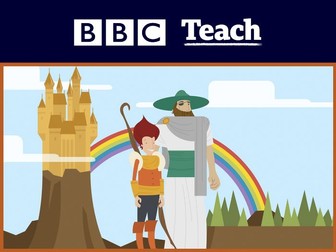
A comical play-script ideal for end of year performances or drama club shows.
A granddad reads his grandson his favourite story book ‘The Truth About Fairy Tales’ and they embark on an adventure into the Kingdom of Once Upon a Time.
Visit the world of fairy tales, not as you quite remember them.
This is an extended script of 15 pages on Microsoft word.
It includes 6 additional pages on suggestions for music, dance, props and costumes.
Tried and tested with great success.
Ideal for KS1/2/3 children
Approximately 1 hour in length plus interval
Links to Drama, Speaking and listening and English
This is a Christmas Carol Playscript that has five scenes; Christmas Eve, Ghost of Christmas Past, Ghost of Christmas Present, Ghost of Christmas Future and Christmas Day.
It also comes with a list of props needed and stage layouts for each scene. This has been used to perform an excellent show with 10 and 11 year olds.
It lasts about an hour.
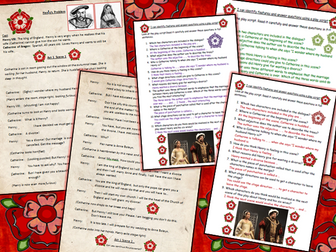
A superb Tudor style play-script comprehension. Includes Henry VIII and Catherine of Aragon. The dialogue includes Henry VIII demanding a divorce. Good text to discuss the features of a play script. Differentiated questions to suit four ability groups. Text can lead to extended writing with children writing the next scene that could include Henry's second wife (Anne Boleyn). Both Word files and PDF versions included.
An extended comedy play-script
A class of children await their stressed-out teacher and decide to discuss the question ‘What is the meaning of Christmas?’
Ideal for an alternative Christmas production
Aimed at KS2/3
19-page script with music suggestions
Cross curricula link to RE, Drama, English and Citizenship
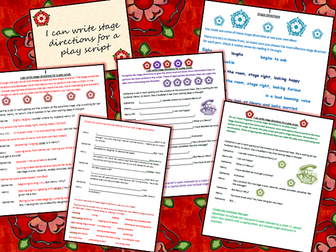
Differentiated activity where children will select or choose appropriate stage directions to fit a Tudor themed play-script including Henry VIII and Catherine of Aragon. The short script covers Henry demanding a divorce from his first wife. The differentiated activity (to suit 3 ability groups) can lead to extended writing with the children continuing the play-script. Accompanying presentation included with embedded fonts. Stage direction word mat examples included and an example text with stage directions added in included as an example. All files formats are Word and duplicated as PDF files.
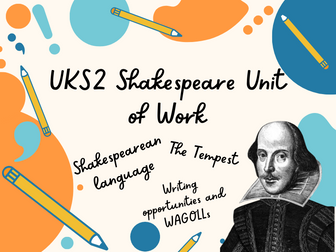
Mini unit of learning (15+ lessons), which includes:
an introduction to Shakespeare, life in Elizabethan England and Shakespearan language
a summary of the story of The Tempest and related writing tasks to engage students in the play
input and WAGOLL setting descriptions to build up to an extended writing task
Could be expanded for pupils to write their own playscripts or look at Shakespeare’s other works
If you liked this, please have a look at my other resources
A comprehensive pack of worksheets that includes a wide variety of extracts from a range of murder mysteries. The resource provides a number of tasks including a drama exercise complete with playscript.
A unit of work covering a whole range of literacy activities centred around 'Christmas Carol' by Charles Dickens: Playscripts, Diaries, Viewpoints, Biography, Narrative. Goes really well with the movie.
Enjoy! :->
The Invisible Man by H.G. Wells - KS3 Unit of Work
(93-slide editable PowerPoint presentation, 14 lesson plans, unit of work overview and 3 worksheets)
Our ‘The Invisible Man’ teaching unit explores the popular Oxford Playscripts drama interpretation of the classic C19th H.G. Wells novel.
It includes the following activities:
Examining the cover and blurb and making predictions
Using P.E.A.R. to construct an extended response
Writing and redrafting responses to texts
Character analysis
Writing an empathetic response
Understanding the P.A.F. of a text
Individual, pair and group activities
Exploring and understanding the key themes of the story
Creating storyboards and quizzes to consolidate knowledge of the text
Uncovering the context of ‘The Invisible Man’ - H.G. Wells research task
Role play, Hotseating and other speaking and listening opportunities
Writing a review of ‘The Invisible Man’
Whiteboard resource looking at scripts and performance.
Based on the story of Frankenstein. Pupils use an interactive theatre to create their own playscript and play.
It links with the key stage 2 attainment target 1 structure - oracy. The main links are English AT1: participate in a wide range of drama activities including role play, improvisation and the writing and performance of scripted drama.
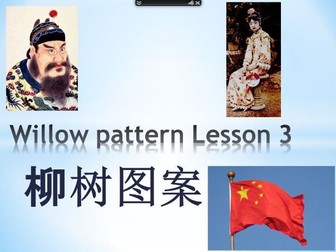
KS2 English/Drama 25 slide power-point lesson about the Willow Pattern story which includes pupil resources and a lesson. This is the third lesson in a series of three. It can be used as a follow up to Lessons 1 & 2 (also for sale!) or as a discrete lesson. The lesson start recaps the poem and Chinese rituals and greetings The main part of the lesson focuses on writing a script for a section of the story. Included are opportunities for pupils to assess their work using a script features checklist and give feedback . At the end of the lesson each group is encouraged to perform their scripted scene as part of the whole drama/story.
Speaking & Listening: Increase contextual subject vocabulary. Ask relevant questions to extend subject knowledge. Use drama to create conversations for a short play. Reading: Use a short poem to summarise a story into five parts. Identify a clear start, middle and end in each part of the story. Writing: use drama composition to rehearse sentences orally, build vocabulary and noun phrases to write a short playscript /scene (one of the five parts of the story)
Key Question: What is the best way of writing our ‘still photo’ drama scenes?
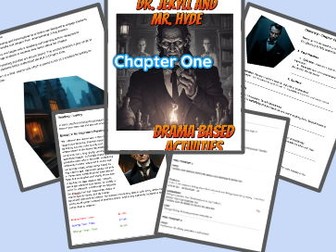
This comprehensive resource on Chapter One is designed to help GCSE English Literature teachers guide students through the key themes, characters, and plot of The Strange Case of Dr. Jekyll and Mr. Hyde - Chapter One using drama and discussion activities. It is particularly suited to students who find reading challenging.
What’s Included:
Speaking and Listening Tasks: Students explore essential themes like duality, reputation, and social responsibility through targeted speaking and listening questions. These activities encourage discussion, helping students to articulate their thoughts on Victorian values, morality, and the nature of evil as portrayed in Jekyll and Hyde.
Drama Activities and Play-Script: A play-script based on Chapter 1, The Story of the Door, allows students to perform key scenes. This hands-on approach deepens their understanding of the novella by actively engaging with the characters and narrative. Role-playing the interactions between Mr. Utterson, Mr. Hyde, and Mr. Enfield provides insight into the novel’s tension and atmosphere.
Character Analysis and Themes: Through activities like tableau, role on the wall, and conscience alley, students explore characters’ psychological depth and internal conflicts, while also reflecting on important themes such as secrecy, urban isolation, and morality.
Monologue Writing and Performance: Students write internal monologues from the perspectives of major characters like Mr. Utterson, Mr. Enfield, or Mr. Hyde. This writing exercise encourages students to delve into character motivations, moral dilemmas, and thematic concerns, followed by a performance to bring these reflections to life.
Glossary and Key Vocabulary: A glossary of challenging words from the text ensures that students can engage with the language and understand the novella’s more complex vocabulary, facilitating deeper comprehension. A reading activity is included to improve fluency and pronunciation when reading passages from Chapter One.
Learning Outcomes:
Deep Understanding of Themes: Students will develop a nuanced understanding of the novel’s themes, such as duality, reputation, and evil.
Character Insight: Through drama and monologue writing, students will gain a deeper emotional and intellectual connection to the characters.
Speaking, Listening, and Writing Skills: These activities promote critical thinking, discussion, and extended writing, preparing students for GCSE exam success.
This resource offers an interactive and creative way for students to explore Jekyll and Hyde, making complex themes and characters accessible through drama and collaborative learning.
About the Schlieffen Plan. Quite hard concept, needs a lot of extra discussion. However, the children got really into it.
The first lesson, which includes the detailed plans for 6 weeks, is charged at 2GBP. Everything else is available thereafter for free.
I have made a sequence of 6 detailed lessons with resources. I also added 6 further lesson objectives to make a full term’s work if you wish to extend.
Alex
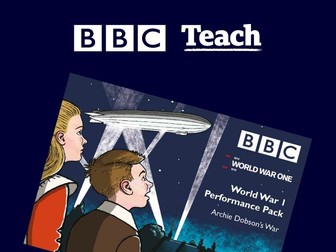
The programmes in this ‘Performance Pack’ from BBC Teach explore World War 1 through music, dance and drama, providing an ideal means to extend your study of the topic into Expressive Arts activities.
There are units of three programmes supporting each discipline, which may be used separately or together. Taken as a whole they may be combined to rehearse and perform our specially-written musical play for pupils aged 9 to 12 called Archie Dobson’s War.
The full range of resources available includes the playscript of Archie Dobson’s War, Teacher’s Notes, backing tracks of all the songs, incidental music to enhance your staging and a range of multimedia resources. The Pack enables teachers to link ongoing work in dance and music to the theme of World War 1 and also to stage a performance that will be both entertaining and thought-provoking.
The purpose of BBC’s content is to inform, educate and entertain. As such, students, teachers, schools, and other established educational bodies may utilise such content for educational purposes via an ERA Licence.
Without an ERA Licence, reasonable use of the content (for the purposes set out above) may still be possible, however; any such use must be in line with the BBC’s Terms of Use.
Whilst this is not an exhaustive list, when using and or sharing BBC Education content, you must comply with the BBC’s Terms of Use and where relevant, YouTube’s terms and conditions, ensuring that:
there aren’t any advertisements on or around the BBC content;
there aren’t any charges for access and or charges associated with the content (clearly stating that the content is free to access); and
you do not state or imply (in any way) that there is a relationship and or any endorsement from the BBC to you.
We ask that you read the said terms before using any of BBC’s services. When you use BBC’s services and content, you’re agreeing to the BBC’s terms of use.
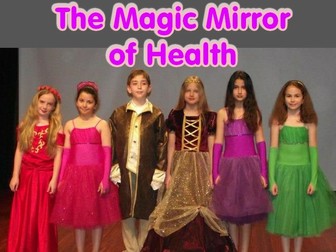
An extended musical assembly for primary schools to promote health and fitness. Learn about the benefits of healthy eating and exercise in a fun-packed presentation for young actors, dancers and singers from KS2. 25 min.
Synopsis: The King and his Court are unhealthy and out of condition. A wise woman tells of a magic mirror hidden in the mountains, which will restore their vitality, and they go on a quest to find it. The King has a rival who finds the mirror first, but ultimately the King achieves fitness through a healthy lifestyle. Great fun to act, sing and dance. A fabulous addition to your PSHE/.Health Education Resources or as a very special memorable class assembly. Free performance licence included in the price. A Cd version is available on request as well as the download. Please email the writer: fgreen14@btopenworld.com
Cast List:
Narrator 1……………………………Narrator 2 ……………………………………
King …………………………………. Princess …………………………………….
Silas the merchant ………………………………………………………………….
Doctors 1, 2, 3 and 4 …………………………….………………………………….
Courtiers 1, 2, 3 and 4 ………………………………………………………………
Wise Woman ………………………………Lady in Waiting …………………………
Mountain people: Woodcutter………… Mountain girl…………………………… Hunter ………………………………Mountain leader…………………………….
Vicar …………………………………………
Singers ………………………………………………………………………………
The audio supplied is as follows:
5 Vocal Tracks
9 Backing Tracks / Incidental music
TRACK LISTING
You Can Be Healthy (with vocals)
His Majesty the King! (with vocals)
Bend! Stretch! (with vocals)
Magic Mirror (with vocals)
We Can Go Home (with vocals)
You Can Be Healthy (backing track)
Wise woman (sound effect)
His Majesty the King (backing track)
Spirit Appears (sound effect)
Mountains Music (instrumental)
Bend! Stretch! (backing track)
Magic Mirror (backing track)
We Can Go Home (backing track)
Wedding Music (instrumental)
This easy musical play celebrates the primary school career of a cohort of Year 6 pupils, and comes with three easy leavers songs set to well known tunes (with vocals and instrumental backing tracks). You also receive the script and lyrics to customize, a Powerpoint workbook for the children, and a basic score. The price includes a school performance licence.
It provides a positive focus as the children complete their final term in Year 6. No musical ability is needed. The children can sing along to the backing tracks. The play is suitable for an end-of-year assembly for the whole school, hopefully with parents, lasting about 20-30 mins.
Number of Players / Singers: At least 24
Video animations from BBC Teach of some of the best-known Viking Sagas, told in a light-hearted but faithful style.
Download the Teachers Notes, then go to the BBC Teach website for the animations, the first of which is available here.
The collection begins with the Viking account of how Odin creates the Viking world, before relating tales involving gods and goddesses such Thor, Loki, Freya and Iduna - as well as plenty of goblins and giants!
Each video has a transcript of the text making it an ideal resource to extend the study of myths and legends into drama and the dramatisation of narrative text.
The purpose of BBC’s content is to inform, educate and entertain. As such, students, teachers, schools, and other established educational bodies may utilise such content for educational purposes via an ERA Licence.
Without an ERA Licence, reasonable use of the content (for the purposes set out above) may still be possible, however; any such use must be in line with the BBC’s Terms of Use.
Whilst this is not an exhaustive list, when using and or sharing BBC Education content, you must comply with the BBC’s Terms of Use and where relevant, YouTube’s terms and conditions, ensuring that:
there aren’t any advertisements on or around the BBC content;
there aren’t any charges for access and or charges associated with the content (clearly stating that the content is free to access); and
you do not state or imply (in any way) that there is a relationship and or any endorsement from the BBC to you.
We ask that you read the said terms before using any of BBC’s services. When you use BBC’s services and content, you’re agreeing to the BBC’s terms of use.