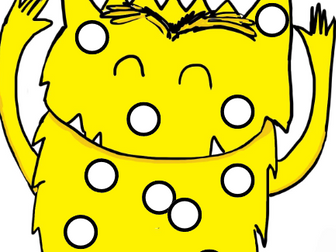
Can be used to match colours and develop fine motor skills
Can also be used for a numeracy activity
Includes 7 monsters - Red, Pink, Yellow, Grey, Blue, Green & Multicoloured
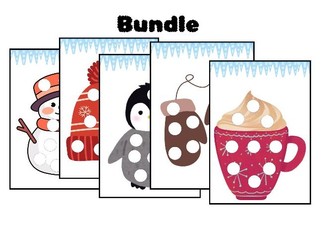
5 wintery images with dots on to add loose parts and work on fine motor skills
mitten, hat, scarf, snowflake and hot chocolate
Inspiration for this resource from @miss_e_early_years
Fine motor and scissor skills practice for EYFS and KS1.
Talk about the space items, Have your children cut out the ones they like and stick them onto the picture to create their own space themed scene.
Fine motor skills activity to include in continuous provision.
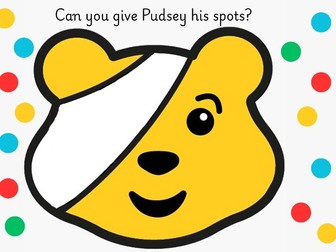
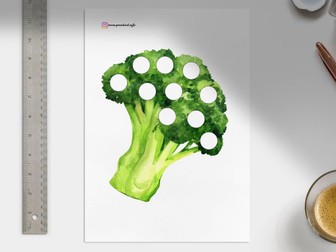
Children could cut out the spots to stick on the bandana, they could finger paint spots on, use sequins or pom poms.These sheets could be laminated and used with felt tip pens/dry wipe pens. There are many implementations depending upon your intention.
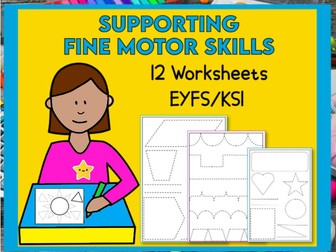
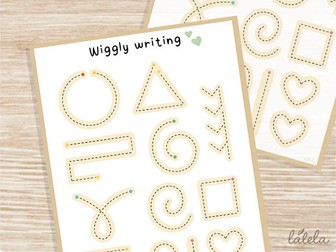
This 12-page fine motor skills resource for EYFS and KS1 supports early handwriting development through tracing activities.
Each page features a variety of patterns, dotted lines, and shapes for children to trace over, helping to strengthen pencil control, hand-eye coordination, and pre-writing skills.
The resource encourages precision and confidence in mark-making, making it a valuable tool for early learners.
The sheets can be laminated for flexible use and added to the writing corner.
Fine motor skills and scissor skills activity for continuous provision.
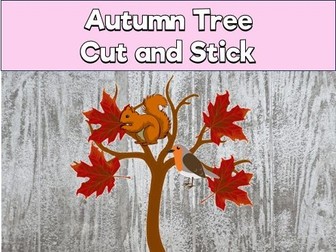
Talk about what happens to the trees in autumn and discuss the changing seasons. Cut out the different parts to create autumn trees.
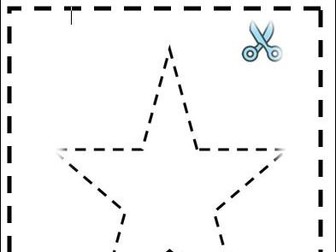
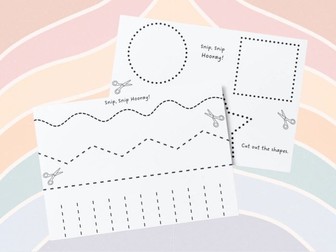
A set of shapes for children to improve their cutting skills.
There are 11 large shapes and 2 pages showing small shapes which can be used for assessment.
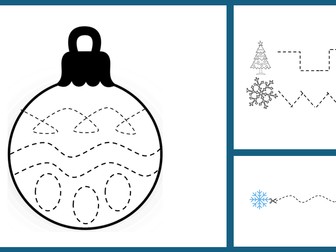
This online educational resource offers a wide collection of winter-themed fine-motor control sheets perfect for early learners. Children can practise pencil control, tracing, and early cutting skills through engaging activities featuring snowflakes, and other seasonal characters. The worksheets include dotted lines to follow, simple cutting paths, shape cutting, and trace-and-draw challenges designed to strengthen hand–eye coordination and build confidence. Easy to download and print, these winter activities make an ideal addition to classroom centres, home learning, or occupational therapy sessions.
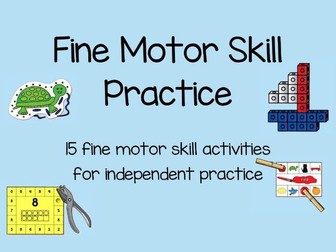
15 activities for students to develop their fine motor skills. Each activity includes illustrated instructions, a box label and printable material. Activities may require extra materials (scissors, glue, beads, etc.).
All young children need to master fine motor control to equip them for handwriting, math, and more.
Some of the Activities:
Fine Motor Skills: 4 lacing cards
Fine Motor Skills: 2 "Make Your Own" Fold-able Clocks- Lift the flap to see how to read the minute hand more clearly.
Fine Motor Skills: 6 Circle Time Tracing and shading Task cards
Fine Motor Skills: 24 Scissor Skills Task Cards
including fall, winter, spring, and holiday themes!
Perfect for centers, homeschoolers, group activities, and quiet time.
Children can decorate their own pumpkin using a variety of materials. Two versions of the pumpkin template are provided:
Black and White Pumpkin
Colour Pumpkin
This flexible activity allows for a wide range of engagement levels. Children can use finger painting, dabber pens, or loose parts like buttons, beads, poms, or natural materials such as leaves or seeds. For an extra fine motor challenge, provide tweezers or mini tongs for placing materials.
This resource provides a range of activities to develop fine motor skills, designed with learners with severe learning difficulties in mind. It is by no means exhaustive, but covers a range of activities to develop discrimination of left and right, hand-eye coordination, crossing the mid-line, in-hand strength, finger and in-hand manipulations, finger isolation skills, grasps, releases, pencil control skills, early drawing skills and early letter formation skills.
Perfect for EYFS classrooms, this printable resource helps little learners develop the fine motor skills and hand-eye coordination they need before forming letters.
A4 / A3 Pencil control sheet featuring a variety of patterns and pre-writing shapes, including:
Straight lines
Wavy and zig-zag lines
Curves and loops
Spiral and circular patterns
Fun paths for children to trace
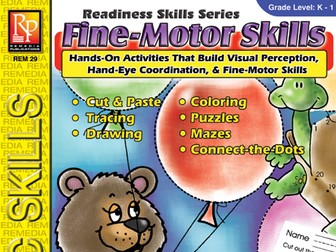
Improve eye-hand coordination and executing verbal directions. Students will use pencil and paper - as well as scissors and glue - to complete the 22 creatively illustrated lessons in this unit.
Activities include cutting and pasting pieces of a pictures together, connecting the dots to create an image, finishing incomplete drawings, making it through mazes, and tracing shapes. Even young students are sure to improve their fine motor skills.
Use this tree with falling leaves to help your students improve their fine motor skills and pencil control skills as they follow the leaf trails to the ground. This can be used as a stand alone activity ( we use it as morning work) or as part of a lesson that focuses on fine motor skills, the children can also be encouraged to add their own leaves to the tree and colour it in with the appropriate colours.
Upright working surfaces promote fine motor skills. Examples of these are: vertical chalkboards; easels for painting; flannel boards; ‘lite bright’; magnet boards (or fridge); windows and mirrors; white boards, etc. Children can also make sticker pictures; do rubber ink stamping; use reusable stickers to make pictures; complete puzzles with thick knobs; use magna doodle and etch a sketch as well. The benefits for these include: having the child's wrist positioned to develop good thumb movements; they help develop good fine motor muscles.