Unlock the magic of Shakespeare with an engaging Macbeth Poetry Lesson that brings the Bard’s work to life for students of all abilities! This expertly crafted lesson plan is packed with visually appealing slides and detailed instructions, ensuring that every aspect of teaching Shakespearean poetry is covered. Perfect for interview or a formal lesson observation, it showcases your ability to deliver captivating, structured, and inspiring content.
With a focus on pupil creativity, the lesson includes differentiated resources, allowing students to explore key themes and language at their own pace. The differentiated success criteria guides pupils towards meaningful analysis, while the interactive elements of the lesson spark enthusiasm for Shakespeare’s timeless work.
An excellent resource to highlight your teaching skills, engage your class, and leave a lasting impression on potential or current employers. Also ideal for other formal lesson observations.
Non-fiction Texts (KS4)
Lesson 9: The Explorer’s Daughter - Magical Atmosphere
FREE - Lesson One: https://www.tes.com/teaching-resource/-12942552
Bundle Sow: https://www.tes.com/teaching-resource/non-fixation-texts-gcse-12942563
FREE Animal Farm SoW: https://www.tes.com/teaching-resource/resource-12942163
Leave a review for a FREE single resource
This SoW is designed in detail and is both differentiated and engaging, and allows you to move pupils through content efficiently.
Made to the highest standard and constructed using current research, both dual coding and retrieval practices are at the heart of this unit. A colour scheme also runs throughout to ease both your delivery and students comprehension.
SoW: Non-fiction Texts (KS4)
Lesson 1-3 The Danger of a Single Story
Lesson 4-6 A Passage to Africa
Lesson 7-9 The Explorer’s Daughter
Lesson 10-13 Explorers or boys messing about
Lesson 14-17 Between a Rock and a Hard Place
Lesson 18-20 Young and Dyslexic - Zephaniah
Lesson 21-22 Game of Polo with a Headless Goat - Levine
Lesson 23-25 Beyond the Sky and Earth - Zeppa
Lesson 26-28 H is for Hawk - Macdonald
Lesson 29-30 Chinese Cinderella - Yen Mah
If you leave a review of any of our resources, you can claim any FREE single resource from our ever growing library. Simply message the above email, which is monitored daily.
teachercentralltd@gmail.com
Best FREE Resources (Teacher Central)
https://www.tes.com/teaching-resource/britain-losing-and-gaining-an-empire-12973075
https://www.tes.com/teaching-resource/financial-literacy-12898983
https://www.tes.com/teaching-resource/romeo-and-juliet-12908635
https://www.tes.com/teaching-resource/shakespeare-12908634
https://www.tes.com/teaching-resource/macbeth-gcse-12863697
https://www.tes.com/teaching-resource/animal-farm-free-sow-12942163 (FREE SoW)
https://www.tes.com/teaching-resource/slavery-sow-12843084 (FREE SoW)
https://www.tes.com/teaching-resource/-12727408 (FREE SoW)
https://www.tes.com/teaching-resource/russia-1917-91-from-lenin-to-yeltsin-12834552
https://www.tes.com/teaching-resources/shop/TeacherCentral?sortBy=lowestPrice&p=5
I hope you find this SoW useful. If you have, I have created a series of resources.
You can check them out here.
https://www.tes.com/teaching-resources/shop/TheGeographyShopOriginal
A highly engaging resource which provide approximately 1 weeks worth of lessons. Based on the theme of magic and the supernatural – the lessons provide writing and reading tasks based on the spell in Macbeth and Harry Potter extracts.
Very creative. Tailored towards MAPS but easily differentiated. KS3 focus.
Seven whole-text plans with one blank plan for pupils to complete themselves for revision. Includes evidence, analysis, dramatic effects and “magic points of magic” (i.e. targeted contextual information to add edge to a conclusion.)
A comprehensive and thorough resource on Macbeth, designed for KS3 but easily adaptable for KS4, covering social and historical context, use of Language, Form and Structure, self and paired assessment and final assessments.
A great little resource to help celebrate the Bard's birthday later this month!
This 'ready to go' lesson explores the rhyming scheme and content of the witches' spell in Act Four, Scene 1 and guides students towards planning and writing their own magic spell - which can then be displayed in the classroom or around the school.
Can be adapted as required. Resource includes word document with the witches' spell and simple reading and planning instructions. There is also a list ten associated spellings.
Students do not need to have read Macbeth to complete this lesson successfully.
Intended for Year 7 but could work for Year 8 too.
Two lessons using the perfect shakespeare recall to start off with. Can be adapted for any group.
Second lesson looks at the superstitions and give examples of real life Macbeth curses.
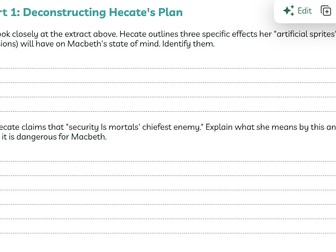
This energetic KS3 worksheet plunges students into the eerie world of Hecate as they compare her cunning new plan with the witches’ earlier prophecies. Learners explore how her manipulation raises the stakes, shifts the supernatural power dynamic, and reveals a darker, more calculated strategy behind Macbeth’s downfall. A gripping way to boost comparison skills and deepen understanding of the play’s magical machinations.
The perfect introduction to Shakespeare, featuring ghosts, witches, battles and murder. You just need to add some dinosaurs and a monster truck and it could have been written for a class of ten year-olds.
A complete unit of work, free to download and ready for the 2014 National Curriculum. You can find lots more like it at ShakespeareandMore.com
Four sessions of whole class guided reading planning for Act 1 Scene 3 of Macbeth using the original text.
I like to teach this to Year 6 when we are studying the Tony Ross abridged Macbeth for English.
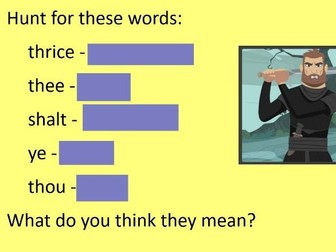
Sessions cover a deep dive into archaic language, specific vocabulary instruction, looking at magic and the supernatural in the play and a comprehension aimed at Year 6 (UK).
Files included
Excerpt of Macbeth
Planning overview
Smart notebook file with the slides
Task sheet to support vocabulary session
Comprehension task sheet
Vocabulary cards for display
Enjoy and please let me know how you use it in your classes!
Macbeth by William Shakespeare – Beliefs about Witchcraft and the Supernatural
A clear and detailed analysis of how beliefs in witchcraft and the supernatural influence the plot, characters, and themes in Macbeth.
This resource explains the role of witches, visions, and ghosts in the play, showing how Shakespeare reflects Jacobean fears of magic, evil, and divine punishment. It explores the moral, psychological, and dramatic effects of the supernatural and includes relevant quotations to support understanding.
Key features:
Examination of Jacobean beliefs about witches and the supernatural
Analysis of key supernatural elements, including the witches, Banquo’s ghost, and Macbeth’s visions
Discussion of how the supernatural shapes characters, themes, and events
Key quotations with explanations and context
Includes an accompanying worksheet to reinforce and practise key concepts
Includes an accompanying worksheet to reinforce and practise key concepts.
This presentation looks at the opening scene of Macbeth. In the comments, there is a link to a great Youtube video that compares three versions of the opening scene. Three slides ask questions about the impact of these presentations and get the students to think about how this contributes to the presentations of the witches overall.
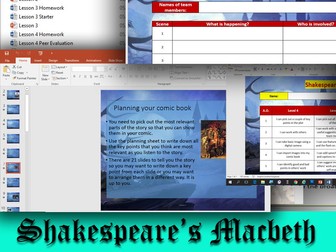
Learn Shakespeare's Macbeth by turning key scenes into a comic strip over 4 fun and engaging lessons. Learn about Macbeth's secrets, Lady Macbeth's dilemmas and the 3 witches and their magic using story telling, art skills and descriptive writing enhanced with technology and if available a digital camera or hand drawings.
This is a scheme of work mainly aimed at Year 9 pupils studying Macbeth. The unit will end in a reading assessment on the question: How does Shakespeare present the causes and consequences of greed in the play Macbeth? This could also be adapted for KS4 classes. A lesson plan is included with each lesson so you can understand my thought process. Macbeth is possibly my favourite Shakespeare play, so I hope I have done it justice!
This is a scheme of work mainly aimed at Year 9 pupils studying Macbeth. The unit will end in a reading assessment on the question: How does Shakespeare present the causes and consequences of greed in the play Macbeth? This could also be adapted for KS4 classes. A lesson plan is included with each lesson so you can understand my thought process. Macbeth is possibly my favourite Shakespeare play, so I hope I have done it justice!
Shakespeare in 10 Minutes – A Fun and Engaging Introduction for Kids!
Step into the exciting world of Shakespeare with this special bundle of four classic plays, adapted into 10-minute scripts designed for 7-11 year olds! These short, lively versions make Shakespeare’s timeless stories fun, accessible, and easy to perform, helping young learners experience the magic of theatre.
A Midsummer Night’s Dream – Enter a world of fairy mischief, mistaken identities, and a group of hilarious actors as love and magic create chaos in the enchanted forest.
Romeo and Juliet – Follow the thrilling tale of two young lovers from feuding families as they try to find happiness despite the battles raging around them.
Macbeth – Witches, ghosts, and a power-hungry nobleman—this spooky tale of ambition and fate takes audiences on a dramatic journey through Scotland’s darkest secrets.
Hamlet – When Hamlet meets the ghost of his father, he uncovers a chilling secret. As he pretends to be mad to uncover the truth, the palace fills with spies, schemes, and betrayal.
With comedy, action, and adventure, this bundle is the perfect way to introduce young actors to the world’s greatest playwright in a way that’s easy to understand and fun to perform.


 Quick View
 Quick View
 Quick View
 Quick View
 Quick View