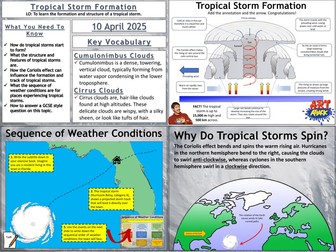
AQA GCSE Geography lesson for the new specification Unit 1A: In this lesson we look at how tropical storms form and what structure they have.
The lesson has a weather themed retrieval practice starter. We start by creating a diagram of the structure and formation of a tropical storm. The students have a slide by slide guide on how to create the diagram complete with annotations. We then complete a cloze exercise to describe how the Coriolis effect causes tropical storms to spin and change their track. We then look at the changing weather conditions a place would experience as a tropical storm passes. The students use information provided to place the weather conditions in the correct order. We finish with a GCSE-style practice question with some guidance and structure provided for the students.
Hope this saves you some valuable planning time.
https://www.tes.com/teaching-resources/shop/markthegeographer
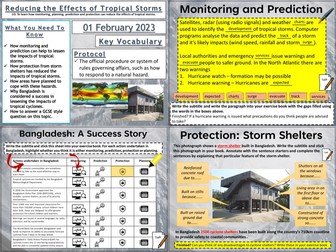
AQA GCSE Geography lesson for the new specification Unit 1A: In this lesson we look at monitoring, prediction, planning and protection in regards to tropical storms.
The lesson has a tropical stormed themed retrieval practice starter. We firstly introduce the importance of monitoring to aid prediction with measurements of SST’s. There is a cloze writing exercise on monitoring of hurricanes. A video clip from American tv provides a useful example of how tropical storms are monitored and their paths predicted even on mainstream television. There are some questions for the clip. We then look at protection, specifically storm shelters in Bangladesh, the pupils will have to label the storm shelter and annotate why these features of the storm shelter were needed. We then look at how building in vulnerable areas has made the risks of tropical storms and storm surges more severe. We then look at Bangladesh as a success story of monitoring, predicting, planning and protection, the students have a grid with the actions that have been undertaken by Bangladesh, they have to categorise them accordingly. We finish with a GCSE-style practice question with some guidance and structure provided for the students.
Hope this saves you some valuable planning time.
https://www.tes.com/teaching-resources/shop/markthegeographer
Storm on the Island - AQA GCSE Power and Conflict Poetry Anthology
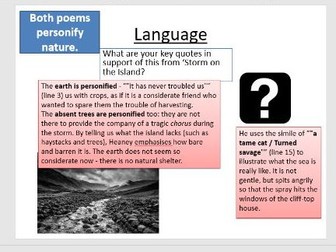
This two-lesson mini-unit covers Seamus Heaney’s ‘Storm on the Island’ in detail. Designed for GCSE pupils studying AQA Power and Conflict poetry, this resource explores the poem in depth and explains how to compare it to other poems from the anthology. The resource is made up of a 51-slide editable PowerPoint presentation and 5 accompanying worksheets.
The lessons contain the following:
Lesson One
Context – A brief outline of Seamus Heaney and the conflict in Northern Ireland
First Reading – A reading of ‘Storm on the Island’ with glossary and comprehension / consolidation questions with example answers included.
Language and imagery – Analysing ‘Storm on the Island’ in detail. Exploring language and answering questions that delve deeper. Model answers provided.
Essay Writing – An essay question to assess students’ initial understanding of the poem. An example response is included.
Lesson Two
Imagery - Analysing Heaney’s use of imagery and poetic techniques (sibilance, simile, metaphor).
Themes – Exploring the themes of ‘Storm on the Island’ – the power of nature, conflict and fear.
Structure and Form – How Heaney uses form, structure, rhythm and rhyme.
The GCSE exam – Comparing ‘Storm on the Island’ with ‘The Prelude: Stealing the Boat’ and explaining how to write a comparison essay in the exam.
This is a comprehensive resource containing a range of activities, however it can also be edited, personalised and differentiated to suit your teaching needs.
To preview a few slides from the ‘Storm on the Island’ PowerPoint presentation, please click on the images.
Click below to see more AQA GCSE Anthology Power and Conflict Poetry resources:
Ozymandias
London
The Prelude - Stealing the Boat
My Last Duchess
The Charge of the Light Brigade
Exposure
War Photographer
Bayonet Charge
Remains
Checking Out Me History
Poppies
Tissue
The Emigree
Kamikaze
AQA GCSE Anthology Poetry Power and Conflict Pack
Storm on the Island
TWO fully differentiated lessons
(GCSE 1hr PP differentiated tasks, New Spec)
Focuses on Seamus Heaney’s Storm On The Island - part of the Power and Conflict anthology
For Paper 2 Literature New Spec
Complete 2 hours, well differentiated lessons (x2) with worksheets
Suitable for KS4 or adaptable for KS3
Different level tasks for MA,LA or Core
Designed to fit Ofsted criteria for’ Good’ or above
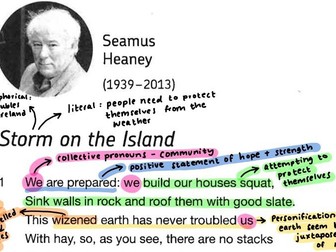
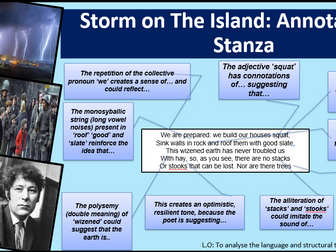
An annotated copy of the poem Storm On The Island by Seamus Heaney. Two copies of the poem, one annotated with questions, one with answers. Could be used in lesson, as a homework, to check understanding or to revise the poem.
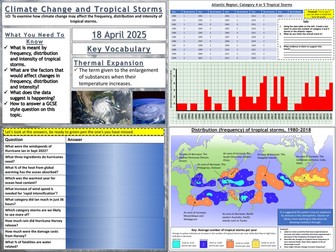
AQA GCSE Geography lesson for the new specification Unit 1A: In this lesson we look at what how climate change may affect the frequency, distribution and intensity of tropical storms.
We begin with a true or false starter. Our first task is to look at the meaning of frequency, distribution and intensity in the context of tropical storms, we also consider the reasons why climate change may affect tropical storms. Next we watch a 7 minute video clip on climate change and tropical storms. The students have some questions to answer on a question sheet. We then look at the distribution and frequency of tropical storms. The students create a map using colouring by numbers and then identify regions which have seen an increase or a decrease in frequency. We then look at intensity and the students use data from the last 40 years to create a bar chart that shows the occurrence of severe category 4 or 5 storms in the Atlantic region. We create a diagram to summarise our findings. We finish with a 4-mark GCSE-style practice question with some guidance and structure provided for the students.
Hope this saves you some valuable planning time.
https://www.tes.com/teaching-resources/shop/markthegeographer
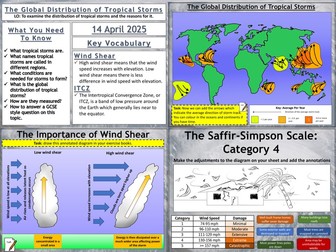
AQA GCSE Geography lesson for the new specification Unit 1A: In this lesson we look at what the distribution of tropical storms is and the reasons for it.
We start by looking at what tropical storms are and the different names they are called in different parts of the Earth. the students then complete a map colouring by numbers activity to show the distribution of tropical storms but also their ferquency. The students then add directional track arrows to indicate the movements of the tropical storms. We then watch a short video on the conditions needed for tropical storms to form. The students complete a diagram on wind shear before then complete a match-up exercise on the ingredients needed for a tropical storm to form. We then look at the Saffir-Simpson scale, the students have a worksheet with a faint outline drawing of a house and palm tree. As we go throug the scale, the students adjust the scene according to the damage caused and annoate it with some of the examples of the likely damage. We finish with a 6-mark GCSE-style practice question with some guidance and structure provided for the students.
Hope this saves you some valuable planning time.
https://www.tes.com/teaching-resources/shop/markthegeographer
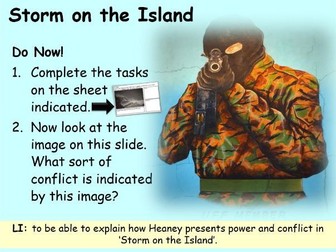
A lesson ‘Storm on the Island’ for lower ability learners. It includes:
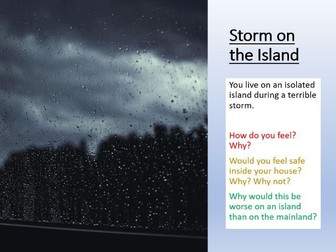
Do Now task: learners examine an image of storm in a coastal area, identifying how it represents power and conflict.
Context sheet with corresponding tasks
Quotation hunt
Comparison with Exposure in terms of 1) power and 2) conflict
Review
PowerPoint (will take approximately 2 lessons) focusing on the life of Seamus Heaney, an outline of social historical context and close textual analysis of the poem. Lesson also explores the allegorical message to the poem along with an exam style question at the end. Designed for a mid/high ability Yr 10 GCSE class.
Year 1/ 2 lesson resources include:
Lesson 1: Making predictions from the front cover.
Lesson 2: Make inferences.
Lesson 3: Acting out the scene of Noi’s dad finding the whale, writing a question, command or exclamation on the speech bubble.
Lesson 4: Learning new vocabulary.
Lesson 5: Creating an expanded noun phrase to describe the ocean.
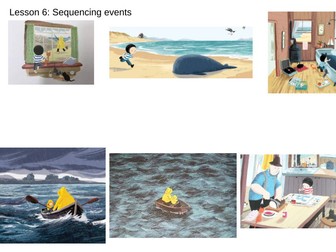
Lesson 6: Pictures to sequence the story, short sentences to help children break down the story and create a short narrative.
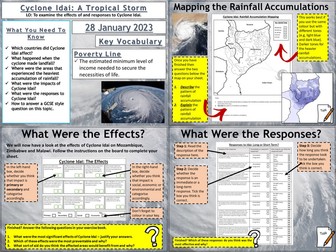
AQA GCSE Geography lesson for the new specification Unit 1A: In this lesson we look at the events, effects and responses of Cyclone Idai on Mozambique, Malawi and Zimbabwe.
The lesson has a retrieval practice starter based around a field sketch of a coastline. We firstly introduce Cylone Idai and there is a video clip of the impafts to give students an understanding of the context. The students then undertake a colouring by numbers exercise to create a choropleth map of the rainfall accumulations of the tropical storm. We then consider the effects. The students complete a simple classification exercise categorising the effects into primary and secondary as well a SEE effects. We then look at the responses to the cyclone. There is a worksheet for this activity where the students read the repsonses and tick the appropriate boxes to determine if it was immediate or long-term and how long they think the response took. We finish with a GCSE-style practice question with some guidance and structure provided for the students.
Hope this saves you some valuable planning time.
https://www.tes.com/teaching-resources/shop/markthegeographer
This lesson breaks the two poems down into small chunks:
Context
Language
Structure
Themes/ attitudes and ideas
An absolute must for revision! Students can stick these up as posters.
First lesson: Word of the Week and Context
Second lesson: Guided structural and poetic analysis
Third lesson: Planning and writing a critical analysis, and a 10- question multiple choice low stakes quiz.
This is a 2-week writing unit based on The Storm Whale by Benji Davies. I have used this with Year 2 pupils but it could be adapted for Year 1 or Year 3. It covers decriptive writing, expanded noun phrases and conjunctions.
This contains 2 weeks worth of resources, planning and SMART boards. (10 lessons. The resources are in words and PDF format.
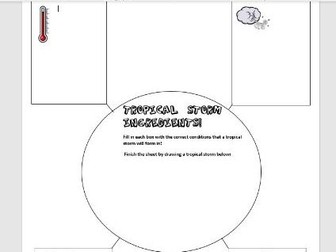
KS3 Geography Extreme Weather or Natural Hazards module: 1 page worksheet for listing the ‘ingredients’ - the conditions needed for a tropical storm to be able able to form. Extended drawing task also included on the sheetSuitable for ages 11-14.
A fully planned lesson where students watch a special news report and write down the impacts of the flood under SEEP headings. They then use this information to annotate photographs of the flooding and discuss how the news report made them feel.
As homework or a task for next lesson, students are provided with a variety of poems about floods and asked to discuss them and create an illustration to accompany their chosen poem.
Notes are written on each of the slides with links to videos and news articles as well as what to prepare before delivering this lesson.
Useful sheets to help pupils looking at storms and shipwrecks. The sheets cover pearl harbour, titanic, pirates and weather events at sea. they are aimed as a starting point and then use other resources to expand their knowledge.


 Quick View
 Quick View
 Quick View
 Quick View
 Quick View
 Quick View
 Quick View
 Quick View
 Quick View
 Quick View
 Quick View
 Quick View
 Quick View