KS2 Science All About Joints Practical experiment includedQuick View
shofnak

KS2 Science All About Joints Practical experiment included

(0)
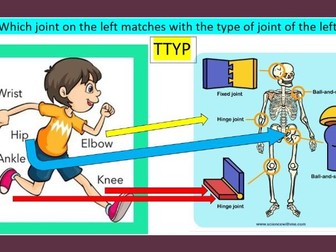
This human body joints PowerPoint lesson teaches pupils to identify different types of joints in the body through clear explanations, practical modelling and movement-based activities. Ideal for KS2 science units on Animals Including Humans, this resource includes definitions, examples, classification tasks and a hands-on model-making activity to help children understand how bones and joints allow movement. The lesson begins with a fun scenario—“Move Like the Desert Animals!”—linking UAE desert wildlife to how the human body bends, stretches and rotates. Pupils explore key joints such as the elbow, knee, shoulder, hip, wrist, neck and ankle, learning the differences between hinge joints and ball and socket joints, as well as fixed joints. Partner questions, think-pair-share prompts and injury-identification scenarios deepen discussion and critical thinking. Teachers will find a range of interactive tasks, including: matching joint types to body movements identifying joints used for different actions labelling the main joints on a diagram creating a working arm model using card, split pins and string challenge questions comparing joint functions in everyday movements Clear definitions, diagrams, word bank keywords and a joint word search support vocabulary acquisition. A plenary task asks pupils to draw or describe their favourite joint and explain how it helps them move. This resource is perfect for whole-class teaching, science investigations, model-making lessons or revision activities. It supports differentiation, hands-on learning and strong scientific understanding with minimal teacher preparation.
KS2 Science Parts of a SeedQuick View
shofnak

KS2 Science Parts of a Seed

(0)
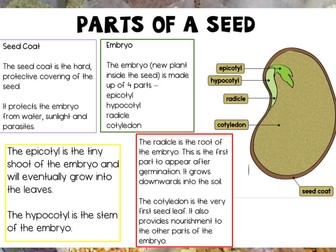
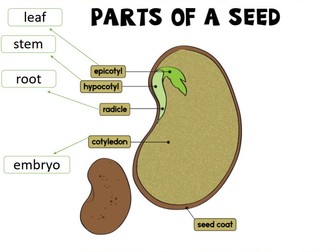
This “Parts of a Seed” PowerPoint is a ready-to-teach science lesson that helps students identify and understand the key structures inside a seed. The resource includes clear visuals, essential vocabulary, a story-based introduction, and UAE/Islamic cultural links to make learning meaningful and engaging. Students learn the functions of the epicotyl, radicle, hypocotyl and cotyledon through interactive activities, a movement-based corners game, and a Wordwall plenary quiz. Ideal for primary plant biology, germination lessons, or supporting a seed dissection activity. How Teachers Can Use This Resource As a full lesson on plant reproduction and seed structure in science. To introduce vocabulary before a practical seed dissection activity. To support EAL learners with clear visuals, repetition, global examples, and movement-based learning. To make cultural connections relevant to UAE classrooms, linking science with Islamic studies and social studies. For assessment using the interactive corners game and the Wordwall quiz. To build cross-curricular links with geography, cultural diversity, and moral education.
KS2 Science The Human Body MusclesQuick View
shofnak

KS2 Science The Human Body Muscles

(0)
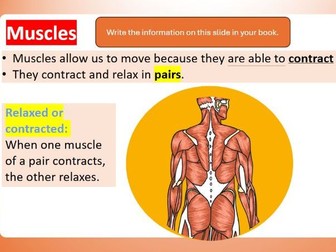
This muscles and movement PowerPoint lesson teaches pupils how muscles work with the skeleton to help the human body move. Designed for KS2 science units on Animals Including Humans, the resource explains the role of muscles, introduces key vocabulary, and includes practical activities that help pupils understand contraction, relaxation and muscle pairs. The lesson opens with a recap on joints, then leads into an engaging scenario—“The Muscle Mission: Exploring Human Strength”—linking human movement to desert animals, Emirati athletes and UAE culture. Pupils explore what muscles are, why they are essential for movement, and how the skeleton relies on muscles to bend, lift and stretch. Clear explanations guide pupils through concepts such as muscle pairs, biceps, triceps, contract, relax, shorten, and upper-arm movement. Teachers will find a wide range of interactive tasks, including: Muscle Map Challenge: pupils draw a body outline and label major muscles partner questions on how muscles help us walk, lift, and smile think-pair-share prompts exploring contraction and relaxation labelling worksheets for major body muscles challenge activities explaining why muscles are essential for movement hands-on model building, adding rubber-band “muscles” to the arm model created in the previous lesson This resource is ideal for whole-class teaching, model-building lessons, human-body investigations and revision of muscle function. With clear explanations and practical work, it supports scientific enquiry, physical exploration and strong vocabulary development, with minimal teacher preparation.
KS2 Science The Human Body Healthy Eating and ExerciseQuick View
shofnak

KS2 Science The Human Body Healthy Eating and Exercise

(0)
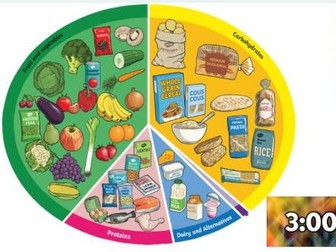
This Healthy Muscles and Bones resource is a KS1/KS2 science and PSHE lesson designed to teach pupils how diet and lifestyle choices keep the skeletal and muscular systems strong. Linked to the learning objective “to identify how to keep muscles and bones healthy,” the lesson guides children from simple food identification to creating and justifying a full healthy meal plan. Pupils begin by designing a healthy meal and labelling key foods, learning to recognise items that contribute to a balanced diet. As they progress, they move on to explaining why a balanced meal supports muscle and bone health, making links to nutrients such as calcium, protein, vitamins and minerals. For deeper understanding, pupils create a complete meal plan and justify their choices, using scientific vocabulary to explain how certain foods strengthen bones and build muscles. The lesson also explores the importance of exercise, helping children understand how physical activity works with good nutrition to promote overall health. This resource is ideal for cross-curricular teaching, combining science, health education, and nutrition. It supports discussion, creativity and scientific explanation while helping pupils understand real-life healthy habits. The tiered success criteria offer clear differentiation, allowing children to progress from basic identification to confident justification and reasoning.
KS2 Science The Human Skeleton Movement Complete LessonQuick View
shofnak

KS2 Science The Human Skeleton Movement Complete Lesson

(0)
This Skeleton and Movement Investigation resource is a KS2 science lesson designed to help pupils understand how bones and joints work together to allow the human body to move. The lesson uses a practical, hands-on approach to build knowledge of the skeletal system. Pupils begin by identifying where different bones meet, exploring simple joint locations, and creating a basic hand model with support. This introduces the idea that bones connect at joints and that these connections enable movement. As pupils gain confidence, they move on to independently creating a hand model and explaining how bones allow movement in different directions. This strengthens their understanding of how the skeleton provides structure, flexibility and protection. For deeper learning, pupils extend their explanations by describing how bones and joints work together to produce movement, using scientific vocabulary such as hinge joint, tendons, phalanges, and flexion. They provide clear examples of movements, helping them link model-making to real human biology. This resource is ideal for KS2 units on Animals Including Humans, supporting practical exploration, model-building, and clear scientific explanation.
KS2 Science Function of the StemQuick View
shofnak

KS2 Science Function of the Stem

(0)
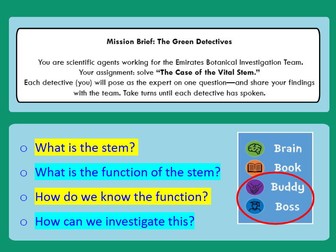
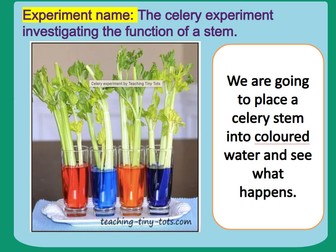
This Function of the Stem PowerPoint is a complete KS2 science lesson that teaches pupils what the stem does within a plant and how we can investigate its role through practical scientific enquiry. The resource opens with a retrieval starter on plant parts and a thinking task comparing stems and tree trunks, helping pupils link prior knowledge to new learning. The lesson explains the stem as a tube-like structure that supports the plant, transports water, minerals and nutrients, and stores food and water. Clear visuals and accessible explanations help pupils understand how stems move water to the leaves, flowers and fruits. The PowerPoint guides learners through a classic scientific investigation—the celery and food colouring experiment—to show how water travels through the stem. It includes: key scientific questions prediction prompts a WAGOLL prediction equipment lists step-by-step method fair-test reminders observation guidance opportunities for discussion and recording results Observations such as colour changes in the celery, falling water levels and visible dyed transport tubes help students grasp how stems function in real plants. The resource concludes with a results explanation and evaluation prompts to deepen understanding of scientific enquiry and plant biology. This PowerPoint is ideal for teaching the plants unit in KS2 science, supporting practical investigation skills, vocabulary development, and understanding of plant structure and function. Teachers can use it for whole-class instruction, hands-on experiments, or guided group work with minimal preparation.
KS2 Science Dissecting a SeedQuick View
shofnak

KS2 Science Dissecting a Seed

(0)
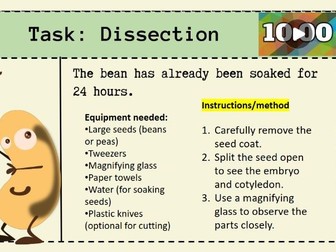
This Dissecting a Bean Seed PowerPoint is a complete, hands-on KS2 science lesson that teaches students how to identify, label and explore the internal parts of a seed through scientific observation and practical investigation. It introduces and reinforces key vocabulary including epicotyl, hypocotyl, radicle, cotyledon and embryo, with space for pupils to record these under clear success criteria. The lesson begins with a meaningful scenario—“Seeds for a Sustainable Future”—linking seed study to global food security, UAE culture, and Islamic teachings about caring for creation. This helps students understand why seeds matter in the real world, from date palms in the UAE, to rice fields in Asia and Indigenous seed-saving traditions worldwide. The resource includes structured tasks such as: Task 1: Labelling a diagram with the five main seed parts Task 2: Reflection prompts connecting science to culture, sustainability and religion A matching activity (boss and employee) to reinforce identification of seeds A prediction task and WAGOLL to model scientific thinking Students are then guided through a full seed dissection. The PowerPoint provides: equipment lists step-by-step instructions observation prompts (texture, colour, seed coat, embryo, cotyledon) key questions to support scientific enquiry opportunities to compare predictions with real results Visuals and a linked video help students understand how to safely dissect a soaked bean seed, identify its parts and record accurate observations using scientific vocabulary. A results section guides pupils to reflect on what they discovered, how the seed coat protects the seed, and what a seed needs to grow. The lesson ends with a plenary and self-assessment opportunity. It also introduces the next lesson on germination and testing different growing conditions, providing excellent continuity. This resource is ideal for KS2 plants, life cycles, or scientific enquiry units. It supports practical investigation, cross-curricular learning, sustainability links, and vocabulary development, with minimal teacher preparation required.
KS2 Science Parts of a SeedQuick View
shofnak

KS2 Science Parts of a Seed

(0)
This Parts of a Seed PowerPoint is a complete, engaging KS2 science lesson designed to help pupils identify and understand the key parts of a seed, including the epicotyl, hypocotyl, radicle and cotyledon. The resource supports scientific vocabulary development, hands-on learning and cross-curricular links with geography, culture and Islamic studies. The lesson opens with clear learning objectives and a vocabulary list for pupils to record. A creative scenario introduces students to seeds around the world, linking the concept to real-life examples from the UAE, Asia, Africa and the Americas. Cultural and religious connections—including a Qur’anic reference about seeds—help deepen understanding and make learning meaningful for students in the region. The PowerPoint includes child-friendly definitions of each seed part, supported by an active learning game in which pupils run to the correct corner of the room based on the word shown (radicle, epicotyl, hypocotyl or cotyledon). This adds movement, retrieval practice and fun to the lesson. A video segment and a main/challenge task follow, allowing pupils to consolidate knowledge and demonstrate understanding in written or practical activities. The plenary features a Wordwall quiz challenge to check understanding and provide instant feedback, making it ideal for assessment. This resource is perfect for the KS2 plants unit, enabling teachers to deliver a rich lesson with minimal preparation. It supports scientific enquiry, vocabulary retention, cultural relevance and active participation.
Outstanding Science Lesson PollinationQuick View
shofnak

Outstanding Science Lesson Pollination

(0)
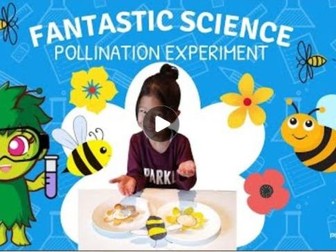
This Flowering Plant Pollination Investigation is a KS2 science resource designed to help pupils understand how pollination works and why it is essential for plant reproduction. The lesson guides learners from recognising the basic steps of pollination to evaluating how this process leads to the formation of new seeds and plants. Pupils begin by identifying the stages of the pollination process with the help of visual models, diagrams or practical demonstrations. They then build on this knowledge by describing the function of key flower parts—such as the stamen, stigma, pollen and ovary—and understanding how each contributes to successful reproduction. Higher-level tasks challenge pupils to observe and evaluate how pollination supports seed formation, making links between pollinators, flower structures and the creation of new plants. This supports scientific enquiry, critical thinking, and clear explanation using scientific vocabulary. This resource is ideal for plant reproduction units, practical investigations, dissection lessons, or hands-on activities involving real flowers or pollination simulations. This lesson offers natural differentiation, allowing pupils to progress from simple identification to meaningful scientific evaluation.
Exploring Plant Requirements for Life and GrowthQuick View
shofnak

Exploring Plant Requirements for Life and Growth

(0)
This Plant Requirements for Life and Growth resource is a KS1/KS2 science lesson designed to help pupils understand what plants need to survive and thrive. The lesson guides students from identifying basic plant needs to analysing how environmental changes affect growth. Pupils begin by listing and identifying the essential needs of plants, such as sunlight, air, water and soil. Through structured explanations, discussions and practical examples, they then move on to describing why each requirement is important, developing a deeper understanding of how these factors support healthy plant development. Higher-level tasks encourage pupils to analyse how a lack of sunlight or water impacts growth, helping them make scientific predictions, observe changes and explain their reasoning. This supports enquiry skills and introduces the concept of variables in a child-friendly way. This resource is ideal for units on plants, living things, and scientific enquiry, and works well for whole-class teaching, small-group investigations or hands-on experiments such as growing plants in different conditions. The clear success criteria allow for easy differentiation and assessment, helping teachers track progress from basic recall to deeper scientific understanding.
Outstanding Observation Science Lesson Plant GrowthQuick View
shofnak

Outstanding Observation Science Lesson Plant Growth

(0)
This Seed Growth Investigation resource is a structured KS1/KS2 science lesson that guides pupils through predicting, planning and explaining what a seed needs in order to grow. The lesson develops early scientific enquiry skills while building an understanding of plant life cycles. Pupils begin by writing a simple prediction with support, identifying basic factors such as water, sunlight, air and soil. As they progress, they learn to work more independently, writing both a prediction and a method that describe how they will test seed growth using appropriate scientific vocabulary. For higher-level learners, the resource encourages pupils to write a full prediction and method independently, demonstrating clear use of scientific terms such as germination, variables, conditions, and observation. This helps children move from guided writing to confident scientific explanation. The activity can be used alongside a practical experiment—such as growing seeds in different conditions—to support enquiry skills, vocabulary development, and an understanding of how environmental factors affect germination. Clear success criteria allow for easy differentiation and assessment, making the resource suitable for mixed-ability classes.
KS2 Science Grouping and Classifying LeavesQuick View
shofnak

KS2 Science Grouping and Classifying Leaves

(0)
This Leaf Grouping Science Activity is a KS1/KS2 resource designed to help pupils explore, sort and compare leaves from different plants. The lesson supports children in developing early classification skills and understanding how plants vary in structure. Through guided activities, pupils first learn to identify flowers and leaves and begin grouping them with teacher support. As they progress, they work independently to sort leaves based on simple observable differences, such as shape, size, colour or texture. Higher-level tasks encourage deeper thinking as pupils evaluate and compare leaf types across a variety of plants, building their scientific reasoning and vocabulary. This resource promotes hands-on investigation, outdoor learning and meaningful discussion as pupils observe real plant specimens or images. It is ideal for science units on plants, classification, or living things and their habitats, and can be used for whole-class teaching, small-group work or science centres. The clear success criteria allow for easy differentiation and assessment, making the activity suitable for mixed-ability classes and for supporting pupils as they move from guided to independent scientific enquiry.
KS2 Science Lesson Function of a LeafQuick View
shofnak

KS2 Science Lesson Function of a Leaf

(0)
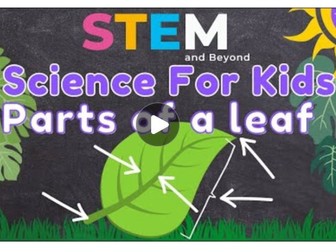
Parts & Function of a Leaf – KS2 Science Lesson (Photosynthesis, Veins, Structure) A complete KS2 Science lesson exploring the function of leaves, their structure, and why they are essential to plant survival. Ideal for Year 3–5 biology units. This fully editable lesson introduces pupils to the role of leaves as producers, how they absorb sunlight and carbon dioxide, and how veins transport water and nutrients. Through discussion, observation, quizzes, and hands-on tasks, children build a secure understanding of why leaves are vital for plants and for life on Earth. What’s Included: Full lesson PowerPoint Warm-up “Write Round” and retrieval questions Discussion prompts about real plants in the classroom Close-up explanations of leaf veins and nutrient transport Leaf rubbing activity (optional) Mini plant quiz (multiple plenaries throughout) Differentiated tasks WAGOLL model included Self-assessment success criteria
KS2 Science Lesson Function of the StemQuick View
shofnak

KS2 Science Lesson Function of the Stem

(0)
Function of the Stem – KS2 Science Lesson (Celery Investigation, Transport & Support) A complete KS2 Science lesson teaching pupils about the structure and function of the stem, including a hands-on celery experiment to observe how water travels through a plant. Suitable for Year 3–5 biology units. This engaging lesson explores how stems support plants, transport water and nutrients, and store food. Pupils learn through clear explanations, retrieval practice, real examples, and a practical investigation that demonstrates stem function visibly and memorably. What’s Included: Fully editable lesson PowerPoint Starter activity: recall all parts of a plant Discussion prompts on trees vs plants (trunk vs stem) Clear explanation of the stem’s roles Instructions for a full Celery Stem Experiment Prediction writing (“I believe…” sentence stems) Fair test reminder (same size celery, same water, same dye) WAGOLL example prediction Equipment list and step-by-step method Observation guidance Results and explanation slides Conclusion and evaluation prompts
Parts of a Flower Complete LessonQuick View
shofnak

Parts of a Flower Complete Lesson

(0)
Parts of a Flower – KS2 Science Lesson (Structure, Function, Dissection Activity) A complete and fully editable KS2 Science lesson introducing pupils to the parts of flowering plants, their functions, and the differences between perfect and imperfect flowers. Ideal for Year 3–5 biology units. This engaging lesson helps children explore the anatomy of flowering plants through clear explanations, visual support, vocabulary building, and a hands-on flower dissection activity. It also includes an Islamic link that supports values education and environmental responsibility—perfect for international schools and culturally diverse classrooms.
Modern Europe - Creating a Fact File of European CountriesQuick View
shofnak

Modern Europe - Creating a Fact File of European Countries

(0)
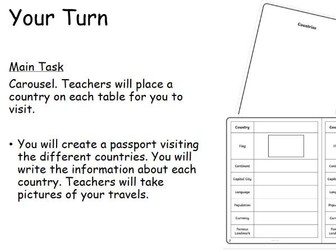
This Modern Europe PowerPoint is a complete, ready-to-teach geography lesson designed to help students identify, explore, and research capital cities across Europe. The resource includes a clear learning objective, an engaging starter activity where pupils unscramble European country names, and a recap slide that defines what a capital city is in simple, accessible language. It also revisits key prior learning by reminding students of the fact files they created in the previous lesson. The main task features a carousel activity in which teachers place different European countries on tables for students to “visit.” Pupils then create a travel-themed passport, recording key information about each country as they move around the room. Space is built into the lesson for teachers to take photos of pupils’ “travels,” adding a fun, immersive element. The plenary encourages discussion about European travel choices and what makes a country or city safe. This resource is ideal for KS2 geography, European studies, or cross-curricular humanities lessons. It supports research skills, geographical knowledge, and collaborative learning, while the structured, step-by-step slides make it easy for teachers to deliver without additional preparation. It can be used for whole-class teaching, group activities, or as part of a wider unit on modern Europe.
Facts About France (KS2 Geography Complete Lesson)Quick View
shofnak

Facts About France (KS2 Geography Complete Lesson)

(0)
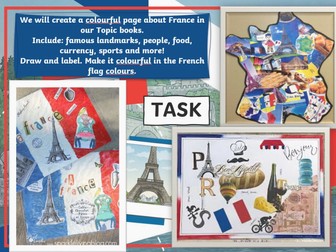
Explore France with this KS2 geography PowerPoint covering landmarks, culture, food, climate, maps, wildlife and key facts for engaging European studies. This France Geography PowerPoint is a comprehensive, ready-to-teach KS2 resource perfect for introducing students to a European country through engaging, curriculum-aligned content. The lesson begins with a French vocabulary starter activity, helping pupils practise common phrases such as bonjour, merci and au revoir, supported by a clickable video link for pronunciation practice. The resource includes clear learning objectives and a wide range of detailed, child-friendly information about France. Slides cover capital city facts, population, the French flag, bordering countries, language, currency, and key geographical features. Students explore France’s location in Europe, climate zones, major rivers, mountain ranges, and famous human and physical landmarks including the Eiffel Tower, Louvre, Palace of Versailles, Mont Blanc and the Loire River. The PowerPoint also features sections on wildlife and vegetation—such as the Gallic rooster, bears, lynx and lavender fields—as well as traditional foods like pot-au-feu, pastries, and escargot. Sport is also highlighted, including football, the Tour de France and other popular activities. The resource includes profiles of famous French figures such as Napoleon Bonaparte, Coco Chanel and Claude Monet and provides a creative task where pupils produce a colourful page about France using key facts from the lesson. A quick-fire plenary quiz and full answer slides support assessment and consolidation. This PowerPoint is ideal for geography units on Europe, cultural studies, research projects, or cross-curricular work linking history, art and modern languages. With visual prompts, clear explanations and interactive elements, it supports independent learning, class discussions and creative work with minimal teacher preparation.

Modern Europe MountainsQuick View
shofnak

Modern Europe Mountains

(0)
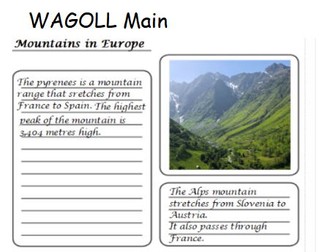
European Mountains – KS2 Geography Lesson (Fact File Writing & Physical Geography) A complete KS2 lesson on European mountains, mountain ranges, and key geographical vocabulary. Perfect for Year 4–6 Geography or cross-curricular writing. This fully editable PowerPoint introduces pupils to European mountains through clear explanations, real-life examples, and structured research activities. Students learn what mountains are, explore mountain ranges across Europe, and create their own detailed fact file using guided questions and model examples (WAGOLLs).
2 Complete Lessons to Design a European LandmarkQuick View
shofnak

2 Complete Lessons to Design a European Landmark

(0)
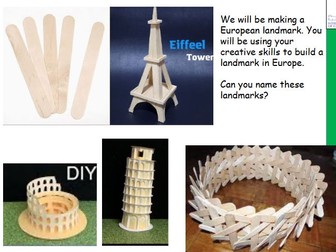
Lesson 1: European Landmarks – Fact-Finding & Landmark Design (KS2 Geography) A complete KS2 lesson on European landmarks where pupils learn to identify, research and design famous structures across Europe. This fully editable PowerPoint and task pack helps children explore iconic landmarks, build factual knowledge and create their own landmark design using supported criteria. The lesson includes engaging images, discussion prompts, and structured support to guide pupils from identifying well-known landmarks to designing their own European structure. Clear success criteria allow easy differentiation and ensure pupils know how to move from basic to deeper understanding. Lesson 2: Create a 3D European Landmark – DT & Geography Project (KS2) A hands-on KS2 DT + Geography project where pupils design and build a 3D European landmark using varied materials. This creative lesson allows children to explore structural design, develop geographical knowledge, and discuss how materials affect stability and strength. The PowerPoint guides pupils step-by-step from identifying real landmarks, to planning their model, to constructing their own 3D version. Clear success criteria provide built-in differentiation to support all learners, including reasoning about material choices at greater depth.
Italy Tourism Leaflet – KS2 Geography Writing TaskQuick View
shofnak

Italy Tourism Leaflet – KS2 Geography Writing Task

(0)
A complete KS2 writing and geography lesson where pupils learn about Italy and create their own persuasive tourism leaflet. This resource guides children step-by-step as they research key facts, explore famous Italian landmarks, and produce an engaging leaflet aimed at tourists visiting Italy. The lesson includes clear modelling, differentiated success criteria, and structured writing support. Pupils move from simple fact-finding to designing an informative leaflet, and finally to using persuasive language techniques to attract visitors—perfect for cross-curricular learning.
European Rivers – KS2 Geography LessonQuick View
shofnak

European Rivers – KS2 Geography Lesson

(0)
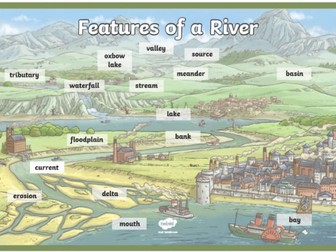
A complete KS2 Geography lesson introducing pupils to European rivers, their locations, key features, and how rivers are formed. This fully editable PowerPoint guides learners through identifying major rivers in Europe, exploring key facts about each one, and developing a deeper understanding of river formation and geographical features. The resource is structured with clear success criteria so pupils can progress from simple identification to deeper geographical explanation. It is ideal for whole-class teaching, map-skills sessions, or Europe-themed topics.