Alcohols, haloalkanes and organic synthesis bundle OCR AS Chemistry
Resource Bundle


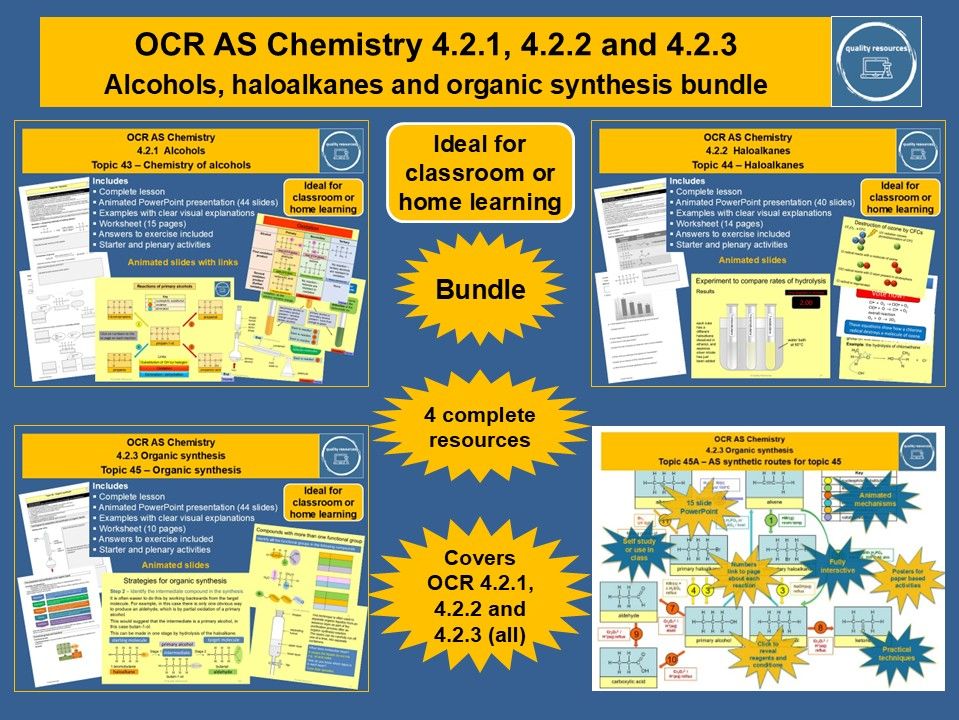

This bundle covers all of the OCR A level chemistry specifications section 4.2.1 (alcohols), 4.2.2 (haloalkanes) and 4.2.3 (organic synthesis)
The resources included are:
The first three resources include a fully interactive PowerPoint including starter, group activities, questions and plenary along with a worksheet. Answers to all exercises are provided. Some of the resources include a PowerPoint quiz and all are ideal for classroom or home learning.
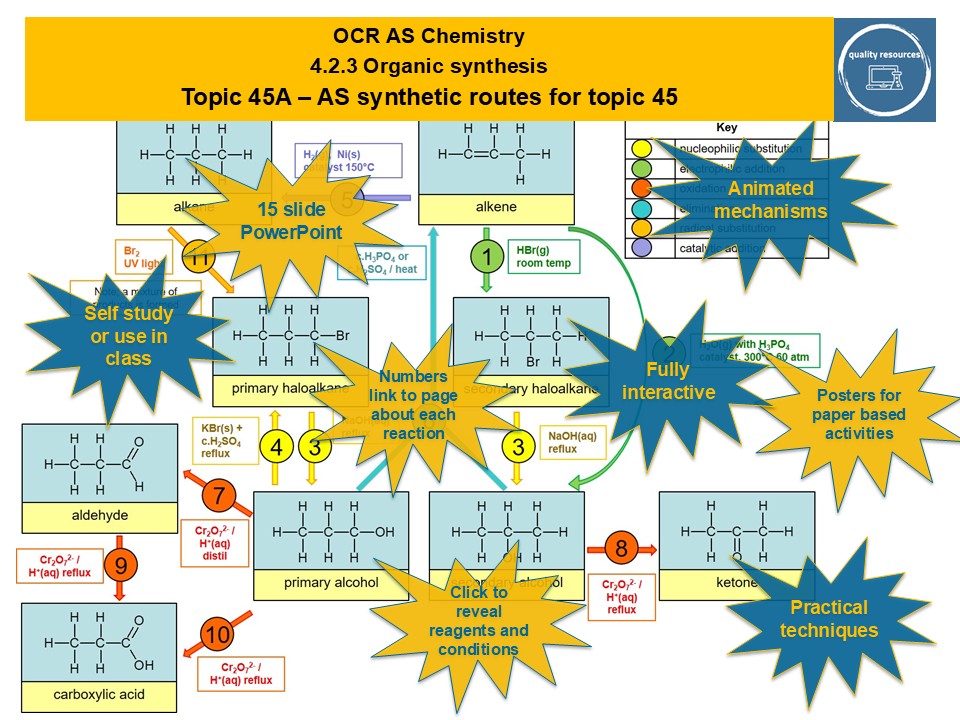
The final resource covers AS organic synthetic routes through a 15 slide interactive PowerPoint that is based on a clear chart of numbered synthetic routes, where each number is linked to a page detailing that reaction. Information given includes type of reaction, reagents and conditions and an equation, as well as key definitions. In addition most reactions have an animated mechanism or structural equation. There are links to pages describing and explaining practical techniques, where relevant.
This bundle is part of a series covering the OCR AS Chemistry specification and relates to the following sections:
Module 4– Core organic chemistry
Part 2 –Alcohols, haloalkanes and analysis
4.2.1 (alcohols), 4.2.2 (haloalkanes) and 4.2.3 (organic synthesis)
Please review!
Content covered:
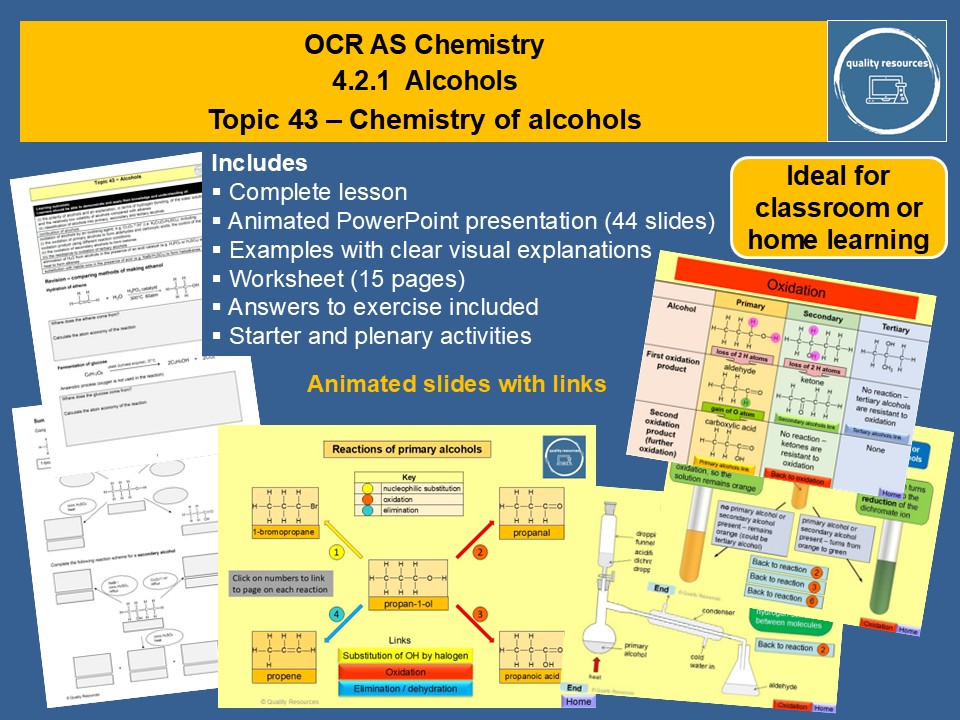
Chemistry of alcohols
• Comparing methods of making ethanol
• Naming alcohols
• Physical properties of alcohols, in terms of hydrogen bonding
• Primary, secondary and tertiary alcohols
• Substitution reaction of alcohols
• Oxidation of alcohols
• Elimination (dehydration) reaction of alcohols
• Reactions of primary, secondary and tertiary alcohols
• Animated mechanisms
• Reaction classification
• Reagents and conditions
• Structural equations
• Key definitions
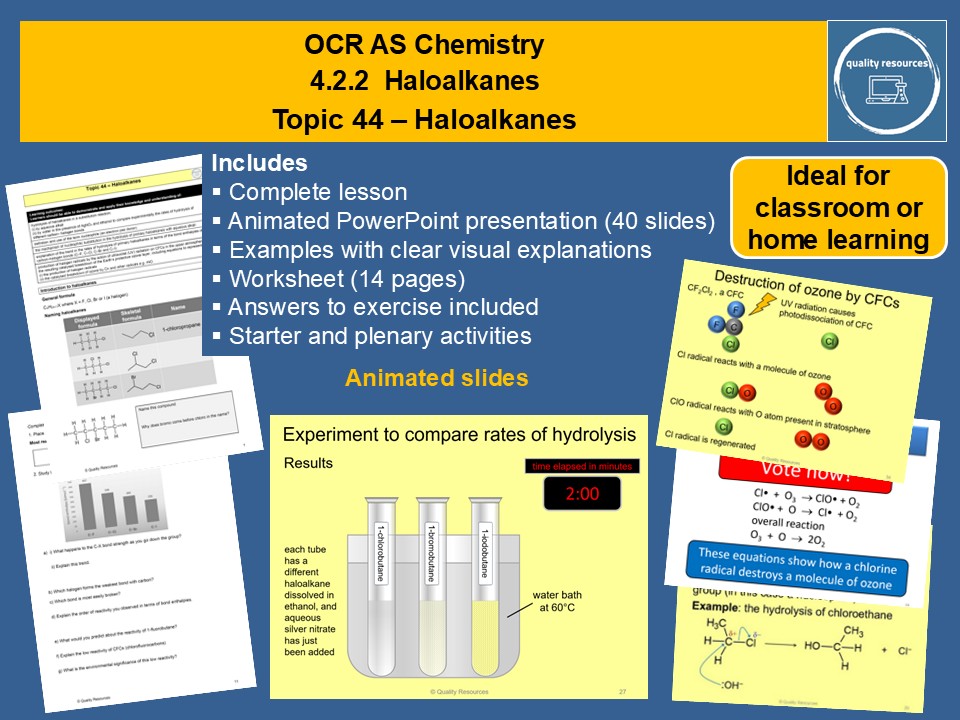
Haloalkanes
• Naming haloalkanes
• Reactivity of haloalkanes general equation for polymer formation
• Uses of haloalkanes
• Nucleophilic substitution reactions of haloalkanes including hydrolysis
• Mechanism of nucleophilic substitution
• Experiment to compare rates of hydrolysis of different haloalkanes
• Explaining the different rates of hydrolysis
• Organohalogen compounds and the environment
• Destruction of ozone by CFCs
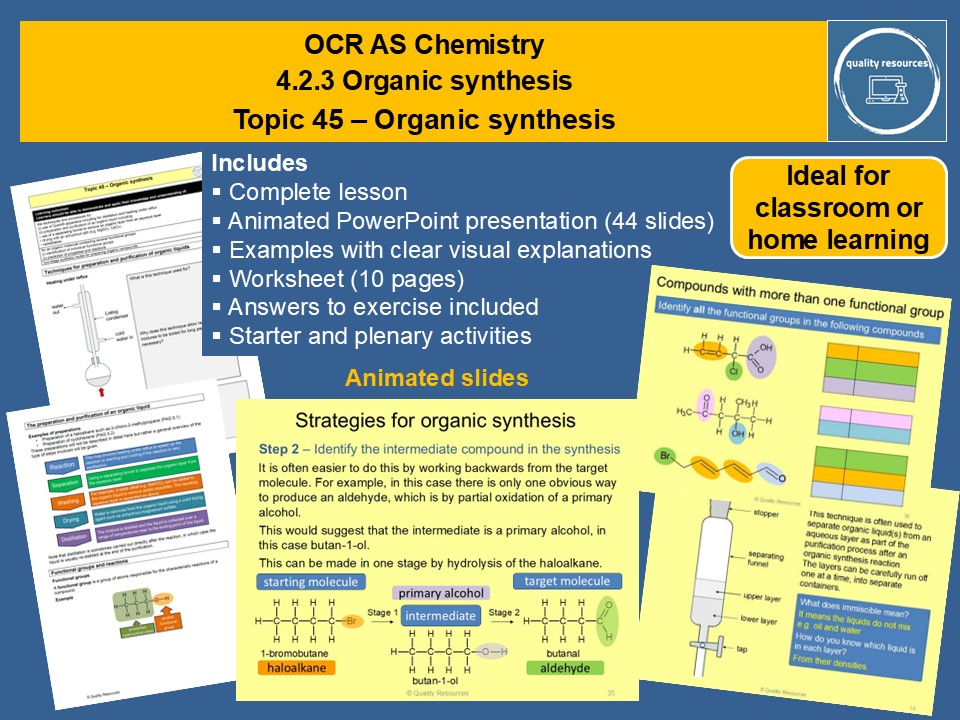
Organic synthesis
• Revision of functional groups
• Techniques for preparation and purification of organic liquids
• Heating under reflux
• Distillation
• Separation of immiscible liquids using a separating funnel
• Use of drying agents
• Stages in the preparation and purification of an organic liquid
• Tests for functional groups
• Compounds with more than one functional group
• Strategies for organic synthesis with examples
AS synthetic routes
• AS synthetic routes
• Animated mechanisms
• Key definitions
• Heating under reflux
• Distillation
• Reaction classification
• Reagents and conditions
• Structural equations
Links
Next topic
Topic 46 – Infrared spectroscopy – OCR AS Chemistry
https://www.tes.com/teaching-resource/infrared-ir-spectroscopy-ocr-as-chemistry-12315096
Next small bundle
Analytical techniques
https://www.tes.com/teaching-resource/resource-12325546
Something went wrong, please try again later.
This resource hasn't been reviewed yet
To ensure quality for our reviews, only customers who have purchased this resource can review it
Report this resourceto let us know if it violates our terms and conditions.
Our customer service team will review your report and will be in touch.