


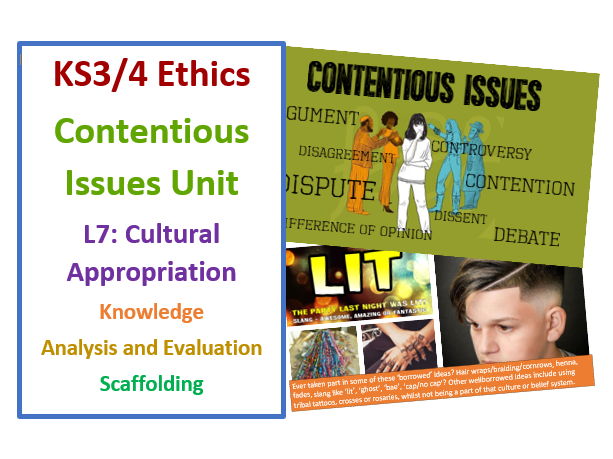
Lesson: Can we ‘borrow’ from other cultures? (cultural appropriation)
This lesson is Lesson 7 in the new ‘Contentious Issues’ ethics-based unit, devised as part of a brand new, relevant and engaging scheme of work for Y9 KS3, or KS4 RE/P&E. For my own setting, this unit is the first studied in Year 9, as a way of engaging students pre-Options into our subject area.
This lesson explores the difference between cultural appropriation and cultural appreciation, using examples of each - including some well-known/used examples that are likely to be a part of our students’ lives.
Although part of a unit, this lesson can also be taught as a stand-alone lesson. The corresponding lesson sheets would also support a home-learned curriculum as the PowerPoints and Packs themselves include scaffolding, where required, and opportunities for the teacher to apply adaptive teaching techniques.
The interleaved schemed of work are specifically designed to promote the two skills desired for success at GCSE:
- AO1 (Knowledge and Understanding)
- AO2 (Analysis and Evaluation)
The resources are specifically created to ensure students are aware of the skill they are demonstrating and how to improve further through modelling.
These new units bring the relevance back to our topics, for example, through thought experiments and reference to current affairs. Students will experience greater engagement and enjoyment in a fair and balanced approach.
Lesson includes:
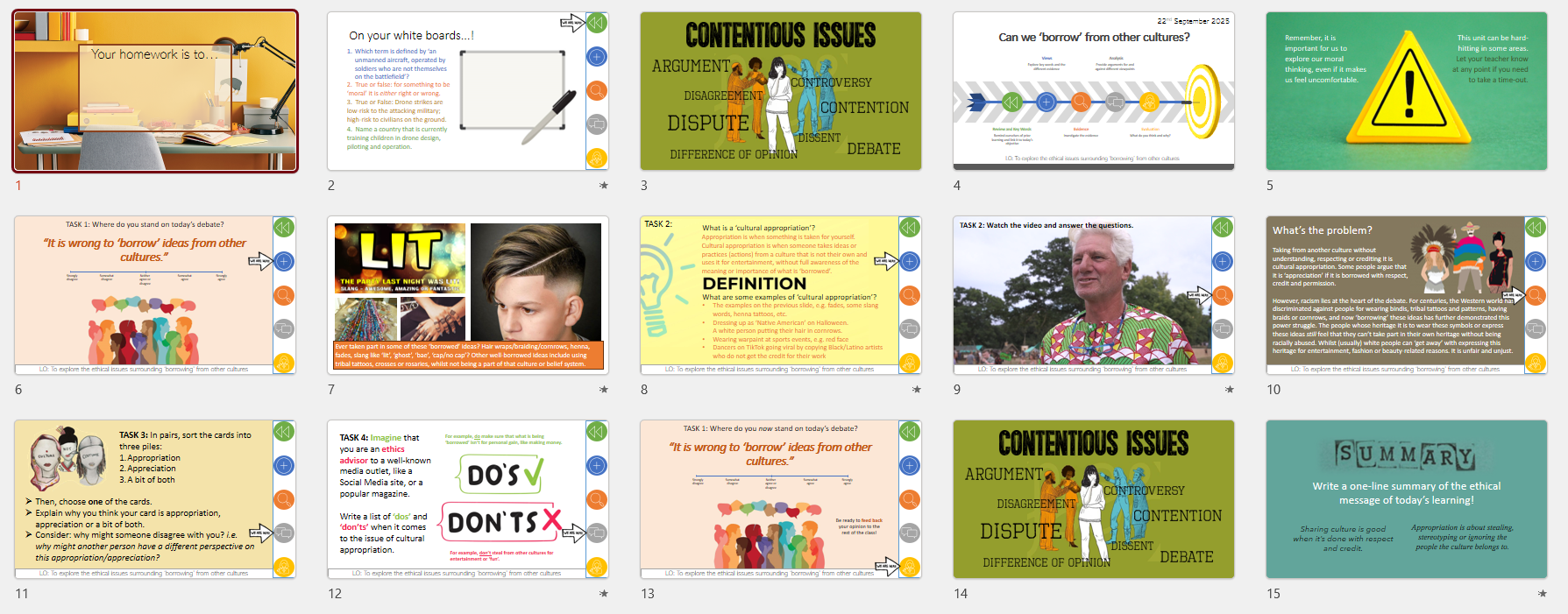
- Homework Slide
- Starter activity (retrieval and adaptive teaching opportunity)
- Lesson overview (lesson objective and the lesson journey)
- Key words (literacy focus)
- Introduction of key information (AO1 - knowledge) and how this is used (AO1 - understanding)
- Introduction of a contentious issue or debate (AO2 - analysis) and finalised judgement (AO2 - evaluation)
- Plenary
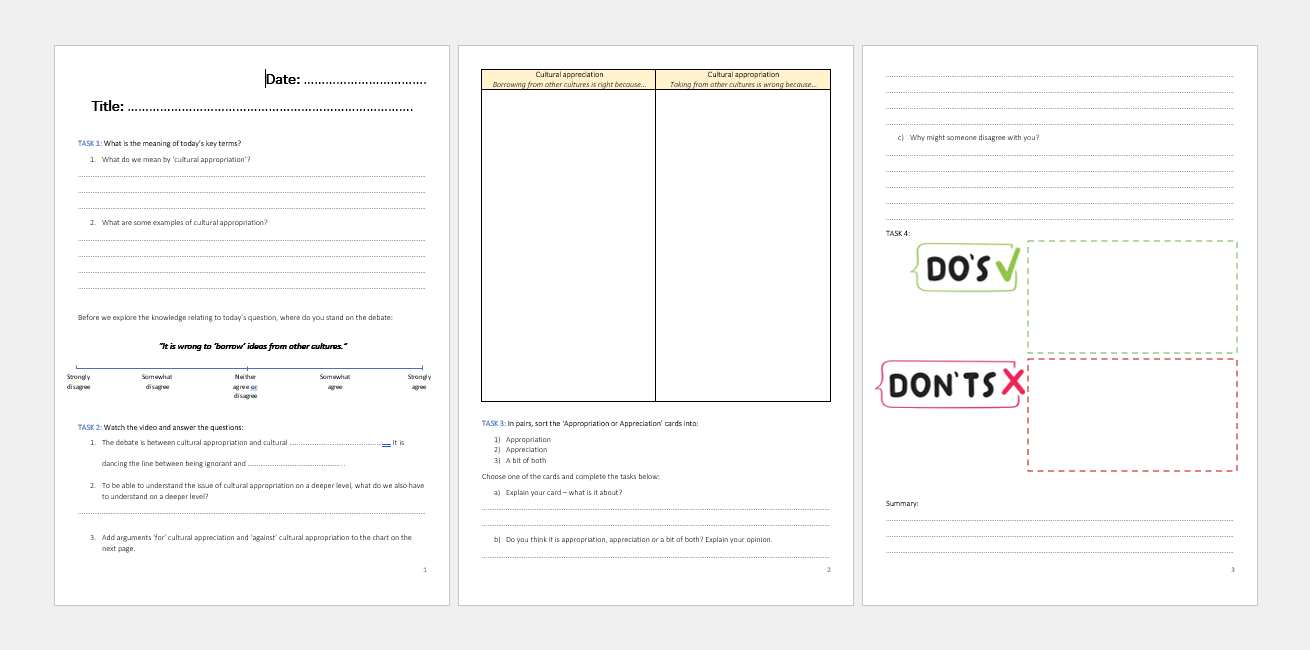
Lesson Sheets:
If you would rather work in exercise books, the lesson sheets are designed so that you can print off relevant pages - it is a resource pack. This would be useful if you have appropriate curriculum time to cover the content of the course. Unfortunately, this is not the case across all schools, and therefore the lesson sheets help by providing time-saving activities, whilst still being able to cover the breadth and depth of the course.
In addition, students who may be limited by literacy issues, e.g. slower writing paces, are not disadvantaged or capped in their progress. Therefore, some classes could use a mixed approach - part lesson sheets, part exercise book - and all students will be able to progress through the same volume of content.
Something went wrong, please try again later.
This resource hasn't been reviewed yet
To ensure quality for our reviews, only customers who have purchased this resource can review it
Report this resourceto let us know if it violates our terms and conditions.
Our customer service team will review your report and will be in touch.
£4.99