


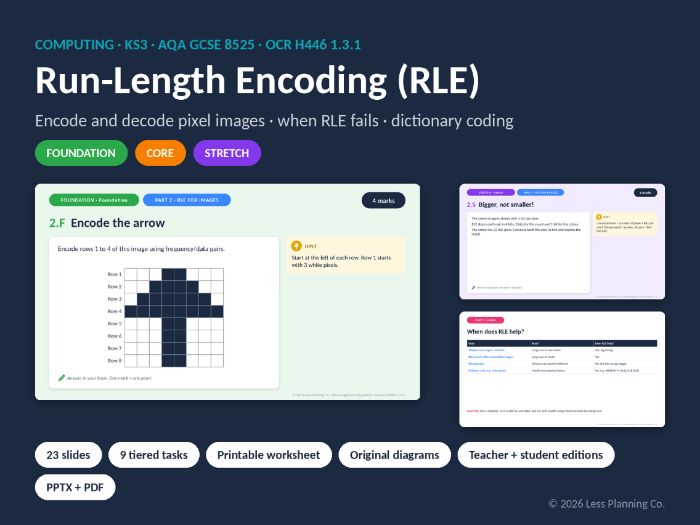
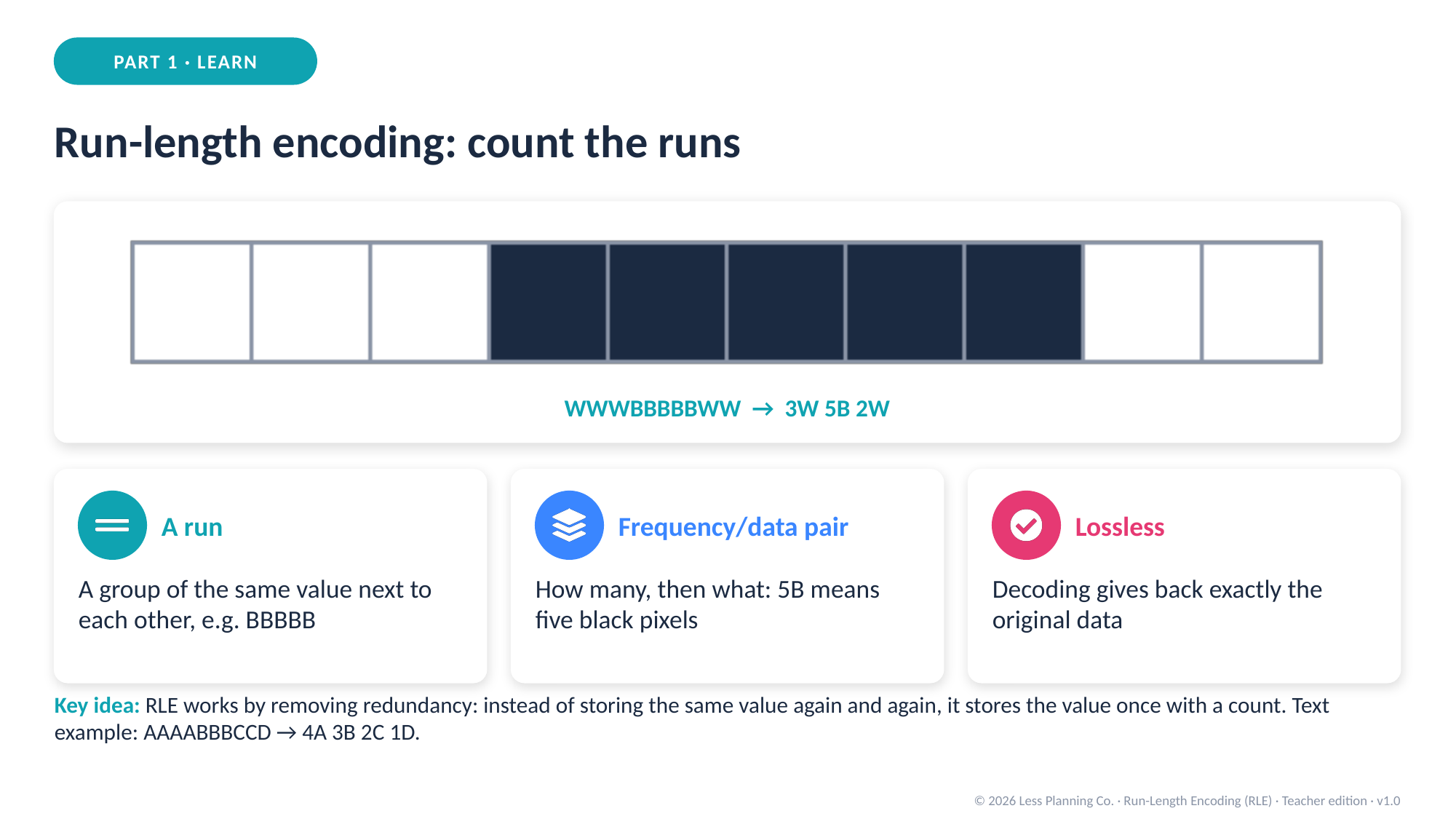
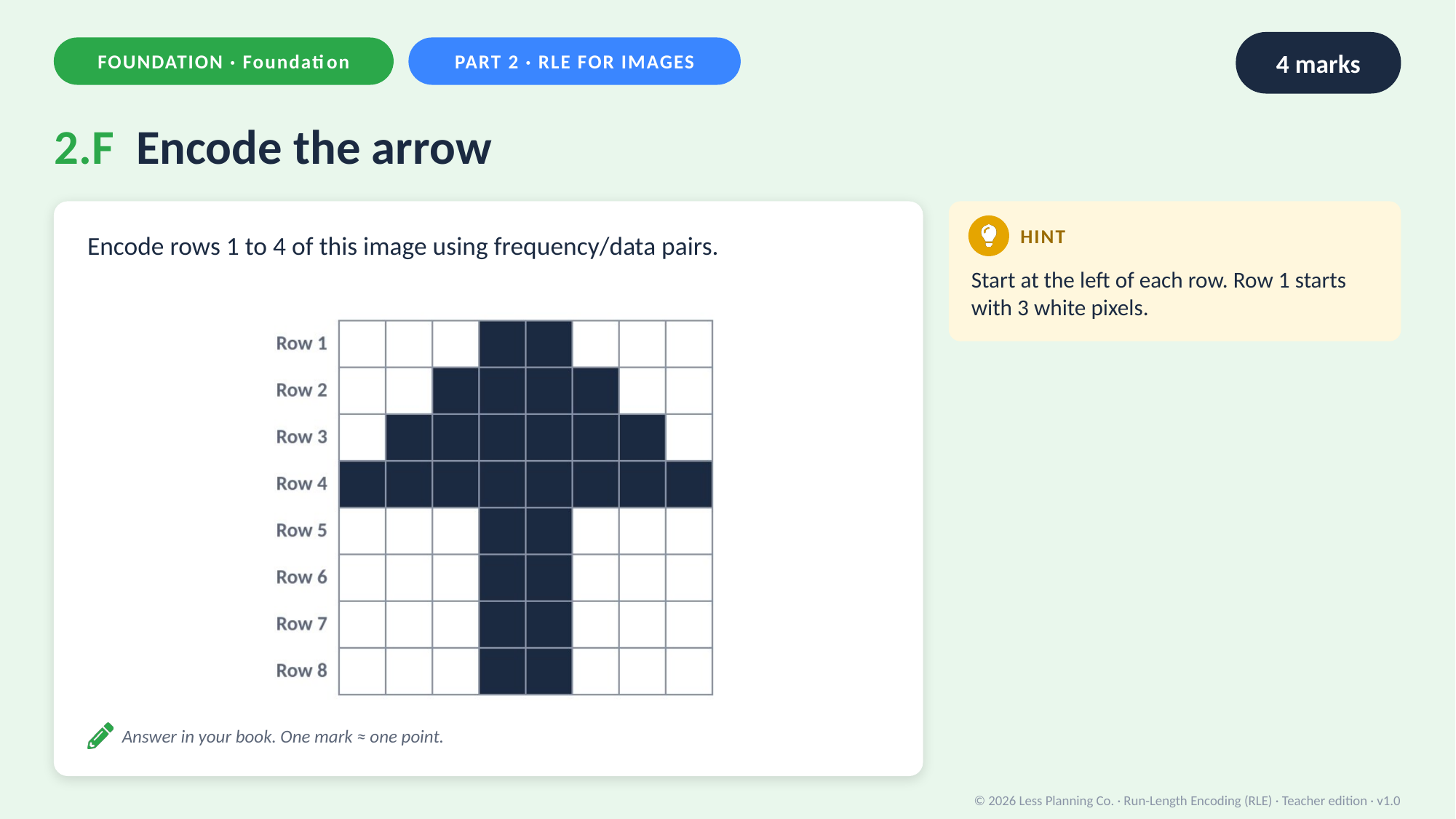
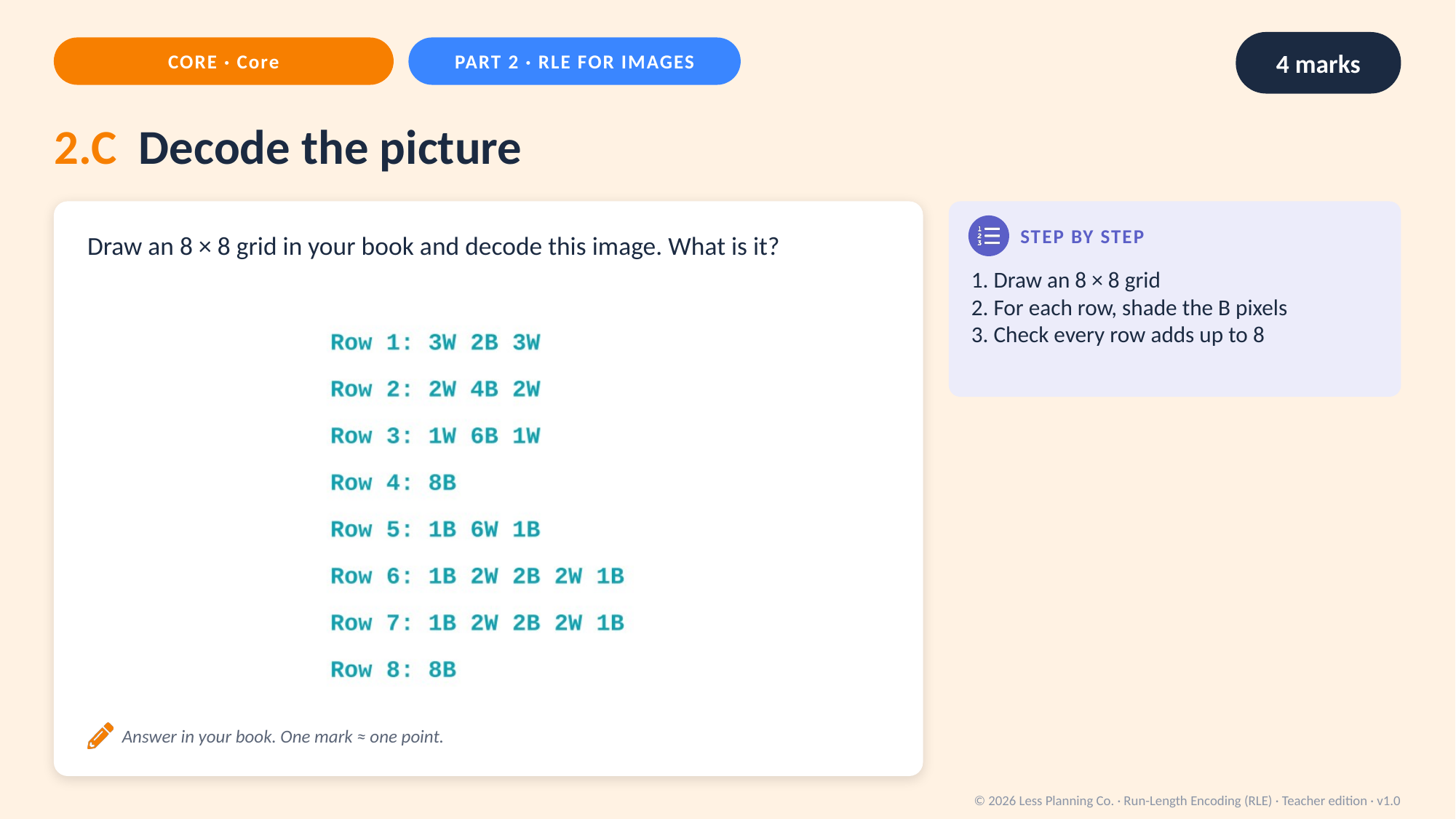
A hands-on lesson on run-length encoding. Students encode and decode original pixel images, work out how much space RLE saves, find out when it actually makes a file bigger, and meet dictionary coding.
Every task is tiered:
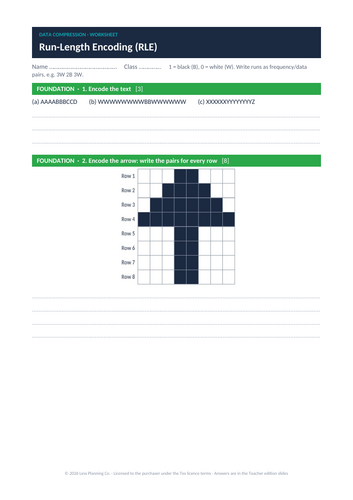
🟢 Foundation: encode text and pixel rows
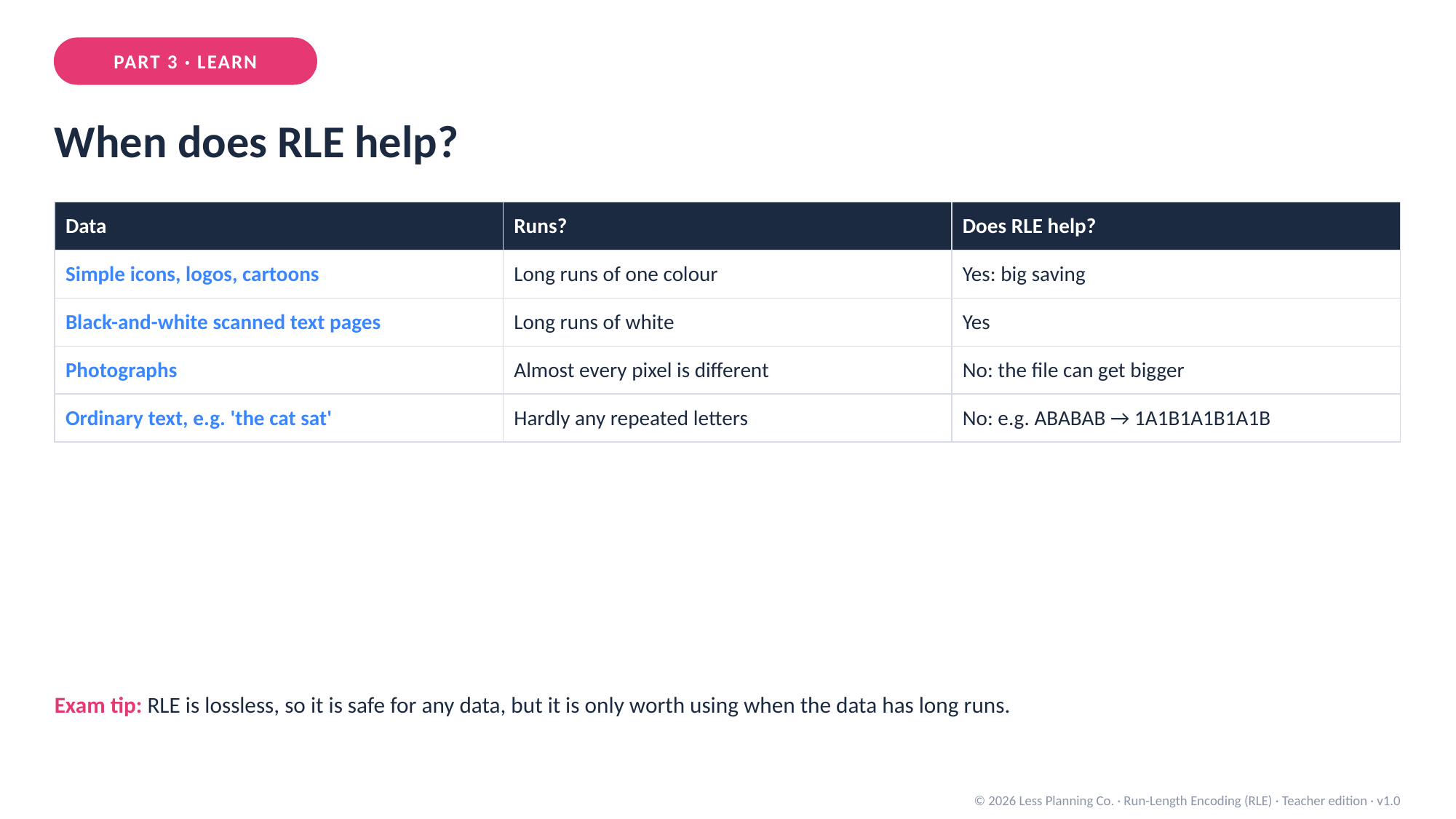
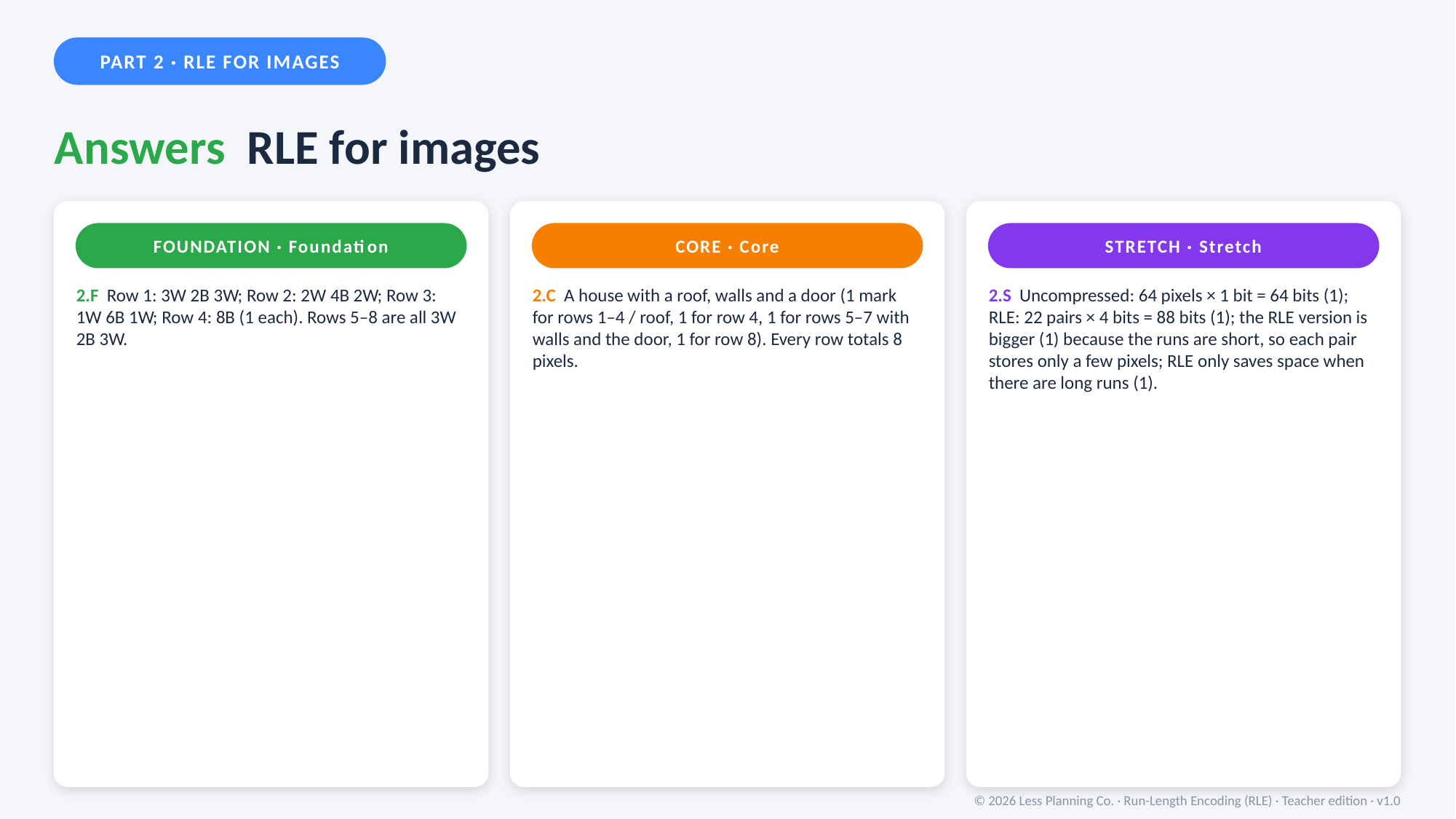
🟠 Core: decode RLE and draw the picture it describes, and explain why photos don’t compress well
🟣 Stretch: calculate file sizes in bits, find when RLE makes a file bigger, and use dictionary coding
Covers: lossless compression · redundancy · frequency/data pairs · encoding and decoding text and 1-bit images · calculating savings · when RLE fails · dictionary coding
What’s included:
Teacher edition (23 slides) with notes and answers
Student edition (18 slides) with no answers
Printable worksheet (Word) with pixel grids
9 tiered tasks with hints and scaffolds, a starter, an exit ticket and a lesson plan
Original pixel images
PPTX and PDF
Matches AQA GCSE 8525 (RLE) and OCR A Level H446 1.3.1 (RLE and dictionary coding). Also a strong KS3 data lesson, and extension work for OCR J277 and Edexcel 1CP2.
Independent resource, not affiliated with or endorsed by AQA, OCR or Pearson.
Tags: run length encoding, RLE, data compression, lossless compression, dictionary coding, AQA GCSE Computer Science, KS3 computing, A Level computer science
Something went wrong, please try again later.
This resource hasn't been reviewed yet
To ensure quality for our reviews, only customers who have purchased this resource can review it
Report this resourceto let us know if it violates our terms and conditions.
Our customer service team will review your report and will be in touch.
£3.00