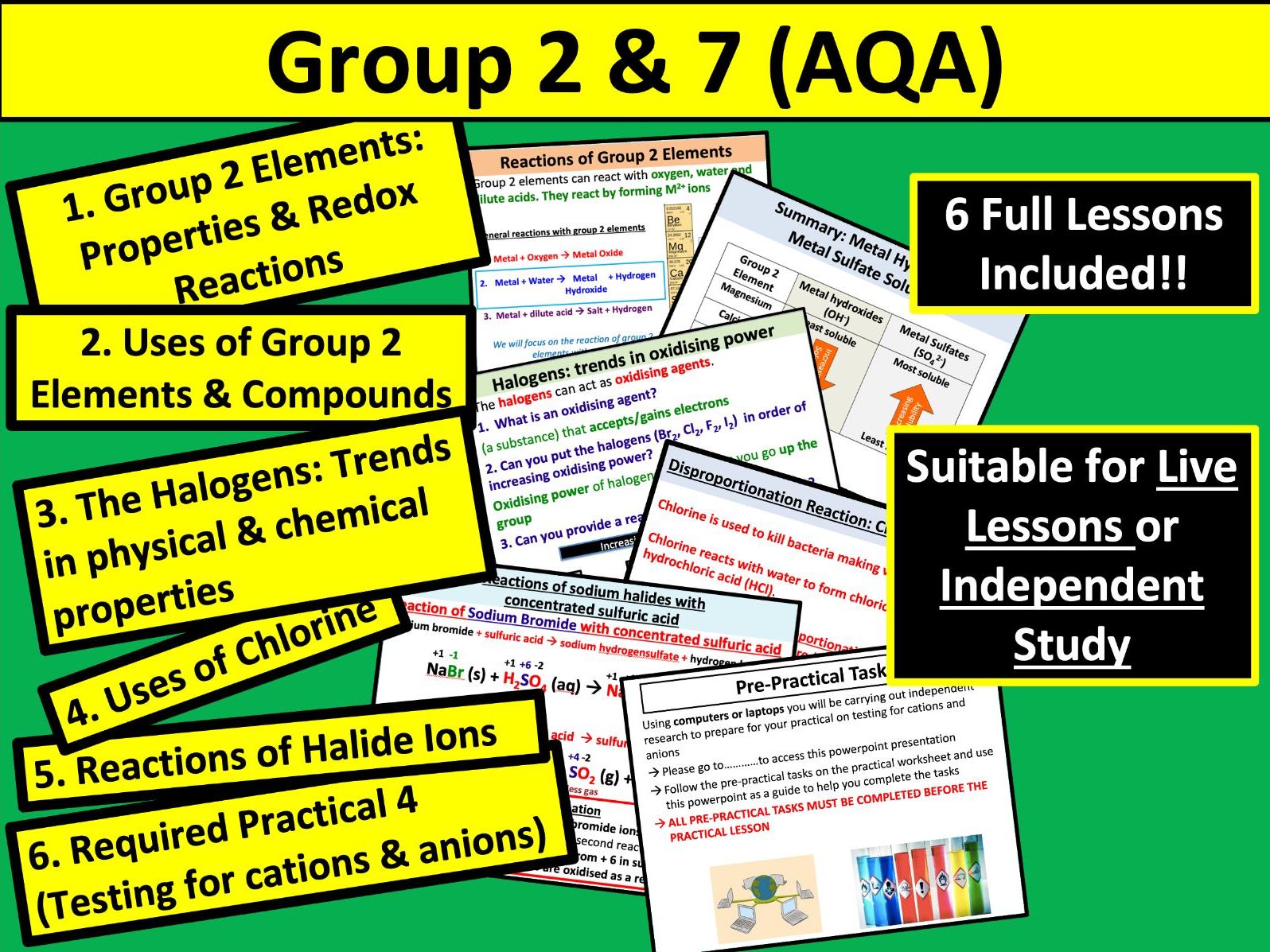
6 full lesson bundle on the topic of Group 2 and 7 from the AQA AS Level Chemistry specification. See below for the lessons and learning objectives.
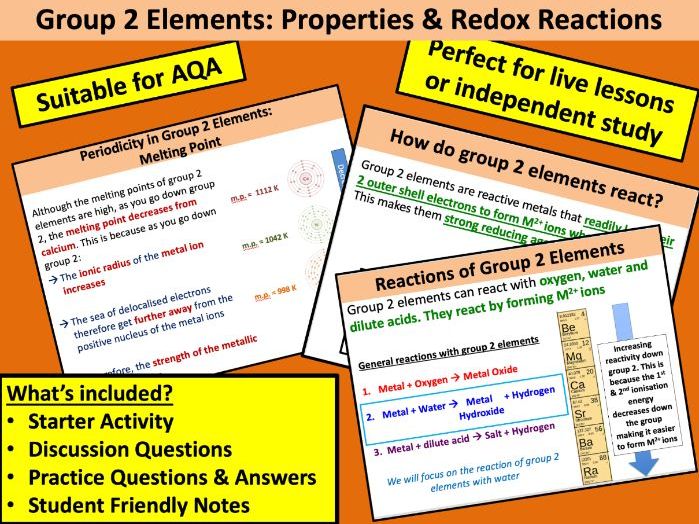
Lesson 1: Group 2 Elements: Properties and Reactions
To state and explain the trend in first and second ionisation energies of group 2 elements and how this links to their reactivities
To state and explain the trend in the melting point of group 2 elements
To construct equations of redox reactions of group 2 elements with water and to identify what species have been oxidised and reduced using oxidation numbers
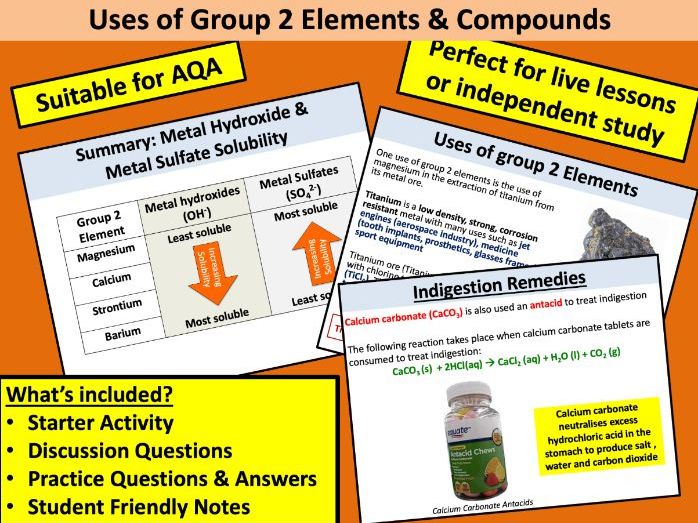
Lesson 2: Uses of Group 2 Elements and Compounds
To state the trend in solubility and alkalinity of group 2 metal hydroxides and sulfates
To describe the use of magnesium in the extraction of titanium from its ore
To describe the uses of Mg (OH)2, Ca(OH)2 and CaO/CaCO3
Lesson 3: The Halogens: Trends in Physical & Chemical Properties
To describe and explain the trend in electronegativity, boiling and melting points of the halogens
To describe and explain the trend in oxidising ability of halogens and reducing ability of the halide ions
To outline experiments to support the trend in oxidising ability of halogens
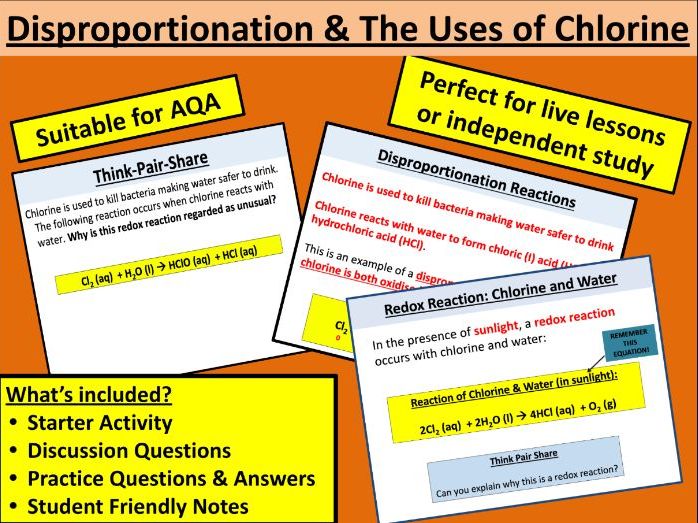
Lesson 4: Uses of Chlorine
To explain the term disproportionation
To explain how the reaction of chlorine with water or cold dilute sodium hydroxide are examples of disproportionation reactions
To evaluate the uses of chlorine
Lesson 5: Reactions of Halides
Describe an experiment to identify sodium halides with sulfuric acid (evidence of trend in reducing power)
Describe an experiment to identify metal halides with silver ions
Analyse various experiments (in questions) based on identifying halide ions
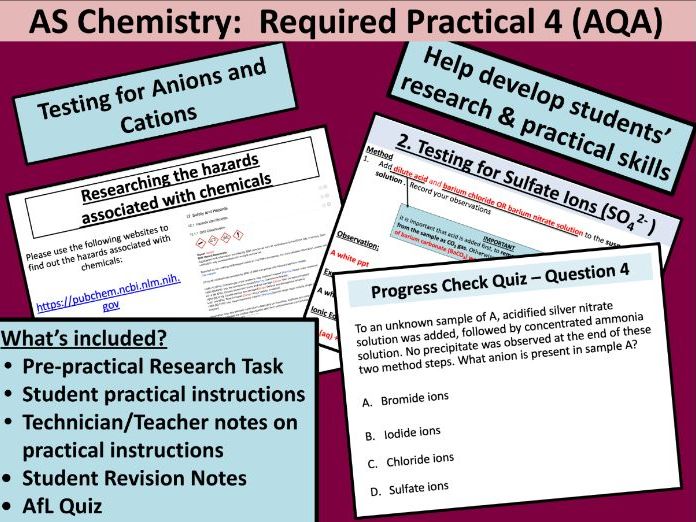
Lesson 6: Required Practical 4: Testing for Cations & Anions
Researching the risks associated with the experiment and creating appropriate risk assessment based on your findings
Researching appropriate experimental methods for testing for group 2 cations, NH4+ ions, CO32- ions, SO42- ions and halide ions
Constructing appropriate results tables to record your observations during the experiment