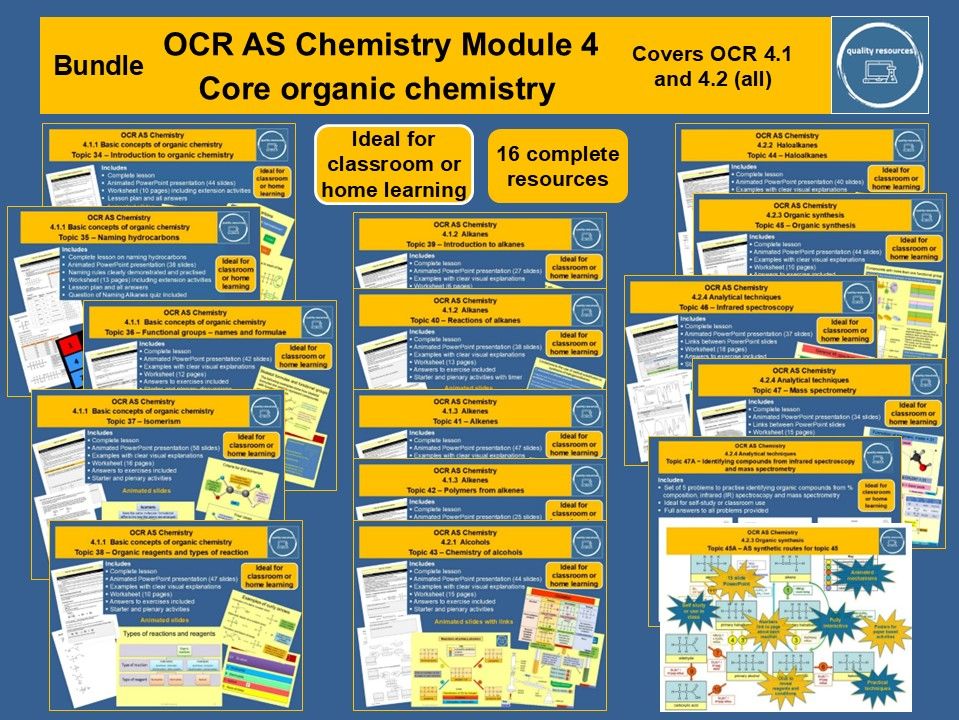
This bundle covers all of the OCR A level chemistry specification section 4.1 (basic concepts and hydrocarbons) and 4.2 (alcohols, haloalkanes and analysis).
The resources included are:
- Introduction to organic chemistry
- Naming hydrocarbons (includes quiz – A Question of naming alkanes)
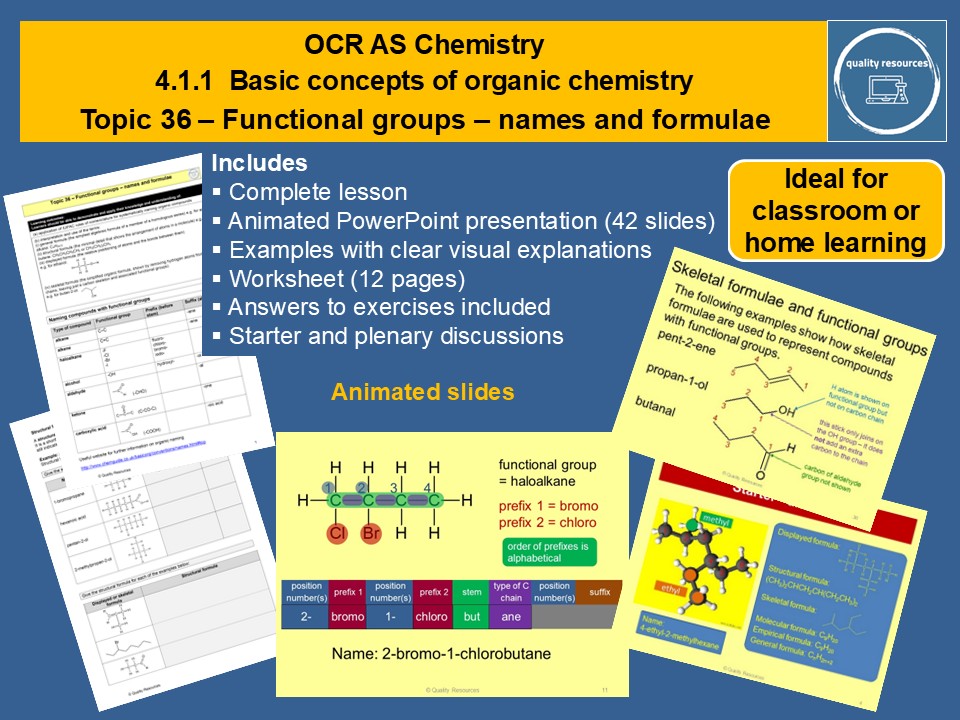
- Functional groups – names and formulae
- Isomerism
- Organic reagents and types of reaction
- Introduction to alkanes
- Reactions of alkanes
- Alkenes
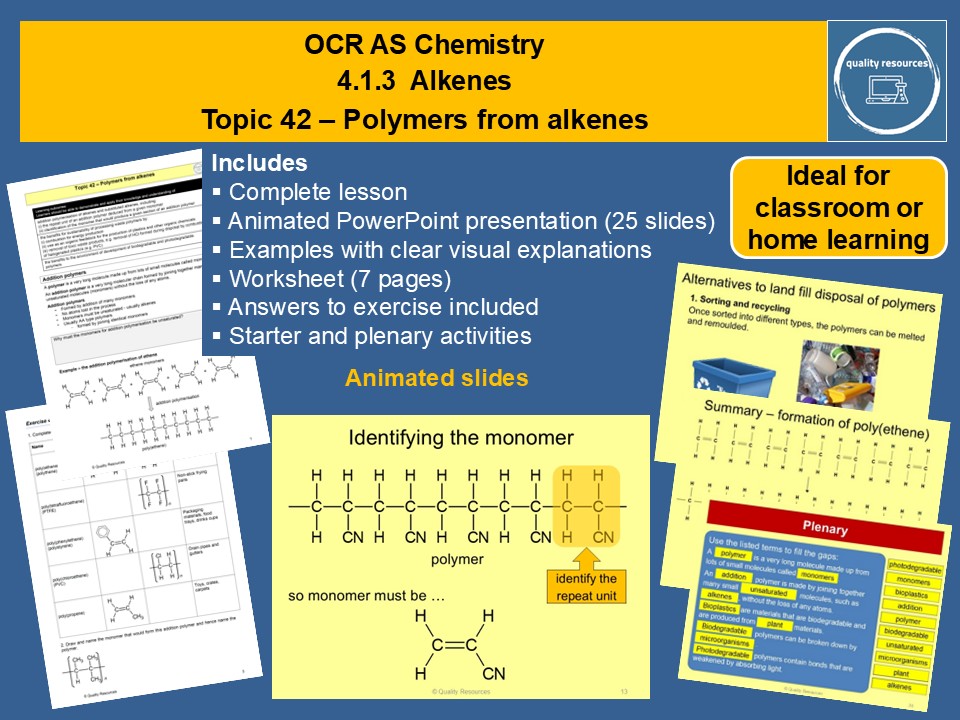
- Polymers from alkenes
- Chemistry of alcohols
- Haloalkanes
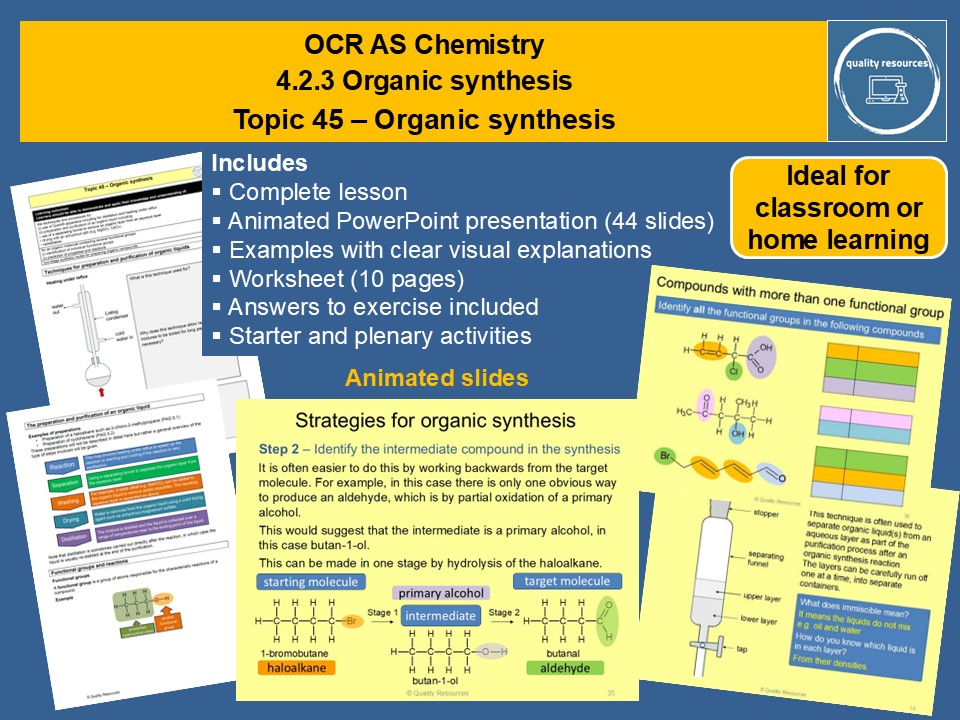
- Organic synthesis
- AS synthetic routes
- Infrared spectroscopy
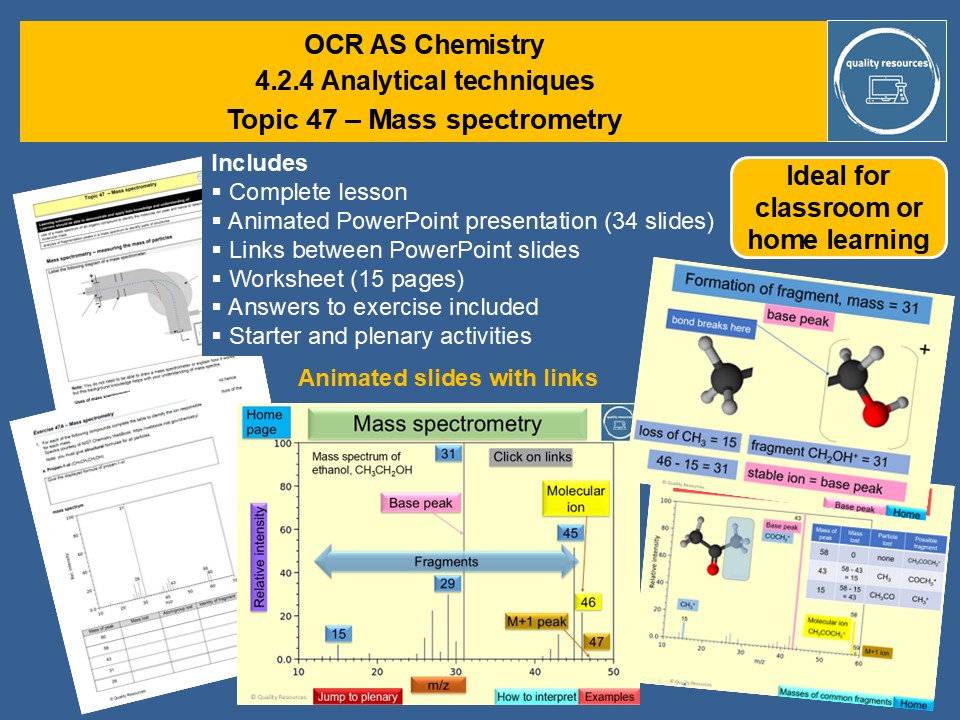
- Mass spectrometry
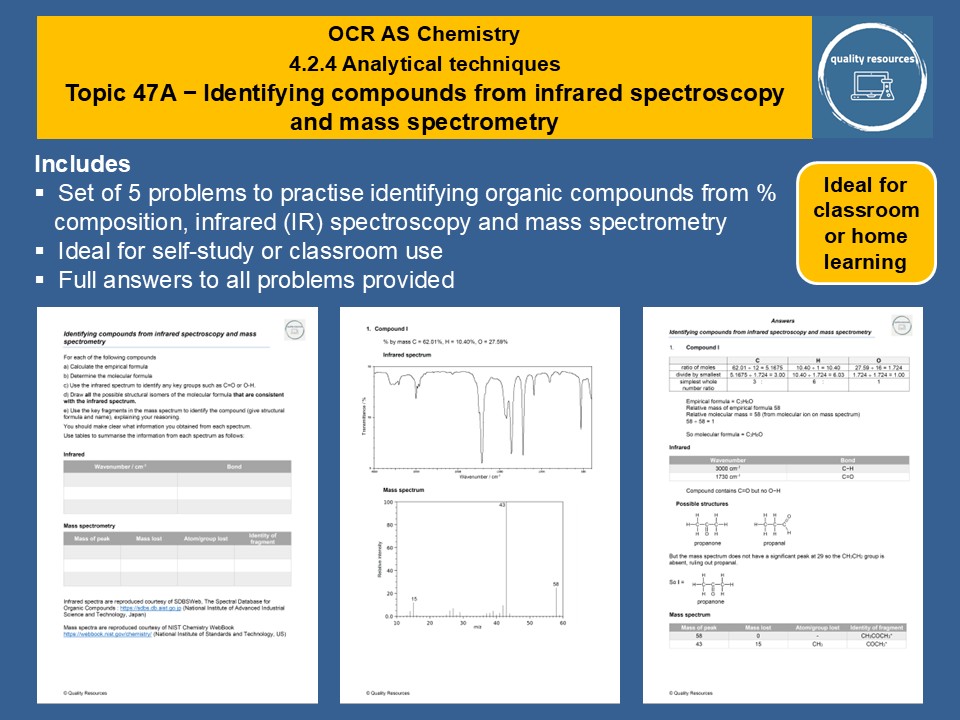
- Identifying compounds from infrared and mass spectra
Each topic includes a fully interactive PowerPoint including starter, group activities, questions and plenary along with a worksheet. Answers to all exercises are provided. Some of the resources include a PowerPoint quiz and all are ideal for classroom or home learning.
This bundle is part of a series covering the OCR AS Chemistry specification and relates to the following sections:
Module 4– Core organic chemistry
Part 1 – Basic concepts and hydrocarbons (all)
Part 2 - Alcohols, haloalkanes and analysis (all)
Please review!
Content covered:
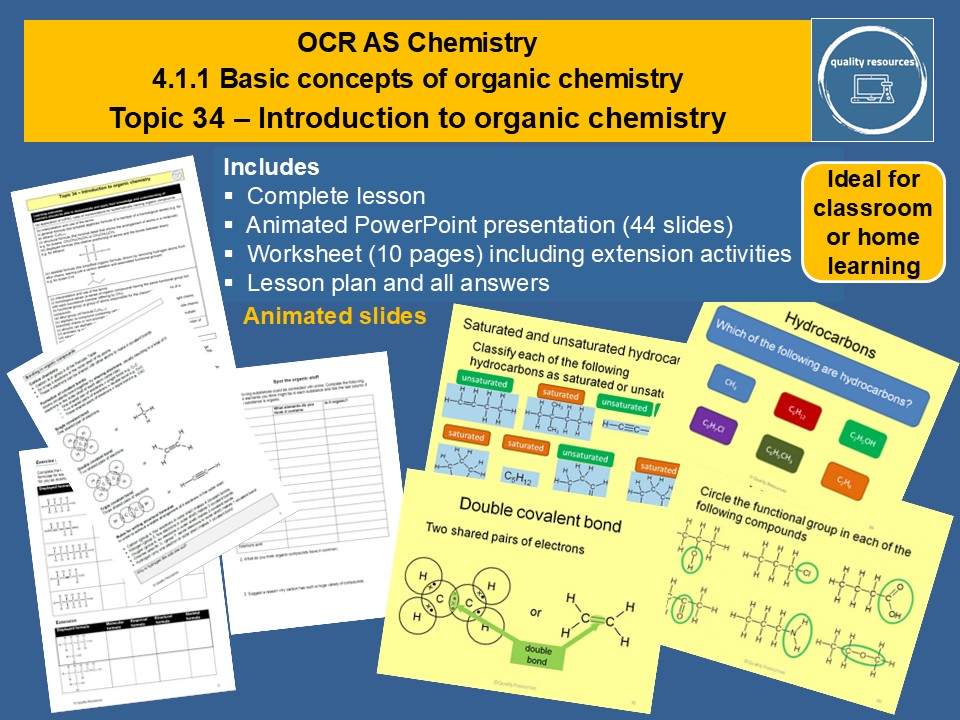
Introduction to organic chemistry
• Why carbon is special
• Bonding in organic compounds
• Different types of formulae
• Types of organic compounds
• Functional groups and homologous series
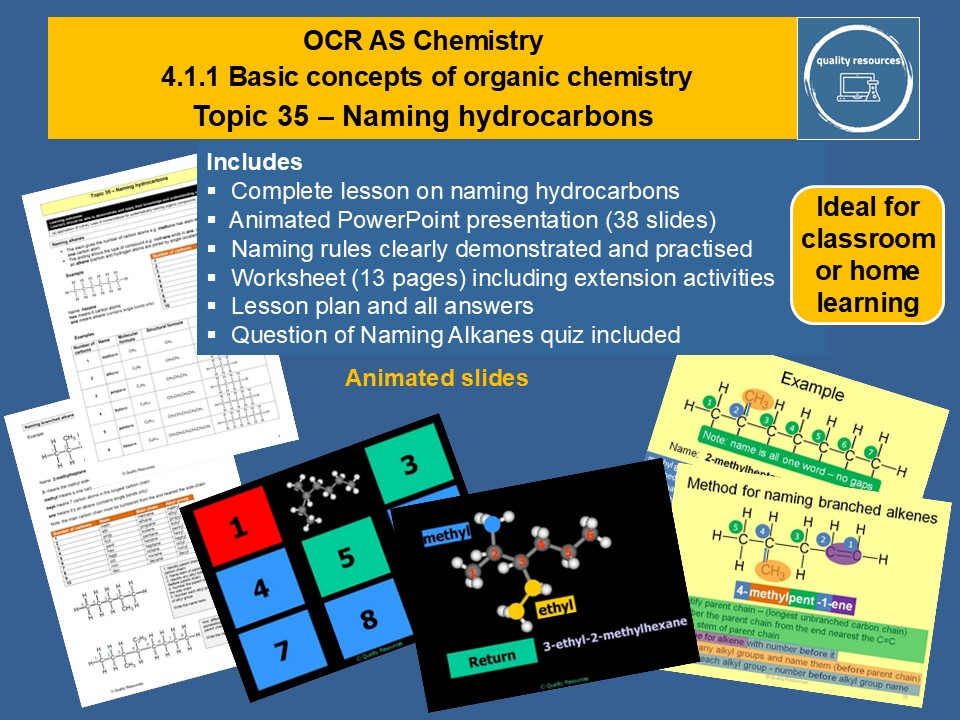
Naming hydrocarbons
• Application of IUPAC rules of nomenclature for systematically naming organic compounds
• Naming alkanes and cycloalkanes
• Naming branched alkanes
• Naming alkenes and branched alkenes
Quiz – A Question of naming alkanes
Functional groups – names and formulae
• Application of IUPAC rules of nomenclature for systematically naming organic compounds
• Practice naming organic compounds including those with functional groups
• Revision of empirical and molecular formula and how to calculate them
• Formulae of compounds with functional groups
Displayed formula
Structural formula
Skeletal formula
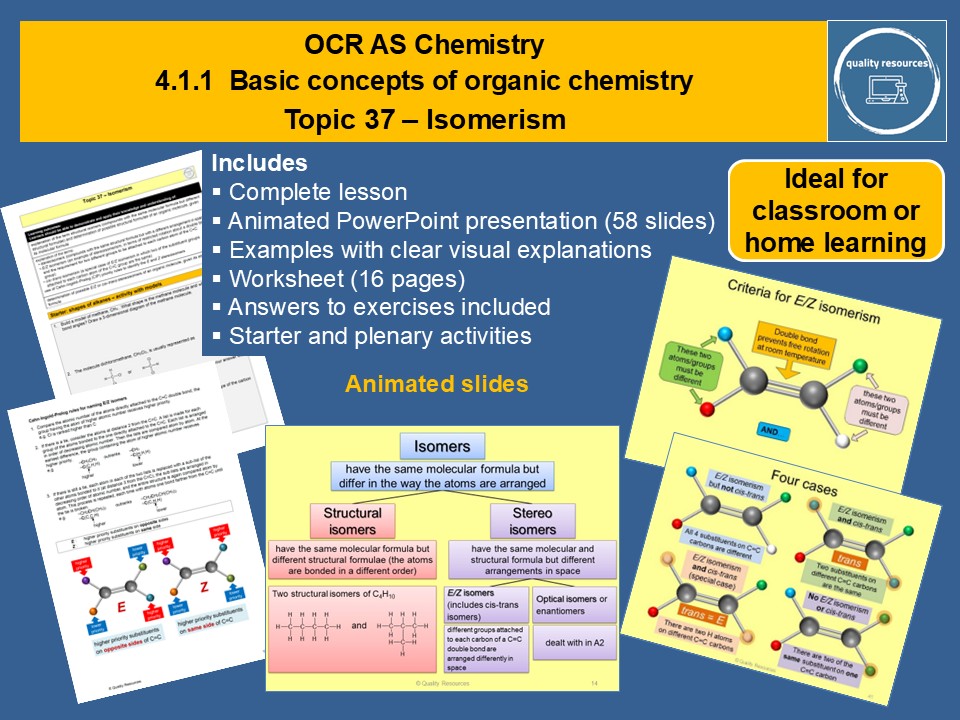
Isomerism
• Shapes of alkanes (with model building)
• Definitions of structural isomers, stereoisomers, E/Z isomers and cis-trans isomers
• Classification of isomers with examples
• Structural isomers including chain, position and functional group isomers
• Shapes of alkenes (with model building)
• Restricted rotation around the C=C double bond
• Stereoisomers – E/Z and cis-trans isomers
• Animated illustrations of E/Z isomers
• Criteria for E/Z isomerism and for cis-trans isomerism with examples and learning check
• Cahn-Ingold-Prelog rules for naming E/Z isomers with examples
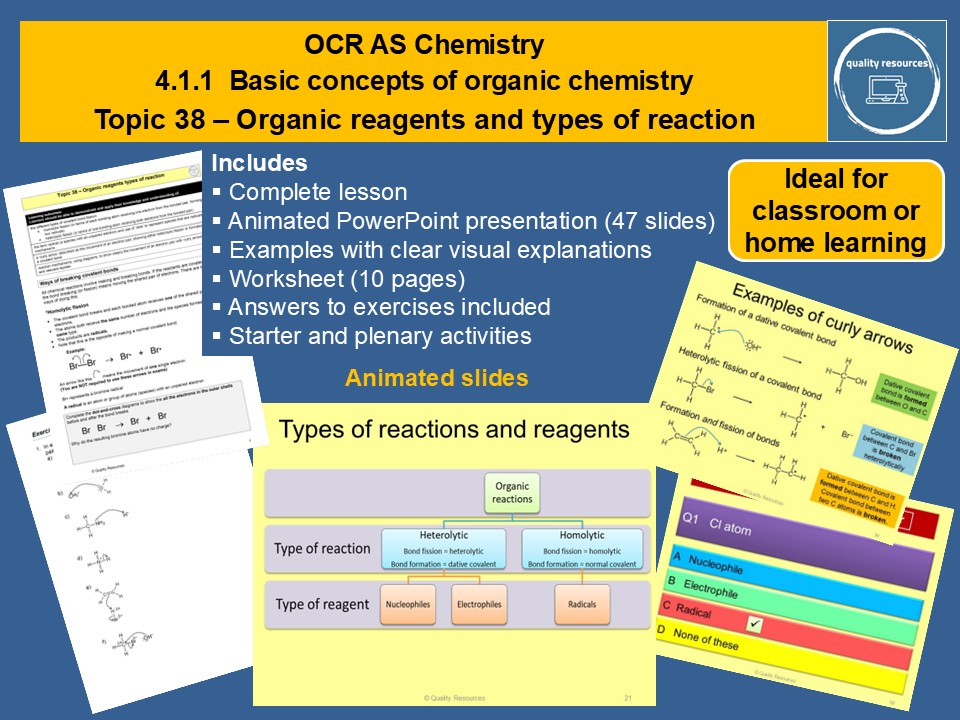
Organic reagents and types of reaction
• Ways of breaking covalent bonds
Homolytic fission
Heterolytic fission
• Types of organic reagents and their reactions
Nucleophiles
Electrophiles
Radicals
• Introduction to mechanisms
• Curly arrows
• Types of reaction
Addition
Substitution
Elimination
• Classification of reactions
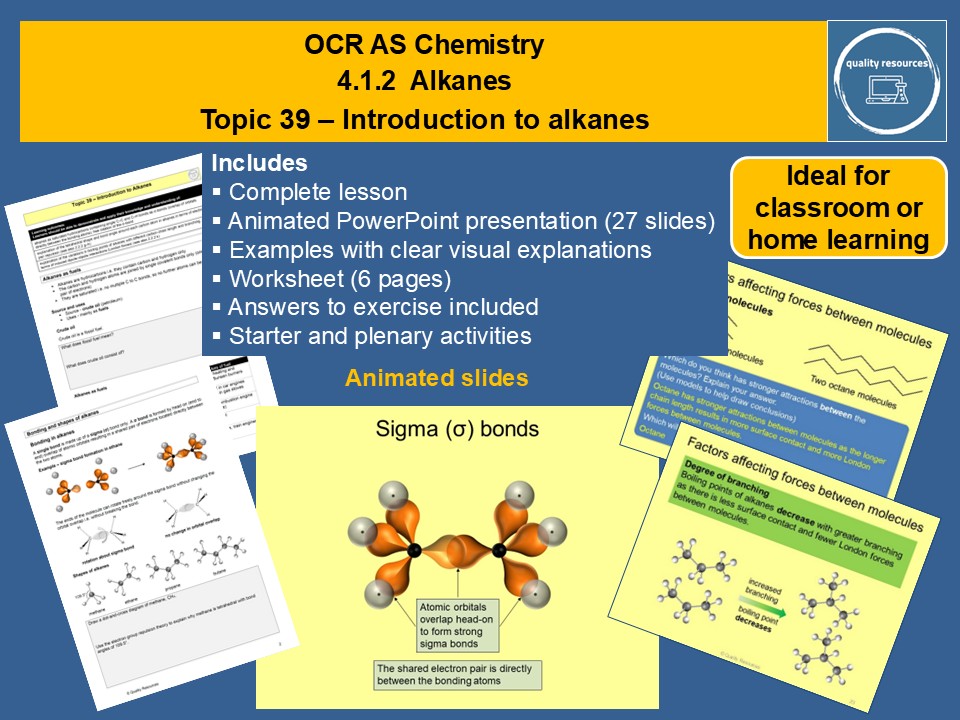
Introduction to alkanes
- Sources and uses of alkanes
- Definitions of fossil fuels and crude oil
- Uses of alkanes as fuels
- Bonding in alkanes
- Formation and rotation of sigma bonds
- Shapes of alkanes
- Intermolecular forces in alkanes in terms of non-polar molecules
- Melting and boiling points of alkanes in terms of London forces
- Effect of chain length and branching on London forces
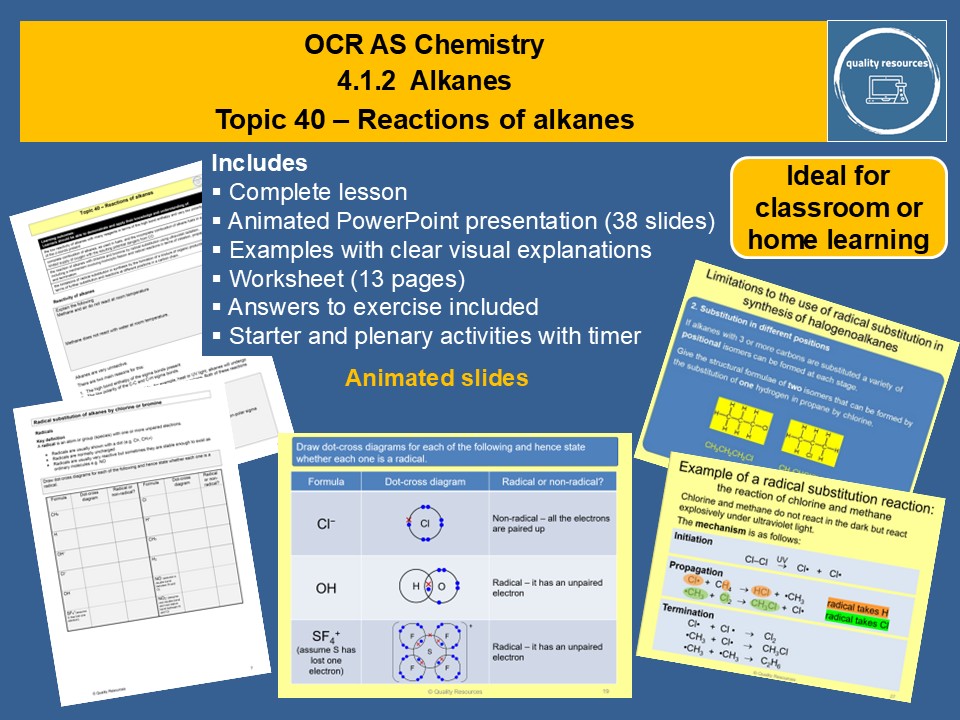
Reactions of alkanes
- Reactivity of alkanes
- Combustion of alkanes – complete and incomplete
- Balancing combustion equations
- Radicals and dot-and-cross diagrams
- Radical chain reactions
- Radical substitution of alkanes by halogens
- Mechanism including initiation, propagation and termination
- Limitations to the use of radical substitution in synthesis of halogenoalkanes
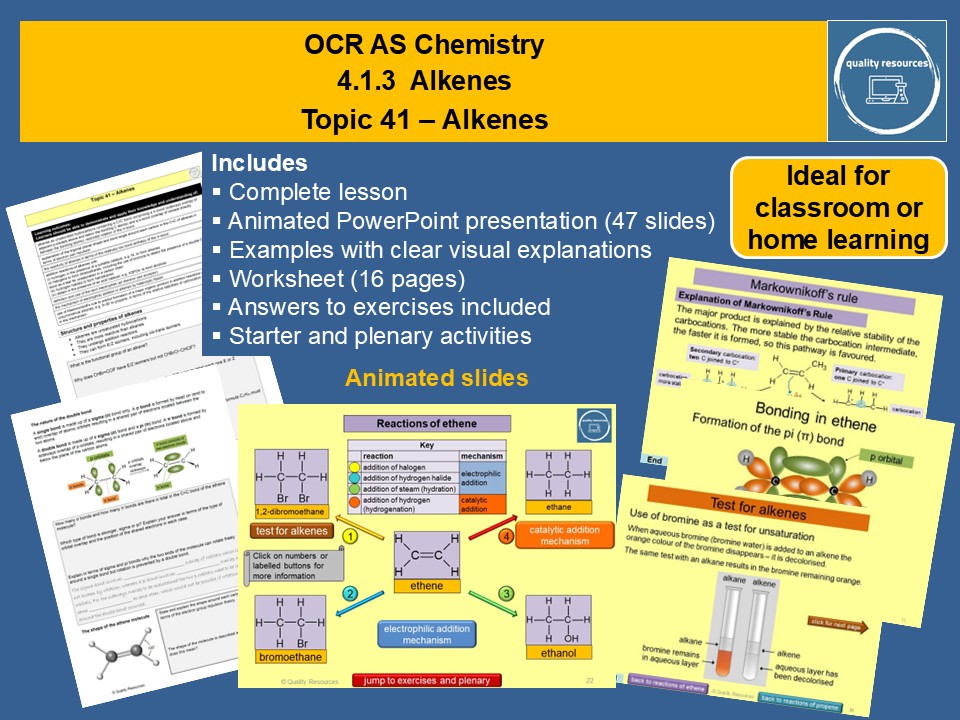
Alkenes
- Structure and reactivity of alkenes
- The nature of the double bond – sigma and pi bonds
- Explanation of restricted rotation around C=C
- Shape of ethene in terms of electron pair repulsion theory
- Addition reactions of alkenes
- Reactions of ethene and propene including addition of halogens, steam, hydrogen halides and hydrogen
- Test for alkenes with aqueous bromine
- Catalytic addition of hydrogen - mechanism
- Margarine manufacture
- Definition of electrophile
- Electrophilic addition mechanism
- Addition of HX to unsymmetrical alkenes - Markownikoff’s rule and explanation
Polymers from alkenes
- Meaning of the terms addition polymer and monomer
- the formation of poly(ethene)
- General equation for polymer formation
- Identifying the monomer from the repeat unit of the monomer
- Disposal of waste polymers by recycling, cracking and combustion
- Bioplastics
- Biodegradable polymers
- Photodegradable polymers
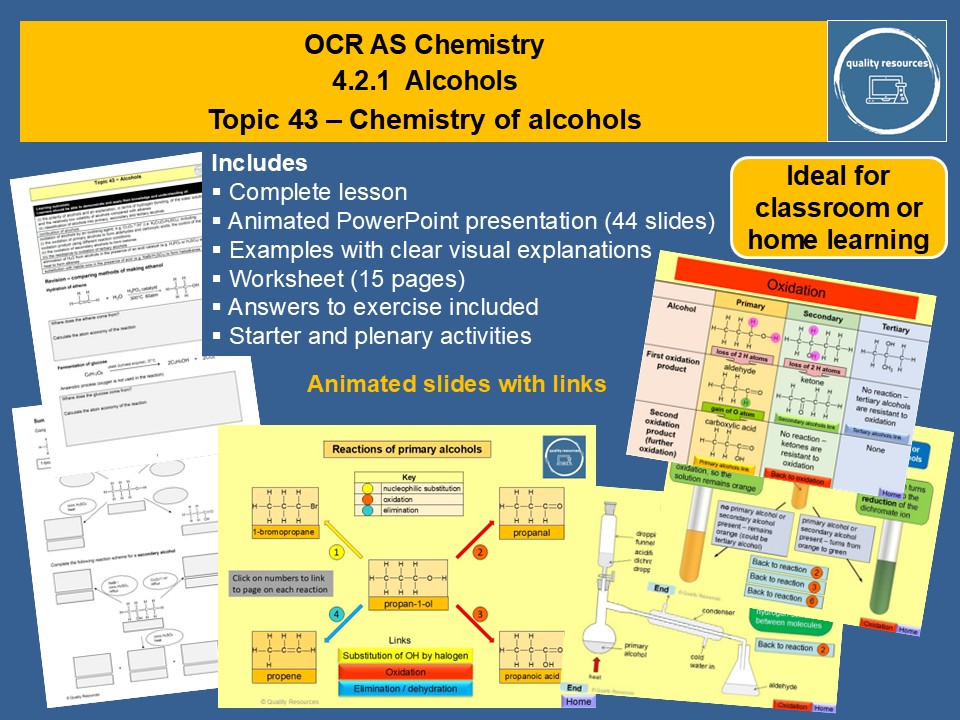
Chemistry of alcohols
- Comparing methods of making ethanol
- Naming alcohols
- Physical properties of alcohols, in terms of hydrogen bonding
- Primary, secondary and tertiary alcohols
- Substitution reaction of alcohols
- Oxidation of alcohols
- Elimination (dehydration) reaction of alcohols
- Reactions of primary, secondary and tertiary alcohols
- Animated mechanisms
- Reaction classification
- Reagents and conditions
- Structural equations
- Key definitions
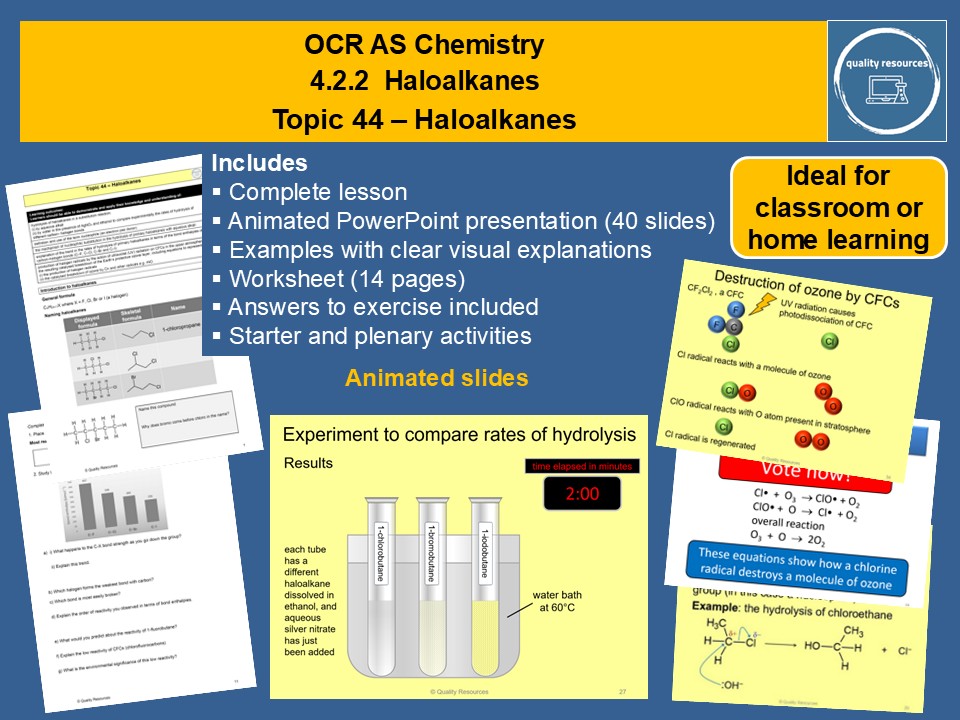
Haloalkanes
- Naming haloalkanes
- Reactivity of haloalkanes general equation for polymer formation
- Uses of haloalkanes
- Nucleophilic substitution reactions of haloalkanes including hydrolysis
- Mechanism of nucleophilic substitution
- Experiment to compare rates of hydrolysis of different haloalkanes
- Explaining the different rates of hydrolysis
- Organohalogen compounds and the environment
- Destruction of ozone by CFCs
Organic synthesis
- Revision of functional groups
- Techniques for preparation and purification of organic liquids
- Heating under reflux
- Distillation
- Separation of immiscible liquids using a separating funnel
- Use of drying agents
- Stages in the preparation and purification of an organic liquid
- Tests for functional groups
- Compounds with more than one functional group
- Strategies for organic synthesis with examples
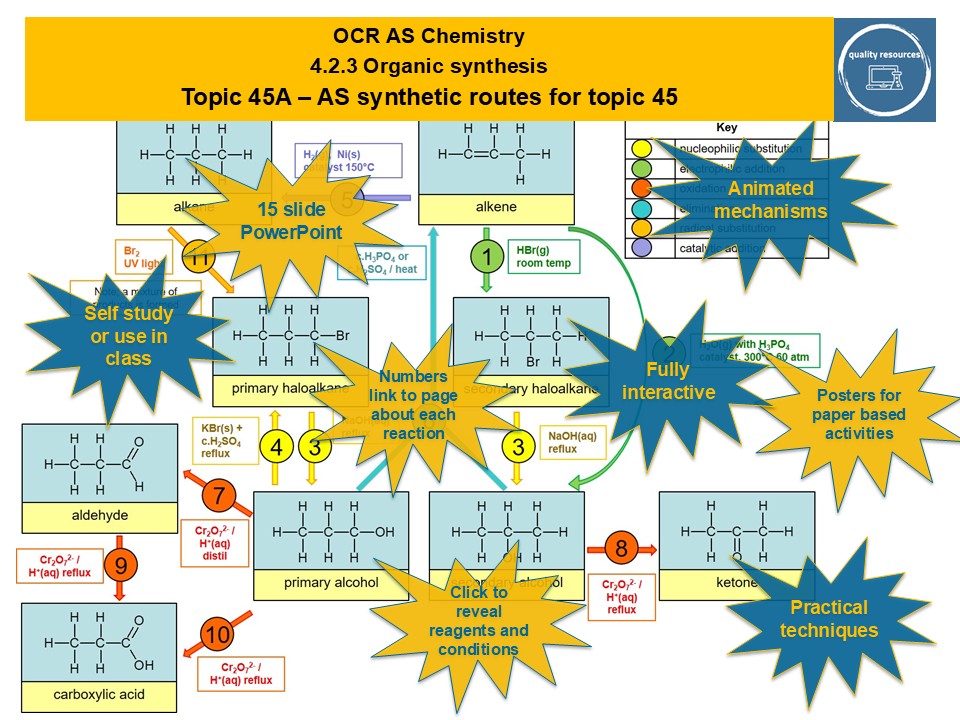
AS synthetic routes
- AS synthetic routes
- Animated mechanisms
- Key definitions
- Heating under reflux
- Distillation
- Reaction classification
- Reagents and conditions
- Structural equations
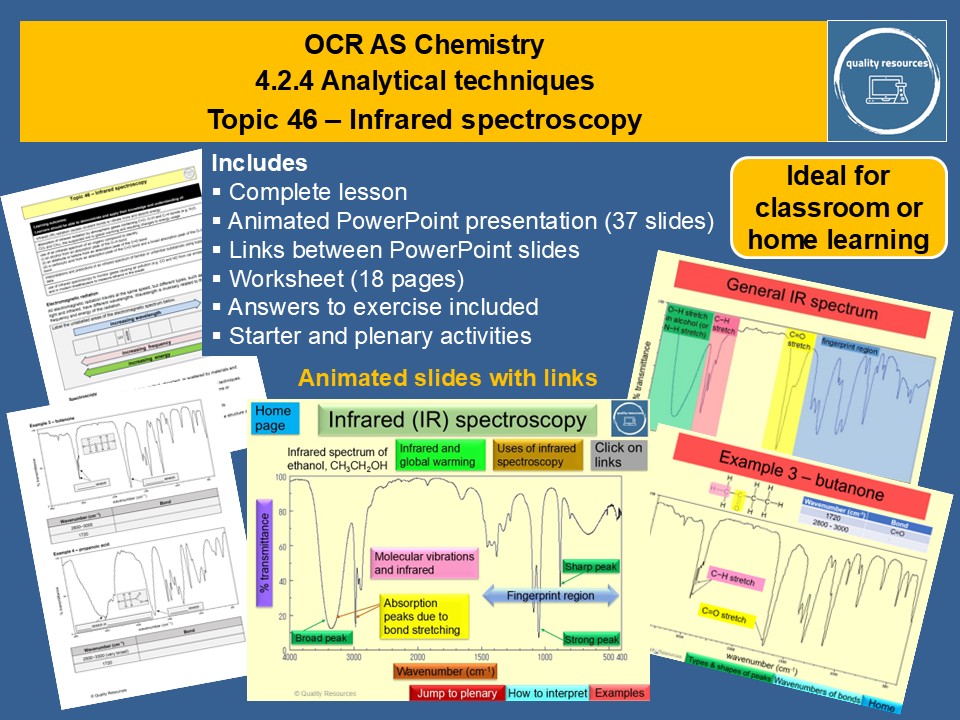
Infrared spectroscopy
- Introduction to spectroscopy linked to the electromagnetic spectrum
- Meaning of wavenumber and transmittance
- Molecular vibrations
- Bond stretching
- Fingerprint region of spectrum
- Types and shapes of peaks
- Infrared and global warming
- The greenhouse effect and greenhouse gases
- Interpreting the infrared spectrum
- Examples of IR spectra with animated explanation linking peaks to structure
- Uses of infrared spectroscopy
Mass spectrometry
- Animated diagram and description of a mass spectrometer
- Meaning of m/z
- Relative intensity
- Base peak
- Molecular ion
- M+1 peak
- Fragments
- Interpreting the mass spectrum
- Mass spectrum of ethanol
- Animations of formation of fragments from ethanol
- Summary of fragments for ethanol
- Examples of mass spectra with animated explanation linking peaks to structure
- Interpretation of mass spectrum of unknown compound leading to its identification
Identifying compounds from infrared and mass spectra
- Calculating empirical formula from % composition
- Calculating molecular formula from empirical formula and molar mass, using the molecular ion peak on the mass spectrum
- Using the infrared (IR) spectrum to identify bond stretches and hence functional group(s) present
- Drawing structural formulae consistent with the molecular formula and IR data
- Using mass spectrum to distinguish between the suggested structural formulae
- Identifying fragments in the mass spectrum