This resource contains all of the lessons for the first unit of AQA A-Level Biology - Biological Molecules.
Including:
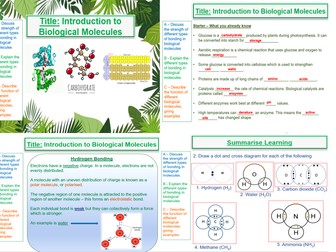
1.1 Introduction to Biological Molecules
12 Carbohydrates & Monosaccharaides
1.3 Carbohydrates - Disaccharaides and Polysaccharides
1.4 Starch, Glycogen & Cellulose
1.5 Lipids
1.6 Proteins
1.7 Ezyme Action
1.8 Factors Affecting Enzyme Action
1.9 Enzyme Inhibition
Initial lesson (single) for A Level Biology covering Biological Molecules.
Based on AQA SOL. - Ready to use, no preparation needed.
Starter - GCSE Recap - what do you already know task & answers
Introduction to biological molecules and bonding (GCSE recap activity)
Dot & Cross diagram task & answers
All answers for tasks included.
One extra task requires Oxford AQA A Level (or As Level) Biology textbook - this can be removed
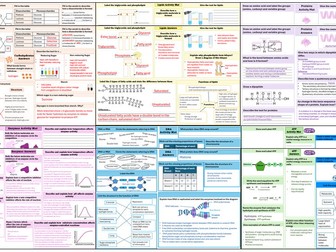
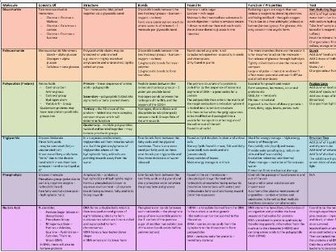
These revision mats will help with revision for topic 1 biological molecules AQA A level biology. Answers are included which are written with key exam answer terminology.
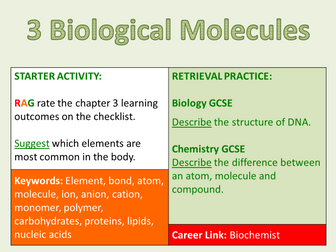
Chapter 3 unit from the OCR Biology A A-Level all about biological molecules.
*The unit was planned with the intention of carrying out flipped learning whereby students do pre-reading on the topic prior to the lesson so that we can consolidate that learning with activities/exam questions during the lesson.
*
Including:
3.1 Biological elements
3.2 Water
3.3 Carbohydrates
3.4 Testing for carbohydrates
3.5 Lipids
3.6 Structure for proteins
3.7 Types of proteins
3.8 Nucleic acids
3.9 DNA replication and the genetic code
3.10 Protein synthesis
3.11 ATP
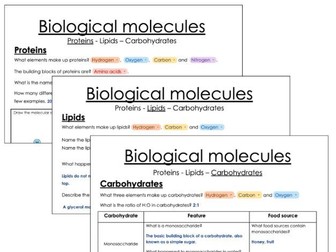
Digital worksheets covering biologyical molecules (protein, carbohydrates and lipids).
Each worksheet contains interactive elements, questions and research tasks.
Completed worksheets are also provided.
New for the AAQ Pearson Applied Science BTEC - teaching starting from 2025
A bundle containing the full specification of content for the topic B: Structure and function of Biological Molecules in Unit 1: Principle and Application of Biology
The lesson order is as follows:
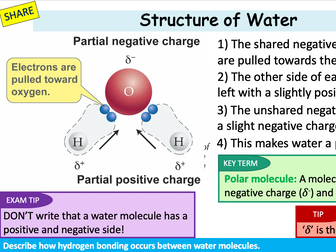
• Structure and Function of Water (21 slides)
• Structure and Function of Carbohydrates (25 slides)
• Protein Structure (20 slides)
• Protein Function (26 slides)
• Structure and Function of Nucleic acids (21 slides)
• Structure and Function of Lipids (23 slides)
• Biochemical Testing (16 slides)
A total of over 150 slides worth of content!
All lessons follow a similar structure and design with:
• Learning objectives and specification link
• Recall starter activity with answers based on previous lesson
• Explanation slides with clear concise diagrams - chunked in an easy to understand format
• Variety of practice activities including exam questions, gap fills, differentiated questions etc.
• Answers for all questions
• All easily editable to adapt to your teaching or to use in existing lessons although all lessons are ready to go
• Minimal printing - I understand how limited printing budgets are so printing is mostly restricted to small diagrams and reusable fact sheets.
• The occasional fun and interesting fact.
If any of my resources have saved you time, please leave a review!
This resources introduces a-level biologists to the concept of biological molecules, touching upon how these molecules are synthesised and broken down via condensation and hydrolysis. This is a resource been made to be picked up and used by any teacher.
AQA Biology
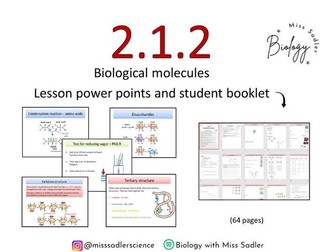
All lessons for the OCR Biology A A Level Topic 2.1.2 Biological Molecules.
This includes a 62 page workbook (with exam questions (and answer booklets) to go with these lessons.
Please leave a review and check out my other resources.
Made using the OCR A Level Biology specification
1. Properties of water
2. Molecular bonding
3. Carbohydrates
4. Polysaccharides
5. PAG 9 Tests for carbohydrates reducing and non-reducing sugars and Starch
6a. Lipids - triglycerides
6b. Phospholipids and steroids
7. Proteins - amino acids
8. Protein structure
9. Protein function
10. inorganic ions
11+12 Qualitative tests PAG 9 (Biuret and Emulsion)
13 + 14 Quantiative tests PAG 5 (Colorimetry and biosensors)
15 +16 Chromatography PAG 6
17+18 revision grids, podcasts, glossary and QR coddes to Study mind exam questions. lined paper for own work (enough for approx 6 hours of work)
All OCR Biology A Level topics available. Feedback really appreciated.
Comprehensive PowerPoint slides covering the first half of Biological Molecules for AQA A-level Biology (3.1.1 - 3.1.4)
Download includes:
3 separate Powerpoints with over 120 slides in total — detailed, structured, and ready to use in lessons or for independent study.
The PowerPoints include detailed slides covering all of the content, plus embedded consolidation/knowledge check to test understanding.** Full answer slides are included** for any embedded tasks/questions.
Biochemical tests are all covered together at the end of Protein & Enzymes Powerpoint.
Several blank template slides are included at the end incase you want to add extra tasks (these template slides include ‘lesson objectives’, ‘starter’, ‘knowledge check’, ‘plenary’ and ‘homework’). Please note, no homework tasks are included in the download.
Available in both PowerPoint and PDF formats.
Please note: The text on the PowerPoint slides is not editable (to preserve layout and formatting), but you’re free to make changes by adding new slides or placing text boxes over existing content.
PART 2 should be ready by the end of September.
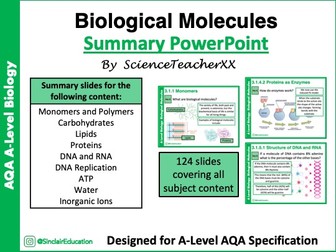
Introducing our new A-level Biology summary PowerPoints. This PowerPoint lessons cover all the content within the Biological Molecules topic within the AQA A-Level Specification. Designed as a concise overview of the entire topic to support revision in class and at home.
Content included within this PowerPoint includes:
• Monomers and Polymers
• Carbohydrates
• Lipids
• Proteins: Structure
• Proteins: Enzymes
• DNA and RNA
• DNA Replication
• ATP
• Water
• Inorganic Ions
We understand that you may have specific queries or requests for revision activities, resources and bundles. So, please feel free to contact us through instagram, and we’ll be more than happy to assist you.
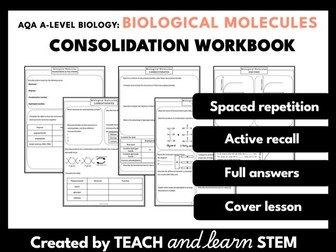
I designed this 12-page A4 workbook of exam-style questions to help my students consolidate the Biological Molecules topic. Written with the AQA specification in mind, but suitable for other exam boards. Covers all the key content for Section 1 of the AQA A-level Biology specification.
All activities focus purely on recalling key content, with no application questions, making it particularly useful for less confident students who benefit from clear, structured guidance when revising.
Also, it is a really useful activity for cover lessons because a fully completed version of the workbook with model answers is included.
Section 2 and 3 workbooks also available.
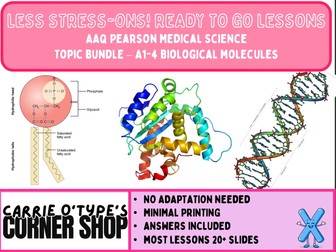
New for the AAQ Pearson Medical Science BTEC - teaching starting from 2025
A bundle containing the full specification of content for the topic A1-4: Biological Molecules
The lesson order is as follows:
• Structure and Function of Carbohydrates (25 slides)
• Protein Structure (20 slides)
• Protein Function (26 slides)
• Structure and Function of Nucleic acids (21 slides)
• Structure and Function of Lipids (23 slides)
• Nucleic Acid Deriviatives/ ATP and Coenzymes (19 slides)
• Conditions associated with Biological molecules (13 slides)
147 slides worth of content!
All lessons follow a similar structure and design with:
• Learning objectives and specification link
• Recall starter activity with answers based on previous lesson
• Explanation slides with clear concise diagrams - chunked in an easy to understand format
• Variety of practice activities including exam questions, gap fills, differentiated questions etc.
• Answers for all questions
• All easily editable to adapt to your teaching or to use in existing lessons although all lessons are ready to go
• Minimal printing - I understand how limited printing budgets are so printing is mostly restricted to small diagrams and reusable fact sheets.
• The occasional fun and interesting fact.
If any of my resources have saved you time, please leave a review!
A PowerPoint that covers organic molecules. Includes animations of the condensation reaction. It has been devised for OCR AS Biology Unit 2, but should be usable with other exam boards as well.
WJEC A level Biology AS Unit 1 Topic 1.1: Biological molecules powerpoints for whole topic
Each lesson covers a spec point:
Lesson1: Inorganic ions and water
Lesson 2 and 3: Carbohydrates
Lesson 4: Lipids
Lesson 5: Amino acids and proteins
Lesson 6: Food tests practical
Each lesson has notes, small tasks and exam questions
Accessible for students


 Quick View