Set of 18 Hot Chocolate Mugs - each with a different CVC picture on. They are lovely for the children to use to write the word in hot chocolate powder. Add to tables or tuff spots for an engaging phonics set up!
Perfect to use for Bonfire Night activities as well as Christmas!
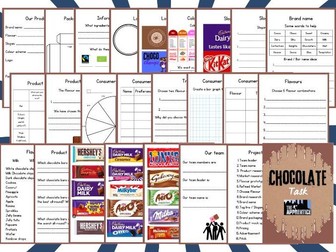
This creative and engaging project based lesson is based on the format of the TV show ‘The Apprentice’. Students are tasked with developing a new chocolate bar, covering all aspects of product development, branding, and marketing. It includes steps such as market research, flavor prototyping, brand and slogan creation, logo design, packaging ideas, pricing strategy, and advertisement planning. Teams must collaborate to survey potential buyers, analyse data, and create a pitch for their product. This activity is ideal for fostering teamwork, creativity, and entrepreneurial thinking in an educational or workshop setting.
This lesson is useful for consolidating data handling concepts such as tally marks, bar charts and pie charts.
This file includes 28 pages.
This is a fully prepared practical drama scheme of work suitable for KS3 students. The scheme explores various elements of the story and scripted text and provides new skills and techniques for students to explore in an active, practical and fun way.
All resources are included within power-points or as seperate documents.
The scheme includes:
Self assessment starts and end of scheme sheet
Lesson 1 - Imagination
Lesson 2 - Narration
Lesson 3 - Oompa Loompa Chorus
Lesson 4 - Physical Theatre and Soundscape
Lesson 5 - Characterisation
Assessment task (Carousel activity recapping learning)
A KS3 project (three-four lessons) to prepare students for a persuasive presentation on a chocolate bar they have designed.
This resource is designed to prepare students for the following skills:
Persuasive writing
AFOREST devices
Speaking and listening
Understanding target audiences and purpose of text
Improving vocabulary for non-fiction writing
Lesson 1:
LO: To analyse how advertisements use techniques to cater to differing audiences.
Students watch advertisements of chocolate bars, exploring and discussing target audiences and persuasive techniques used in the adverts.
Lesson 2:
LO: To analyse how language is used to create effects and to persuade audiences.
Students extend vocabulary to describe chocolates. Students practice using AFOREST devices to describe them and think about target audiences (packaging, flavour, etc.). You can either give the students the chocolates to taste, or you can just based this lesson on their knowledge of the chocolate flavours already.
Lesson 3:
LO: To create a speech that uses AFOREST and language devices to persuade audiences.
Students to plan and create a chocolate bar of their own design, ready to present to the class. Students to vote on which chocolate bar was the most persuasive in its pitch to the target audience chosen by the student.
Optional - extend L3 to a full writing lesson, followed by L4 as speaking and listening lesson.
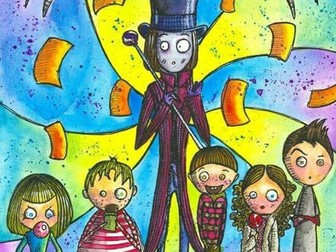
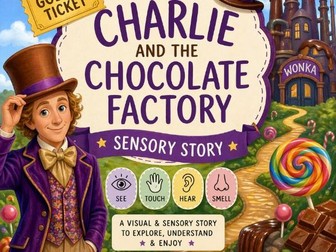
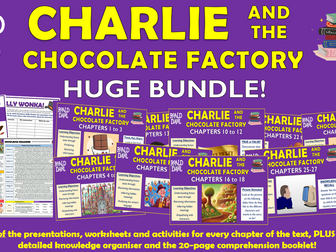
This huge ‘Charlie and Chocolate Factory’ bundle contains the entire series of lessons, in addition to the clear, detailed knowledge organiser and the 20-page comprehension activities booklet!
The engaging, thought-provoking, and comprehensive series of lessons has been devised to provide students with a well-rounded, secure understanding of the story. Included are questions, tasks and activities for all 30 chapters of the text, broken down into ten triple lesson resources:
-Chapters 1-3 - ‘Here Comes Charlie’, ‘Mr Willy Wonka’s Factory and 'Mr Wonka and the Indian Prince’
-Chapters 4-6 - ‘The Secret Workers’, ‘The Golden Tickets’ and ‘The First Two Finders.’
-Chapters 7-9 - ‘Charlie’s Birthday’, ’Two More Golden Tickets Found’ and ‘Grandpa Joe Takes A Gamble.’
-Chapters 10-12 - ‘The Family Begins to Starve’, ‘The Miracle’ and ‘What it Said on the Golden Ticket.’
-Chapters 13-15 - ‘The Big Day Arrives’, ‘Mr Willy Wonka’, and ‘The Chocolate Room.’
-Chapters 16-18 - ‘The Oompa-Loompas’, ‘Augustus Gloop Goes Up the Pipe’ and ‘Down the Chocolate River.’
-Chapters 19-21 - ‘The Inventing Room’, ‘The Great Gum Machine’ and ‘Goodbye Violet.’
-Chapters 22-24 - ‘Along the Corridor’, ’Square Sweets That Look Round’ and ‘Veruca in the Nut Room.’
-Chapters 25-27 - ‘The Great Glass Lift’, ‘The Television Chocolate Room’ and ‘Mike Teavee is Sent by Television.’
-Chapters 28-30 - ‘Only Charlie Left’, ‘The Other Children Go Home’ and ‘Charlie’s Chocolate Factory.’
The comprehensive and colourful PowerPoint presentations guide students through a wide range of activities, including those designed to enhance the following skills: retrieval, understanding vocabulary, inference, explanation, summarising, sequencing, analysis and deeper thinking activities.
Additional worksheets and templates are also provided (In both PDF and Word) to enhance a number of the deeper thinking activities.
All of the resources and tried and tested in real classrooms, catalysing excellent outcomes. The resources are suitable for students across lower KS2, having being used successfully in the past with both year 3 and year 4 children.
A lively, amusing script for the Chocolate Factory the Musical. This show last around an hour to an hour and a half and will leave audiences with a huge smile on their faces. This is aimed at children in years 5 and 5 but would also be perfect for KS3. The script includes stage directions and ideas for putting the show on and will be perfect to stage a fabulous show. Comes complete with easy to follow cast list. Please leave a review!
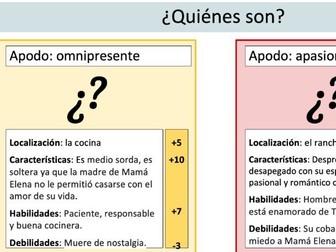
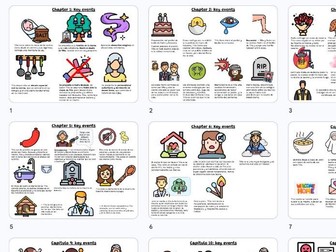
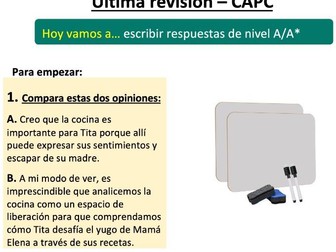
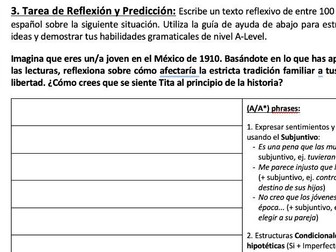
Complete PowerPoint and worksheet resources for Como agua para chocolate by Laura Esquivel.
Including: introduction, synopsis, social and historial context, chapter summaries, themes, characters analysis, writer methods, exam advice, samply essays and quotations.
Complete unit of study: 10+ lessons
Persuasive Writing Chocolate Unit
Persuasive Writing Chocolate – Complete Unit of Work 4 Weeks
This download includes a complete four-week literacy unit on persuasive writing. Children will examine persuasive text in different mediums and then create their own advert for a product they have designed (chocolate bar), before in the final week applying the techniques they have learnt to other areas of persuasive writing. Everything you need to teach the whole unit is included.
This download includes:
- Full and detailed lesson plans
- PowerPoint slides for lessons
- activities for every lesson with clear progression
- examples, prompts and templates for the activities
Thanks for looking.
Please remember to leave feedback, for updates and promotions you can also follow me here.
*****************************************************************************
My other English products:
Complete Instruction Writing Unit .
Complete Recount Writing Unit .
Complete Dialogues and Play Scripts Writing Unit .
*****************************************************************************
This is a worksheet showing a cross-section of Willy Wonka’s Chocolate Factory. Children can then design the different rooms within the factory. Perfect activity for a class studying ‘Charlie and the Chocolate Factoy’ by Roald Dahl.
¡El Chocolate! – Chocolate KS1 Half Term Spanish
All the plans and resources you need to teach six, 30 minute Spanish lessons to KS1 on the topic of chocolate. Students will learn about the history of chocolate in Mayan culture. They will learn the ingredients and verbs in Spanish to make hot chocolate.
Included:
Detailed medium term plan.
¡El Chocolate! PowerPoint - includes everything needed to teach the topic, e.g. presentation of vocabulary (including sound files by a native speaker), games, activities, dialogues etc.
¡El Chocolate!Activity Pack - includes front cover for new topic; large flashcards; small flashcards; reading comprehension; comparison of Mayan hot chocolate with modern hot chocolate; matching activities
End of Unit Self-Assessment – students assess how well the have achieved the topic objectives.
The plans are designed for non-specialist primary teachers or specialist teachers who are short on time.
The ‘¡El Chocolate!’ topic includes sound files of a native speaker and five games to practice the vocabulary.
The five games are:
1 The five games are:
Matching - students match the numbers to the pictures.
Picture splat - teacher says the number and two students compete to be the first to splat the picture.
What’s missing - numbers disappear from the slide and students must say what has disappeared
Blockbusters – students complete to say the target vocabulary to cross from one side of the board to another.
Quick flash - pictures are displayed momentarily. Students put their hand up and say what the picture is. Click again and the picture appears. Click a third time and the word in Spanish appears.
Students will love learning Spanish with this fun topic! Teachers will love how much time they save!
¡Muchas Gracias!
Charlie and the Chocolate Factory - KS2
This English fiction teaching resource is an 11 lesson scheme of work with a 97 slide editable PowerPoint presentation and a 13-page booklet of worksheets. ‘Charlie and the Chocolate Factory - KS2’ contains a variety of lessons and activities designed to help children understand the novel’s plot, characters, language and themes.
Content includes:
A scheme of work overview
A brief biography of Roald Dahl with a short film about his life by Michael Rosen
Engaging chapter by chapter activities to consolidate understanding as children read through the book
Reading comprehension questions to assess students’ knowledge of plot, character and language
Analysis of the characters of Charlie Bucket and Willy Wonka
Developing the key reading skills of inference and deduction
Learning how Roald Dahl creates suspense and evokes sympathy from the reader
Role play - hot-seating to aid understating of characters
Developing understanding of characters through empathy writing activities
Not quite what you’re looking for? Click below to see more resources for Roald Dahl books:
Boy
Fantastic Mr Fox
The Magic Finger
The Twits
Hot Chocolate Number Mugs 1-10
Children need to add the correct amount of marshmallows to the mug. You could also use for formation practice with hot chocolate powder!
Pack also comes with a table sign
I have created a booklet/resource pack to support persuasive writing! Based around chocolate bars, pupils must design their own chocolate bar, logo and slogan, as well as the supporting advertising campaign. I have used this resource in the past for pupils to work independently, as well as in small groups. We finished the week with having a Dragon's Den style session, where everybody voted for their favourite, most persuasive sales pitch!
Any feedback is welcomed and I hope you and your pupils enjoy using this resource.
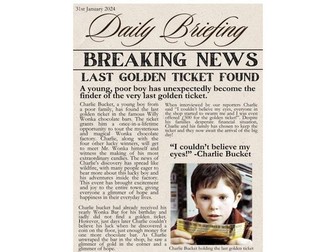
I have written a model text to support newspaper report writing. This text is based on the story of Charlie and the chocolate factory by Roald Dahl.
I really hope that you find this resource useful and I would love to see how you use it! Please share to my instagram @teaching.in.the.sun
There are three photocopiable worksheets which are created by Franklin Watts for the title 'Espresso Ideas Box: Chocolate'. They include a template for a collage, a questionnaire for a chocolate factory visit and a writing frame for a diary of a day out. The activities stand alone, but using them in conjunction with the book will offer a more complete learning experience.
I was looking for a presentation about Fair Trade chocolate, but really struggled. I found a great presentation about Fair Trade bananas and tweaked it. Hope this helps you!