Fully planned and resourced lesson on allergies and intolerances in food technology.
Lots of activities and differenciated application tasks.
SEN/LA suitable.
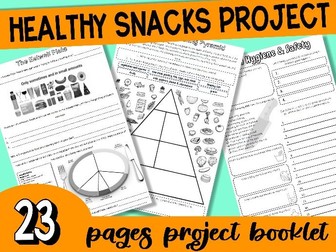
A 23 page project booklet leading students through learning about healthy eating using the eatwell plate and the healthy eating pyramid onto designing, costing and making a healthy snack of their own.
Each page has activities for the students to complete and includes an assessment structure and alternative front covers.
The booklet is suitable for students in years 8 or 9 depending on the ability of the students and the location of the curriculum.
The worksheets can be used on their own for other projects or as a whole unit of work covering around 10 weeks.
A comprehensive Food Technology, Food Science and Nutrition, and Hospitality & Catering lesson designed to teach students about the three macronutrients and their role in a balanced, healthy diet. This lesson forms part of a wider unit on healthy eating and diet, giving students the essential theoretical knowledge needed to understand energy intake, nutrient balance, and the functions of carbohydrates, proteins, and fats.
This resource includes clear, SEN/AEN-friendly teaching slides alongside structured written activities that guide students through key concepts in an accessible, engaging way. Tasks support recall, application, and deeper understanding, making this ideal for lessons that underpin practical cooking skills.
Perfect for Key Stage 3 or as an accompaniment to GCSE Food and Nutrition, Food Science and Nutrition, Hospitality and Catering, Cooking and Nutrition, or similar specifications. The lesson is fully suitable to set for cover and requires no additional planning.
This resource includes:
• Accessible, SEN/AEN-friendly teaching slides
• Detailed explanations of carbohydrates, proteins, and fats
• Written and theory-based activities to test understanding
• Application tasks linking theory to practical cooking lessons
• Printable worksheets for classwork or homework
• Suitable for KS3 and supportive for GCSE and vocational courses
• Cover-ready lesson with everything needed to teach macronutrients effectively
This pack is ideal for building strong foundational knowledge in healthy eating and diet, supporting students in both theory and practical food-based subjects.
This resource offers a complete set of revision materials designed to cover full specification. Perfect for enhancing student understanding and retention, this comprehensive bundle includes:
Detailed Revision Resources: Each key concept and topic within the Business Studies curriculum is covered in depth, providing thorough explanations and content.
Retrieval Grids: Specially designed to promote active recall and help students consolidate their knowledge for every topic, ensuring they can retrieve information effectively under exam conditions.
Thinking Hard Grids: These challenging questions and tasks are crafted to deepen understanding, encourage critical thinking, and allow students to apply business concepts to diverse scenarios.
These resources are ideal for independent study, in-class revision activities, or as structured homework assignments. Ai helped create these time saving resources. They are built to help students identify and address knowledge gaps, fostering a robust grasp of all essential business principles.
Benefits:
For Students: Supports mastery of key terms, core concepts, and the analytical skills crucial for exam success.
For Teachers: Saves significant preparation time by providing ready-to-use, highly effective revision tools that can be easily integrated into any teaching plan.
Revision resources for each part of the specification
Retrieval grids
Knowledge organisers
Thinking hard grids
Revision sheets
3.2.1.1 - Protein
3.2.1.2 - Fats
3.2.1.3 - Carbohydrates
3.2.2.1 - Vitamins
3.2.2.2 - Minerals
3.2.2.3 - Water
3.2.3.1 - Nutritional needs for life stages
3.2.3.2 - Special dietary groups
3.2.3.3 - Reducing risk of diet-related disease
3.2.3.4 - The Eatwell Guide and DRVs
3.2.3.5 - Meal planning
3.3.1 - Cooking of food and heat transfer
3.3.2 - Functional and chemical properties of food
3.4.1 - Food spoilage and contamination
3.4.2 - Principles of food safety
3.5.1 - Factors affecting food choice
3.5.2 - Food labelling and marketing influences
3.5.3 - British and international cuisines
3.5.4 - Sensory evaluation
3.6.1 - Environmental impact and sustainability
3.6.2 - Food sources and primary processing
3.6.3 - Secondary processing and food production
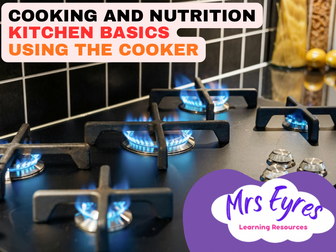
A complete lesson designed to teach students how to use the cooker safely and effectively. Ideal for Cooking and Nutrition, Food Technology, and Hospitality & Catering courses, this resource introduces key skills needed before beginning practical cooking, including how to operate ovens, hobs, and grills, how to control heat, and how to follow essential safety procedures.
The lesson includes SEN/AEN-friendly teaching slides with clear, accessible explanations and visuals, alongside structured written activities that build understanding of cooker functions, safety rules, and common kitchen hazards. Tasks help students develop confidence using equipment and link learning directly to practical lessons.
Suitable for Key Stage 3 or as supporting theory for GCSE Food and Nutrition, Cooking and Nutrition, Food Science and Nutrition, Food Technology, Hospitality and Catering, and similar food-based courses. Fully cover ready and requires no additional planning.
This resource includes:
• SEN/AEN-friendly teaching slides with simplified text and clear visuals
• Step-by-step explanations of using ovens, hobs, and grills
• Written/theory tasks to reinforce understanding
• Activities linking theory to practical cooking lessons
• Suitable for KS3 and supportive for GCSE and vocational specifications
• Fully cover-ready lesson with no extra preparation required
This lesson provides essential foundational knowledge for safe and successful practical cooking.
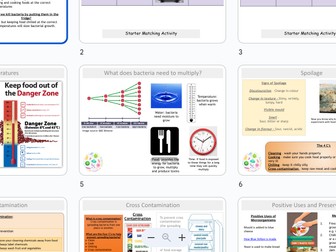
Powerpoint looking at bacteria in food.
Can be used as a revision source or introduction to bacteria.
Slide cover the following information;
What is bacteria?
Matching cards starter for key temperatures.
Core temperatures (danger zone)
What does bacteria need to multiply?
Spoilage
Sources of contamination
Cross contamination
Positive uses and preservation
The effect of PH
The effect of oxygen
Bacteria within food knowledge check
Revision techniques
A comprehensive series of multimedia materials to support the teaching of the GCSE Design and Technology Food Technology course. The materials can be downloaded as a complete Moodle course or as individual elements. The bilingual resources include video clips, animations, text and quizzes within Moodle and can be used on an interactive whiteboard for whole class teaching or by students on individual computers. The images included in this work, to the best of our knowledge, are from sources that their use do not breach any copyright rules. Please visit the NGfL site, linked below.
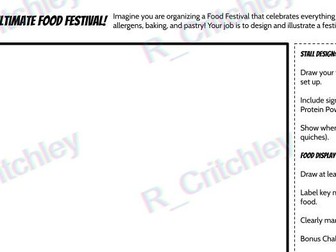
Sudents design a festival food stall, sketching layouts, creating menus with macronutrient and allergen labels, and showcasing baking and pastry skills.
This engaging cover lesson challenges students to apply their knowledge of macronutrients, allergens, and baking by designing a stall for the Ultimate Food Festival. Ideal for Year 8 Food Technology, this task encourages creativity while reinforcing key food preparation and nutrition concepts with minimal teacher input.
What’s Included in the Task?
Draw a detailed food festival stall, considering signage, layout, and food display.
Design a menu featuring at least three food items (cakes, bread, pizza, or quiche) with macronutrient and allergen labels.
Explain how foods fit into a balanced diet, using key nutrients learned in class.
Bonus challenge: Create a promotional poster or a special festival meal deal.
Perfect for:
Independent cover lessons that require little teacher guidance.
Encouraging creativity, problem-solving, and real-world food industry insights.
Reinforcing baking, pastry, and nutrition skills in an interactive way.
Formats: One A3 Sheet cuts down on printing cost and Time
Printable PDF worksheet or editable digital document.
A great way to keep students engaged while applying their learning in a fun and practical context.
This Food Technology booklet consists of a range of tasks and covers skills that students will learn at KS3.
It includes:
Wordsearch
Eatwell Plate activity
Reading Comprehension task
Nutrients table
Meal planning schedule
Health and safety drawing task
Tools and equipment in the food room.
This booklet can be used as cover work for multiple lessons, used as a homework booklet or simply used in lesson to help supplement the students current lesson.
Here you have a Food, Preparation and Nutrition Quiz, tried and tested with KS3 and GCSE students studying Food. The quiz is interactive throughout using Hyperlinks navigating to the correct and incorrect answers which appear clearly on the screen for students to see.
The quiz contains 23 questions and covers:
Food and Kitchen Safety
Food Types, Nutrients and Diets
What’s Hidding
Cultural Foods
This Quiz has been tried and tested and has had fantastic feedback from students and teachers. It is great for a specialist teacher or a non-specialist teacher during a Food cover lesson.
Additional high quality resources
Eduqas Coursework and NEA 1 & 2 BUNDLE
AQA Coursework and NEA 1 & 2 BUNDLE
Food Written Exam/Mock Questions and Revision suitable for all exam boards (Larger Bundle
GCSE Food Exam/Mock Questions with Model Answers BUNDLEsuitable for all exam boards (smaller Bundle)
Food Cover Worksheets
GCSE Food Cover BUNDLE
KS3/KS4 Food Cover BUNDLE
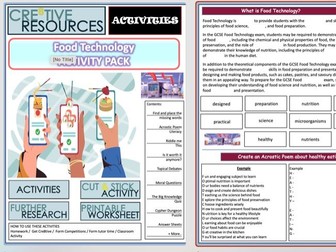
Food Technology Cover Lessons Student Activity Booklet This activity booklet contains 12+ pages. Within this activity pack is a wide range of student tasks to complete and we have included the answers to any puzzles.
Contents of this food technology activity pack include:
Reading Comprehension + Missing words task
Literacy Acrostic Poem Example + Task
Set of riddle to unravel
In depth ‘For’ and ‘Against’ argument matching sorting activity
Topical Debates
Big Moral + Ethical Questions
Fun Facts
The Big Knowledge Quiz
Cypher Dungeon Puzzle
Answer Sheets
More…
Activity packs can provide a variety of benefits for teenagers. Some potential benefits include:
Developing new skills: Activity packs can provide opportunities for teenagers to learn and practice new skills, such as problem-solving, teamwork, and communication.
Boosting mental health: Engaging in enjoyable activities can improve teenagers’ mood and overall well-being.
Promoting social interaction: Many activity packs can be completed as small group activities, which can provide opportunities for teenagers to interact and socialize with their peers.
Increasing creativity: Some activity packs may include creative challenges or projects that can help teenagers think outside the box and exercise their creativity to solve riddles and Cyphers
Providing a sense of accomplishment: Completing activities and challenges in an activity pack can give teenagers a sense of accomplishment and boost their confidence.
Search ‘Cre8tive Resources’ for support with our library of resources or send us an email.
Leave a review and email TheCre8tiveResources@gmail.com for a free resource as a thank you!!
Explore all our resources on TES
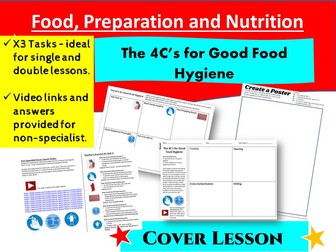
This Food Cover Work is suited for key stage 3 students studying food. It has been tried and tested with year 7 and year 8 classes. The resource includes three tasks and is three sides of A4.
Tasks:
To watch the 10 videos (provided) and jot down notes. The videos relate to - Cross-Contamination, Cleaning, Cooking and Chilling.
Students are provided with a table showing 6 Health and Safety rules that need to be followed in the food room. Students are tasked to write down at least one reason why this rule should be followed and 1 hazard for each. (Answers have been provided for the non-specialist teacher to follow and encourage self-marking)
Create a poster on the worksheet provided.
This resource also includes a helpful teacher guidance page. It includes simple instructions for the lesson, video links and answers (for task 2) to encourage self and peer marking - saving you extra time later!
Try before you buy - A lesson with 5* Reviews
Types of Eggs
Interested in purchasing more lessons, coursework and revision resources from this authorMade for teachers Shop. Then why not try before you buy with this great 5* lesson. Fellow teachers have reviewed stating that they purchased further lessons off the back of this resource - saving them lots of time!
Other helpful resources:
If may also be interested in:
Made for teachers Shop
Complete Food Lesson Bundle
Food Coursework and Exam Preparation Bundle
AQA Food Preparation and Nutrition Nea 1 & 2 Coursework Guidance & Exam/Mock Questions Preparation
EDUQAS Food Preparation and Nutrition NEA 1 & 2 Coursework Guidance & Exam/Mock Questions Preparation
Food Written Exam/Mock Questions and Revision suitable for all exam boards (Larger Bundle
GCSE Food Exam/Mock Questions with Model Answers BUNDLEsuitable for all exam boards (smaller Bundle)
I use this for pupils who are in inclusion or who have not got ingredients for the practical session. It means I can get on with practical work rather than finding something for the pupils to do. It also helps improve knowledge of the subject and covers in more depth some of the work it is not possible for me to cover in a 10 week rotation.
Use these striking displays to promote food tech careers in the classroom!
Each display includes useful information such as day to day activities, salary, required skills and relevant qualifications.
Careers displays include baker, butcher, chef, barista, fishmonger, food technologist, nutritionist, farmer, street food trader, restaurant manager and environmental health professional.
A comprehensive series of multimedia materials to support the teaching of the GCSE Design and Technology Food Technology course. The materials can be downloaded as a complete Moodle course or as individual elements. The bilingual resources include video clips, animations, text and quizzes within Moodle and can be used on an interactive whiteboard for whole class teaching or by students on individual computers. The images included in this work, to the best of our knowledge, are from sources that their use do not breach any copyright rules. Please visit the NGfL site, linked below.
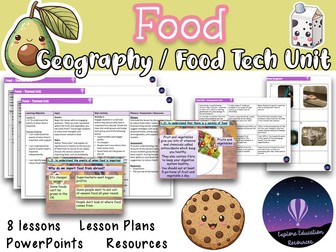
A cross-curricular food unit exploring nutrition, sustainability, sourcing and more!
Looking for a fun, informative and fully resourced unit that combines geography and food technology? This comprehensive 8-lesson unit is perfect for Key Stage 2 and is packed with real-world connections to help pupils understand where food comes from, how it’s processed, and how our choices impact the planet.
What’s covered:
★ Food groups and balanced diets
★ The story of James Lind and the discovery of vitamins (Scurvy focus)
★ Food miles and the global journey of food products
★ The environmental and social impact of food choices
★ Fairtrade: what it means and why it matters
★ Ingredient sourcing and food processing
★ The history and geography of chocolate production
★ Developing food technology skills, evaluation and presentation
What’s included:
✔ 8 detailed lesson plans
✔ 8 engaging PowerPoint presentations
✔ Student-friendly worksheets and resources for each lesson
✔ Curriculum-linked objectives for Geography, DT and Science
✔ Web links to videos, images, and interactive tools for extended learning
Why choose this unit?
✔ Created by an experienced educator to align with national curriculum standards
✔ Ideal for project-based learning, enrichment weeks, or cross-curricular topics
✔ Differentiated content suitable for a range of KS2 year groups
✔ Saves hours of planning time with everything ready to use
✔ Great for encouraging debate, critical thinking and teamwork
Perfect for topics on:
Sustainability and global citizenship
Healthy eating and wellbeing
The journey of food from farm to fork
Geography through real-world contexts
Also available:
KS2 Dig for Victory – 5 Outstanding Food Tech Lessons
KS2 Chocolate Unit – 5 Geography Lessons
KS2 Fairtrade Unit – 5 Lessons
Tags: KS2, geography, food, nutrition, food miles, food technology, balanced diet, Fairtrade, chocolate, sustainability, farm to fork, environment, global issues, healthy eating, key stage 2, lesson plans, cross-curricular, DT
A ready-to-use Food Technology cover worksheet focused on food poisoning, hygiene, and safe food handling practices.
Perfect for KS3 classes and ideal for cover lessons, revision, or independent study.
This worksheet includes:
Memory recall questions to activate prior knowledge
Short-answer tasks covering symptoms, high-risk foods, and contamination
Problem-solving temperature table (danger zone, fridge, freezer, reheating, etc.)
Applied questions on cross-contamination, food storage, and transport
Extended writing task: Students write a mini inspection report as a food hygiene officer
No preparation needed — simply print and go!
Suitable for any mixed-ability KS3 Food Tech class and fully aligned with food hygiene and safety learning outcomes.
Perfect for:
Cover work
Homework
Revision sessions
Assessment practice
Distance learning
A comprehensive bundle of Food Technology and Cooking & Nutrition lessons, ideal for KS3 and KS4 teaching. This collection provides everything needed to deliver a full scheme of work, making it perfect for new teachers, non-specialists, departments updating resources, or schools building a consistent Food curriculum.
Each lesson includes clear teaching slides and student activities, making the content accessible, engaging and easy to deliver. Suitable for Food Technology, Cooking & Nutrition, Food Science, Hospitality & Catering, and related qualifications.
⸻
✔ Lessons Included (Full Coverage Across KS3 & KS4)
This bundle includes lessons on:
Core Cooking Skills & Techniques
• Aeration & Baking
• Basic Cooking Methods
• Basic Food Preparation Techniques
• Basic Kitchen Equipment
• Knife Skills
• Using the Cooker / Oven
• Weighing & Measuring
• Heat Transfer in Cooking
• Cooking Methods Assessment
Nutrition & Health
• Eatwell Guide
• Healthy Diet & Nutrition Assessment
• Macronutrients
• Micronutrients
• Energy From Food
• Introduction to Healthy Eating
Food Safety & Hygiene
• Food Poisoning
• Environmental Impact & Waste
• Food Provenance
• Food Production & Farming Methods
• Origins of Ingredients
• Cereals: Origins & Production
Additional Units for Full Curriculum Delivery
• Environmental sustainability
• Food provenance
• Waste awareness
• Catering & hospitality links
⸻
Why this bundle?
✔ Covers the entire Food Technology curriculum
✔ Easy-to-teach lesson structures for specialists & non-specialists
✔ SEND-friendly formatting in several lessons
✔ Perfect for Year 7–11
✔ Ideal for full units, revision, cover work or home learning
✔ Saves dozens of planning hours
✔ Great for departments building consistent delivery across teachers
⸻
Polite note for buyers:
Please check the full list of lessons and ensure they fit your specification or scheme of work before downloading.
If you experience any download issues, kindly contact TES so they can resolve the problem before leaving a review.
Look no further!!!
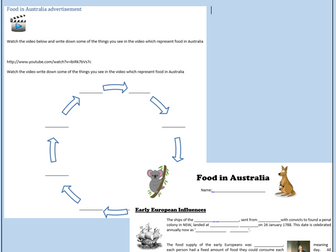
This highly visual booklet of 34 pages is a resource that will have your students understanding and working on the topic of Food in (and from) Australia. Some of the topics covered include Bush Tucker, European influence on food, economic factors, historical summary of food in Australia, Influences on food selection, food habits and the evolution of Australian cuisine. To make sure that all the information that you are talking about is correct and to save you valuable time.
I have included the answer booklet as well!
In addition to all of the above, there is also a survey for students to take home and do with their families so they can include numeracy into this unit with data and graphing of results. This was done as an assessable task.
Please don’t think that this is just a Q+A type workbook. There is a range of visual opportunities for students to show understanding, cloze passage activites, online research, survey, links to online films to answer questions about.
For those in NSW this unit is built around the Focus Area of Food in Australia and covers the outcomes:
5.3.2 justifies food choices by analysing the factors that influence eating habits 5.5.1 selects and employs appropriate techniques and equipment for a variety of food-specific purposes
5.5.2 plans, prepares, presents and evaluates food solutions for specific purposes
5.6.1 examines the relationship between food, technology, and society
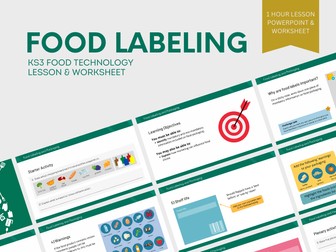
PowerPoint presentation on Food packaging and labelling. The presentation includes information and activities on:
Starter activity on cross contamination and use of chopping boards
Create your own packaging activity which teaches students legally required information on food packaging including:
* name of product/business
* list of ingredients/warnings
* shelf life
* storage conditions
* net weight
* cooking instructions.


 Quick View
 Quick View
 Quick View
 Quick View
 Quick View
 Quick View
 Quick View
 Quick View
 Quick View
 Quick View
 Quick View
 Quick View
 Quick View
 Quick View
 Quick View