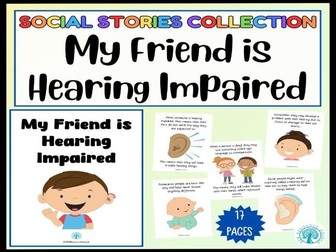
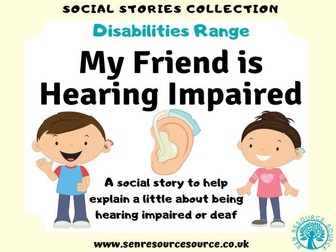
This social story helps children understand what it means to be hearing impaired or deaf and how it may affect a friend who experiences hearing loss. Using simple language and supportive illustrations, the story aims to build empathy and promote inclusivity.
A valuable resource for parents, teachers, and caregivers, this story encourages children to understand and support their peers who are hearing impaired or deaf, helping create a more inclusive and compassionate environment.
Why Is This Social Story Helpful?
Social stories use a gentle and reassuring tone to teach children about social situations in a way that’s easy to understand. They are particularly useful for:
• Children who struggle to grasp social concepts.
• Learning social skills, social cues, and appropriate responses.
• Providing guidance on expectations, emotions, and problem-solving.
• Supporting autistic children who may find social interactions challenging and benefit from clear, structured explanations.
How to Use This Story Effectively
• Create a focused environment - Read the story in a quiet space with minimal distractions.
• Read it regularly - Start by reading it twice, then revisit it often to reinforce learning.
• Incorporate it into daily routines - Use the story as part of a structured schedule.
• Use it when needed - If the child struggles with apologising, read the story at relevant moments (without making it feel like a punishment).
• Encourage and praise - Keep the experience positive, reinforcing good behavior with encouragement.
Durability & Reusability
For long-term use, consider laminating and binding the pages or placing them in a display book. This allows for repeated reading and reinforcement, making the lesson more effective over time.
Advice and information on Hearing Impairment for SENCOs and teachers. Written by an experienced SENCO, working across all phases from EYC to Sixth Form, the Hearing Impairment Advice sheet includes information on:
What is Hearing Impairment
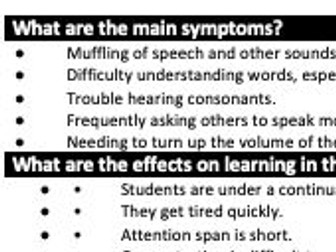
What are the main symptoms
What strategies can I use to help students with Hearing Impairment
Where can I find more information
One of a series of SEND Advice leaflets from the SENDbank
This resource is editable so can be amended to suit your setting.
A 'one-side-of-A4' guide, with a description of Hearing Impairment (HI) and classroom strategies, designed for secondary school subject teachers of students with hearing loss.
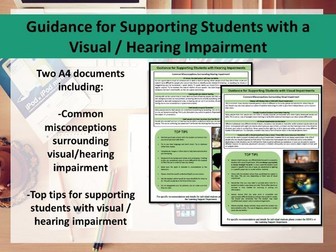
Two A4 documents including:
-Common misconceptions surrounding visual/hearing impairment
-Top tips for supporting students with visual / hearing impairment
Contains very useful information for any staff member (teacher/ support staff etc) working with a student with visual / hearing impairment.
This social story is designed to help explain a little about being hearing impaired or deaf to a child with a friend who is hearing impaired.
The point of a social story is to use a patient and reassuring tone to teach children about social situations in a way that can be easily understood. Social stories can be useful for any child who is struggling to understand a situation or concept or needs help to understand a social skill or social cue, expectations, perspectives, common responses or is troubled about an upcoming event but social stories are particularly useful for children on the autistic spectrum for whom social cues can be challenging and who often suffer anxiety if they do not know what to expect from a situation.
These books should be used over and over to reinforce the point so I would suggest either putting the pages into a display book or laminating and binding them.
Clipart images courtesy of Kari Bolt Clip Art
This programme focuses on the needs of deaf children in the classroom and explores the many ways in which mainstream schools can achieve full inclusion for the hearing impaired.
Rosie attends Willingdon Primary in Eastbourne, a school with a Hearing Support Facility and uses various communication methods in order to include Rosie, and other deaf children, in every aspect of school life.
Rosie's class teacher is an NQT who has recently completed a deaf awareness course. He works together with Mary, one of the three signing TAs who support hearing impaired children in the school.
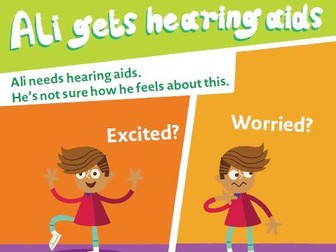
This comic introduces the idea of getting hearing aids. The story follows Ali as he goes to the audiologist to have earmoulds made and have his hearing aids fitted. We also find out what a difference the hearing aids make for Ali and how he looks after them.
You can order and download the rest of our range of comics on the NDCS website.
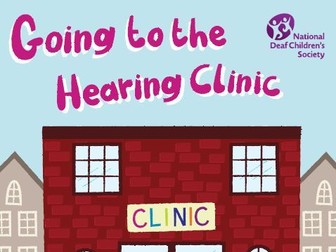
This comic explains what happens when children visit the hearing clinic for the first time.
It gives children a chance to understand what it will be like to meet their audiologist and have their hearing tested.
You can order and download the rest of our range of comics on the NDCS website.
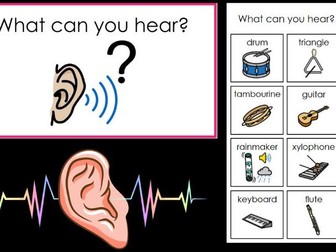
A PowerPoint consisting of images, sounds and Widgit symbols exploring 12 instrumental sounds.
Deliver the lesson through the PowerPoint as a guessing game style activity, using the individual symbols or crib sheet for learners to choose what they think they can hear.
Repeat lesson as necessary and monitor progression through your phonics scheme/assessment as well as against the engagement model indicators
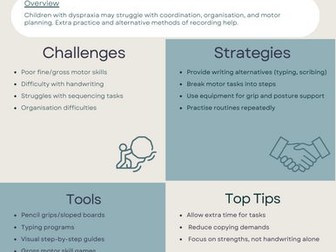
Fact sheets on dyslexia, dyspraxia (DCD), ASD, SLCN, attachment disorder, ADHD, hearing and visual impairment. Includes summary of the need and suggested classroom strategies.
Working Memory Difficulties, ASD, ADHD, Visual impairment, Speech language and communication, SEMH, Hearing Impairment, Global Developmental Delay, Dyspraxia and Dyscalculia resource bank bundle
This comes with 2 resources!
One is a powerpoint of all the info and one is a word doc that is ‘bookmarks’
Common traits and teaching strategies for:
Asperger’s Syndrome
Autism
ADHD/ADD
Dyslexia
Dyscalculia
Dyspraxia
Visually Impaired
Hearing Impaired
Speech/Language
Reading
Handwriting
You can add any others!
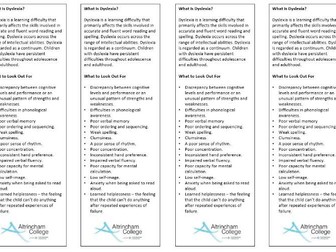
A set of reference bookmarks for teachers with ‘what to look out for’ and strategies for:
Dyslexia;
Dyspraxia/ DCD;
Dyscalculia;
Irlen Syndrome/ Visual stress;
ADHD;
Attachment disorder;
Autism Spectrum Condition (ASC);
Hearing Impairment;
Visual Impairment;
Sensory Processing Disorder.
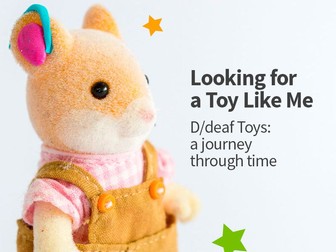
Start playful conversations with your D/deaf learners!
This FREE resource covers the history of D/deaf toys and is designed to open conversations with your hearing impaired learners around identity, play and representation.
Easy to use teacher guidance forms that will help staff when considering how best to support the individual needs of SEN pupils in their classes.
This version is split into 4 different aspects of Sensory & Physical difficulties - Hearing impairment/ Visual Impairment/Dysraxia & Co-ordination / Sensory.
The sheets include summaries of:
-strategies & QFT classroom ideas
-SMART target suggestions
-some useful classroom resources
-a few possible interventions
-assessments that could be used to baseline/track progress.
This resource provides a list of five action points for the following Special Educational Needs:
* Social and emotional mental health difficulties (SEMH)
* Moderate Learning Difficulty (MLD)
* Specific Learning Difficulty (SPLD)
* Hearing Impairment
* Visual impairment
* Sensory Impairments
* Physical Disability
* Autism spectrum disorder (ASD)
* Speech, language, and communication needs (SLCN)
* Dyspraxia
* Dyslexia
* Dyscalculia
These action points are designed to assist in lesson planning, resource development, and adding key points to class context and support sheets. Each set of action points is tailored to address the specific needs of students with the mentioned SEN, ensuring that effective support and create an inclusive learning environment can be provided.
 Quick View

 Quick View
 Quick View
 Quick View
 Quick View
 Quick View
 Quick View
 Quick View
 Quick View
 Quick View
 Quick View
 Quick View