This is a textbook to accompany the CIE IGCSE Music Curriculum: AOS 5 - Music for Dance.
The resource takes you through the set works outlined by CIE in their suggested scheme of work with analysis, questions and composition tips.
This is a SOW aimed at KS3 Students that is designed to help students understand what the term Musicals/ Musical Theatre is. It looks at the history of musical theatre and the different sub genres.
This SOW is built up of theory and practical tasks to help students understand the term musicals and know how dance is used to portray meaning within them.
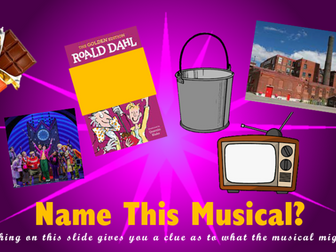
The two main musical that students will practically explore are ‘Matilda’ and ‘Charlie and the Chocolate Factory’. Students will have the opportunity to learn choreography from both musicals and them develop their own choreography based on the specific styles and genres.
This book accompanies my pupil booklet for AOS 5 - Music for Dance of the CIE IGCSE Music Syllabus. Answers are given for set questions to save you planning and prep time!
An introduction to DJing and Dance Music. Pupils will learn basic DJing techniques using existing tracks. They then go on to create their own dance track which can be incorporated into their final DJ mix. This set of resources includes a medium term plan, PowerPoints, and worksheets for tracking pupils’ progress.
You can use any dance tracks as examples, and will need a selection to build a library of songs for pupils to use.
Mixxx DJing software is free to download; my pupils have enjoyed using it and found it straightforward.
I use Cubase to create the Dance Tracks.
A full academic year (Sep - May) worth of Powerpoints for the BTEC Level 3 Unit 1 Investigating Practitioners exam.
Term 1 - Writing Skills
Term 2 - Activity 1
Term 3 - Activity 2
Term 4 - Activity 3
All Powerpoints include Mock Questions, Exam examples, and tasks for the students to complete based on the practitioners Lin Manuel Miranda, Alvin Ailey, and Frantic Assembly.
I have delivered many, many dance cpd sessions over the years & the common question is ‘where do you find your music?’ So I have put together a list of my regular ‘go-to’ pieces, complete with the name of the artist, a direct link to that song on iTunes & themes that I think they could match with.
This is obviously not a complete list but it is a really good start and I recommend building up your own library of 'music for dance - it makes finding suitable music so much quicker!
But if I can give you one piece of advice when finding music for dance… don’t look for the perfect piece of music (it doesn’t exist!) - just look for a good match - then stop looking!
Another tip - a good place to start are film scores - they’ve been written with a visual image in mind - doing The Romans? Then something on the score of ‘Gladiator’ will probably suit.
This is mainly aimed at KS1 & 2, but a good piece of music doesn’t have age boundaries… I hope you enjoy them.
This resource is a set of 6 lessons which covers the topic of EDM (Electronic Dance Music). The resource includes 6 PowerPoints and a student booklet.
The project is designed to be completed using a DAW in this instance, BandLab but could be easily adapated to whichever programme you use.
The assessment of the project is designed to look at how well students have used texture, sounds and structure.
Please note that the student booklet is uploaded in Microsoft Publisher and PDF format.
Overview:
Lesson 1:
Introduction to the genre, looking at 3 sub-genres (house, techno, garage).
Creating a build.
Lesson 2:
Creating a drop.
Lesson 3:
Adding and manipulating vocal samples.
Lesson 4:
Extending the structure to include additional sections.
Lesson 5:
Creating the mix out
Lesson 6:
Assessment
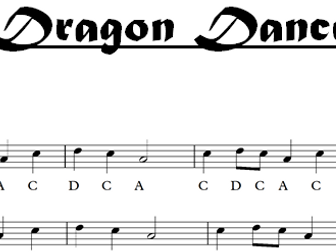
Keyboard task suitable for a KS3 Music classroom. Nate names, two melodies and ostinato parts are on the worksheet. Second worksheet has missing notes for students to fill in as a starter activity.
Worksheets are in Word format within a .zip folder.
These 24 Dance Music task cards task cards are perfect for your Music lesson plans and topic. They are suitable for secondary music students. They feature different activities including knowledge retrieval practice, multiple choice and spot the musical mistakes amongst other music related activities.
Contents of Music Revision Topic Task Card bundle
1 x Set of 24 Different topic Task Cards with a range of activities and styles in editable and PDF versions
1 x Teacher answer sheet - All answers covered
2 x Student fill in activity sheets that can be used with the cards (optional)
Each topic task card is matched to the theme of the set and includes numbering and answers designed by our Music specialist . Can be printed in colour or black and white.
How to use Music Knowledge Retrieval Topic Task Cards?
These cards are perfect as an extension task, starter or plenary and as a means of testing knowledge upon completion of a unit. For a short task (extension/starter/plenary), you can simply give them one or two cards and differentiate which cards are given according to the students level or their areas needing improvement. For an end of unit, you could hand the cards out to different groups and have them switch the cards after a certain period of time (e.g. one group gets multiple choice, one group gets spot the mistakes, one group gets photocards, etc.).
Benefits of using this new style of T&L activity
Set of retrieval activities
Motivating for students
Bitesize tasks
Fun way to revise a topic
Allow for differentiation
Copy, cut and laminate – use over and over again
Versatile and can be used in many different ways
If you leave a nice review to email us at thecre8tiveresources@gmail.com for a Music treat for your students. Product code C8/TS/294
✰✰✰✰✰✰✰✰✰✰✰✰✰✰✰✰✰✰✰✰✰✰✰✰✰✰✰✰✰✰✰✰✰✰✰✰✰
Why not check out some of our most popular music resources:
Rap Music Escape Room
Rap KS3 Scheme of Work
Modern Era Music Escape Room
Western Classical Music
Dance Music
Musical Culture
** DANCE MUSIC Escape Room ** Knowledge Escape Room Quiz - End of term fun for the whole class. No printing required! Just project the Powerpoint and off you go. Built in timers, video clips and answer reveals after every slide. This is an educational fun immersive 'themed Escape Room’ experience.
Have the students compete individually, in teams or as a whole class the choice is yours! This resource is a great team-building activity to keep your students engaged during the last few days (or week) leading up to the end of term.
There are seven different challenging puzzles and you have the choice of setting the timer at easy, medium or high difficult level for each escape. Students will complete a variety of tasks using different skills including: problem-solving, critical thinking, reading comprehension, literacy challenges and some clever deduction.
The puzzles, bonus questions and challenges are a fun way to assess a topic or subject area. This resource covers a variety of different elements including: vocabulary, key terms. key themes, general subject knowledge, literacy and much more…
** Escape Room Quiz Experience** Super Hero Escape Room Contents
☞ Interactive 26 slide Powerpoint Escape Room Challenge
☞ Optional Escape Certificates
☞ Optional Team Sheet (Print it or use scrap paper instead)
Common FAQ’s
★Group sizes: 1-30 students per team - (Participants up to 180)
★Time: Approximately 50-60 minutes (Provide hints along the way if time is a factor!)
★Materials: Aside from Powerpoint - all students need is a pen / pencil.
How to run this escape challenge
This escape room can be done without any printing we have however still included a team sheet (Slide 2) should you wish to use it, if not plain paper will more than suffice.
The escape room is story driven by a YouTube video which is split into 9 sections.
Introduction - Puzzle 1 – Puzzle 2 - Puzzle 3 – Puzzle 4 – Puzzle 5 – Puzzle 6 – Puzzle 7 - Success
At various points you will be instructed to pause the video at these points you can go to the next slide in the presentation.
Each video section (excluding Introduction and Success) will be followed by a puzzle.
Every puzzle has three built in timers in the lower right hand corner to put the teams on a time limit of your choice if you so wish.
Once the timer has expired or everyone has completed the puzzle teams can check their answers on the next slide using the CLICK TO REVEAL boxes.
Once all answers for the current puzzle have been revealed move on to the next video section and subsequent puzzle until all 7 puzzles have been completed and everyone has escaped successfully
(Optional) Give out winning certificates to the highest scorers.
This activity combines movement and music in a very creative way. Children always enjoy playing instruments and can be very imaginative in the way they interpret sounds in movement.
Musical Theatre Lesson focusing on dance.
The lesson looks at the history of dances in MT. It looks at practitioners of dance in MT.
It ends with a dance routine from chicago.
Save a whopping 58% on music tracks from the 'Circularis' album by Paul Flynn. Music specially composed to accompany KS3, KS4 and KS5 Dance compositions. Can also be used for inspiration, rehearsals, warm-ups and improvisations.
Edited-examples of Inuit throat singing and traditional dancing are given as examples for the children to copy and try for themselves. There are suggestions, on the video, for children to make their own Inuit dance and music
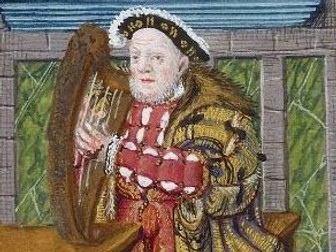
KS2 Music lesson activities on the topic of Tudor Music and Dance. Suitable for non-specialist and specialist teachers. Included - detailed lesson plans, powerpoint, mp3s of music and songs, video and audio links, a worksheet, two Tudor dances to learn, individual scores for an accompaniment suitable for differing levels of ability, a Tudor instrument matching pair game, suggestions of websites to explore and videos to watch!
Use these resources as part of a series of lessons with interactive whiteboard activities for KS2. The resource is based on school linking in Wales and Lesotho using materials gathered during a year's experience of teaching in Lesotho. Lessons are intended to give continuation and progression from t More…he KS1/Foundation Phase unit and to provide extension activities for more able pupils whilst offering a theme based approach to NC subjects. For more materials relating to this resource, please visit the NGfL site, linked below.


 Quick View