A 'one-side-of-A4' guide, with a description of Specific Learning Difficulties (SpLD) and classroom strategies, designed for secondary school subject teachers of students with this kind of learning disability.
Continuum, a pdf book offereing a comprehensive reference for busy teachers, parents, and caregivers striving to support children’s individual learning differences.
Contents
About the book
About the author
Specific Learning Difficulties
ADHD
Autism
Dyscalculia
Dysgraphia
Dyslexia
Dyspraxia/DCD
General classroom strategies
Executive functions
Classroom management
Glossary
Resources
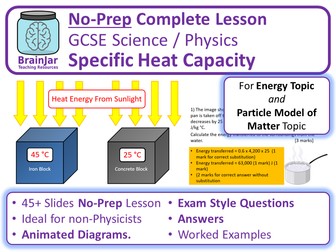
Complete No-Prep lesson with exam questions, tasks and answers on Specific Heat Capacity for AQA GCSE (9-1) Science / Physics. Rewritten and improved 16.05.22.
Specific Heat Capacity is included in the exam specification in two separate places:
Energy Topic (Physics 4.1.1.3 / Combined Science 6.1.1.3) where it is followed by a required practical.
Particle Model of Matter Topic (Physics 4.3.2.2 / Combined Science 6.3.2.2)
The exam spec points are virtually the same for each. I have written this lesson so that it can be taught in either place, however the required practical means it is likely to be taught in the energy topic.
As a Secondary Science teacher, Deputy Headteacher, writer and examiner for many years I make high quality no-prep lessons so busy teachers can teach outstanding lessons without spending hours planning. This high quality lesson includes explanations, different types of in-lesson assessment (all with answers) and unique exam questions.
My lessons are ideal for non-Physicists - as a Biologist who retrained as a Physics teacher I know how to take learners on a journey that builds up their understanding step by step, while still going into a lot of depth. The preview video shows a representative sample of slides from the resource so that you get a good idea of what it includes before you buy.
What’s Included:
• Starter / Do Now Activity with answers
• Explanation slides in “chunked” sections with animated diagrams.
• Worked examples of calculations / questions.
• Multiple questions in different question styles and difficulties - no need for worksheets. Each “chunked” explanation section typically includes a set of “learning check / quick questions” followed by a set of in-depth questions on the learning from that “chunk” of the lesson. All questions have answers.
• Exam-style questions on the whole lesson at the end of the lesson- these are unique, based on real exam questions but not just copied from exam boards.
• Answers for all questions
• All easily editable to adapt to your teaching or to use in existing lessons.
.
Learning objectives:
Describe the difference between thermal energy and temperature.
Define specific heat capacity.
Describe the factors that affect the amount of energy stored in or released from a system as its temperature changes.
Explain how specific heat capacity can affect temperature changes and energy stored or released for different substances.
Use the equation below to determine the temperature change, mass or specific heat capacity of an object, or the change in thermal energy.
Change in thermal energy = Mass x Specific Heat Capacity x Temperature Change
The lesson was written for AQA GCSE Science / Physics but is very likely to be applicable to other exam specifications.
Please leave a rating / review and all other feedback gratefully received!
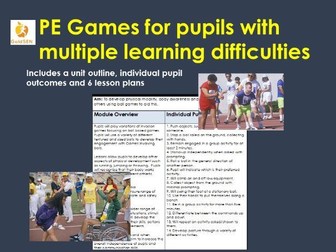
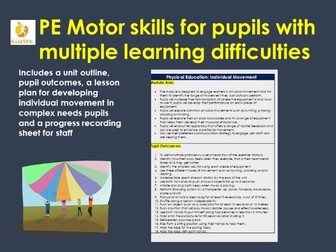
This resources is aimed at pupils with high complex needs and trying to use PE as a means to engage them. This would be suitable for pupils with multiple learning difficulties such as sensory impairments, global learning delay and physical disabilities.
This resource is a 6 week block of lessons that slowly add complexity to familiar tasks over the course of the unit. The unit uses Ball games as a means to help engage the pupils in their physical development.
The resource also includes an outline of the unit that could be submitted as part of a medium term plan.
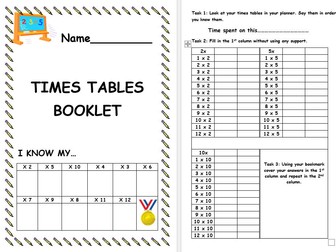
This booklets covers all times tables from 2-12 with various activities that students can engage with to help them learn their times tables independently.
The booklet is designed to increase in level of difficulty as students work through it.
I have also included all time tables ‘diploma’ sheets to test students once they feel they have learn a particular times table.
As well as mini times tables test that can be used to help students identify the particular times table they need to work on
Students can work at their own pace through the book or focus on certain specific times tables.
Equip your students with the confidence and skills to master Specific Latent Heat calcuations with this “Shed Loads of Practice” (SLOP) worksheet, focused on calculating energy for changes in state, masses and the specific latent heat of fusion or vaporisation for different substances.
Our SLOP Calculation worksheets feature questions which mimic the typical style of calculation question on AQA papers. Through 9 worded questions, students will independently practice applying the idea of energy changes when substances change state, converting from grams and kJ, while also practicing rearrangement. Some questions also feature values in standard form.
Worked examples and solutions are included to help you to support students in demonstrating the key skills of substitution and rearrangement, maximising their marks.
Perfect for Exam Preparation: This worksheet is an excellent tool for preparing students to tackle calculation questions typically found on AQA Physics Paper 1, and could be equally valuable for other exam boards.
Files:
Ready-to-print worksheets and solution documents (.pdf)
Editable version of worksheets (.doc)
Worked examples and solutions PowerPoint (.ppt) using our clean Resistance Physics Layout.
Featuring:
Worked Examples: Model the methods for calculations and problem-solving.
Clear FIFA Routine Expectations: Solutions follow the FIFA approach (Formula, Insert, Fine-tune, Answer), supporting students in applying key mathematical skills such as substitution, rearrangement, and unit conversion.
Progressive Difficulty: Questions gradually increase in demand.
Fuss-free Feedback: Solutions and answers are provided in a ready-to-print formats and as a projectable PowerPoint slide deck.
Versatile Use: Ideal for classroom learning, homework, cover work, or revision. Adaptable for Edexcel and OCR.
Similar resources:
Elastic Potential Energy Calculations SLOP
Kinetic Energy Calculations SLOP
Power Calculations SLOP
GPE Calculations SLOP
P1 Energy Multi-Step Calculations Worksheet
P2 Electricity Equation Worksheet Bundle
P5 Forces Equation Worksheet Bundle
This resource is for teachers in Special Schools delivering PE to complex needs pupils. Included is a unit outline, pupil outcomes, lesson plan and a record sheet for staff to use.
The resource is aimed at developing the individual movement of complex needs pupils and their general physical literacy. Sessions are geared towards classes with high staffing where the teacher acts a facilitator to the learning taking place and helps to guide the staff working with individual pupils.
A comprehensive, 3-hour CPD course covering dyslexia and related specific learning difficulties, dispelling common myths along the way (dyslexia is not about “seeing letters backwards,” and is unrelated to intelligence). Across 7 modules, you’ll cover dyspraxia, dyscalculia and dysgraphia alongside dyslexia, structured literacy and multisensory teaching techniques, and practical classroom accommodations for reading, writing and organisation.
The course covers protecting pupil self-esteem and building a strengths-based identity, plus identification, formal assessment, and exam access arrangements. A one-page pupil profile template is included in the worksheet.
Written by a qualified teacher (Cert Ed) with over 10 years’ experience across further education, SEND provision and pastoral care.
Ideal for: class teachers, SENCOs, teaching assistants, or whole-staff INSET training.
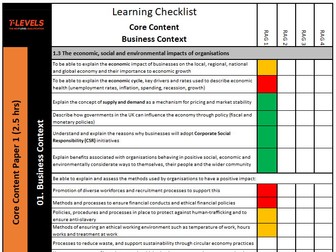
This tracking document for the new T Level in Management and Administration, specifically for Core Content 1. Business Context. It has been designed to be used in two different ways - although is fully editable so you can adapt it for your own needs.
It can be used by individual students to track and monitor their own progress against the learning outcomes and knowledge they must have for core area 1. Business Context. At regular intervals, students would be encouraged and given time to reflect on their learning (to date) and RAG rate their own levels of confidence; Green - secure, Amber - in progress, Red - priority revision areas/areas of difficulty.
The other way this resource could be used is as evidence of formative assessment either through; mini-tests, knowledge quizzes, starter questions, or student conversation. Having data on the performance of a whole cohort will identify areas to return to for revision to support and secure learning in areas that show up as less embedded.
This introduction to Specific Learning Disorders provides an introduction for teachers, TAs, LSAs and SENCOs. Includes detail on Dyslexia, Dysgraphia, Dyscalculia. Runs to 61 pages and 2 hours of Professional Development. A specific learning disability is a disorder in one or more of the basic psychological processes involved in understanding or in using language, spoken or written, that may manifest itself in an imperfect ability to listen, think, speak, read, write, spell, or to do mathematical calculations, including conditions such as perceptual disabilities, brain injury, minimal brain dysfunction, dyslexia, and developmental aphasia.
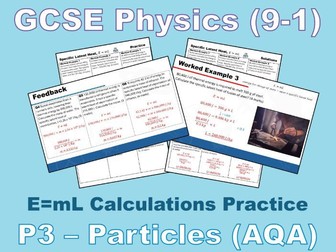
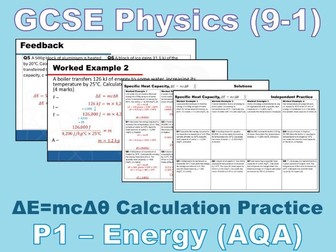
Equip your students with the confidence and skills to master Specific Heat Capacity Calculations with this “Shed Loads of Practice” (SLOP) worksheet, focused on the equation: ΔE=mcΔθ, Change in thermal energy = Mass x specific heat capacity x temperature change.
Our SLOP Calculation worksheets feature questions which mimic the typical style of calculation question on AQA papers. Through 8 worded questions, students will independently practice applying the equation, while also practicing rearrangements of a 4 variable equation, and build familiarity converting to Joules and Kilograms.
Worked examples and solutions are included to help you to support students in demonstrating the key skills of substitution and rearrangement, maximising their marks.
Perfect for Exam Preparation: This worksheet is an excellent tool for preparing students to tackle calculation questions typically found on AQA Physics Paper 1, and could be equally valuable for other exam boards.
Files:
Ready-to-print worksheets and solution documents (.pdf)
Editable version of worksheets (.doc)
Worked examples and solutions PowerPoint (.ppt) using our clean Resistance Physics Layout.
Featuring:
Worked Examples: Model the methods for calculations and problem-solving.
Clear FIFA Routine Expectations: Solutions follow the FIFA approach (Formula, Insert, Fine-tune, Answer), supporting students in applying key mathematical skills such as substitution, rearrangement, and unit conversion.
Progressive Difficulty: Questions gradually increase in complexity.
Fuss-free Feedback: Solutions and answers are provided in a ready-to-print Word document and a projectable PowerPoint slide deck.
Versatile Use: Ideal for classroom learning, homework, cover work, or revision. Adaptable for Edexcel and OCR.
Similar resources:
Elastic Potential Energy Calculations SLOP
Kinetic Energy Calculations SLOP
Power Calculations SLOP
GPE Calculations SLOP
P1 Energy Multi-Step Calculations Worksheet
P2 Electricity Equation Worksheet Bundle
P5 Forces Equation Worksheet Bundle
This is a pack of a few word maps and then four games to help children with word finding difficulties or word retrieval difficulties to 'file' words in their mind for later use. The games focus on children connecting words through rhyming words, starting sounds, categories and parts of items to ideas and words they already know.
It contains:
- 3 pages of a word map with a clipart image of a dog, cat or frog in the centre for children to work on by answering the questions in the shapes around.
- 1 blank word map.
- 1 game board using starting sounds.
- 1 game board using rhyming words.
- 1 game board using 'parts of...'.
- 1 game board using categories.
- 1 game board for the syllables game.
- 1 game board for the 'where you find it' game.
A Mind Map, created in PowerPoint, that works as a poster or as a mini presentation that could be used as part of staff training or to build awareness. This list of difficulties is not exhaustive but is a flavour of some of the issues that can affect students with dysgraphia.
A Mind Map, created in PowerPoint, that works as a poster or as a mini presentation that could be used as part of staff training or to build awareness. This list of difficulties is not exhaustive but is a flavour of some of the issues that can affect students with dyspraxia.
This is a 4000 word assignment looking at the effectiveness of the Phonological Assessment Battery in assessing SpLD difficulties. Lots of useful research on SpLd difficulties.
The resource is designed and created in PowerPoint to help all professional bodies working with children. They can be used as a poster or within a presentation regarding SpLD. These mind maps can assist SENCO's, teachers, support staff etc within primary or secondary education as part of staff training or building awareness.
There are four posters all together:
Dysgraphia
Dyslexia
Dyscalculia
Dyspraxia
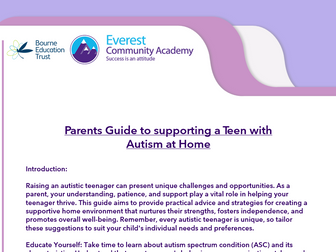
Fully editable word document to help support parents with a teenager with Executive Function difficulties.
This can be adapted to include your own Schools Logo and address, and the colour scheme can also be changed to suit your own needs
There are 16 Parent guides in the series, which can be purchased separately, or as a whole series for a discount.
Each guide has a section with practical tips for parents, as well as a section signposting websites that have free resources, support and communities to widen the support available to parents.
The guides are written for Teens, but could just as easily be used for parents of younger children.
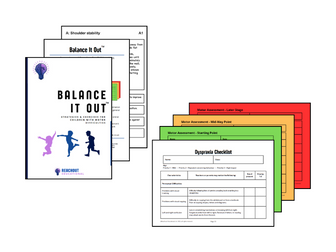
Help children build confidence, coordination, and independence with Balance It Out, a comprehensive digital toolkit designed for educators, therapists, and families supporting children with motor difficulties, including those with Dyspraxia (DCD).
This downloadable resource includes:
Practical, easy-to-follow exercises for home or school
Colour-coded traffic light system to differentiate difficulty levels
Customisable progress trackers and motor assessments
Creative Idea Jars and sensory-motor activities
Dyspraxia Checklist and profile mapping tools
Strategies for inclusion, handwriting, organisation, and more
Perfect for intervention groups, individual support, or integration into PE and classroom learning. Developed by expert educators with decades of SEN experience.
Format: PDF
Licence: Permitted for use with multiple children in one educational setting. Not for resale or sharing.
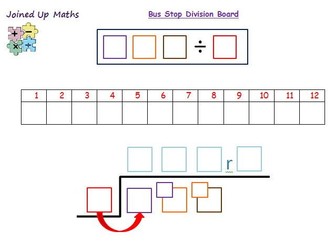
This pack of 13 pages contains grids to support:
Long multiplication for 2 by 2 digits
Rounding numbers to the nearest 10, 100 and 1000
Vertical number line
2 differentiated place value boards to aid multiplying and dividing by multiples of 10 and aligning sums correctly
Bus stop division with remainder
Bus stop division with decimal answers
All boards except the vertical number line come with an instruction sheet to guide how to use the board.
Please note that I have also provided a grid for long multiplication 2 digits by 1 digit, which is available as a free download to try out.
I have developed these boards through my work with students with difficulties in maths including dyscalculia. I have found these structured guides support learning and allow processes to be understood. They aid students to learn using this scaffolding approach, which can be taken away when they feel more confident. These boards are ideal for laminating so they can be used repeatedly.
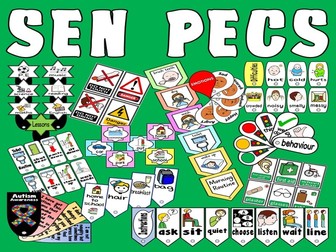
•12 sets of pec cards for children and adults with special needs. Including Autism.
•Each set is lightly different so that they can be easily identified.
•Great to use for those who struggle with verbal communication or changes in routine.
Good for praise, behaviour modification and general day to day understanding.
•Can be made into fans or keyrings or used separately to plan routines.
•Example of each set is shown on the picture but each set includes more than just the cards shown, with full details shown below.
•Every person has differing needs – should you want extra pictures added into any of the sets, please just let us know and we will add them in for you free of charge.
•The 12 sets are as follows:
•Autism awareness: explains to others what Autism is and helps with interaction. Cards include: explanation of Autism, explanation of behaviour, explanation of verbal understanding, cards to be completed by carer – things I like, things I don’t like, I get upset when…, the calm down when…, ways I communicate…, photo of me, my address is, my school is…
•Behaviour cards – traffic light think, red light, yellow light, green light, well done, good, stop, think.
•Dangers: cards include – danger, electricity, do not touch, do not eat, do not drink, sharp, slippery, hot, yes, no, stop, poison
•Difficulties: cards include – too hot, too cold, it hurts, too crowded, noisy, smelly, messy, too bright, tastes bad, tired, sick, hungry, lonely, angry, sad
•Going out: cards include out, home, dog, walk, car, bike, bus, taxi, school, shop, park, doctors, hospital, dentist, family, holiday, train, swimming, bowling
•Emotions: cards include – happy, sad, confused, angry, scared, tired, excited, surprised
•Medical and help needed: cards include – medicine, tablets, bandage, crutches, injection, help, wheelchair, teacher, doctor, nurse, nappy, insulin, sanitary towel, tampon, underwear, bin, first aid, glasses, hearing aid, plaster
•Home to school routine: cards included – wake up, get dressed, wash, teeth, hair, breakfast, school bag, car, seat belt, school, home, homework, toilet
•Instructions: cards include – ask, sit, quiet, choose, listen, wait, line, tidy, eat, drink, sleep
•Lessons: cards include – maths, English, science, reading, library, music, PE, computers, group work, art, writing, outside, lunch, snack, home, assembly, religion, cooking, swimming, history, geography, blank card to add extras.
•Toilet routines: cards include – need toilet? Shut door, pants down, sit down, change, wee (girl), wee (boy), poo, wipe, throw tissue, stand up, pants up, wash hands, dry hands
•Morning routines: cards include – wake up, toilet, wash, dry, brush teeth, comb hair, get dressed, breakfast, shoes, coat.