Dividing using a  bar model (4 times table)Quick View
apricotears1

Dividing using a bar model (4 times table)

(0)
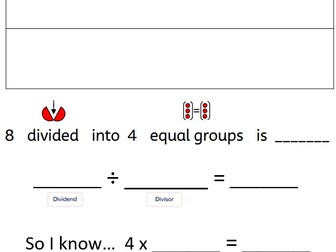
Year 3 - Multiplication and Division (4 times table) LO: To divide using a bar model (sharing) Teaching Powerpoint: Retrieval task Key fact introduction with visuals to teach a generalisation Key vocabulary widgited for oral rehearsal 3 ‘I do’ models and 1 ‘We do’ model. Task: 5. Task varied 4 ways: Working Towards Dividing using 4x table. Intelligent practice, backward fade to writing division number sentences and segmenting bar model. Expected: Divide using 4 x table. I know… so I know statement to write the related multiplication number sentence. Greater Depth: Dividing by 4. First couple completed on sheet before children begin drawing their own models in their books. Children to also list the fact family to match the bar. SEND: Dividing using 5 x table. Intelligent practice with the bar divided for children. Widgits to support. Challenge task to apply generalisation. Varied retrieval task for lesson.
Multiplication problem solvingQuick View
apricotears1

Multiplication problem solving

(0)
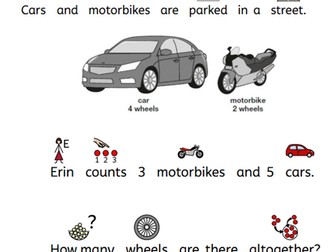
Year 3 - Multiplication and Division - Problem Solving LO: To solve multiplication problems Task: Varied 3 ways. Expected and WTS: Application of 2 and 4 times tables followed by ‘What if’ intelligent practise questions. Greater Depth:Multiple possibility problem requiring application of 2, 3 and 4 times table. Problem of greater complexity. SEND: Application of 5 times table with scaffolded numberline to support. Varied retrieval task for lesson also.
4 times tableQuick View
apricotears1

4 times table

(0)
Year 3 - Multiplication and Division LO: To represent the 4 times table Teaching Powerpoint: Analogue time starter Key Fact to teach a generalisation Introduction of key vocbaulary, alongside widgits for oral rehearsal 2 x ‘I do’ model and 1 ‘we do’ model Task: Varied 4 ways WTS: Structured scaffold completing the 4 times table in order, beginning with the faded scaffold and then carrying on in their book. Expected: Complete the 4 times table in order, using the worked example as a guide. Children to work directly in their books. Greater Depth: If children are able to recall facts, they can focus on practising them OUT of ORDER using digit cards to determine the factor they represent. Children will also complete the related fact family and will have worked example to guide them but complete the work in their books. SEND: To represent the 5 times table Children to make the 5 times table using counters (not numicon). Conceptually, it is very important for them to count out 5 counters every time for each group. Alongside the counters, they will complete the number line and number sentence using the template.
Applying the 4 times tableQuick View
apricotears1

Applying the 4 times table

(0)
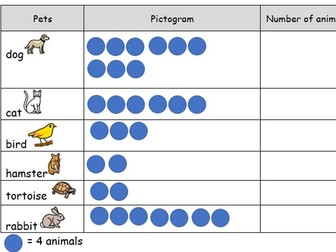
Year 3 - Multiplication and Division- 4 times table LO: To apply the 4 times table Teaching Powerpoint: Vocabulary introduced alongside widgits for oral rehearsal Key fact to teach a generalisation Model to investigate Task: 4. Task varied 3 ways Expected and Working towards:Use skip counting in 4s to complete the pictogram and find out how many animals there are across Year 3. Greater Depth: Missing information so children need to begin thinking about the inverse. Final two answers are not multiplies of 4 and will require children to apply fraction knowledge. SEND: To apply the 5 times table Children will investiagte tally chart to practise their 5s. Varied retrieval tasks.
Leon and the Place Between Guided ReadingQuick View
apricotears1

Leon and the Place Between Guided Reading

(0)
Year 3 - Guided Reading Focus Text: Leon and the Place Between This was a 2 week planning cycle - the first week the skills are taught and the second week, the children apply the learnt skills independently. 1.Inference LO: To make predictions Clarify LO: To understand how a dictionary is organised (this was first ever dictionary lesson taught, which dictates the heavy structure and the skills being taught) Word Reading (Fluency) Select and Retrieve LO: To select and retrieve information from a fiction text Inference LO: To infer a character’s thoughts and feelings Select and Retrieve LO: To select and retrieve information from a fiction text Dictionary Work LO: To understand how a dictionary is organised Word Reading (Fluency)
Adding moneyQuick View
apricotears1

Adding money

(0)
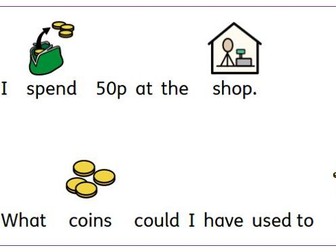
Year 3 - Measures- Money (taught Autumn term, so could work with Summer Year 2) LO: To find different combinations of coins that equal the same amount of money Teaching Powerpoint: Coin recognition starter Key vocabulary alongside widgits for oral rehearsal ‘I do’ model Task: Same problem varied 3 ways: Expected and Working Towards in partnerships: Worked example and children to work immediately in their books. Working within a pound. SEND: Problem with widgits to support comprehension and worked example alongside numicon to show how to use resources. GDS: Working in pounds and pence.
Money reasoningQuick View
apricotears1

Money reasoning

(0)
Year 3 - Measures- Money (taught in the Autumn term so could be suitable to Summer Year 2) LO: To reason about adding money on a number line Teaching Powerpoint: Introduction of LO and key vocabulary Key Fact with visuals to orally rehearse 1 x ‘I do’ models invovling ‘Bubble questions’ to explain why the number line is incorrect. Widgited word bank included. 1 x ‘We do’ model. Task: Bubble questions, requiring children to apply previous learning about adding money on a number line. Worked example included. Varied 2 ways: Jumps on 10 and then jumps of 1 Jumps of multiples of 10 and multiples of 1 Retrieval activity included (varied 2 ways)
Adding moneyQuick View
apricotears1

Adding money

(0)
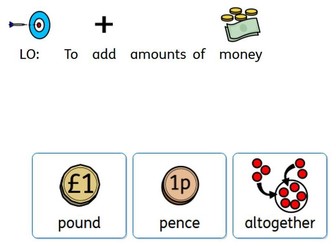
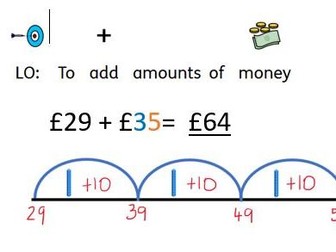
Year 3 - Measures - Money LO: To add amounts of money Task varied four ways: Expected: One worked example in their books using the number line. Calculcations provided in the context of money for children to draw their own numberlines in their books and solve. Working towards: Backward faded number line, with pictorials alongside the number line scaffold initially. Greater Depth: Worked example before children drawing numberlines independently in their books, through the context of word problems. SEND: 2 digit + 1 digit. Backward faded scaffold, with pictorials alongside. Retrieval activity included.
3 digit numbers (drawing)Quick View
apricotears1

3 digit numbers (drawing)

(0)
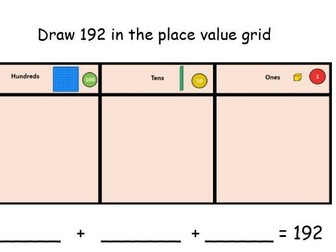
Year 3 Number and Place Value LO: To understand the place value of 3 digit numbers This lesson came after the children have explored the composition of 3 digit numbers by making them with the dienes. Teaching Powerpoint: Retrieval activity (degrees of a turn, fact families from a bar model) Key vocabulary introduced, alongside widgits Key facts made explicit, alongside models for oral rehearsal. 4 x ‘I do’ models, with a place value chart and sentence stem alongside to draw attention to the structure of the number. 1 x’We do’ task Task: 6. 2 page task, that is backward faded, requiring children to draw the number in the place value chart, write the number sentence and complete the sentence stem. This leads to the final 3 questions where children need to ‘read’ the picture and idenitfy the number represented. 7. 2 x multiple possibility challenges where children need to apply their learning in a different context. 8. Related SEND task LO: To understand the place value of 2 digit numbers.
Counting in hundredsQuick View
apricotears1

Counting in hundreds

(0)
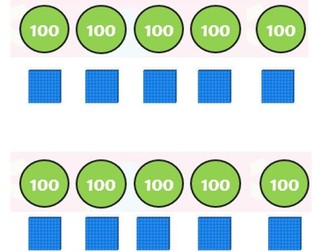
Teaching Powerpoint: Oral starter for counting in hundreds, including visuals alongside a number line. Key Fact to orally rehearse, alonside visual representation. Key Vocabulary identified and widgited and generalisations made explicit 3 x ‘I do’ models, showing varying representations of hundreds numbers, alongside diene represenation and a sentence stem to reveal number composition. 1 x ‘We do’ task to get children started. Tasks 6. Retrieval task - analogue clock activity and times table questions. 7. Counting in hundreds task, which includes a model for children to count, alongside a widgited sentence stem to complete. 8. Varied version of this task for Greater Depth. 9. Challenge task: 3 statements to investigate, using the statements Always True, Sometimes True, Never True.
Money - counting pounds and penceQuick View
apricotears1

Money - counting pounds and pence

(0)
Year 3, Meausurement - Money (delivered in the Autumn term) LO: To count pounds and pence Teaching Powerpoint: Introduction of key vocabulary alongside widgits Key fact with visuals for oral rehearsal 3 x ‘I do’ models 1 x ‘we do’ model Task: 5. Number line placement retrieval activty 6. Varied task (4 ways) SEND: Keep counting within 50. Can use numicon pieces, alongside coins to assist calculation if needed. Working Towards: Descending order to assist counting – pounds and pence kept as separate units Expected: 3 values, coins starting in descending order but slightly mixed by the end. Greater Depth: Pounds and pence – mixed order. Notes and coins.
Geometry Unit Year 3 - SEND resourcesQuick View
apricotears1

Geometry Unit Year 3 - SEND resources

(0)
This series of lessons focuses on resources for children working below age related expectations. I have focused on simplifying tasks to limit cognitive load and make the learning accessible. I have used mathematic vocabulary but included the use of widgits to assist reading and support comprehension of maths ideas. There are opportunties for invisible reasoning, with children engaging in sorting activities. LO: To identify if angles are less than or greater than a right angle. LO: To identify parallel lines LO: To identify the properties of 2D shapes (naming, counting total sides, straight sides, curved sides, vertices) LO: To identify the properties of 2D shapes (reasoning task) LO: To draw 2D shapes LO: To identify the properties of 3D shapes (sorting shapes into table based on their number of faces) To sort 2D and 3D shapes
Angles in a turnQuick View
apricotears1

Angles in a turn

(0)
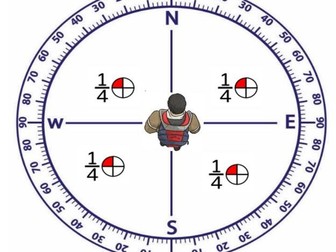
Objective: To recognise angles in a turn Teaching Powerpoint includes: A counting in 50’s oral starting activity. LO introduced alongside key vocabulary that is accompanied by widgits. Supporting models and images (bar model and compass). Turns completed in the context of direction using the compass. I do, We do models Task: 5. Task varied 3 ways Working towards (fully widgited single step instructions) Expected (only key maths words widgited and increasing in difficulty) Greater Depth (multistep instructions, no widgits, varied structure) 2 x Challenge ‘Odd one out’ activities for children to move onto, which require them to apply their learning.
10 more and 10 lessQuick View
apricotears1

10 more and 10 less

(0)
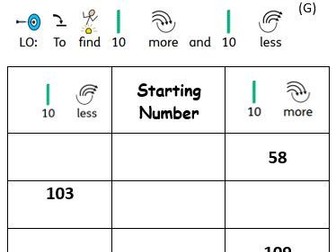
Year 3 Number and Place Value LO: To find 10 more and 10 less Teaching Powerpoint Introduction of LO and key vocabulary alongside widgits Key Number and place value fact for oral rehearsal, alongside visuals. ‘I do’ models, with generalisation alongside for children to rehearse. Task: 4. Task varied 4 ways. Working Towards: Backward faded number line model that matched exactly to the models on the teaching powerpoint. EXP: Table with starting number provided and children to find 10 more and 10 less Greater Depth: Known number changing and children to work backwards at times to complete the table. SEND LO: To find 10 less than a 2 digit number. Limit cognitive load by focusing only on subtracting 10. Scaffold provided for children to draw the number after making it with dienes. Challenge Task to apply learning in a different context.