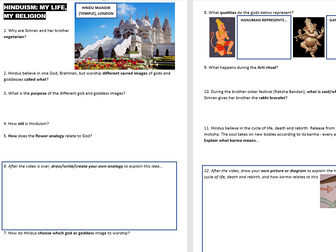
A 3 page video question booklet to be used alongside the BBC video (available easily on YouTube) ‘Hinduism: My Life, My Religion’.
Covers various things, such as vegetarianism, god and goddess images (murtis), the arti ritual, Raksha Bandan brother-sister festival, the cycle of life death and rebirth, karma, Hindu cremation and putting ashes into a river, marriage, Holi and Diwali. The answers to each of the questions is included on the answer sheet.
The video is 30 minutes long, time to complete the booklet and feedback answers would fill a lesson. Could finish the lesson by getting students to make their own resolution for the next school year if you wish (fits in with the end of the video)
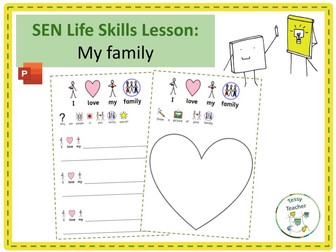
Worksheets x4 for learners to practice describing what they love about their family and why they are special.
Visual content and Widgit visuals for young people with special education needs (SEN/SEND).
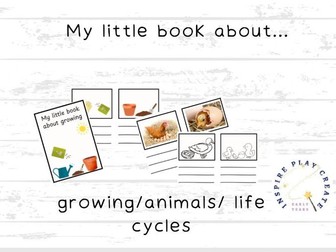
19 different designs to support children`s writing and understanding of the world skills.
*Spring
Growing - open ended for plants, flowers, fruit and vegetables
Growing - sunflowers, cress, beans
Life cycle - chicken and duck
A mixture of books with coloured images, black and white to colour and plain for children`s own ideas.
These little books are perfect for little hands and to put around different provision areas in your classroom.
Print off on A4 and fold in half and half again. Space to write on lines.
See classroom photos using my resources @inspireplaycreate_eyfs
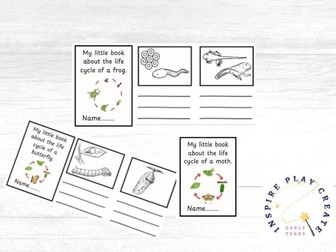
6 books to develop children’s writing skills, linked to their understanding of life cycles.
My little book about the life cycles of a frog.
My little book about the life cycle of a butterfly.
My little book about the life cycle of a moth.
3 books with pictures children can colour in and use as a prompt for writing
3 plain, including the front cover for children to create their own drawings.
Photocopy and fold into their own little book.
A fully-resourced and engaging lesson on Search for My Tongue by Sujata Bhatt, designed for the Edexcel IGCSE English Literature (4ET1) Poetry Anthology. This lesson supports students in exploring themes of identity, language, and cultural belonging, with a particular focus on Bhatt’s vivid use of imagery and bilingual structure. Includes contextual material, group analysis, a PETAL-style writing task, and reflective homework on code-switching and personal identity. Perfect for first teaching or revision.
Lesson Features and Content:
Personal Reflection Starter: Students begin by reflecting on the experience of losing or reclaiming a language, skill, or cultural habit — helping them engage with the poem’s central themes.
Contextual Slide on Sujata Bhatt: A concise introduction to Bhatt’s life, background, and poetic focus on bilingualism, identity, and heritage.
Guided First Reading & Comprehension: Questions guide students through key ideas: the conflict between the “foreign tongue” and the “mother tongue,” and the emotional impact of losing and reclaiming one’s first language.
Collaborative Group Task: Students work in groups to analyse different aspects of the poem (e.g., imagery, structure, language choices), annotate together, and share insights with the class.
Analytical Writing Practice: Students write a PETAL paragraph in response to the question: How does Bhatt use imagery and language to show the importance of her mother tongue? Includes example sentence stems to support developing writers.
Homework Reflection on Code-Switching: Students explore their own experience of shifting between languages, dialects, or registers, encouraging personal engagement with the poem’s themes.
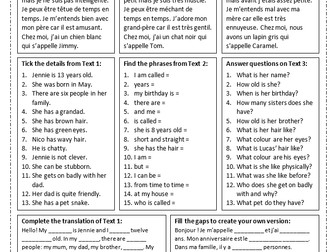
One page of resources describing self and family. Includes physical description, personality, relationships, and pets. Fits with EPI teaching. Reading, and writing/translation activities.
For similar worksheets on different topics:
https://www.tes.com/teaching-resources/shop/MFLBella
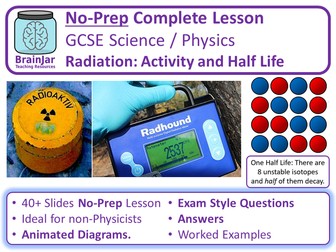
Complete No-Prep lesson with exam questions, tasks and answers on Activity, Count Rate and Half Life for AQA GCSE (9-1) Science / Physics. This lesson covers all of AQA GCSE Physics 4.4.2.3 and the parts of 4.4.2.1 regarding activity and count rate (which make more sense in this lesson) – the rest of 4.4.2.1 (and all of 4.4.2.2) are in the previous lesson “radioactive decay and nuclear equations”.
As a Secondary Science teacher and Deputy Headteacher for many years I make high quality no-prep lessons so busy teachers can teach outstanding lessons without spending hours planning. This high quality lesson includes explanations, different types of in-lesson assessment (all with answers) and unique exam questions.
My lessons are ideal for non-Physicists - as a Biologist who retrained as a Physics teacher I know how to take learners on a journey that builds up their understanding step by step, while still going into a lot of depth. The preview video shows a representative sample of slides from the resource so that you get a good idea of what it includes before you buy.
What’s Included:
• Starter / Do Now Activity
• Explanation slides in “chunked” sections with animated diagrams.
• Worked examples of calculations and questions.
• Multiple questions in different question styles and difficulties - no need for worksheets. Each “chunked” explanation section typically includes a set of “learning check / quick questions” followed by a set of in-depth questions on the learning from that “chunk” of the lesson. All questions have answers.
• Exam-style questions on the whole lesson at the end of the lesson- these are unique, based on real exam questions but not just copied from exam boards.
• Answers for all questions
• All easily editable to adapt to your teaching or to use in existing lessons.
• Slightly humorous, at points, if you like that sort of thing.
Learning objectives:
Describe what is meant by the “activity” of an unstable nuclei, and how it is measured.
Describe what is meant by the “count rate” of an unstable nuclei, and how it is measured.
Define what is meant by the “half life” of a radioactive isotope.
Explain the concept of half life and relate it to the random nature of radioactive decay.
Calculate the half life of a radioactive isotope, including by using graphs.
Calculate the decrease in activity / count rate of a radioactive isotope after a given number of half lives, expressing it as a ratio.
The lesson was written for AQA GCSE Science / Physics but is very likely to be applicable to other exam specifications.
Please leave a rating / review and all other feedback gratefully received!
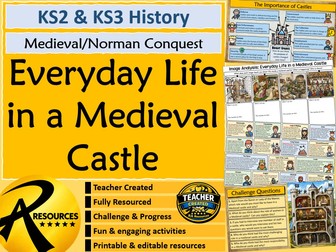
Students examine the roles and jobs of people who lived and worked in a medieval castle. Packed with activities and printable worksheets.
This teacher created and fully resourced pack includes:
1 x 21 slide PPT
1 x A4Printable worksheet
1 x A4 Printable castle diary writing frame
Main Power Point Includes:
Slide 1: Title slide
Slide 2: Warm Up Bell Ringer - Where the British royal family reside today - discussion about the roles of staff with historical links.
Slide 3: Starter 1 - Predictive Learning - Students pick 2 words from a choice of 20 which they predict will best describe a medieval castle.
Slide 4: Starter 2: Key Terms - Students select 2 key terms they are unaware of and save them until the end of the lesson.
Slide 5-7: Task 1 - Students analyse 4 images of a medieval castle to describe what each image shows and infer from them what life was like. Printable colour and black and white resources included.
Slide 8-9: Background information about the importance of castles with challenge question.
Slide 10: An outline of the two additional worksheets which come with the lesson.
Slide 11-13: Three versions of the lesson fact sheet containing information about the roles and jobs of people who live and worked in a medieval castle.
Slide 14: A set of 5 challenge questions/activities.
Slide 15-16: Learning Review 1 - 6 who am I? questions with answers.
Slide 17: Learning Review 2 - An option for students to carry out a game of charades.
Slide 18-20: Learning Review/Task - Printable crossword with answers.
Slide 21: More from RA Resources
All images used in this resource are in the public domain and are therefore copyright free. Images which require attribution have been attributed in the notes section of each slide where the image appears. Any images where AI technology has been used are labelled in the notes section and are property of RA Resources. Other than AI images, all other lesson content is teacher created. If you feel any errors have been made, please contact me at raschoolresources@gmail.com in the first instance to resolve any issues. My lessons are completed using PowerPoint and designed on widescreen formatting. Thank you.
This resource is for personal use only unless a school license is purchased and for copyright reasons any slides, worksheets, RA Resources maps or diagrams should not be copied/amended for commercial use.
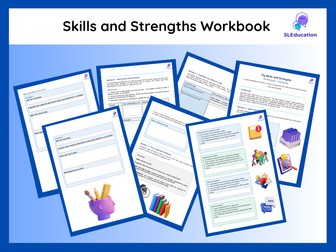
This resource is designed for individuals with ASD and those with social communication differences. It helps students recognise their own skills using specific, observable statements rather than vague self-assessment questions, then teaches them to turn those skills into concrete evidence they can use in interviews and applications.
The workbook is a fully interactive, fillable PDF — students click directly into the checkboxes and text boxes to complete it on screen. It can be completed independently or with guidance from a tutor, parent, or support worker.
What is covered:
Section 1 — Spot Your Skills: six skill categories (Reliability & Organisation, Focus & Attention to Detail, Following Instructions, Working with Others, Solving Problems, Communication), each with specific, behavioural tick-box statements and space for their own
Section 2 — Turn a Skill Into Evidence: a worked example followed by three guided writing activities to build their own skill evidence
Section 3 — Matching Your Skills to a Job: a table matching common job advert phrases directly to the student’s own skills
Section 4 — Personal Reflection: guided reflection questions on which skills were easiest and hardest to recognise
Section 5 — Skills Others Have Noticed: a structured activity gathering outside observations from people who know the student well, with guidance for setting it as homework between sessions
*** An Instructor Review page for tutor comments**
Suitable for:
Individuals with ASD and those with social communication differences aged 16+
Students preparing for job applications and interviews
Independent study, or 1:1 sessions and small group work with guidance
SEN specialists, therapists, tutors, support workers, and parents
Format: Interactive fillable PDF
Important: Please download the file and open it in a PDF app or PDF viewer. Fillable fields will not work when viewed in a browser or Google Drive preview. The digital workbook can also be printed and used as a physical copy.
All content uses clear, literal, and neutral language throughout. Resources are universally applicable, with no political, ideological, or religious content.
SLEducation — Where rehearsal meets real life…
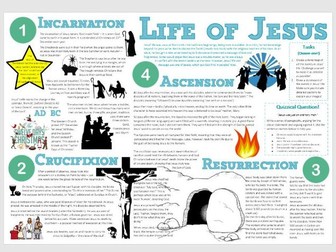
Creative and visually engaging learning mat / task sheet for Christianity: the Life of Jesus - from birth to ascension. It covers the four main events in Jesus’ life that are examined at GCSE.
Can be used for revision, cover work, homework or class work - incredibly versatile resource!
Task mat includes:
Knowledge
Choice of Tasks
Challenge question (Analysis question for extended writing)
Download as an A3 word document and as an A4 PDF, for compatibility.
Please give feedback! I am always happy to respond to comments - whether positive or constructive - this will help to improve the quality of my resources in the future and, more importantly, the quality of pupils’ RE/RS education in general - which is what we’re all here for!
Two standalone resources on the topic of celebrating my birthday for GCSE.
Resource 1: including a review of dates, key vocabulary, a sentence builder, translation and a reading comprehension.
Resource 2: mi próximo cumpleaños - immediate future and pure future review with a reading comprehension and translation practice.
Answers included.
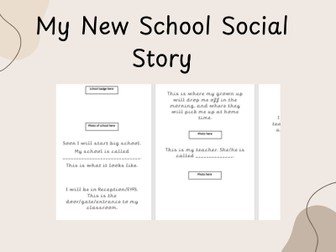
Worksheet to support pupils in reflecting on events in their lives so far. Developed for pupils with SEN and autism who struggled with reflection, recall and sequencing.
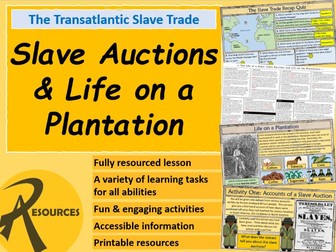
**In this lesson, students will learn all about the events of the transatlantic slave trade from the stage of the slave auction to life on the plantations. **
Students will be able to describe the differences between the two methods of slave auctions and also use sources to describe the events of the auctions. They will then use a detailed fact sheet to help them understand what life on s slave plantation was like.
The lesson includes the following:
Slide 1: Title slide – Slave Auctions and Life on a Plantation
Slide 2: The purpose and aims of the lesson.
Slide 3: Recap Activity: Slave Trade recap quiz
Slide 4: Recap Activity answers
Slide 5: Source Analysis – A slave auction source with prompt questions and challenge questions.
Slide 6: Source Analysis – An alternative source about a slave auction with prompt questions and challenge questions.
Slide 7: Activity 1 – Source Analysis - instructions
Slide 8: Activity 1 – A printable sheet with 9 different sources about the slave auctions.
Slide 9: Background information about the two main methods of slave auctions.
Slide 10-16: Images of what life was like on a slave plantation.
Slide 17: Information/Fact sheet about life on a plantation
Slide 18: Printable question sheet about life on a plantation.
Slide 19: Challenge questions
Slide 20-21: 10 question learning review quiz with answers.
I would be grateful if you could leave a review for the lesson if you feel the lesson is effective for you. Many thanks if you spend some of your valuable time doing this as feedback is highly valued.
All images used in this lesson are in the public domain and are therefore copyright free at the time of publishing. Images which require attribution have been attributed in the notes section of each slide where the image appears. If you feel any errors have been made, please contact me at raschoolresources@gmail.com in the first instance to resolve any issues. All of my lessons are completed using PowerPoint and designed on widescreen formatting. Thank you.
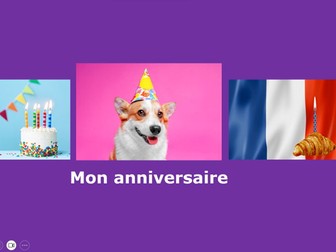
Full lesson on practising months, numbers, and learning how to say the date of your birthday. Includes a link to a song for them to sing. Includes a class birthday survey and a match-up task with famous French figures for a bit of fun. Finishes with a challenging sentence un-scramble.
This could easily be split into 2 lessons, depending on timing.
A nice little questionnaire to conduct with a class. It helps the teacher to understand more about an individual's reading habits and interests, thus enabling them to plan accordingly.
Look at case studies from different African countries and using the healthy box discuss what things are missing from the healthy box, which explains diffs between the UK & Africa. Children share their case studies and key points. A focus on children’s health.
Suitable for years 5 and 6.
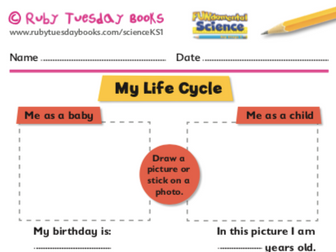
KS1 Science: My life cycle
Use this activity with its quality questioning to help teach the life cycle of humans in KS1 Science. It complements our book ‘Growing and Changing’ from our FUNdamental Science series. For more information, downloads and to purchase our books, please visit www.rubytuesdaybooks.com
This download helps meet the following National Curriculum targets:
Year 2: Animals, including humans
Statutory requirements:
Notice that animals, including humans, have offspring which grow into adults
Find out about and describe the basic needs of animals for survival.
Describe the importance for humans of exercise, eating the right amounts of different types of food and hygiene.
Notes and guidance (non-statutory):
Pupils should be introduced to the basic needs of animals for survival, as well as the importance of exercise and nutrition for humans. They should also be introduced to the processes of reproduction and growth in animals.
Pupils might work scientifically by: observing, through video or first-hand observation and measurement, how different animals, including humans, grow; asking questions about what things animals need for survival and what humans need to stay healthy; and suggesting ways to find answers to their questions.


 Quick View