Fairy Tale Newspaper Article LessonQuick View
akathryn27

Fairy Tale Newspaper Article Lesson

(0)
This lesson stems from the Literacy Shed Three Little Pigs video, looking at the alternative viewpoints of the classic tale. It begins by watching the video and then discussing the different points of view of the story with a debate and some hot seat role play. The children then go on to analyse a WAGOLL to create a checklist and finally create their own article. This lesson comes with supportive material and an optional extension task. The lesson is aimed at Upper KS2, however I have also delivered it to Lower KS2, with great success. The children really enjoyed the debate and created some very imaginative and impressive pieces of writing. If you enjoyed the lesson or found the resources helpful, click onto the downloads button and leave a review, thank you!
Fairy Tale - What can you see?Quick View
medmunds43

Fairy Tale - What can you see?

(0)
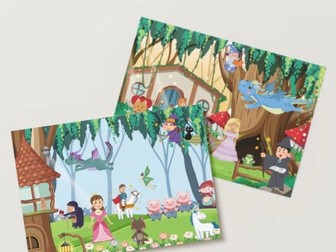
Perfect for World Book Day! Two Traditional Tale/Fairy Tale theme ‘What can you see’ boards… Pack comes with a magnifying glass cut out you can laminate and use to ‘spot’ what you can see Children can use post it notes, whiteboards or paper to write on Also includes… Table sign Star cut outs
RUMAYSA A Fairy Tale NOVEL STUDY and Reading ComprehensionQuick View
desireem671

RUMAYSA A Fairy Tale NOVEL STUDY and Reading Comprehension

(0)
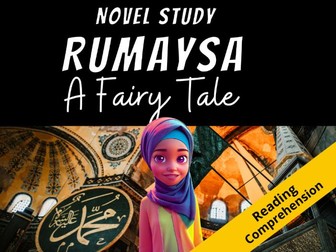
A NOVEL STUDY Book Companion for RUMAYSA A Fairy Tale by Radiya Hafiza. This resource is an engaging and comprehensive unit that allows your students to respond to the story by using a wide range of reading comprehension strategies and skills. The Unit can be followed chapter by chapter, with no extra preparation or planning required by the teacher. The responses in the unit have been planned and arranged so that your students will practise a wide range of comprehension strategies in context. It has been designed to promote thinking and comprehension. Tasks can be completed independently, collaboratively or alongside a teacher. The unit has been planned so that over the course of the book, students will become familiar with and well-practised in using comprehension strategies to make meaning from text. Activities include: COMPREHENSION ACTIVITIES FOR EACH CHAPTER Comprehension strategies - inference, prediction , visualising, questioning, retrieving information, activating prior knowledge, making connections, summarizing, analysing, synthesising, understanding vocabulary in context. Literacy Skills - sequencing, cause and effect, main idea and events, compare and contrast, point of view, venn diagrams, writing, vocabulary work. Story elements - character descriptions, character analysis, character emotions, character challenges, setting, plot, theme. Book response - creative responses, written responses. All activities have been designed with student engagement at the forefront. In responding to the book, students will be required to think both within and beyond the text. Children learn best when they are having fun! Even better that they are learning the love of books at the same time!
Fairy Tale Writing Structure | Five Sentence Fairytales | Sentence StartersQuick View
TeachieTings

Fairy Tale Writing Structure | Five Sentence Fairytales | Sentence Starters

(1)
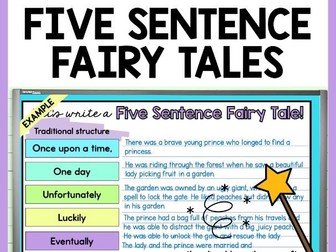
Give all of your fairy tales a ‘happily ever after’ with these fairy tale writing prompts, perfect for fairy tale writing. Five sentence fairy tales are a powerful way to teach students how to construct a fairy tale. Writing five descriptive sentences to outline each stage of the fairy tale, helps your students to successfully complete their stories. No more unfinished stories! The ‘five sentence fairy tale’ scaffold includes opener/hook, orientation, complication, solution & resolution. There are also fractured fairy tale slides with different ideas for fracturing a fairy tale/ Here’s what is included in this resource: PowerPoint slideshow with eleven different fairy tale-themed prompts for displaying on your whiteboard: Traditional fairy tale prompts - focussing on characters, settings etc. Prompts for fractured fairy tales - different prompts including how students can fracture their tales. Blank slide to add your own prompts Use on your whiteboard or for distance learning. Easy to differentiate! You will find your lower writers will finally give you complete stories, while your talented writers will fill a page with just five sentences! When students nail this process, they are ready to use these sentences as topic sentences for narrative paragraphs. How can you develop this idea? Once students have nailed writing five sentences, they can extend the sentences to become topic sentences for paragraphs. I like to tell my students they now have to write two sentences, then three etc. Before you (or they) know it, they have written a complete story! Finally, all of my students edit for language features, structure, grammar, punctuation and spelling. This is when they check they have included direct speech, descriptive language, figurative language and more, depending on their age. I have used Five Sentence Stories (and the planning and brainstorming processes) to ‘bump up’ my students to the next level -there is nothing better than reading complete and detailed stories!
Fairy-tales PowerpointsQuick View
Kallie92

Fairy-tales Powerpoints

(5)
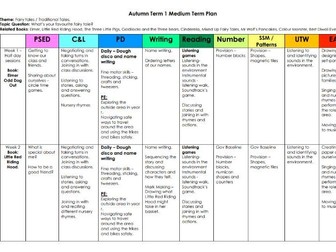
These are some of the PowerPoint's that work alongside my Fairy-tales scheme of work. For the assessment lesson there are differentiated assessment tasks for students.
Fairy Tale Activities for EYFSQuick View
MagicalEYFS

Fairy Tale Activities for EYFS

(1)
A selection of fairy tale themed resources for the EYFS. Includes: Three Bears Topic Web: all areas of EYFS Three Pig House Junk Model Plan: Expressive Arts and Design Making Gingerbread Men Baking Plan: Physical Development and Literacy Three Pigs Story Picture Plan: Expressive Arts and Design and Literacy
Fairy TalesQuick View
QTPie

Fairy Tales

(0)
A 14-lesson scheme of work suitable for KS3 students, exploring the conventions of fairy tales. Also looks at juxtaposition and contrast, through the medium of Disneyland -vs- Dismaland. Includes full PowerPoint and all supplementary resources.
Fairy Tale Scheme of LearningQuick View
kieranstevens96

Fairy Tale Scheme of Learning

6 Resources
This SOL is focused on developing writing skills through the following: Genre · Develop a secure understanding of Fantasy fiction and fairy tale conventions · Develop a secure understanding of the history of Fantasy fiction and fairy tales · Develop a secure understanding of the purpose of Fantasy fiction and fairy tales Character · Develop a secure understanding of archetypes (both narrative and character) · Develop a comprehensive understanding of elements of characterisation: personality, motivation, narrative arcs, dialogue, interactions, relationships, and overall actions · Develop a comprehensive understanding of fairy tale settings across literature Skills · Identifying narrative points using Freytag’s narrative structure · Plan narrative points using Freytag’s narrative structure · Subvert typical narrative structures for effect · Utilise fairy tale vocabulary for effect · Identify archetypal and Propp character types · Craft and subvert archetypal and Propp character types · Craft exposition using engaging narrative hooks and subverting expectations
Fairy TalesQuick View
learningwithlindsey

Fairy Tales

(1)
Fairy Tales and Fractured Fairy Tales: Exploring Characters, Plot, and Setting! Everything you need to support your Fairy Tale Unit! Inside you will find: Elements of Fairy Tales: Graphic Organizer What Do We Already Know About Fairy Tales: Graphic Organizer Character/Character Traits: Graphic Organizer Character/Internal Character Traits: Graphic Organizer Character/External Character Traits: Graphic Organizer Good Character/Evil Character: Graphic Organizer Good Character/Evidence from Text to Support Graphic Organizer Evil Character/Evidence from Text to Support Graphic Organizer Characters/Action/Motivation Graphic Organizer Comparing Two Characters Graphic Organizer Character/Beginning of the Story/End of the Story Graphic Organizer Setting: Time/Place Graphic Organizer Sensory Images in the Setting Graphic Organizer Plot: Conflict/Solution Graphic Organizer Elements of Magic Brainstorming Determining Importance of Events: Graphic Organizer Internal/External Conflict Graphic Organizer Plot: Cause/Effect Graphic Organizer Plot: Sequence of Events Graphic Organizer What is a Fractured Fairy Tale? Brainstorming Comparing Fractured Fairy Tale to Original Graphic Organizer Fractured Fairy Tale: Characters/Plot/Setting Graphic Organizer Fractured Fairy Tale: Original Ending/New Ending
KS2, KS3, Fairy Tales Cover HomeworkQuick View
knapster

KS2, KS3, Fairy Tales Cover Homework

(0)
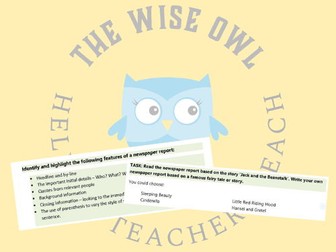
I made this grid when cover was needed for a year 7 class who were working on a unit on Fairy Tales. The task is adaptive so children could choose their own activity. However, this grid could also be used over a half term, providing homework activities.
Fairy Tales Figurative LanguageQuick View
reneesmalley1

Fairy Tales Figurative Language

(1)
Fairy Tales Figurative Language "Fee-Fi-Fo-Fum!" Are you ready for some figurative language fun? In this unit, students will read seven beloved fairy tales and analyze story elements. Each child will also illustrate a flip book focusing on figurative language found throughout the story. The following books are used in this product, however other titles can be substituted: - Jack and the Beanstalk by Steven Kellogg - The Three Little Pigs by James Marshall - Snow White by Josephine Poole - Cinderella by Cynthia Rylant - Strega Nona by Tomie Dapaola - Sleeping Bunny by Emily Snowel Keller - Goldilocks and the Three Bears by Jan Brett This lesson features fonts from Lettering Delights, clipart from Scrappin Doodles, and includes seven different story element printables that focus on: * Setting * Good Characters * Evil Characters * Magical Elements * Conflict * Conclusion * Alliteration * Onomatopoeia * Simile * Metaphor * Personification * Assonance * Idiom In addition, Fairy Tales Figurative Language also includes story element headlines to label chart paper during whole class discussion. Happy Learning! Renee Smalley
Grimm's Fairy Tales- BookletQuick View
lewisdbmitchell

Grimm's Fairy Tales- Booklet

(2)
This booklet is created for home learning with KS3. The booklet is designed to develop the key skills in English while focusing on Grimm’s Fairy Tales. There are 5 key activities as outlined below: A Research Task What is a Fairy Tale? Reading and rewriting Hansel and Gretel Creating a fairy tale monster. Writing a story titled The Enchanted Wood.
Fairy Tale Introduction & ConventionsQuick View
kieranstevens96

Fairy Tale Introduction & Conventions

(0)
A two-part, fully resourced lesson introducing students to fairy tales, including conventions. Lesson Two: What are fairy tales Students will gain an initial understanding of the genre to support their homework research, which will include conventions and key-terms to be utilised throughout the topic. Students should be informed of their assessment task and informed of the skills they will need to develop over the course of this term. Lesson Three: Fairy tale conventions Students will explore and identify the conventions in fairy tales. This lesson should link, yet differentiate the conventions in Fantasy fiction (Term 5 SOL). Week Overview: By the end of the week, students need an understanding of what makes a fairy tale, common conventions, different types of fairy tales, and the oral origins of the genre.
Fairy Tale Writing PromptQuick View
JadynThone

Fairy Tale Writing Prompt

(0)
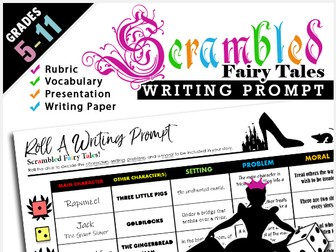
A fun twist on writing fractured fairy tales, this magical writing prompt for scrambled fairy tales will get your students writing creative twisted stories! With over 7770 unique possible combinations, you could use this year after year and never get tired of the outcomes! Students roll a dice to decide the characters, setting, problem and moral of their own scrambled fairy tale based on this handy magical writing prompt resource. ☸ Example Rolls ⚀ -1- Main Character: Rapunzel ⚁ -2- Other Character(s): Goldilocks ⚂ -3- Setting: In the highest room, of the tallest tower. ⚃ -4- Problem: An angry creature stops the main character from making progress. ⚄ -5- Moral: Hard work pays off. ✂ Contents ✏ Teacher notes explaining how to implement Roll A Writing Prompt resource in the classroom ✏ Grading/marking rubric should you wish to use this resource as an assessment item ✏ Student-friendly instructional slideshow presentation that will hype up the activity and explain every aspect of Roll A Writing Prompts to ensure student success with the activity ✏ A full-page grid detailing the options for each side of a dice, in colour or black and white master ✏ Recording and story writing sheet ✏ Challenge vocabulary - can students use the included words in their stories? Easy differentiation, with beginner, intermediate and expert vocabulary levels. ✏ Story starters for those who need the little extra nudge! ✏ Printable dice template with instructions (two sizes: large and small) ▶ Teacher Preparation Instructions Ensure students understand the basics of narrative writing before implementing in the classroom. You could print a copy to add to writing centers, display the color version on the board for a class activity or hand out individual copies to students. Children can view on any digital device and type into a Word document if distance learning.
Fairy TalesQuick View
Alleree

Fairy Tales

(3)
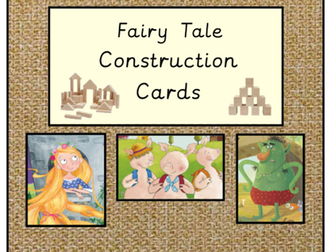
A selection of images of characters from fairy tales with a worksheet for sorting. Can be used as independent activity or as a game.
Fairy TalesQuick View
Cre8tive_Resources

Fairy Tales

(0)
These 24 Fairy Tales task cards are perfect for your English (or drama) lesson plans and topic. They are suitable for secondary students. They feature different activities including knowledge retrieval practice, multiple choice and spot the English mistakes amongst other English related activities. Contents of Blood Brothers Knowledge Retrieval Topic Task Card bundle 1 x Set of 24 Different topic Task Cards with a range of activities and styles in editable and PDF versions 1 x Teacher answer sheet - All answers covered 2 x Student fill in activity sheets that can be used with the cards (optional) Each topic task card is matched to the theme of the set and includes numbering and answers designed by our English specialist . Can be printed in colour or black and white. How to use English Knowledge Retrieval Topic Task Cards? These cards are perfect as an extension task, starter or plenary and as a means of testing knowledge upon completion of a unit. For a short task (extension/starter/plenary), you can simply give them one or two cards and differentiate which cards are given according to the students level or their areas needing improvement. For an end of unit, you could hand the cards out to different groups and have them switch the cards after a certain period of time (e.g. one group gets multiple choice, one group gets spot the mistakes, one group gets photocards, etc.). Benefits of using this new style of T&L activity Set of retrieval activities Motivating for students Bitesize English tasks Fun way to revise a topic Allow for differentiation Copy, cut and laminate – use over and over again Versatile and can be used in many different ways If you leave a nice review to email us at thecre8tiveresources@gmail.com for a History treat for your students Product code C8/TS/42 You may want to check out some of our other great ENGLISH resources: ENGLISH CHRISTMAS QUIZ 2020 ENGLISH ESCAPE ROOM Shakespeare 24 Task Cards A Christmas Carol 24 Task Cards English End of Term Bundle Careers in English Quiz Lesson GCSE English Language Escape Room Why is reading Important Assembly
Fairy TalesQuick View
nikpeachey

Fairy Tales

(0)
A Creative ESL Lesson Plan That Brings Stories—and Students—to Life Looking for a lesson that sparks imagination, inspires discussion, and gets your students truly talking? “Fairy Tales” is a ready-to-use, high-impact ESL lesson plan designed for B1+ learners that transforms your classroom into a world of magic, mystery, and meaningful conversation. Using the captivating short film Croaked, students dive into the world of fairy tales and folk stories while developing their speaking, listening, and critical thinking skills. But this isn’t just a watch-and-talk lesson—your students will retell stories, argue in a mock trial, debate the role of media, and even create their own modern fairy tale. Why teachers love it: Zero prep – Just open, play, and teach Flexible – Works as a one-off lesson or part of a broader storytelling unit Engaging – Perfect for mixed-ability groups who need a break from the coursebook Why students love it: It’s fun, surprising, and different It gives them a real reason to speak It connects English to their own ideas and creativity Give your students a lesson they’ll remember—and talk about long after the bell rings. Includes video link, lesson procedures, discussion tasks, role play ideas, and a creative project.
Fairy Tales and Short Stories BookletQuick View
bethan_hughesou

Fairy Tales and Short Stories Booklet

(0)
A booklet aimed at Y7 / KS3 students developing literacy skills through the theme of fairy tales and short stories. Includes extracts from The Hobbit, The Chronicles of Narnia, Chinese Cinderella, Tales from India and Revolting Rhymes amongst others. The booklet also includes descriptive writing tasks, tasks on the start and endings of stories and on story structure. At the end of the booklet are extension activities.
French Fairy Tale ProjectQuick View
lucycast

French Fairy Tale Project

(0)
L’objectif: to use familiar fairy tale literature to learn new French vocabulary (Goldilocks and the three bears) Designed for KS3 (particularly good for remote learning) 9-slide presentation including: Imbedded link to the website The French Experiment (credit to them for made these audio and transcription resources free!) 6 activities related to the story including adjectives, breakfast food, possessive adjectives, translations and sequencers. Designed for mixed-ability Year 7 classes during remote learning period. Please feel free to amend/edit and comment to let me know how pupils found it. Designed to take pupils approximately 1 hour to complete (exluding challenge tasks).