PDFS:
KCSIE poster/ handout - key info for all staff
Definitions of Thresholds poster/ handout - Universal, Early Help, Safeguarding - Child in Need and Child Protection
Types of abuse poster/ handout - 4 main types
specific forms of abuse - poster/ handout - 2 pages
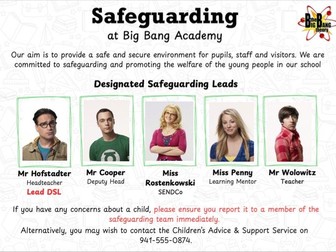
Editable poster to display your school’s safeguarding team - just add photos and edit the name tags/ labels.
Templates cater for team of 2, 3, 4, 5 and 6
16 information posters which cover the different types of safeguarding issues raised in KCSIE. Each poster has a defintion, key signs and key actions - including what not to do.
There is an A4 set and an A5 set to suit the size of your safeguarding board. If you need them smaller you can adjust the sizing.
Also included a canva link if you wanted to edit or change colours.
Also included:
KCSIE - summary posters ideal for your safeguarding board as well as communal staff areas/ toilets/ wherever they may be seen and read regularly.
5 steps to safeguarding poster
Asking open questions poster (TED - Tell Explain Describe)
3 info cards on low level concerns, confidentiality and professional curiosity
policy pockets - print, laminate and use to hold key policies (they just slip inside when on display)
Editable canva links included too
Safeguarding and the Prevent Duty: 2026 Update
Staff training for the September 2026 guidance update — understanding our responsibilities, recognising risk, and protecting every young person in our care.
This ready-to-teach safeguarding lesson PowerPoint is designed for FE and secondary learners, covering essential knowledge, responsibilities, and real-life application. Ideal for tutorial sessions, PSHE, induction, or staff training, this lesson requires no preparation and can be delivered immediately.
What is included:
✔ Full lesson PowerPoint
✔ Clear explanation of key safeguarding concepts
✔ Built-in discussion prompts and activities
✔ Real-life case study scenario
Learning objectives covered:
Understand the legal and moral duty of care
Recognise signs and indicators of abuse and neglect
Know how to respond appropriately to a disclosure
Understand how to report safeguarding concerns
Key topics included:
What is safeguarding vs protection
Who we safeguard (children & adults at risk)
Types of abuse and warning signs
Modern safeguarding risks (online safety, exploitation, financial abuse)
The 4 R’s: Recognise, Respond, Record, Refer
Case study analysis
Why teachers love this resource:
✔ No prep required – ready to deliver
✔ Clear, structured and easy to follow
✔ Includes discussion and scenario-based learning
✔ Suitable for a wide range of learners (KS4–FE)
How to use:
Deliver as a standalone safeguarding lesson
Use in tutorial sessions or PSHE
Adapt slides to suit your setting
Who is it for?
FE tutors
Secondary teachers (KS4/KS5)
Apprenticeship trainers
PSHE leads
Format:
PowerPoint (fully editable)
Keywords:
Safeguarding, safeguarding lesson, PSHE, FE resources, child protection, DSL, abuse awareness, tutorial resources
Please note:
This resource should be used alongside your own safeguarding policies and procedures.
If you find this resource useful, please leave a review!
This lesson is also available as part of a full safeguarding bundle including a student workbook and printable scenario cards.
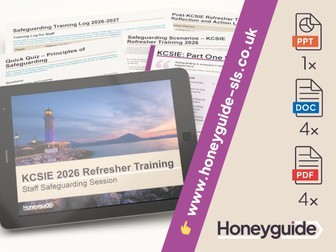
Everything you need to deliver your annual safeguarding refresher training in one easy, ready-to-use bundle.
Keeping Children Safe in Education has has widespread changes this year and it’s more important that ever to ensure staff understand not only the updates, but the full contents of Part One of KCSIE 2026. This pack takes the hard work out of preparing for September safeguarding training – the presentation is ready to deliver, the facilitator notes will support your delivery and the supplementary resources will help delivered effective and fully-rounded training.
Included in this pack: a complete 59-slide INSET presentation (PowerPoint) covering Part One of KCSIE 2026, which all staff must read and understand. Includes one scenario, five quiz questions and the full set of supporting documents.
Further safeguarding resources can be found on our Honeyguide-SLS website.
This was originally delivered over 2, 3 hour lessons to Access to HE students.
There are activities including; types of abuse, accessible complaints procedures, serious case reviews and an activity where students have to design a new Health and Social Care Service compliant with safeguarding policy.
Please note that this lesson is aimed at adult learners who have some prior knowledge of safeguarding. Furthermore, learners are expected to work as independent learners in the same way that they will at university.
You will require computers for your students in order for them to do some independent research.
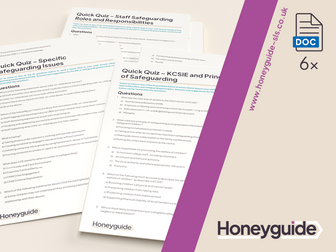
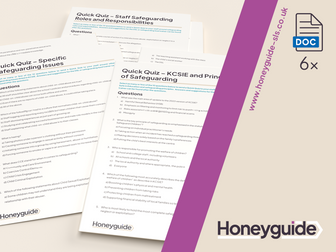
Want to check that staff understand Part One of KCSIE? This Quick Quiz is time-saving and adaptable, meaning you can create quizzes on your school’s internal platform or cherry pick questions for use in meetings and briefings. The quiz document has 10 multiple-choice questions but the answers aren’t obvious, helping to assure you that staff really do know safeguarding inside and out. These 6 editable quiz documents contain 10 multiple-choice questions each. This Quiz focuses on Staff Safeguarding Roles and Responsibilities.
Our full pack of 6 Safeguarding Quizes can be found at Honeyguide SLS for £7.50.
Looking for safeguarding scenarios as outlined in KCSIE? Try Honeyguide SLS.
For more support on safeguarding, you can download our Safeguarding Audit Pack.
You can find more safeguarding information and resources by visiting Honeyguide SLS.
Please note the following disclaimer attached to this resource bundle: These resources address potentially sensitive and/or distressing subjects and are intended to be used for training purposes only. They may also contain strong language as well as terms, themes and content that depict child abuse, neglect and exploitation. All of this could elicit emotional responses and be triggering for staff using them. You must fully read each snapshot before use and it is your duty to carefully assess their appropriateness based on your staff and your context. If you deem each one to be suitable, you must ensure that adequate support is accessible for anyone who may be impacted by the content.
16 potential questions and answers for a HOY interview
10 safeguarding questions
Question have been formulated by experienced SLT member with HOY experience.
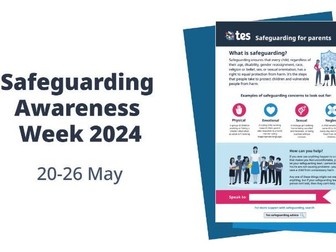
This helpful PDF poster is designed to be displayed in a classroom or school area where parents would be able to access it and read it. The poster includes useful advice and definitions for parents to help create a wrap-around culture of safeguarding in your school and local community.
The poster offers a definition of what safeguarding means as well as examples of safeguarding concerns that parents should be aware of. It also leaves a space open for you to write the designated safeguarding lead or whoever is the best person to speak to in your setting with safeguarding concerns.
This resource is part of our Safeguarding Awareness Week which is taking place from 20-26 May. During this week we are highlighting that everyone has the right to feel safe and encouraging teachers and students alike to discuss the importance of safeguarding and what to do if anyone does have concerns.
As part of this week, we’ll be helping share best practice from leaders and experts in the field. Look out for news on a webinar, further resources, free training and much more. You can find out more about the week and sign up for updates, here.
For more general support, advice and safeguarding support, visit our advice hub.
#SafeguardingAwarenessWeek2024
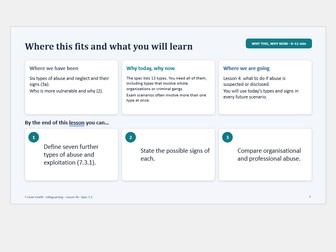
8 one-hour T Level Health safeguarding lessons (Pearson 2026, 7.1-7.7) with Do Nows, hinge questions, exit tickets, mark schemes and a knowledge organiser.
Description:
Teach the whole safeguarding unit without building the lessons yourself. This bundle has 8 PowerPoint lessons (145 slides) and a 2-page A4 knowledge organiser. It’s written for the Pearson T Level Technical Qualification in Health (Level 3), Version 1 (April 2026), content area 7: Safeguarding.
Every lesson is planned to the minute (60 minutes):
Do Now retrieval, with first-letter hints and a mark-it-yourself answer slide
Why this, why now, and learning objectives linked to the spec reference
Key words slide for explicit vocabulary teaching
Two teach-and-check cycles, with hinge questions whose wrong answers are common misconceptions, and mini-whiteboard checks
Independent practice on a case study, with support and stretch prompts
Exam-style 6-mark question with a mark scheme for self-marking
Exit ticket with answers, then review, homework suggestion and a clean finish slide
Teacher notes on every slide: timings, answers, and teaching points
What’s covered:
Lesson Spec Topic
1 7.1 Importance of safeguarding; the six principles
2 7.2 Factors that make people vulnerable; vulnerable groups
3a 7.3 Physical, sexual, emotional abuse; coercion and control; neglect; domestic abuse
3b 7.3 Financial, discriminatory, organisational and professional abuse; modern slavery; honour-based abuse; child criminal exploitation
4 7.4 Responding to disclosure, reporting, preserving evidence
5 7.5, 7.7 Reducing the chances of abuse; safeguarding policies and agencies
6 7.6.1 Radicalisation: what it is and how it happens
7 7.6.2, 7.6.3 Signs of radicalisation; purpose of Prevent
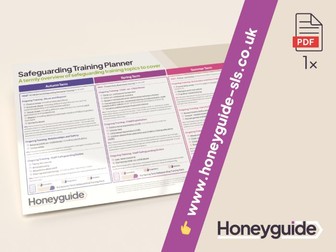
This safeguarding training calendar is designed to help you plot safeguarding training topics across the school year to allow a drip-feed approach, rather than relying on only delivering safeguarding CPD in one session during September INSET. Designed from the latest Keeping Children Safe in Education, the training calendar offers suggestions of what you could cover in each term, including abuse, neglect, exploitation, child-on-child abuse, extremism and radicalisation, harmful practices, staff safeguarding duties and more.
For further safeguarding resources, visit our website honeyguide-sls
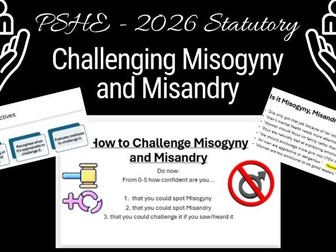
A fully resourced KS3 PSHE lesson exploring how to recognise and safely challenge misogyny and misandry, with a strong focus on respect, impact and safeguarding.
Pupils learn to identify examples of harmful language and stereotypes, consider when it is appropriate to challenge using the SAFE model, and develop practical strategies through the 4 Cs (Call it out, Clarify, Counter, Check in).
The lesson includes discussion scenarios, decision‑making activities and written responses, helping students build confidence in responding to real‑life situations in a safe and responsible way.
Teacher guidance is embedded throughout to support calm, respectful discussion and ensure that students understand that safety and reporting concerns are prioritised over confrontation.
Designed to fill a full lesson, this resource is suitable for KS3 PSHE, tutor time or safeguarding education, and is accessible for non‑specialist staff.
This has been made specifically to fit the new PSHE 2026 Statutory guidance.
A resource designed as a discussion point about safeguarding. This resources has been designed for use with pupils and has a number of different scenarios for the children to consider.
Safeguarding in the News
This engaging resource uses current real-world news stories to help Post-16 Health & Social Care students explore key safeguarding issues in a practical, meaningful way. Designed especially for BTEC and T Level learners, it encourages critical thinking, discussion, and application of safeguarding legislation and principles.
What’s included?
A ready-to-use PowerPoint presentation featuring three recent safeguarding-related news stories
Simplified news summaries for easy student understanding
Thought-provoking questions to develop analysis and reflection skills
A glossary of key safeguarding terms
A reflection page for learners to consolidate their understanding
A sources page with links to original news articles
Why use this resource?
Perfect for lesson starters, group discussions, or independent study
Supports the development of safeguarding knowledge linked directly to real events
Encourages learners to connect theory with practice, preparing them for assessments and future careers
Editable and easy to adapt to fit your teaching style
Suitable for:
Post-16 learners studying Health & Social Care (BTEC, T Level)
Safeguarding units and modules
Tutors and teachers looking for relevant, current teaching materials
119 Slides To enable staff and to develop awareness and understanding of the safeguarding and protection of children; the protection processes, and relate these to their role and responsibilities.
Objectives:
Be able to identify and support children who are experiencing or are at risk of experiencing a significant harm
Be sure you know how to react in a proper way when you are concerned about child’s welfare
Be able to follow a legal path of reporting the concern
Be aware of different examples of abuse and groups of children at risk
Want to check that staff understand Part One of KCSIE? This Quick Quiz is time-saving and adaptable, meaning you can create quizzes on your school’s internal platform or cherry pick questions for use in meetings and briefings. The quiz document has 10 multiple-choice questions but the answers aren’t obvious, helping to assure you that staff really do know safeguarding inside and out. These 6 editable quiz documents contain 10 multiple-choice questions each. This Quiz focuses on Specific Safeguarding Issues
Our full pack of 6 Safeguarding Quizes can be found at Honeyguide SLS for £7.50.
Looking for safeguarding scenarios as outlined in KCSIE? Try Honeyguide SLS. For more support on safeguarding, you can download our Safeguarding Audit Pack.
You can find more safeguarding information and resources by visiting Honeyguide SLS.
Please note the following disclaimer attached to this resource bundle: These resources address potentially sensitive and/or distressing subjects and are intended to be used for training purposes only. They may also contain strong language as well as terms, themes and content that depict child abuse, neglect and exploitation. All of this could elicit emotional responses and be triggering for staff using them. You must fully read each snapshot before use and it is your duty to carefully assess their appropriateness based on your staff and your context. If you deem each one to be suitable, you must ensure that adequate support is accessible for anyone who may be impacted by the content.
New for 2024!
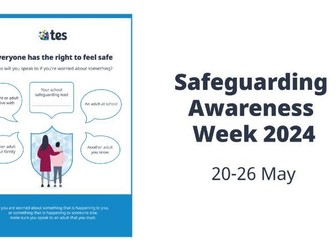
A useful PDF poster designed for your classroom, corridor or staff room explaining which trusted adults pupils or students could go to for support or to share any concerns or worries.
Using this resource can help showcase how seriously your school takes safeguarding and helps to promote the importance of talking and sharing concerns. It also helps to highlight the safeguarding lead within the school, as you are able to write this person’s name on the poster alongside other potential trusted adults that children could talk to.
This resource is part of our Safeguarding Awareness Week which is taking place from 20-26 May. During this week we are highlighting that everyone has the right to feel safe and encouraging teachers and students alike to discuss the importance of safeguarding and what to do if anyone does have concerns.
As part of this week we’ll be helping share best practice from leaders and experts in the field. Look out for news on a webinar, further resources, free training and much more. You can find out more about the week and sign up for updates, here.
You can find other Safeguarding Week resource content below…
KS1 worksheet
KS2 worksheet
KS3 worksheet
#SafeguardingAwarenessWeek2024
The National action plan for tackling child abuse linked to faith or belief for England, published on 14 August 2012, brings together actions agreed between central Government and local statutory partners, faith leaders, voluntary sector organisations and the Metropolitan Police. Working together on the National Working Group on Child Abuse Linked to Faith or Belief the partners agreed ways of protecting children from this horrific abuse. Use this article and supporting PDF to learn more.


 Quick View