Science Experiment: Hair Color
The "Hair Color" Laboratory provides a written laboratory detailing the question, materials list, and procedure for a student to investigate whether people believe hair color affects intelligence. In addition to the written lab, you are provided the step by step guide to the scientific method, a fill in the blank lab report (question, research, hypothesis, planning or procedure, record sheet, and conclusion), fact sheet, data sheet, and reflection sheet.
All science teachers are looking for resources for hands on, demonstrations, or possible science fair investigations. This STEM Center series solves that problem! Print and enjoy!
Celebrate Science Week 2026 with this “Curiosity” themed experiment pack!
This **Curiosity Challenge: Science Week Experiments **offers a flexible, “no-prep” solution for EYFS, KS1, and KS2 classrooms. This pack includes 5 engaging, kitchen-science experiments: Magic Milk, Lemon Volcano, Dancing Raisins, Skittles Rainbow, and Balloon Rockets.
What’s Included?
Digital Student Journal: 5 vibrant A5 Landscape cards optimized for tablets and interactive whiteboards.
Budget-Friendly Printables: i. Black And White A4 sheets in a “2-per-page” layout to save on school printing costs—simply print and cut in half for A5 station cards. ii. Black And White A5 sheets in Landscape layout.
Full Teacher’s Notes: A comprehensive guide including “Science Secrets” to help you explain the CO₂ and surface tension reactions behind the fun.
UK Standard Formatting: All text uses British English (e.g., “colours” and “centre”) to fit perfectly into the UK curriculum.
Perfect for: Science Week rotations, homework challenges, or “Curiosity” themed classroom displays.
Specification link: Oxford KS3 Science - Activate 2
B3 Adaptation and inheritance
Resource includes
differentiated lesson (higher and lower)
opportunity to carry out a practical
worksheets (higher and lower) allows students to practice their skills on collecting data, graphing and calculating
homework exercise - a selection of past exam questions (answers included) When students complete this exercise I mark it as an assessed piece of work.
Make observations
Differentiated worksheet
- lower group - cut and stick pictures
- middle group - draw pictures
- higher group - draw and explain pictures
Science
Foundation Phase
Melting ice
Worksheets and resources to deliver a bridge design activity. Students are set the challenge to design a bridge which crosses a 30 cm gap and supports a car. They must fully budget for materials. Each bridge can be tested in turn and points awarded to identify a winner. This can be delivered as a standalone activity, or linked with construction and engineering.
Science Experiment: Seed Sprouting Germination science experiment that teaches students the Scientific Method in a simple and easy to follow format. Everything you need is included except the seeds, cups, and potting soil. There is nothing complicated in this experiment, even for the teacher that is new to science experiments!
Students will plant common vegetable seeds leaving out sun, soil, and water. They will observe the seeds to see which seeds grow. Kids are very surprised to find out that seeds will germinate even when kept inside a dark cabinet! Students will discover that water is an essential ingredient in seed germination. They will work through all steps of the Scientific Method.
All activity steps are outlined in the Teacher Directions. This activity is tried and true! All parts of the science experiment have record sheets and informational pages for the students to use.
Included in this product:
•Teacher Directions
•Idea sparking poster
•Scientific Method chart
•Seed Facts
•You Will Need poster
•2 Science Experiment record sheets
•What Will You Test page
•6 Data collection pages
•Reflection page
•Follow Up Ideas
Popcorn science experiment or project that teaches students the Scientific Method in a simple and easy to follow format. Everything you need is included except the popcorn and some materials always on hand in a school or kitchen. There is nothing complicated in this experiment, even for the teacher that is new to science experiments!
Students will work together to try to find out if storing popcorn in different temperatures, such as the freezer, will help more kernels to pop. They will store several brands of popcorn in different temperatures. Then, they will pop the popcorn in a microwave or air popper. Students will count the kernels that didn't pop. They will work through all steps of the Scientific Method. As the students work through each step, they will complete the activity pages and data collection sheets. At the end, the class can enjoy a fun popcorn treat!
All activity steps are outlined in the Teacher Directions. All parts of the science experiment have record sheets and informational pages for the students to use. This is also great for kids that need to create a science project.
Included in this product:
•Teacher Directions
•Idea sparking poster
•Scientific Method chart
•Popcorn Facts
•Science Experiment record sheets
•What Will You Test? page
•Observations and Data collection page
•Reflection page
Banana science experiment teaches students the Scientific Method in a simple and easy to follow format. Everything you need is included except the bananas and some materials always on hand in a school or kitchen. There is nothing complicated in this experiment, even for the teacher that is new to science experiments! This activity is also great for science projects!
Students will work together to try to keep a banana fresh for a longer period of time. They will choose a method of trying to preserve the banana, rather than just leaving it to go brown. They will work through all steps of the Scientific Method.
All activity steps are outlined in the Teacher Directions. All parts of the science experiment have record sheets and informational pages for the students to use.
Included in this product:
•Teacher Directions
•Idea sparking poster
•Scientific Method chart
•Banana Facts
•2 Science Experiment record sheets
•What Will You Test page
•4 Data collection pages
•Reflection page
See my Popcorn Science Experiment and Sprouting Seeds Science Experiments in my store!
This list provides 10 practical science experiments tailored for Year 5 and 6 pupils working in small groups. Each experiment is linked to the UK National Curriculum, covering topics such as materials, forces, electricity, and living organisms. The guide outlines clear instructions, required resources, and suggestions for recording results. These engaging experiments include dissolving sugar, making parachutes, growing mold, and creating simple circuits. The activities are designed to encourage hands-on learning, critical thinking, and collaboration among students.
Science Fair: Bacteria Experiment for Science Fair or In Class:
Turn your students into real scientists with this long term experiment which teaches scientific literacy through the writing of a real scientific paper.
This product is an editable guided walk-through for the completion of a full scientific paper (Abstract, Introduction, Methods, Results, Discussion, Works Cited) based on the question: "Which antibacterial chemical: ethyl alcohol (hand sanitizer), isopropyl (rubbing alcohol), or Triclosan (Antibacterial soap) is the most effective at inhibiting bacterial growth?
This product contains:
1. A teachers guide: Descriptions on how to set-up the experiment, materials needed, procedures, and helpful tips.
2. A lesson on Analyzing a Scientific paper utilizing a graphic organizer (Scientific Paper Included)
3. Student pages: a guided walk-through taking the students through the process of writing a full scientific paper.
This long term project (which takes about 2-3 months to complete, spread out intermittently) guides students through the process of writing a scientific paper in the same way scientists write their scholarly papers. Students are taught how to write an Abstract, Introduction, Methods, Results, Discussion, and works cited section.
This guided walk-through covers the following topics:
Abstract:
* Explanations of what goes in an introduction
- What the study was about & the hypothesis
- Summary of how the study was done
- The results that were obtained
- Significance of the results including the hypothesis being supported or not supported
Introduction:
* Explanations of what goes in an introduction
- What bacteria colonies are and what they look like (color, size,shape texture, etc.)
- What Fungal colonies are and what they look like
- The Cellular processes by which ethyl alcohol, isopropyl, and triclosan work to kill bacteria
Methods:
* Teacher notes and tips for conducting the experiment
Results:
* Instructions for:
- Calculating the average number of bacterial colonies
- Graphing the data
- Interpreting the data graph in words
- Describing the appearance of bacterial and fungal colonies
Discussion:
* Instructions for:
- Calculating the data to see if they are statistically significant
- Interpreting the significance of the data
- Calculating Percent effectiveness
- Supporting or not supporting the hypothesis
- Creating a theory to explain the results
- Creating an additional experiment that could be done to test the theory
- Discussing issues that occurred during in the experiment
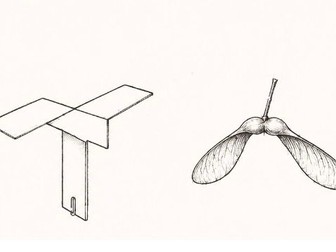
This printable science investigation resource helps students explore forces, gravity, air resistance, and fair testing using paper helicopters.
Designed for MYP Science Criterion B & C, the booklet guides students through the full scientific investigation process, including:
Writing a research question and hypothesis
Identifying independent, dependent, and control variables
Planning a valid method
Recording results in tables
Constructing graphs and lines of best fit
Drawing evidence-based conclusions
Evaluating reliability and validity
Suggesting improvements and extensions
Included in this resource:
Structured student investigation booklet
Multiple paper helicopter templates
Graph paper and results tables
Criterion B & C success criteria
Writing scaffolds and sentence starters
This investigation allows students to test how different helicopter designs affect descent time and flight behaviour while developing practical science and data-processing skills.
Ideal for:
MYP Science
KS3 Science
Forces and motion units
STEM activities
Inquiry-based learning
Cover or extension lessons
A classroom-ready resource that combines engaging hands-on science with clear experimental structure and assessment support.
A pack of resources which includes: 4 differentiated worksheets for the write up of how far a car travels down 3 different gradient of ramps.
Detailed lesson plan
Bar chart and tally chart for children to record results.
5 lesson resources including PowerPoints and activity sheets.
Balloons - static electricity, popping a balloon with a lemon peel and teacher demo inflating a balloon with vinegar and baking soda.
Catapult - make your own lollipop stick catapult investigating the effect thickness of fulcrum, length of lever and mass of object has on the distance traveled by the object.
Natural selection - alleles and adaptations with knockout game of survival of the fittest mouse as the environment changes.
Stained glass glue - making and breaking chemical bonds, making stained glass window models with PVA glue, food colouring and dish soap. Includes teacher demo of surface tension with water, black pepper and dish soap.
Home Learners - Includes experiments with every day objects and 3 tasks: make a person in STEM profile, make a board game and poster competition.
Science experiment sheet which can be easily altered for differentiation. The same format can be used for other subjects such as Food Studies.
With little chages it can be used over and over again for different experients.
Submitted by Kenneth D.
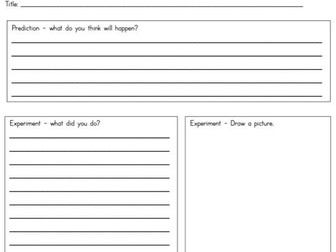
Updated. A booklet that guides students through the process of planning and recording an investigation or experiment.Suitable for Yr7 or any low ability group.
I don't want to slow the pace for Year 7 (or Year 5 .....or Year 6) by stopping to continually explain how to set-out the "write-up" of an experiment!
This resource has all of the common sections (prediction, apparatus, method, etc. etc.). Just the mere fact that a structure is provided will help the least able to write something!!! Would also work well as a homework frame.
Space at the end to add a glossary (spellings!), so once you've bought it once it will find uses for a number of topic areas.
This runs over 2 pages of A4, so either: photocopy onto A3, use as double sided A4 or [my favourite] print on A5 and stick it into the student's books (who need it) prior to the lesson - helping to keep the progress going in your outstanding lesson.
Science Experiments: This bundle includes all of the products listed below. Answer keys are provided for each product.
Important: All these products sell for $13; as a bundle they are 20% off, for $9.95!
♦ 1. Skittles Lab Experiments
♦ 2. Gummy Bears Lab Experiment
♦ 3. Surface Tension Lab
♦ 4. Iron in Cereal Lab
♦ 5. Onion and Cheek Cell Lab
♦ 6. Plant Cell "Stomata" Lab
♦ 7. Scientific Method Fold and Learn: Good with any Science Experiment