Gothic literature

Resources for KS3 and KS4

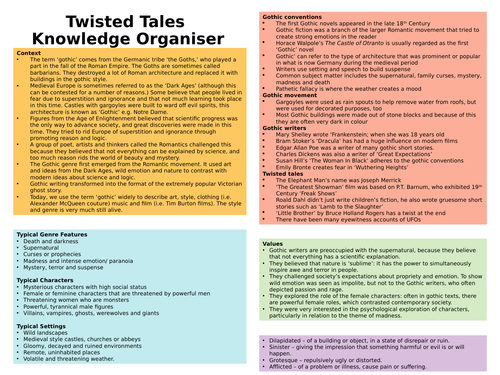
Evoke your students' interest in Gothic literature through novelists such as Poe, Shelley, Stoker and Hill and watch their imaginations come to life with their own Gothic literature pieces. From lessons and revision materials to activity booklets and planning sheets, we have drawn together a selection of resources to help your students embark on their journey into the shadowy world of Gothic literature.

An illustrated Gothic literature collection with a skull, raven and moon to signify teaching gothic literature at KS3

Lessons

Gothic literature is not only fun to teach but more often than not most students love delving into the supernatural and eerie themes that Gothic literature provides. Whether you’re introducing it through Poe or Shelley, or you’re looking for standalone creative writing lessons, we have drawn together a selection of resources you can use to teach Gothic literature. 
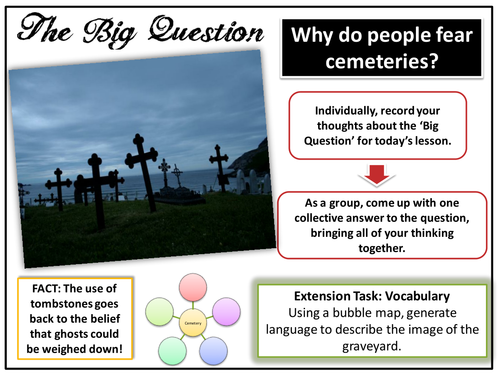
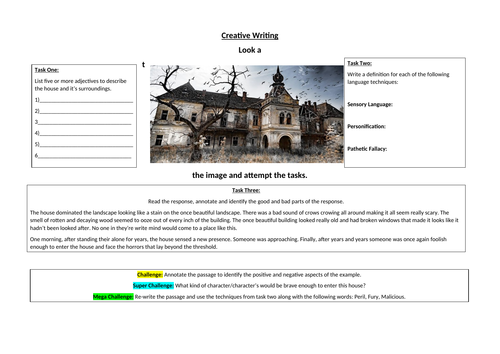
Creative Writing Lesson - Gothic Horror
RojoResources

Creative Writing Lesson - Gothic Horror

(1)
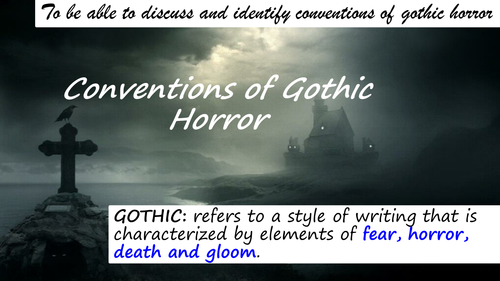
An engaging creative writing lesson based around the theme of gothic horror. The lesson includes a number of activities to develop students' vocabulary and use of more complex sentence structures.
Gothic Narrative Writing
EnglishGCSEcouk

Gothic Narrative Writing

(3)
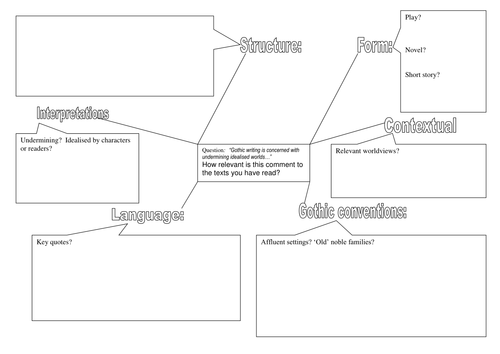
Gothic narrative writing and planning can be tricky, but this lesson support students in effectively planning out characters, protagonists, antagonists, villains, monsters, settings, plot, structure and themes before students write their own Gothic narratives and self-assess their stories through a ...
English Literature - Intro to The Gothic - Epistolary
CMillerEnglish

English Literature - Intro to The Gothic - Epistolary

(1)
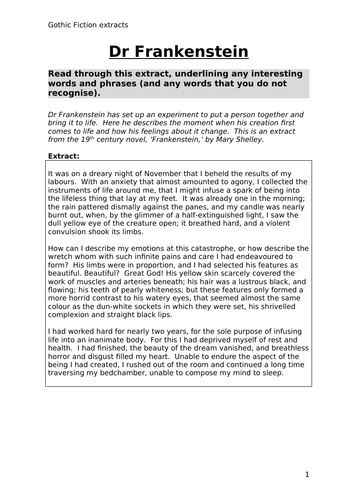
This lesson introduces the concept of 'epistolary' within the Gothic genre, looking specifically at two examples from Bram Stoker's Dracula. Activities move from analysis to evaluation to creative writing. This lesson is suitable for higher ability KS3 students, but could also work for KS4.
Jekyll and Hyde: Setting
MrGradgrind

Jekyll and Hyde: Setting

(1)
This 18-slide lesson offers an introduction to Stevenson's use of setting in 'The Strange Case of Dr. Jekyll and Mr. Hyde'. We consider how Stevenson's use of setting facilitates Hyde's dark deeds and the Gothic atmosphere of the novella. How the author's childhood in Edinburgh influenced his depic...
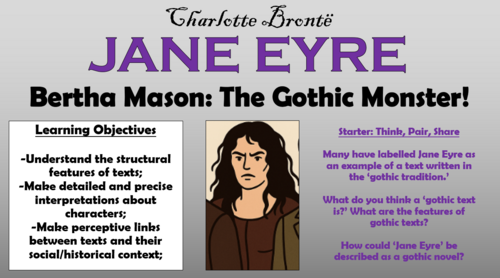
Jane Eyre - Bertha Mason: The Gothic Monster!
TandLGuru

Jane Eyre - Bertha Mason: The Gothic Monster!

(2)
This engaging and informative lesson enables students to make precise and perceptive interpretations of the character of Bertha Mason in Jane Eyre. Through close analysis of specific extracts from the text, students develop an understanding of how Bertha fits the conventions of a quintessential g...
Gothic Writing Standalone lesson
BuksLaughingHeart

Gothic Writing Standalone lesson

(0)
This lesson provides the stimulus for a slow, Gothic writing lesson. It includes atmospheric music, animations, target setting and opportunities for peer assessment. By the end of the lesson, students will have produced 4 paragraphs of description and have used a range of language and literary devi...
Gothic Fiction The Hound of Baskervilles
Miss P

Gothic Fiction The Hound of Baskervilles

(1)
Lesson developed as part of an 'Introduction to Gothic Fiction' module delivered to year 8. Aim of module: to familiarise pupils with the conventions of Gothic Fiction and develop analysis skills (Language AO1). Lesson based on an extract from Sir Arthur Conan Doyle's 'The Hound of the Baskervilles'...

Activities and revision

From word banks and planning sheets to comprehension activities and knowledge organisers, take a look at these worksheets and revision tools you can use in the classroom.
GCSE revision resources

Support your students in the run-up to May with this bumper collection of GCSE revision English language and English literature revision resources.

Find out more

Teacher essentials

Explore this collection of essential resources including tutor time, starter and plenary activities, marking and feedback and more.

Find out more