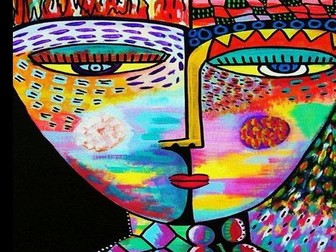
PowerPoint with a collection of self portraits by famous artists and activity ideas for children's own self portraits. An additional PowerPoint with the work of Sandra Silberzweig a great stimulus for the children's own unique self portraits.
More resources @ https://www.tes.com/teaching-resources/shop/Whitley01
Great for Primary or KS3 Students.
Could be used in a project, for a cover lesson, homework/extension tasks.
About 3 hour lessons worth of planning.
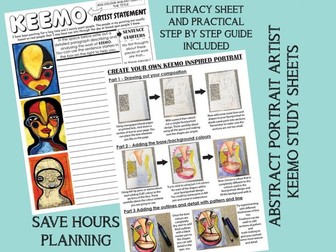
Includes 1x -KEEMO Analysis/Literacy worksheet
1x - step by step practical guide sheet - KEEMO inspired portrait design.
Just print out and you are ready to go.
Happy Teaching :-)
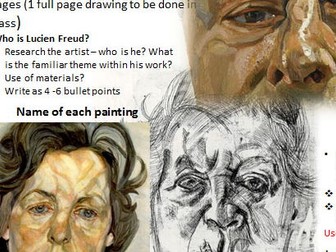
Homework resource sheet based on Artist Lucien Freud to encourage stretch and challenge tasks to heighten critical studies, clearly explaining how pupils can attain higher grades.
I created this to use for an interview lesson with a group of Year 9 boys. I had a lot of fun teaching the lesson, all students were engaged, learning and making progress… and I got the job.
Includes powerpoint & lesson plan.
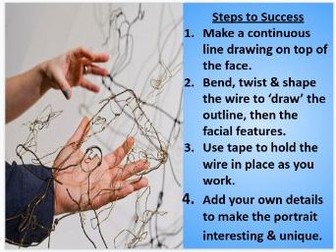
Just add: paper, markers, wire, masking tape, scissors/wire cutters and students
Learning Objectives & Outcomes:
-To understand and reflect on the purpose of a portrait, using key terms
-To create an abstract, dimensional portrait, developing problem-solving skills while working with wire
We look at a classic Velazques and compare it with Bacon’s reinterpretation
Key words:
-line
-continuous line drawing
-sculpture
-shape
-abstract
-portrait
Enjoy!
A set of resources developing an understanding of Cubism. Giving information on the art movement and learning to mix colours.
Making a painting, practising making a 3D sculpture using Analytical cubism and using a portrait as a subject.
Also showing how perspective was changed with Cubism.
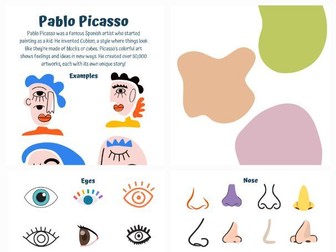
Unlock your students’ creativity with our engaging Cut and Stick Self Portrait Picasso Art Activity, designed for both classroom and home school settings! This activity encourages young artists to explore the whimsical and abstract world of Pablo Picasso while developing their artistic creativity and fine motor skills.
What’s Inside:
Step-by-step instructions for creating unique Picasso-inspired self-portraits.
Printable templates for facial features, accessories, and organic shapes.
Tips and ideas for customising each portrait to reflect individual personalities.
Educational Benefits:
Artistic Creativity: Students will learn about the Cubist style of Pablo Picasso and experiment with abstract art techniques.
Fine Motor Skills: Cutting and sticking activities help improve hand-eye coordination and precision.
Personal Expression: Encourages self-expression and individuality through art.
Perfect For:
Art lessons and projects
Home school art sessions
Enrichment activities
Rainy day fun
This resource is perfect for teachers and parents looking to inspire young minds with the joy of artistic exploration!
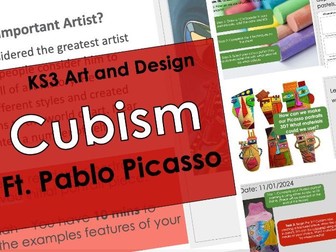
Cubism - Portrait Project (Pablo Picasso Focus) | KS3 Art & Design
This full KS3 unit introduces students to Cubism through the work of Pablo Picasso, giving pupils the chance to explore one of the most influential art movements of the 20th century. Suitable for Year 7, 8, or 9, the project combines critical analysis, artist study, and practical outcomes to help students develop both creative and analytical skills.
What’s Included:
Complete scheme of work (editable unit plan for 10–12 weeks)
Lesson-by-lesson PowerPoint with structured teaching guidance
Artist study tasks on Picasso and the development of Cubism
Critical analysis activities to build evaluative skills
Practical project – create a Cubist-inspired self-portrait or portrait piece
Assessment rubric aligned to lesson objectives and outcomes
Differentiation ideas to stretch or support learners
Learning Aims & Outcomes
Understand the key features and history of Cubism
Explore Pablo Picasso’s style and techniques
Develop confidence in critical analysis and written responses
Experiment with composition, abstraction, and portraiture in personal work
Apply research, design, make, and evaluate skills across the unit
Why This Resource?
Ready-to-use, editable, and time-saving
Flexible length – can run as a full term project or be adapted for shorter study
Includes both theory and practical elements, ensuring well-rounded learning
Encourages creativity while deepening understanding of modern art movements
This engaging project allows students to explore Picasso’s legacy while creating their own unique Cubist portrait, combining research, analysis, and creativity in one complete unit.
A PDF containing a range of abstract photographers with examples of their work.
I designed this to inspire GCSE Year 10 pupils at a previous school.
I have also added a portrait photographer PDF file as well (separate upload)
Children can do this as self-portraits, portraits of a partner or use their imagination. Instructions are provided in the success criteria. Children add a golden background, plan the figure outline in pencil and then go over the pencil in black berrol pens or charcoal. Tone can be added with black and white pencil. This work could also be done as a painting. Download the word version if you want to edit it. Examples from my club are provided.
A PDF containing a range of portrait photographers with examples of their work.
I designed this to inspire GCSE Year 10 pupils at a previous school.
I have also added an abstract photographer PDF file as well (separate upload)
This SoW includes a bundle of ppts:
A detailed ppt on how to draw a portrait.
A word doc verbal description to use whilst demonstrating.
A range of ppts with artist examples: expressive, fragmented, distorted, abstracted.
Expressive ppt includes colour wheel and examples.
A creative Middle School Art & Design lesson exploring the bold, expressive ceramic portraits of Kimmy Cantrell. Students learn slab-clay techniques and experiment with abstract forms, mark-making, and painted surface decoration.
Learning Objectives:
Understand who Kimmy Cantrell is and identify his artistic style.
Learn how to use the slab-clay technique to build an abstract portrait.
Apply mark-making and painting skills to add colour, pattern, and expression.
Includes:
Full PowerPoint lesson with visuals and artist examples.
Step-by-step guidance for each stage of the ceramic process.
Discussion prompts and reflection questions.
Extension ideas and optional drawing preparation task.
Details:
Suitable for Middle School / KS3 students.
Designed for 2–3 class periods.
Encourages creativity, cultural awareness, and technical skill.
A Learning Objective with some success criteria with examples followed by a separate page with just examples that can be printed for children to see. Children can sketch the outline in pencil, make it disproportionate and use a ruler to separate the portrait and background into different sections (filling each section with a separate colour). Paint, oil pastels, chalk or colouring pencils can all be used. Encourage children to use the whole page.
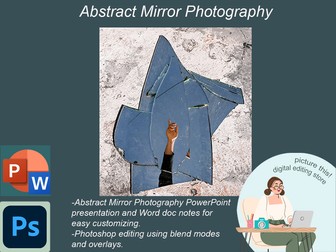
Introduce your photography students to taking more abstract photos and portraits using mirrors. Includes a Powerpoint presentation with lots of visual ideas for taking portraits and photos with mirrors. Also includes a Photoshop editing project using overlays/blend modes.
Total Pages: 21 page presentation, 3 page photoshop instructions
Teaching Duration: 45 minutes
A resource which looks at portraits and focuses on Tudor and Stuart portraits in the Welsh National Museum Gallery. There are cross-curricular links with History and English, and ideas for creative writing and practical art work.
Can be adapted to suit any style of portraits.
In addition to our own resources we have been able to make available an informative guide to medal-making, created by Wolverhampton Arts Museums and inspired by their work with the prolific and enthusiastic medalist Ron Dutton. This guide shows you how to make portrait medals, but can be adapted to suit the needs of any class.
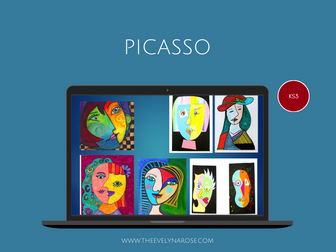
Pablo Picasso KS3 lesson combining the work of Picasso with portraiture.
In this lesson students are asked to create an abstract self-portrait in the style of Picasso.
Starter activity - Picasso word search (included)
Introduction to Picasso
Design your own self portrait using typical Picasso features
(Picasso features sheets and face templates are available with a Google search)
Plenary - Success criteria and three questions.
Homework Slide
One lesson with homework or two lessons worth of work.
11 Slides
A comprehensive 12-week GCSE Art scheme of learning.
Key Features:
New Threshold Concepts
Weekly Learning Objectives: Clear goals to keep students focused and motivated.
Learning Outcomes: Specific skills and knowledge students will gain each week.
Challenge Tasks: Opportunities for students to push their boundaries and explore advanced techniques.
Differentiated Tasks: Tailored activities to support all learners, ensuring everyone can succeed.
Artist Research: In-depth studies of renowned artists to inspire and inform students’ work.
Home Learning Tasks: Practical assignments to reinforce classroom learning and encourage independent practice.
Highlights:
Introduction to Portraiture: Master facial proportions and basic drawing techniques.
Exploring Different Mediums: Experiment with various materials to discover unique effects.
Light and Shadow: Learn to create depth and realism through shading.
Expressive Portraits: Capture emotions and expressions to bring portraits to life.
Cultural and Historical Portraits: Understand the influence of culture and history on portrait art.
Contemporary and Abstract Portraits: Embrace modern styles and abstract approaches.
Self-Portraits and Digital Techniques: Reflect personal identity and explore digital art tools.
Personal Project Development: Plan and execute a unique portrait project, culminating in a final presentation.
This scheme of learning is perfect for educators looking to inspire their students and foster a deep appreciation for the art of portraiture.
Equip your classroom with a structured, engaging, and enriching art curriculum that will help students excel in their GCSE Art studies.
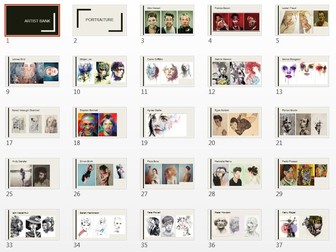
A huge range of 120+ artists ranging from portraits and landscapes to natural forms and abstract art.
A great resource for the start of projects, to look at after reading exam papers, or to give inspiration mid project.
Images are all artists own, this is a bank of artist images and not my own images.
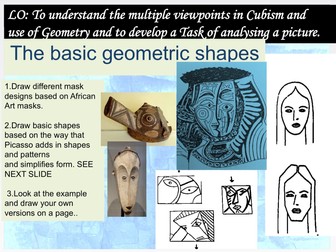
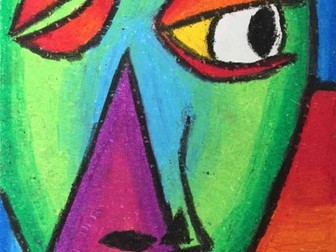
Students explore the distorted style of Picasso by using geometric shapes and abstract features to create a composition. Students then use oil pastel gradients to define segments of the portrait using blending techniques demonstrated on the powerpoint.


 Quick View