Vikings KS2 teaching resources

Find out more about the Vikings and explore hand-picked resources for teaching this popular KS2 topic

Tes Resources Team

Viking longship in sunset scene for Vikings KS2 teaching resources in primary history

To teach your key stage 2 pupils about the Vikings, along with the Viking and Anglo-Saxon struggle for the Kingdom of England, the first question to address may be, ‘Who were the Vikings?’. The Viking era was from around AD700 to 1100 and the Vikings, or Danes, Norsemen or Northmen as they could also be known, originated from Scandinavia (modern-day Denmark, Norway and Sweden). They explored and invaded countries including Britain and Ireland in this period and became known as warriors and raiders – the name ‘Viking’ meaning ‘a pirate raid’ in Old Norse language. There was much more to the Vikings, however; they were farmers, toolmakers, craftspeople, explorers and particularly skilled boat builders. The Vikings also sailed around the world and traded a range of goods, from glass, pottery and jewellery to wine, spices and silk.

Take a look at this collection of informative resources to help you get to grips with the Vikings, build a fascinating Viking fact file and prepare engaging key stage 2 Vikings topic lessons.

Vikings Resources
jdlangford1

Vikings Resources

(2)
Collection of fun factsheets and worksheets to complement teaching Vikings for KS1 and KS2 History. Various aspects of Viking life are covered in the resources and the collection is aimed to cater for all abilities.
The Vikings word mat
hoppytimes

The Vikings word mat

(3)
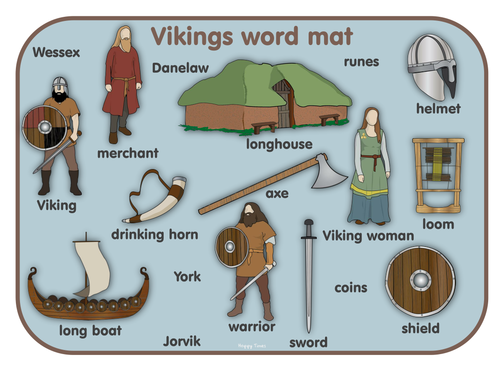
A word mat to go with this popular primary topic on the Vikings. A Viking display is also available here ( https://www.tes.com/teaching-resource/the-vikings-display-11694402 )
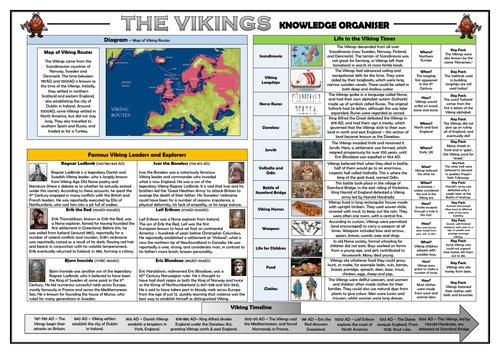
The Vikings Knowledge Organiser/ Revision Mat!
TandLGuru

The Vikings Knowledge Organiser/ Revision Mat!

(3)
This clear, detailed and visually-appealing resource offers a complete reference point for students learning or revising knowledge relating to the Vikings. It contains comprehensive sections on: Viking routes map (annotated); Viking Leaders and Explorers; Viking timeline; Viking places and events; ...
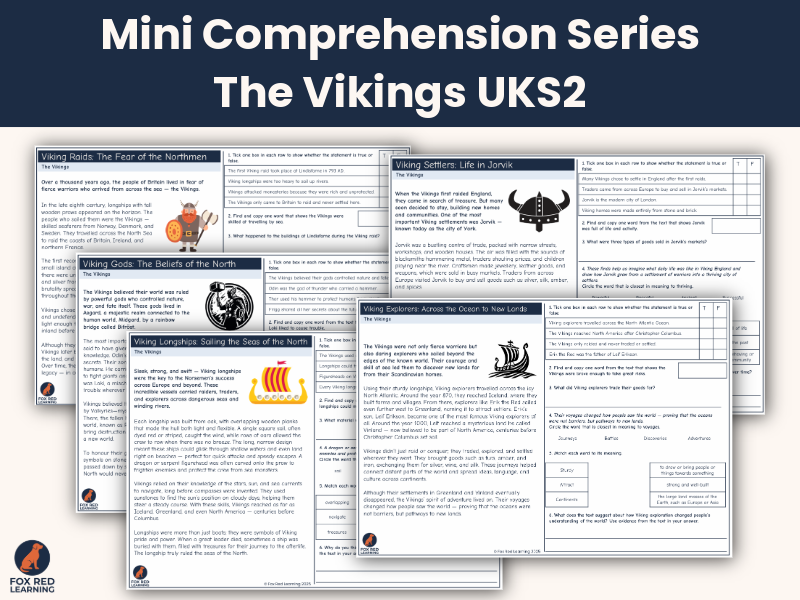
Mini Comprehension Series: The Vikings Y5 Y6
FoxRedLearning

Mini Comprehension Series: The Vikings Y5 Y6

(1)
Mini Comprehension Series - The Vikings. 5 x short comprehension texts, on one A4 page each. Complete in 10 - 15 minutes, suitable for upper key stage 2, year 5 and year 6. Perfect for morning work, intervention, reading fluency, whole class reading, topic work. Answers included.


Vikings in Britain and invasions

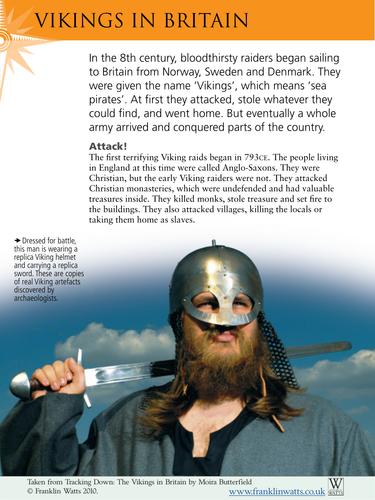
When teaching about the Vikings and Britain, a good place to start is the first recorded Viking raid in Britain, which was on the monastery of Lindisfarne on the north-east coast of England in AD793. A small band of Viking warriors launched a surprise attack, killing the monks and stealing from the monastery.

The Anglo-Saxons were known to refer to Viking invaders as ‘the Great heathen army’ and the Vikings gained a reputation as fearless and ruthless raiders. Berserkers, the origin of the modern word ‘berserk’, were Viking warriors who wore bear or wolf skins and were said to howl like wild animals in battle. One element of the stereotypical image of the intimidating Viking warrior that may not be accurate is the horned helmet. They would have been a hindrance in battle and if they were worn, it may have only been on ceremonial occasions.

Although they could be seen as pirate-like invaders of other lands, the Vikings settled in areas of Britain and Ireland primarily to find better land for farming, as their homeland was less fertile and more difficult to cultivate.

The main area of land in Britain occupied by the Vikings was known as the Danelaw; a region covering an area in the north and east of England. The most important city in the Danelaw was York, or Jorvik (pronounced 'your-vick'), as the Vikings named it. The Vikings captured York in AD866 and it became an important place to trade goods. Your pupils are sure to be interested in the fact that York is also home to a unique Viking artefact - the largest known fossilised human pooh in the world!  The specimen of human faeces from the 9th century AD, named the ‘Lloyds Bank coprolite’, provided valuable insight into the diet and health of the Jorvik people. The Vikings did not restrict themselves to the Danelaw; they also settled in parts of Scotland, including the islands of Orkney and Shetland, and the Isle of Man, as well as travelling on to Ireland, where they founded the cities of Dublin, Cork and Limerick.

Newspaper Report Comprehension Year 4 Vikings Sighted
HelenSQ

Newspaper Report Comprehension Year 4 Vikings Sighted

(1)
A newspaper report, supplied in Word so you may edit, including a Newspaper Title, Headline, strapline, columns, picture and caption, witness quotes and the key info in the first paragraph. The theme is Dragons being sighted by Anglo-Saxons off the coast of Northumbria shortly before the Vikings att...
Vikings Display Posters (Invaders and Settlers)
hoppytimes

Vikings Display Posters (Invaders and Settlers)

(1)
The Vikings Display board pack. Contains everything you need to decorate your display board for this popular topic. 44 pages in .pdf format (the display posters are NOT editable but do contact me if you want something adding or changing). Included in the resource: The Vikings header. A4, but ...


Everyday life in Viking times

Viking society followed the Scandinavian hierarchy of three different classes: Jarls (the aristocracy), Karls (the lower class) and Thralls (slaves). Most Scandinavians were farmers, but there were also many different trades and skills in Viking society, from blacksmiths, armourers and brewers to merchants, musicians and jewellers.

Women had more freedom in Scandinavian/Viking culture than in many other cultures. They could inherit property, divorce their husbands under certain circumstances and own their own business.

Viking children would help out in the home and on farms from an early age. They did not go to school but they did learn about history, religion and law from stories, known as sagas, and songs. Vikings were considered to be adults at the age of 12, with girls marrying from 12 years old and boys sent to war as young as 15 or 16 years of age.

They lived in longhouses, which were dwellings with turf roofs and an interior made up of a single room space with a central fire. Animals could also be kept inside the longhouses during the cold winter months. Scandinavians enjoyed their leisure time and played sports, including wrestling, climbing, swimming, hunting and a field game like hockey known as ‘Knattleik’, board games similar to chess and backgammon and organised festivals. Contrary to popular belief, Vikings also paid a great deal of attention to hygiene and their appearance. Cleanliness being seen as a sign of wealth and status, as well as having religious significance.

Recording and documenting during the Viking era was done using ‘runes’ – a type of writing using symbols rather than letters. Most Vikings could not read or write however, and ‘runes’ were generally only used to record very important information. They did become more widely used as time went on and examples of runes in graffiti from the Viking era have been found in Britain.

Viking Factfile Posters
Elissapaige

Viking Factfile Posters

(1)
There are 6 posters and a sheet divided into 6 squares for the children to record their information down on. I used this resource as a retrieve and relay activity where children had 1 Minute to read information on a specific poster and remember it to teach their group. The results were amazing and ...
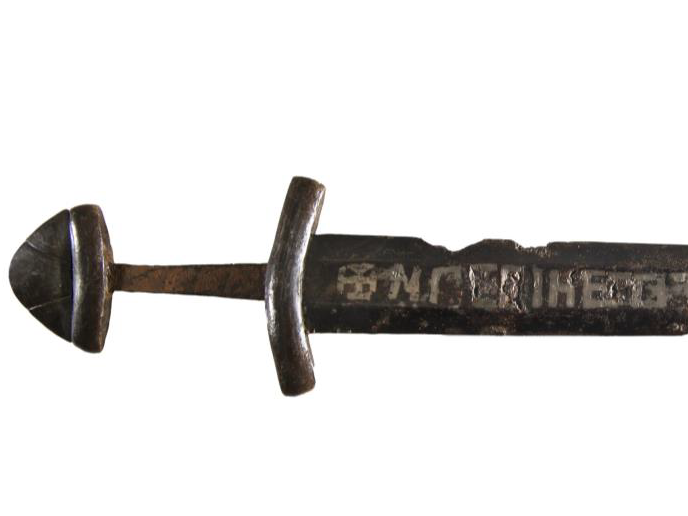
Investigate a viking sword.
TheRomanBaths

Investigate a viking sword.

(1)
The Romans Baths looks after objects and archaeology from the area so this means we have things from other time periods not just the Romans. One of our special things is a Viking sword. It was found buried outside the walls of Bath, but we don t quite know how it got here. Have a go at writing y...
Viking Runes
CMWright89

Viking Runes

(1)
A presentation about runes and Ancient Norse writing with an art activity for children to make their own runestones. Tied loosely to the book, Enthralled: A Viking Saga, but reading the book is unnecessary to understand the resource.


Viking longships and exploration

The Vikings were known as seafaring explorers who travelled all around the globe; not just to Britain and northern Europe. The Norse explorer, Leif Erikson, and his fellow Vikings crossed the Atlantic and formed settlements in North America a thousand years ago, centuries before Christopher Columbus.

They were aided in their exploration by their famous longships that used both wind propulsion, via the sails, and rowing power, meaning they could travel long distances and travel even when the wind was not strong enough. The longships, or longboats, could also sail in both deep and shallow water, allowing them to cross the sea and get them close to shore and sail inland on the rivers. The prow of the boat could be decorated with carved snake heads or dragon heads to be intimidating in battle, leading them to also be known as ‘dragon ships’. A fact about Viking longships KS2 pupils may also be interested in is that they placed their shields on the sides of the longships to protect the ships from damage.

The Vikings - Integrated project
IET Education

The Vikings - Integrated project

(1)
**Multi-lesson activity on The Vikings free KS2 lesson plan activity** This is a multi-lesson integrated classroom project teaching resource based around the theme of the Vikings. It aims to show how Design & Technology and Engineering can be built into a wider theme-based set of primary lesson...
Viking Ships
PrimaryTopicShop

Viking Ships

(1)
This lesson includes a labeled illustration of a longship, definitions of the parts of a longship, unique properties of longships and information about the Knarr. There is a reading response worksheet as well as a dragon's head design activity. Aimed at KS2 Y4-6 Pages: 7 (including one answer s...
Viking Boats
lizbiz2

Viking Boats

(13)
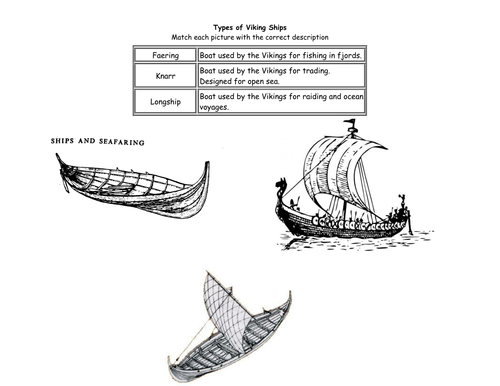
This includes pictures of two types of Viking ships, a matching activity about types of Viking ships and a labelling activity - labelling parts of a longship.


Viking gods and Norse mythology

Norse mythology, the stories of gods and heroes from the Viking era, has given us some of the most well-known figures from world mythology. The main Viking gods for KS2 pupils to focus on could be Freya/Freyja (coming from the Old Norse for ‘woman’ and both the Goddess of fertility and a fierce warrior), Odin (the chief god and God of war, wisdom, poetry and magic), Loki (a mischievous shape-shifter sometimes known as the ‘trickster god’ who could become different kinds of animals) and of course, Thor (the God of thunder, the sky and agriculture and Odin’s son) pupils may know from the Marvel Studios’ popular Thor movies.

Vikings believed the gods they worshipped lived in the mythical realm of Asgard, and Viking warriors were motivated to fight in battle by the belief that dying heroically gained you the honour of a place in Odin’s hall of Valhalla within Asgard. Norse mythology’s influence on Britain can still be seen today with our names for the days of the week, which come mainly from Norse gods, such as Wednesday from Woden (Odin) and Thursday from Thor.

Norse Gods (Viking) Fan
twenhame

Norse Gods (Viking) Fan

(1)
This Norse God project guides students through their research of Viking Mythology. It takes learning deeper and in an attractive & unique way! Myth Fans integrate reading, writing, and history together, engaging students to dig deeper. Ideal for practice note-taking, introducing research, for ce...
KS2 English - Viking Sagas
BBCTeach

KS2 English - Viking Sagas

(10)
[Video animations from BBC Teach of some of the best-known Viking Sagas](https://www.bbc.co.uk/teach/class-clips-video/english-ks2-viking-sagas/zvrmy9q), told in a light-hearted but faithful style. Download the Teachers Notes, then go to [the BBC Teach website for the animations](https://www.bbc.c...


If you're starting with the Anglo-Saxons, why not take a look at these engaging resources for Teaching the Anglo-Saxons in KS2?

We also have a range of hand-picked primary history resource collections, covering historical periods from the Stone Age through to the Victorians.