

 Quick View
Cognitive Overload Strategies
Staff training powerpoint around cognitive overload and strategies that can be used to support students, especially those with lower academic ability and special educational needs. Practical activity and then links to a variety of subject areas.
Schizophrenia: Cognitive Explanation
AQA B A Level Psychology
Whole lesson - Cognitive explanation for Schizophrenia.
 Quick View
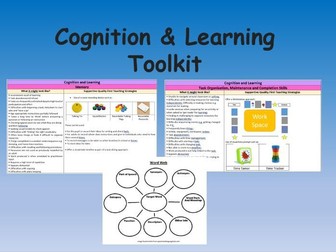
Cognition & Learning Toolkit
This toolkit provides information on how to support the needs of pupils with SEN/EHCPs in the classroom as part of a quality first teaching approach. Each section links to one of the four broad areas of need.
You will find:
Cognition & learning
• Categories of potential difficulty within that need.
-Memory
-Task Organisation, Maintenance and Completion Skills
-Concentration
-Transferring/Generalising Learning
-Time Management
-Self-Assessment Skills
-Information Processing
-Letter and/or Number Recognition and Recording
-Phonic Application
-Spelling:High Frequency Words and Phonetically Irregular Words
-Reading Accuracy
-Reading Comprehension
-Learning and Application of Number Facts
-Organising Ideas for Writing
-Developing Writing (Letter Formation)
• What that area of difficulty might look like in the classroom.
• Supportive quality first teaching strategies that will offer support.
Each list of ‘What it might look like?’ and ‘Supportive Quality First Teaching Strategies’ are not exhaustive but may provide a useful starting point to help you help your pupils access learning. At the end of each section are resources linked to some of the strategies.
The Toolkit can be edited and new needs and provisions can be added to meet the needs of your students.
AO2 Cognitive Explanations
A sheet with content to get AO2 marks on an essay on cognitive explanations
 Quick View
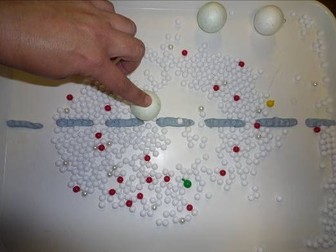
Making models and modifying science equipment for blind and visually impaired students
This is a help sheet for teachers and learning support staff of blind and visually impaired students. There are several ideas for biological models and several ideas for modifying practical equipment to allow tactile access.
undefined
 Quick View
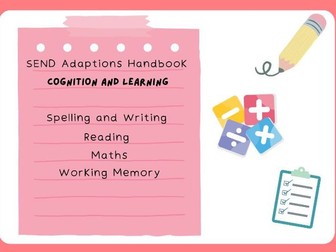
SEND Adaptations Handbook - Cognition and Learning
The perfect aid for a teacher in support SEND within the classroom! With QFT being a platinum thread through education, this guide provides teachers with a comprehensive list of potential barriers to learning they might see in the classroom, wave 1 suggestions to try and resources to use and also wave 2/3 interventions to use if needed.
Contains information surrounding
Reading
Writing and Spelling
Mathematics
Working memory and processing
Make sure to check out my shop for handbooks for the other areas of need!
Self-Assessment and Meta-Cognition Activities for World Language
Paying attention to the learning process helps learners improve, and that’s what these tools are for. These research-based self-assessment resources let students learn how to help themselves improve, particularly in speaking and listening activities. There are also tools to help you give feedback. Included in this bundle of resources are the following:
• Listening Guide
• Presentational Speech Self-Assessment
• Speaking Activity Teacher Assessment
• Speaking Activity Self-Assessment
• Emotional Temperature Chart
• Speaking Focus Signs
Staff inclusion newsletter - Cognitive load theory
Information for school staff on Cognitive Load Theory (CLT).
what is CLT?
types of cognitive load
CLT in the classroom
5 principles of reducing cognitive load
 Quick View
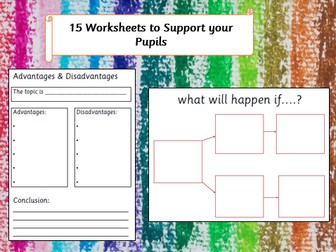
SEN Starter Pack
A selection of 15 worksheets to support pupils with SEND. These were developed to support pupils in life skills e.g. ASDAN AoPE/CoPE however could be used in other settings to support personal development and meta-cognitive skills.
 Quick View
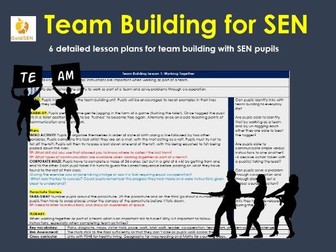
Team Building for SEN
Included in this pack are 6 detailed lesson plans that aim to develop team building amongst pupils with moderate to severe learning difficulties.
This resource has been used with a variety of SEND students particularly visual impairment, cognitive delay, physical impairment through CP, SLD and ASD. This topic would also work well with primary aged pupils.
The resource includes 6 individualized lessons plans. They offer the students an introduction to the world of team building and orienteering. Activities with a parachute are included with lessons lasting 30-40 minutes (excluding changing).
The 6 lessons have a focus comprised with practical activities. They are:
Working together
Problem Solving
Leadership
Cooperation
Planning and Communication
Consolidation of skills
 Quick View
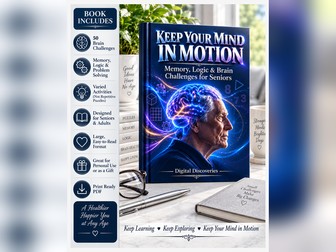
50 Memory, Logic & Brain Challenge Activities for Seniors & Adults | Cognitive Skills, Recall, Focus
110-PAGE PRINTABLE RESOURCE • 50 VARIED MEMORY, LOGIC & BRAIN CHALLENGES FOR ADULTS AND SENIORS
Keep Your Mind in Motion is a thoughtfully created collection of memory, logic, attention, recall, and problem-solving activities designed for adult and senior learners.
Rather than filling the resource with repeated versions of the same puzzle, this collection was developed page by page to provide variety. Learners move between different types of mental challenges, making it especially useful when you want an activity resource that can be revisited without every session feeling the same.
Activities provide opportunities to practice skills including short-term and working memory, concentration, visual recall, sequencing, association, name recognition, attention to detail, spatial awareness, pattern recognition, vocabulary, word retrieval, numerical reasoning, and problem-solving.
Why Teachers, Activity Leaders & Families Would Love It
The collection includes a wide range of activities such as number-sequence memory, picture-grid memory, story recall, faces and names, shopping-list memory, word associations, picture recognition, remembering order, Two-Back letter challenges, playing-card memory, card-pattern logic, number searches, word unscrambles, word searches, number paths, same-or-mirror activities, arithmetic cage logic, visual “What Changed?” challenges, and location-memory exercises.
The activities can be completed independently or incorporated into a structured activity session. Because the challenges vary in style and difficulty, users can work at their own pace and choose activities that appeal to them. The resource itself reinforces that these activities are intended as enjoyable mental exercise rather than a test.
This resource can be useful for adult education and enrichment programs, senior activity programs, community and recreation programs, libraries, homeschool families with adult learners, intergenerational activities, and independent enrichment.
The clean black-and-white interior also makes the pages practical for printing, while the variety gives educators and activity leaders plenty of individual activities to select from.
Please note: These activities are provided for educational, recreational, and enrichment purposes and are not intended to diagnose, treat, or prevent any medical or cognitive condition.
110 PAGES | 50 VARIED BRAIN CHALLENGES | MEMORY • LOGIC • RECALL • FOCUS • PROBLEM-SOLVING | ADULTS & SENIORS | PRINTABLE PDF
 Quick View
BTEC L3 Unit 12 Supporting Individuals with Additional Needs LAA
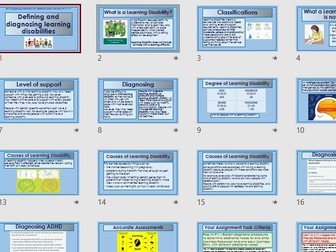
This is a large complete resource package for the delivery of the BTEC Level 3 Unit 12 - Supporting Individuals with Additional Needs Learning Aim A, A1, A2, A3 and A4. This package includes a 52 page Word booklet that can be adapted and altered to suit your teaching needs. It allows students to organise their notes and assignment planning, in one place. There are activities, research task and application, signposting learners to understand the assessment criteria.
To aid understanding, during delivery, there are ELEVEN powerpoints and relevant videos to engage learners. The package covers the below topics, in the Learning Aim A spec.A: Examine Reasons why individuals may experience additional needs
A1 Diagnosing or determining additional needs
• Definitions of mild, moderate, severe and profound learning disabilities.
• Diagnostic procedures, tools and standards used to diagnose a disability.
• Professional background, qualifications and experience of those undertaking the diagnosis and assessment.
• Parameters used to describe the diagnosed condition. This must include the type, causation, severity and stability over time, and prognosis of the condition.
A2 Cognitive and learning needs
• Learning difficulties, to include dyslexia, dyspraxia and attention deficit hyperactivity disorder (ADHD).
• Autism-spectrum disorders, to include Asperger syndrome, pervasive developmental disorder not otherwise specified (PDD-NOS) and childhood disintegrative disorder.
• Inherited conditions, to include Down’s syndrome, Huntington’s disease, dementia, Alzheimer’s.
• Needs of older people, to include memory loss, slower cognitive speed, life-long learning.
A3 Physical and health needs
• Needs of older people, to include arthritis, diabetes and cardiovascular disease.
• Health needs, to include physical needs cystic fibrosis, sickle cell disorders, stroke a mental illnesses.
• Sensory disabilities, to include deafness and hearing impairment, visual impairment.
• Accidents, to include paraplegia, loss of limb.
• Infectious diseases that can lead to individuals having additional needs.
• Problems during pregnancy and birth that can lead to individuals having additional needs.
A4 Social and emotional needs
• Needs generated from family circumstances, to include specific needs of looked-after children, bereavement, school refuser (non-attendance) and bullying.
• Needs generated by being elderly, to include loss of loved ones, fear of dying, family far away, isolation, lack of money.
• Needs affected by the learning environment.
#hscresources TES shop has free and small charge teaching packages
Join the biggest subject team, Health and Social Care Resources Facebook group. 5,000 sharing ideas, resources, signposting and prop each other out
#hscresources
Good luck in your teaching :-)
 Quick View
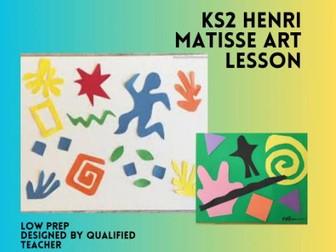
KS2 Art Lesson Pack Henri Matisse Collage
A simple and easy to follow art lesson based on Henri Matisse. No art experience required.
What’s Inside This Pack?
Henri Matisse Fact sheet — A beautifully designed, pupil-friendly fact sheet covering Matisse’s life, his famous cut-out technique, key artworks, and discussion prompts to spark conversation
Step-by-Step Teacher Instructions — Clear, easy-to-follow guidance that walks you through every stage of the lesson, including suggested things to say to pupils — no art knowledge needed!
Visual Vocabulary Cards — Key art terms explained simply with visual support, perfect for display or placing on tables during the lesson
Examples of Henri Matisse’s Work — Carefully selected examples to share with pupils and use as creative inspiration throughout the lesson
SEN Differentiation Strategies — Practical, ready-to-use adaptations for pupils with fine motor difficulties, visual impairment, autism spectrum needs, and cognitive/processing differences
Extension Ideas for Early Finishers — Challenging and creative tasks to keep your most able pupils engaged, including cross-curricular links to English, Maths, History, and PSHE
Teacher Assessment Sheet — A clear, graded rubric (Beginning → Exceeding) with space for observations and next steps, making assessment quick and meaningful
Pupil Self-Assessment Sheet — A child-friendly reflection sheet with a simple rating scale, helping pupils think about their learning and take ownership of their progress
Curriculum & Year Groups
Designed for Key Stage 2 (Years 3, 4, 5 and 6)
Fully aligned to the National Curriculum for Art & Design
Covers: use of colour, shape, composition, and knowledge of a significant artist
Session length: 60–90 minutes (can be split across two sessions)
 Quick View
BUDDHISM AND THE ENVIRONMENT
BUDDHISM AND THE ENVIRONMENT will spark students’ curiosity and critical thinking. It’s engaging, scaffolded for accessibility and challenging for academic rigour. It is easy to deliver for specialists and non-specialists alike and requires minimal printing and preparation.
YOUR STUDENTS WILL BE ABLE TO:
Explain Buddhist attitudes towards the environment: ahimsa, interconnectedness, precepts, reincarnation (with reference to sacred writing)
CONTAINS ALL THE FEATURES OF AN EXCELLENT LESSON:
Do Now retrieval of critical content for this lesson
Tasks broken down to prevent cognitive overload
Checks whole class understanding using miniboards or cold call
Extra challenges throughout
information sheet to promote independence (large font for visually impaired)
Independent practice task:
• Past exam question `
• Clear success criteria with a focus and modelling of development
• Writing frames
• Relevant sacred writing
• Key Vocabulary
I hope you enjoy delivering this lesson. Feedback is welcome.
Find more Religious Studies resources and bundles for ALL KEY STAGES at my shop: https://www.tes.com/teaching-resources/shop/Examined_Life
 Quick View
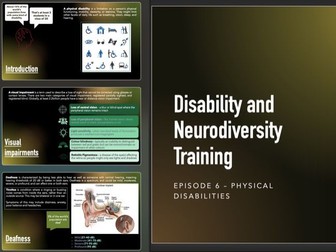
Disability and Neurodiversity - Physical Disabilities
This is episode 6 of a Disability and Neurodiversity Training series, outlining terminology, the student experience, approaches, and debunking stereotypes about visual impairments, deafness, and mobility impairments. This is ideal for teacher training, basic education, and general interest :)
 Quick View
Magnetism and electromagnetism SEND
These are magnetism and electromagnetism wordsearches adapted to lower ability students and visually impaired students. Letters are larger and there are only 15 words in the lower ability sheet with the simplest words.
Wordsearches are an excellent tool to develop and improve scientific vocabulary. Students should be encouraged to work together and say the words aloud to ensure they are internalised,
The sheet suitable for students with visual impairment (SEND) has good contrast colours (black and yellow), recommended font ARIAL size of 14.
They are suitable for students aged from 7 -15 for all curriculum
Learning to Take Turns - Skill Development Program - Turntaking!
This is a one page handout which provides numerous strategies to support an individual to learn to take turns. This is a great handout for parents, carers and/or other allied health professionals. This resource has been very valuable and beneficial in supporting children with learning difficulties, cognitive impairments and/or intellectual disabilities to learn how to take turns.
SEN TRAITS AND STRATEGIES
This comes with 2 resources!
One is a powerpoint of all the info and one is a word doc that is ‘bookmarks’
Common traits and teaching strategies for:
Asperger’s Syndrome
Autism
ADHD/ADD
Dyslexia
Dyscalculia
Dyspraxia
Visually Impaired
Hearing Impaired
Speech/Language
Reading
Handwriting
You can add any others!
Wh- Question Bingo
Responding to who, what, where, when, and why questions can be extremely challenging for children with autism, cognitive impairments, or speech disorders. Practice answering questions using these fun bingo games! Using visuals, multiple examples, and structure will allow students to learn this skill successfully with this resource!
This product contains:
- Who Bingo
- What Bingo
- Where Bingo
- When Bingo
- Why Bingo
- Wh- Mix Up {containing who, what, where, when, & why questions}
Each game contains 16 calling cards & 10 playing boards! 6 separate bingo games are included in this set!
Working on each wh- question in isolation will allow students to identifying the patterning in responding. The wh- mix up game will help teach discrimination!
Holiday Wh- Question Mini Pack
This mini pack is a fun way to help your students learn how to successfully answer who, what, where, when, and why questions in a fun holiday theme! This skill can be a struggle for children with autism, cognitive impairments, or speech disorders. Using visuals, multiple examples, and structure will allow students to learn this skill successfully with this resource!
This product contains:
- 5 Visual Wh- Question Worksheets
- Holiday Themed Wh- Question Mini Book
Anything holiday related is always motivating and engaging! Target important concepts while still joining in on the fun of the season!